Solar Bowden installs from Range Road Solar start with LONGi panels paired with APsystems microinverters, sized to the property's roof or ground-mount layout and its electrical service. In town, that usually means a roof-mount system on a standard residential service, sized from the 12-month usage graph on your most recent power bill rather than a rule-of-thumb number. On the acreages and farm properties in this area, we're just as often looking at a ground-mount array, because the roof on a shop or outbuilding doesn't always have the pitch or orientation to carry the full load of a home, shop, and yard lights together. APsystems microinverters work well on these mixed-load properties because each panel operates independently, so partial shading from a grain bin, a shelterbelt, or a neighboring building doesn't drag down the output of the whole array. LONGi panels give us a dependable, well-documented product to design around, with manufacturer warranties that hold up to the freeze-thaw cycles rural Alberta roofs and ground mounts go through every year. Every installation here includes site design, a full electrical review of the existing service, the FortisAlberta interconnection application, and the physical install and commissioning. We size systems in the 8 to 15 kW range for most homes and acreages in the area, with 10 kW being a common starting point, but the final number always comes from your property and your bill, not a template.
Solar Planning for Bowden Properties
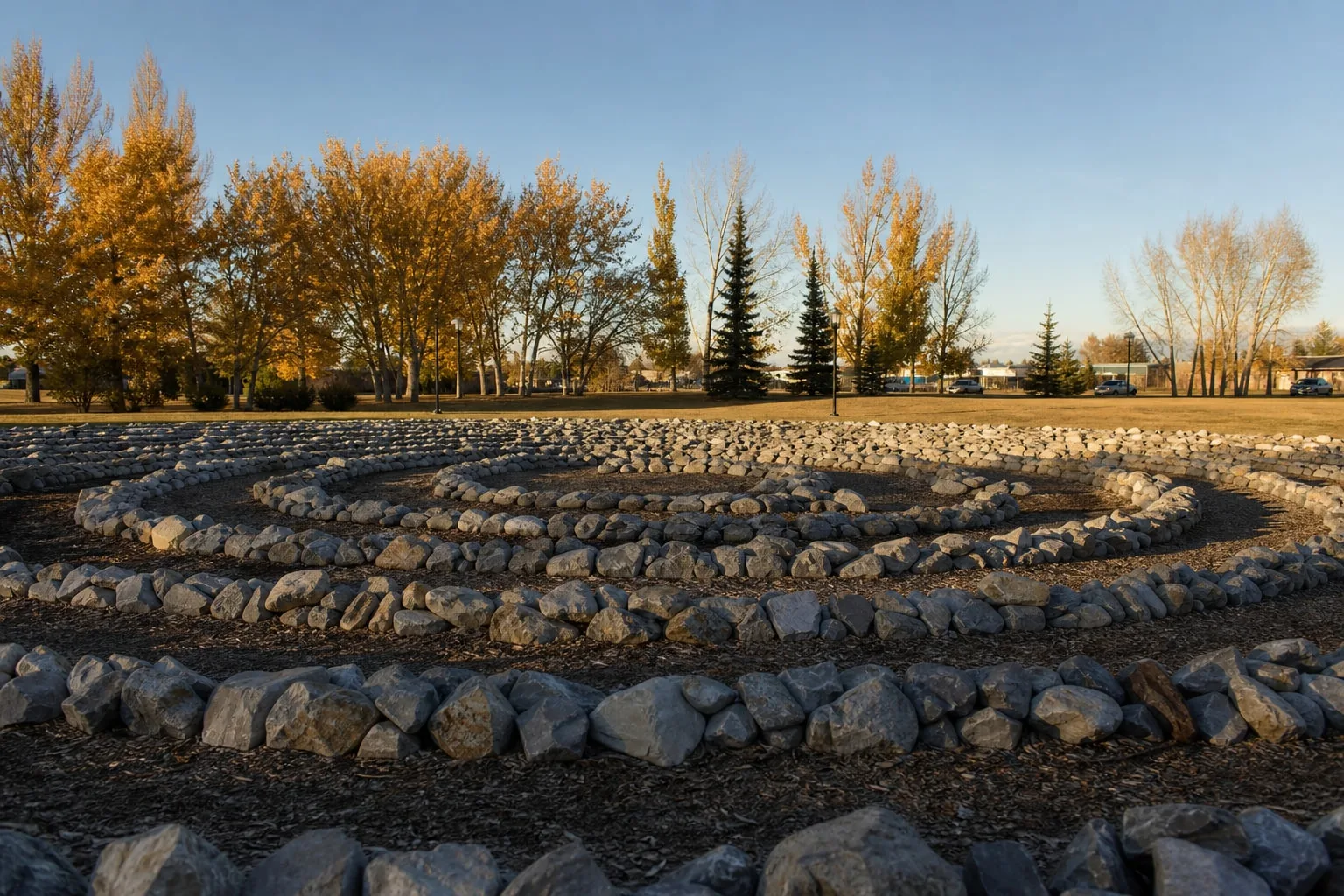
About 1,280 people call this area home as of the last census, up from 1,240 the census before. That kind of steady growth means a mix of established in-town homes, newer builds, and acreages on the edges of the community, each with its own roof layout, shading pattern, and electrical service. The Bowden Institution and the RCMP Police Dog Service Training Centre anchor a good share of local employment, and plenty of households here run on shift schedules that don't match a typical nine to five, which changes how a home actually uses power through the day. Environment Canada's annual bright sunshine normals put the nearby Olds station at 1,998.4 hours of bright sunshine a year, but what that means for any single roof depends on orientation, shading, and panel layout, so we don't quote a production number until we've looked at the property itself. Families who've spent an afternoon at the Bowden Sun Maze know this is a community that does things the practical way: you look at what's actually there before you commit to a plan. We design solar the same way, starting with your most recent power bill and a walk of the property, not a generic estimate.

Electrical Site Review for Bowden Properties
Voltage Rise
Voltage rise happens when the voltage at a point on the distribution line increases because of the power a connected system feeds back, and how pronounced it is depends on the line's length, conductor size, and how many other loads and generators share it. On some rural feeders, voltage rise can push an inverter's protective settings into play sooner than expected. We check the distribution conditions at your service as part of design, because that affects how we size the system and where it may clip output rather than overload the line.
Single-Phase vs Three-Phase
Properties in this area run on either single-phase or three-phase electrical service, and which one you have shapes what inverter equipment and system capacity make sense. Single-phase service is common on most homes and smaller acreages, while three-phase is more often found on larger farm operations or shops with heavier equipment. We confirm which service type a property has early in design, since it affects both inverter selection and how much capacity we can safely add.
Panel Infrastructure
Older rural properties sometimes still run original electrical panels that are decades old, and breaker capacity hasn't always kept pace with the loads a modern home, shop, and solar system add up to. We check the panel's age, its rated capacity, and the condition of the breakers before finalizing a design. If the existing panel can't support the added solar breakers safely, an upgrade becomes part of the project scope, and we flag that during the site review, not after the equipment shows up.
Service Entrance Review
We also look at the service entrance and meter base, since that's where the physical connection to FortisAlberta's grid happens and where the micro-generation application gets tied to the actual equipment on site. A worn or outdated meter base can hold up the interconnection application or need replacing before FortisAlberta will approve the connection. We flag any service entrance concerns during the site visit so they're addressed as part of the project, not as a surprise delay later.
Right-Sizing Solar for Bowden Properties
A system sized for a typical in-town house doesn't usually work for a property that's also running a shop, a well pump, or grain-handling equipment, and that's a pattern we see a lot in this area. Rural properties tend to carry more total load than an urban equivalent, simply because there's more going on: a home plus a heated shop plus outbuilding lighting plus whatever seasonal equipment gets plugged in. That's one reason rural systems often land toward the upper end of the 8 to 15 kW range we install rather than the lower end. Roof versus ground mount comes down to what the property actually offers. If the roof has good southern or western exposure and isn't shaded by trees or neighboring buildings, a roof mount is usually the simpler, more cost-effective choice. But on a lot of acreages, the roof pitch is wrong, trees or outbuildings throw shade across the best sections, or there's simply open yard space that makes more sense than working around roof constraints. In those cases, a ground mount lets us orient the array for the best exposure the property has, independent of roofline. Either way, we don't size from a rule of thumb. We size from the 12-month usage graph on your most recent power bill, combined with a site visit, so the system matches how the property actually uses power rather than a generic average.
Typical Load Profiles We Design For Near Bowden
Home Plus Heated Shop
This is one of the most common profiles we design for in this area: a house plus a heated detached shop used for vehicle storage, equipment work, or a home-based trade. The shop's heating and any welding or tool loads often run on a separate schedule than the house, which changes when the property draws the most power through the day. We pull the usage pattern off your most recent power bill to see how those two loads overlap before sizing the array.
Acreage with Well Pump and Outbuildings
Acreages with a well pump, yard lights, and a few outbuildings have a different draw pattern than a single house, with the pump cycling on demand rather than on a predictable schedule. That kind of intermittent load needs to be accounted for in system sizing so the array and inverters are matched to real usage, not just peak draw. We look at this pattern on the property's usage graph rather than assuming a standard residential profile applies.
Farm Operation with Grain Handling
Farm properties running grain dryers, augers, or other handling equipment see seasonal spikes that look nothing like a typical household's usage through the rest of the year. Sizing for this kind of property means looking at the full year of usage on the power bill, not just an average month, so the system reflects both the quiet season and the busy one. These properties often land toward the higher end of the 8 to 15 kW range we install.
FortisAlberta Interconnection in Bowden
This area is in FortisAlberta's wire service territory, which means FortisAlberta owns and maintains the distribution lines and transformer equipment that carry power to and from your property. Any grid-connected solar system here goes through FortisAlberta's micro-generation interconnection process, and Range Road Solar handles that application as part of every install, from the initial paperwork through the final sign-off. We prepare the single-line diagrams, equipment specifications, and site information FortisAlberta requires, and we coordinate the meter and service entrance work alongside that application. Because FortisAlberta is a wire service provider and not your electricity retailer, your retail contract and your interconnection application are two separate pieces, and we keep both straight through the process. We don't quote approval timelines, credit terms, or payout rules here, those are set by FortisAlberta and your retailer and can change, so we confirm the current requirements at the time of your design review rather than relying on information that may be out of date by the time your system goes in.
Project Economics and Design Review
| System Size | Annual Production | Year 1 Savings | Payback Period |
|---|---|---|---|
| 8-15 kW range, 10 kW typical |
Production, savings, and payback figures are only accurate once we've completed a design review using your property and your most recent power bill.
How We Work in Bowden
Bill and Load Review
We review your power bill to understand your energy use in Bowden and size the system to your actual consumption, not a generic estimate.
Site Assessment
We assess your roof or ground area, south-facing exposure, electrical service, and utility interconnection requirements specific to your property.
Design and Utility Application
We produce a system layout, production estimate, and cost summary, then submit your micro-generation application to your utility on your behalf.
Installation and Commissioning
Our crew installs racking, panels, inverter, and electrical connections. All work is performed by licensed electricians. We commission and test before handoff.
Current Program and Interconnection Review
Utility connection review
FortisAlberta reviews every micro-generation grid connection application before a system can be energized, checking the equipment specifications and site details against their current requirements. Range Road Solar prepares and submits that design package as part of your project, handling the paperwork so you're not managing it yourself.
Current program review
Eligibility for any commercial, farm, or residential program tied to a solar install depends on rules that can change, so we review what currently applies at the time of your design, not based on older information. That review happens before your project is finalized, so you know what you're working with up front.

Frequently Asked Questions
Get a Solar Assessment for Bowden
Submit a recent power bill and we will review your consumption and provide an honest assessment for your Bowden property. No obligation.
(587) 330-7502 Book a CallMore Solar Services in Bowden