Solar rebates and incentives in Bowden, Alberta start with a system built on LONGi panels and APsystems microinverters, sized to your property and reviewed against whatever current programs apply at the time of design. For most homes in the area we're working in an 8-15 kW range, with 10 kW covering a typical household load, though the final number depends on your roof or mount, your service, and what your most recent power bill shows. APsystems microinverters make sense for the mix of housing stock here: older in-town homes with roof obstructions like dormers or chimneys, newer builds with simpler roof planes, and acreage properties where a ground mount might make more sense than the roof. Because each panel operates on its own microinverter, partial shading from a mature tree or a neighboring structure doesn't take the whole array offline, just the panels actually affected. LONGi panels give us a reliable, well-documented product to warranty and service locally, which matters when a rebate or incentive application requires documented equipment specs. Whether you're on an in-town lot or a property with outbuildings, the design package we submit ties the panel and inverter specs to your FortisAlberta interconnection application and to whatever current program review applies to your project. We don't quote a rebate number before we've seen your property and your bill. Solar rebates and incentives change, eligibility rules change, and a number that was accurate last year might not hold today. What doesn't change is the process: site review, equipment selection, interconnection paperwork, and a design package built for your specific property.
Solar Planning for Bowden Properties
Bowden, Alberta sits within Red Deer County, and solar planning here starts with the same question we ask on every rural or in-town property: what does the electrical service actually support? The town's population grew from 1,240 to 1,280 in the most recent census count, a small but steady community where properties range from in-town lots to acreages backing onto county farmland. The RCMP Police Dog Service Training Centre and Bowden Institution are two of the area's larger institutional loads, and while Range Road Solar designs primarily for residential and farm accounts, that mix of institutional, agricultural, and residential electrical demand shapes how FortisAlberta manages the local grid. Incorporated as a village in 1904 and as a town in 1981, a lot of the local housing stock reflects that history: older service panels, additions, and outbuildings that weren't part of the original electrical design. Before we talk system size, we walk the property, check the panel and service entrance, and pull your most recent power bill. That bill's 12-month usage graph tells us more about what a solar rebates and incentives package should look like here than any generic estimate could. Every recommendation comes out of that site-specific review, not a template.
Electrical Site Review for Rural Properties
Voltage Rise
Voltage rise happens when the distance and wire gauge between a property and its FortisAlberta transformer cause voltage to climb as a solar inverter pushes power back onto the line. On rural and semi-rural feeders in the area, that rise can push voltage near the top of the acceptable range even before solar is added. We measure it during the site visit because it directly affects how much an inverter clips output and how we size the system to stay within limits.
Single-Phase vs Three-Phase
Properties in the area run on either single-phase or three-phase FortisAlberta service, and which one you have changes what inverter equipment and system capacity make sense. Three-phase service, more common on larger farm and shop operations, generally supports a bigger system before hitting capacity limits than a typical single-phase residential connection. We confirm your service type early since it affects both equipment selection and design.
Panel Infrastructure
A lot of the local housing stock predates modern electrical codes, so we check breaker capacity and panel age before finalizing a system design. We're looking for available breaker space, the panel's rated capacity versus its actual load, and any signs of an outdated or undersized panel. If the panel can't support the added solar breaker, an upgrade to the panel or a new subpanel becomes part of the project scope.
Service Entrance Review
We check the condition of the service entrance and meter base as part of every site visit, since FortisAlberta's micro-generation application requires that equipment to meet current standards. An aging or damaged meter base can hold up the interconnection application until it's addressed. If an upgrade is required, we scope it as part of the project so it doesn't surface as a surprise after the application is already in.
Right-Sizing Solar for Rural Alberta Properties
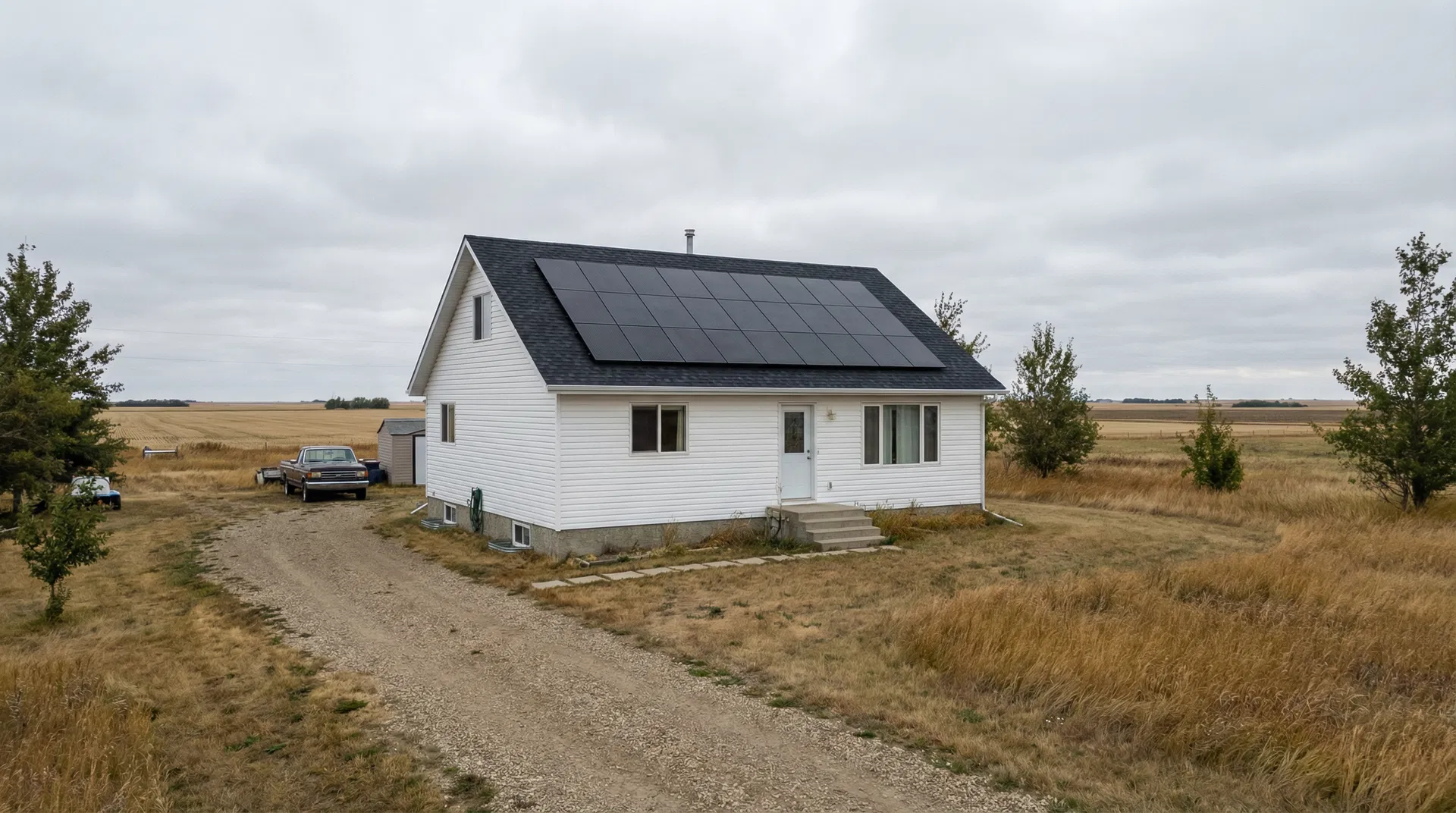
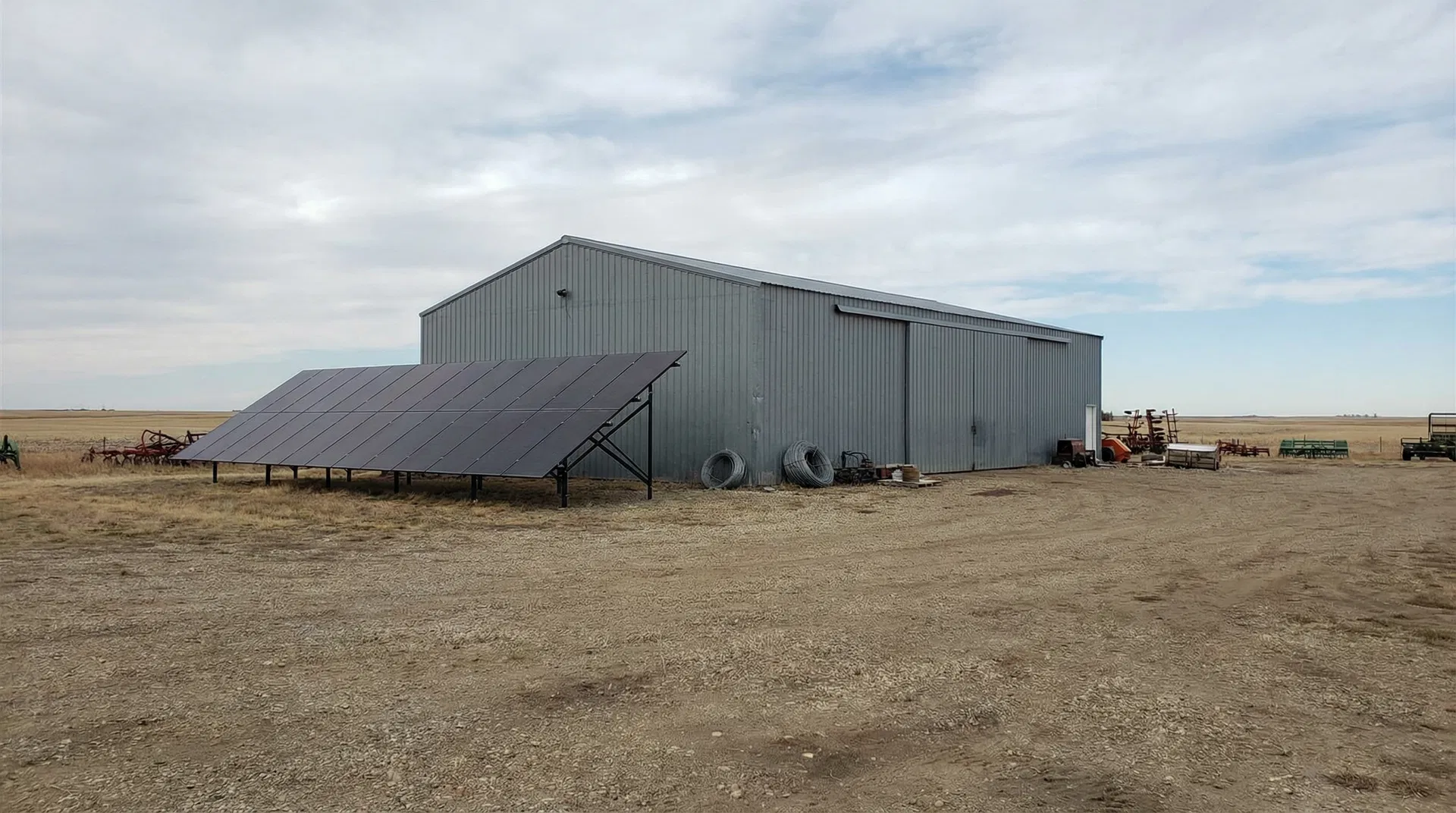
Rural and semi-rural properties in the area usually need more capacity than a standard in-town home, because the property's total electrical load isn't just the house. A shop with its own heat and equipment, a well pump, a grain bin's auger and fan motors, or irrigation equipment can each add meaningfully to annual usage, and a system sized only for the house misses that. Roof or ground mount is a property-by-property call. A roof with good southern exposure and no shading from trees or outbuildings is often the simpler, lower-cost option. But if the roof's pitch is wrong, mature trees or a neighboring structure shade it for part of the day, or the yard has open space that isn't otherwise in use, a ground mount can outperform a compromised roof even with the extra racking and trenching involved. Either way, we size the system from the 12-month usage graph on your most recent power bill, not a rule-of-thumb multiplier. That graph shows seasonal swings, like a grain dryer running hard in the fall or a shop heater working through winter, that a generic per-square-foot estimate would miss entirely. Your bill and a site visit are what turn an 8-15 kW range into an actual number for your property.
Typical Load Profiles We Design For on Local Properties
Home + Heated Shop
This is one of the most common profiles we see in the area: a house plus a detached shop with its own heat, lighting, and often a welder or compressor circuit. We size for this combined load using the 12-month usage graph on your most recent power bill, since shop heat alone can shift usage seasonally in a way a house-only estimate wouldn't catch. Systems in this profile typically land in the middle to upper end of our 8-15 kW range, though your bill and site conditions decide the actual number.
Acreage with Well Pump and Outbuildings
Acreage properties nearby often run a well pump, yard lighting, and one or more outbuildings off the same service, and that combination changes both load and where a ground mount might make more sense than the roof. We look at how those loads show up on your most recent power bill before recommending a system size. A property like this might justify a larger system within our 8-15 kW range, or point toward a ground mount if roof space is limited or shaded.
Grain Handling and Farm Equipment
Grain bins, augers, and fan motors used for drying and aeration create sharp seasonal spikes that only show up clearly on the 12-month usage graph on a recent power bill. A property running this kind of equipment needs a system designed around that seasonal pattern, not an average monthly number. We review the bill's usage graph alongside the site conditions to land on the right system size within the available range.
FortisAlberta Interconnection in Bowden
FortisAlberta is the wire service here, and any grid-connected solar system needs to go through FortisAlberta's micro-generation interconnection process before it's energized. Range Road Solar prepares and submits that application as part of your project: the single-line diagram, equipment specifications for the LONGi panels and APsystems microinverters, and the site details FortisAlberta requires to review a micro-generation connection. We don't control FortisAlberta's review timeline or the specifics of how they handle metering and settlement, and we won't tell you otherwise. What we can tell you is that we've done this application before for properties in FortisAlberta territory, and we know what a complete package looks like versus one that gets kicked back for missing information. If your property has an older service entrance or a panel that can't support the interconnection as-is, we flag that during the site review, before the application goes in, not after.
Project Economics and Design Review
| System Size | Annual Production | Year 1 Savings | Payback Period |
|---|---|---|---|
| 8-15 kW range, 10 kW typical |
Production, savings, and payback figures are only meaningful once we've completed a property-specific design using your most recent power bill.
How We Work in Bowden
Bill and Load Review
We review your power bill to understand your energy use in Bowden and size the system to your actual consumption, not a generic estimate.
Site Assessment
We assess your roof or ground area, south-facing exposure, electrical service, and utility interconnection requirements specific to your property.
Design and Utility Application
We produce a system layout, production estimate, and cost summary, then submit your micro-generation application to your utility on your behalf.
Installation and Commissioning
Our crew installs racking, panels, inverter, and electrical connections. All work is performed by licensed electricians. We commission and test before handoff.
Current Program and Interconnection Review
Utility connection review
FortisAlberta reviews every micro-generation grid connection application before a system is energized, and that review covers the equipment, the single-line diagram, and the site details for your property. Range Road Solar prepares and submits that full design package on your behalf. We don't control FortisAlberta's internal review process, but we make sure what we send them is complete.
Current program review
Commercial, farm, and residential eligibility for any current solar rebate, credit, or program shifts as rules change, so we check your project against what's actually in effect at the time we design your system, not what applied last year. That review happens alongside the site visit and bill review, before we finalize a quote. If your property qualifies for something specific, we'll walk you through it directly, in plain terms.
Frequently Asked Questions
Get a Solar Assessment for Bowden
Submit a recent power bill and we will review your consumption and provide an honest assessment for your Bowden property. No obligation.
(587) 330-7502 Book a CallRelated Resources
More Solar Services in Bowden