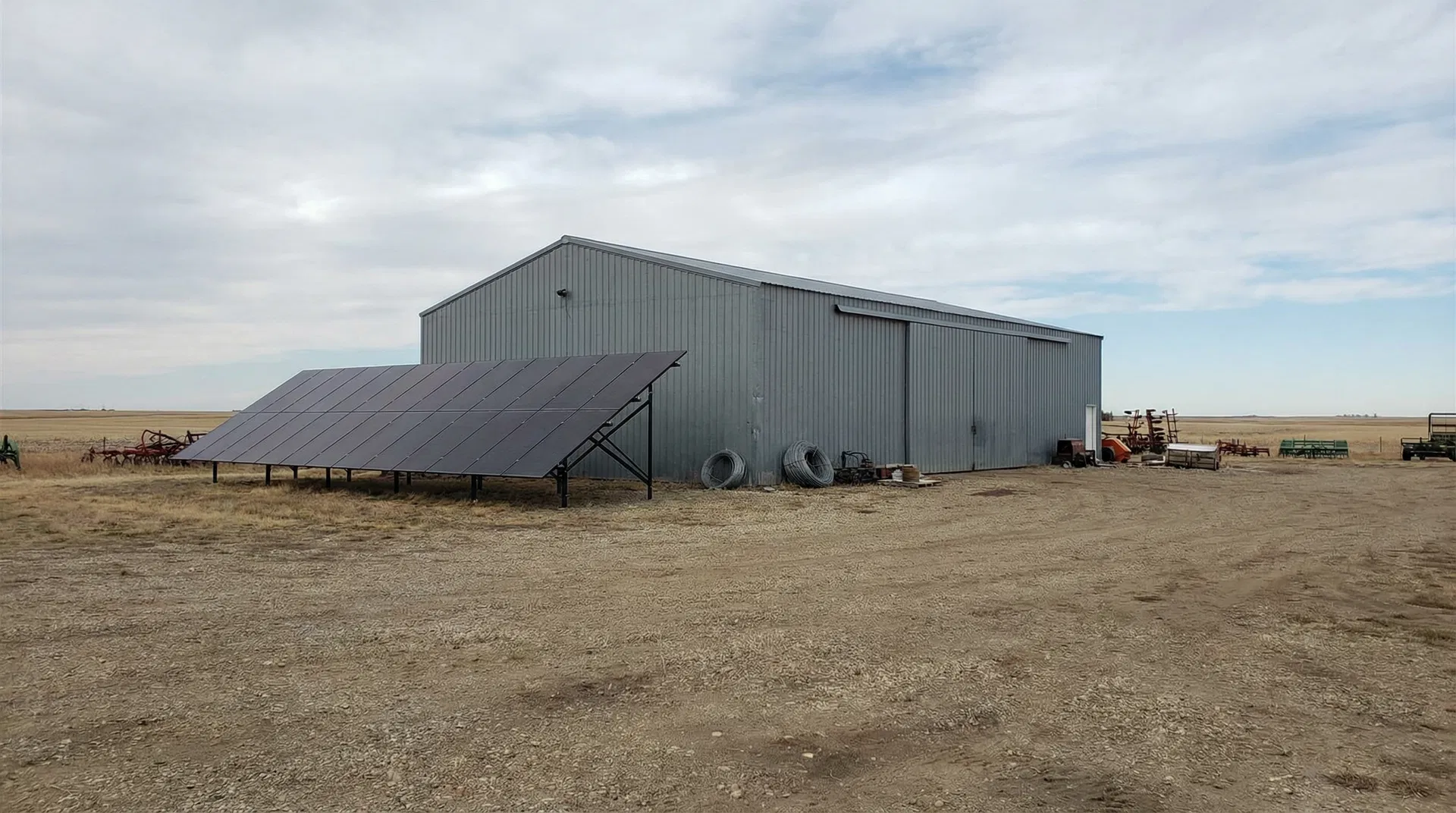
When business owners search for commercial solar Bowden, they're usually looking at a shop, a grain operation, or a small commercial building with a power bill that's outgrown standard residential systems. We design and install commercial systems from 15 kW up to 100 kW, with most projects in the area landing closer to 30 kW once we've reviewed the building's actual load. Every system uses LONGi panels as the standard module, and inverter selection depends on the building: APsystems microinverters work well for smaller commercial roofs with some shading or multiple roof planes, while larger arrays typically move to string inverters sized for the higher output. Commercial buildings here run everything from walk-in coolers and shop compressors to office HVAC and lighting on a schedule that doesn't match a typical house, so we design around the building's actual draw rather than a residential rule of thumb. Roof condition, structural capacity, and available ground space all factor into whether a project makes more sense as a roof mount, a ground mount, or a mix of both. Commercial projects can also carry CT ITC incentive eligibility, and we review that against current federal rules as part of the design process, not as a sales pitch bolted on afterward. Because this is a business asset, we build the proposal around the numbers your accountant will actually want to see: system cost, expected offset based on your bill, and how the incentive picture affects the payback timeline once a design is finalized.
Solar Planning for Bowden Properties
Bowden's population grew from 1,240 to 1,280 between the last two census counts, a small but real increase that shows up in new construction and business activity along the highway corridor. The town was incorporated as a village in 1904 and as a town in 1981, and that history means the commercial building stock here spans several eras of electrical service, from older single-phase drops to newer three-phase panels built for bigger loads. The RCMP Police Dog Service Training Centre is one of the area's larger institutional operations, and it's the kind of large daytime electrical load that shows up on a smaller scale across shops, agri-businesses, and other commercial buildings nearby. We don't guess at what a property needs. Every commercial design starts with a site walk to check the electrical service, roof or ground-mount conditions, and shading, paired with your most recent power bill to see how the business actually uses power across the year. FortisAlberta is the wire service here, and any system we design has to fit their interconnection process from the start, not as an afterthought. That's the approach we bring to every commercial property in the area: look at the building, look at the bill, then size the system to match.
Electrical Site Review for Bowden Properties
Voltage Rise
Voltage rise happens when the distance and load on a distribution line cause voltage to climb higher than an inverter's normal operating window, and rural feeders can be more prone to this than tighter urban grids. If voltage on a property's line runs high, a commercial inverter can clip output or shut down protectively rather than deliver full production. We check line conditions and factor voltage rise into system sizing and inverter selection so the array performs the way it was designed to, not below it.
Single-Phase vs Three-Phase
Commercial and rural properties can have either single-phase or three-phase electrical service, and which one a building has changes what inverter equipment fits and how much system capacity the service can support. A single-phase service caps the practical size of a commercial array differently than a three-phase service does, so we confirm the service type early in the design process. Getting this wrong means ordering equipment that doesn't match the building's actual electrical service.
Panel Infrastructure
Older commercial buildings often have electrical panels sized for the loads of decades ago, not for adding a 15 to 100 kW solar system on top. We check breaker capacity, panel age, and busbar rating as part of every site visit, looking for signs the panel is already near its limit. If the panel can't support the added interconnection, an upgrade means a new panel or a supplemental load center sized for both the existing building loads and the new solar circuit.
Service Entrance Review
We review the service entrance and meter base condition on every commercial site, since a worn or undersized meter base can hold up the micro-generation application to FortisAlberta. This matters because FortisAlberta requires the service entrance to meet current standards before approving an interconnection, not after. If the meter base needs replacing, we scope that upgrade into the project plan upfront so it doesn't surface as a surprise mid-installation.
Right-Sizing Solar for Bowden Properties
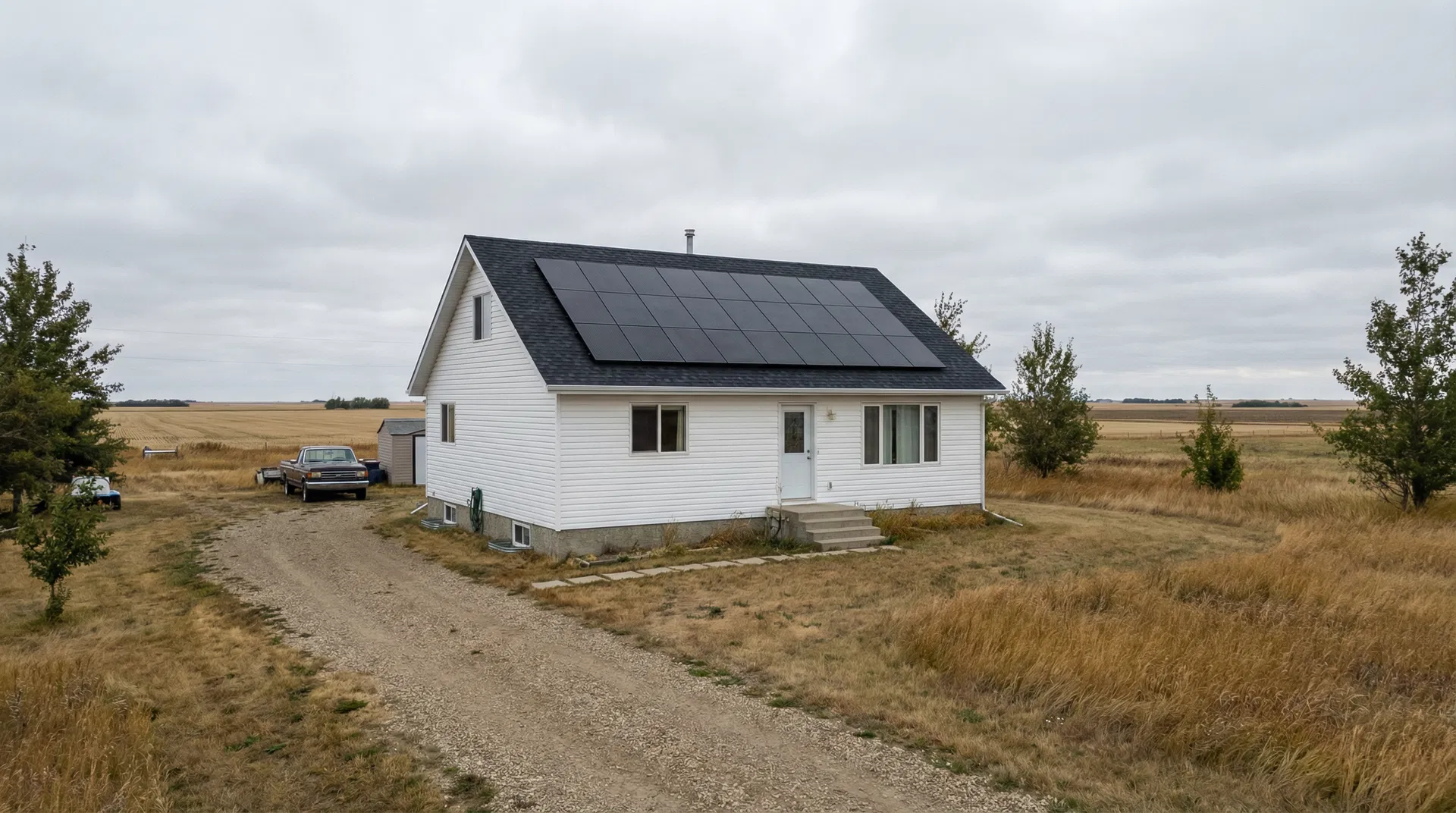
Commercial and rural properties in this area often need more capacity than a typical urban business, because the load isn't just one building. A shop with a compressor and welding equipment, a grain handling setup, irrigation pumps, or a second outbuilding all add up on the same meter, and a system sized like a standard office rooftop would leave a lot of that load uncovered. That's part of why our commercial range runs from 15 kW up to 100 kW rather than a single fixed size. Roof mount versus ground mount comes down to the specific property. A roof with good southern exposure, decent structural capacity, and no major shading is often the simplest and most cost-effective option. But if trees or neighboring buildings shade the roof, if the roof pitch or structure isn't a good fit, or if the property has open ground available near the service entrance, a ground mount can make more sense, and commercial ground mounts can also be easier to expand later if the business grows. Either way, we don't size a system off a rule of thumb like kW per square foot of building. We size it from the 12-month usage graph on your most recent power bill, which shows how the business actually draws power across every month of the year, combined with a site design that accounts for shading, orientation, and available space. That combination, bill plus site, is what determines the final system size.
Typical Load Profiles We Design For Near Bowden
Shop with Compressor and Welding Equipment
A heated shop with an air compressor, welding equipment, and shop lighting draws power differently than a house, often with big equipment cycling on and off during work hours. We size these systems by reviewing the 12-month usage graph on your most recent power bill alongside site conditions, landing most of these projects in the 15 to 40 kW range depending on how the shop is used day to day.
Grain Handling and Agri-Business Loads
Grain handling equipment, aeration fans, and augers can create seasonal spikes in power use that a standard commercial system isn't designed around. For these properties we look closely at how load shifts across the year on the power bill's usage graph, and commercial systems here often land in the 30 to 70 kW range once the full operation is accounted for.
Multi-Building Commercial Sites
Some commercial properties run more than one structure off the same service: a main building plus a second shop or storage building, for example. We size the system around the combined load shown on the property's most recent power bill rather than treating each building separately, and these combined-load projects can reach the higher end of our 15 to 100 kW commercial range.
FortisAlberta Interconnection in Bowden
FortisAlberta is the wire service that serves properties here, and that's the utility every commercial interconnection application runs through. For a system in the 15 to 100 kW range, the application package is more involved than a small residential system: FortisAlberta reviews the site design, the equipment specifications, and the protective relay settings before a commercial system is approved to connect. We prepare and submit that full application package on your behalf, including the single-line diagrams and equipment data sheets FortisAlberta asks for, so you're not the one chasing paperwork between us and the utility. We don't quote approval timelines or promise a specific turnaround, because that's set by FortisAlberta's own review queue and process, not by us. What we can control is making sure the application is complete and accurate the first time it's submitted, which is the biggest factor in avoiding back-and-forth delays. If your property already has FortisAlberta service, we can start the interconnection conversation as soon as we have a system design in hand.
Project Economics and Design Review
| System Size | Annual Production | Year 1 Savings | Payback Period |
|---|---|---|---|
| 15-100 kW range, 30 kW typical |
Production, savings, and payback figures are provided only after a property-specific design review using your most recent power bill and site conditions.
How We Work in Bowden
Bill and Load Review
We review your power bill to understand your energy use in Bowden and size the system to your actual consumption, not a generic estimate.
Site Assessment
We assess your roof or ground area, south-facing exposure, electrical service, and utility interconnection requirements specific to your property.
Design and Utility Application
We produce a system layout, production estimate, and cost summary, then submit your micro-generation application to your utility on your behalf.
Installation and Commissioning
Our crew installs racking, panels, inverter, and electrical connections. All work is performed by licensed electricians. We commission and test before handoff.
Current Program and Interconnection Review
Utility connection review
FortisAlberta reviews every commercial grid connection application against its current interconnection standards before a system is approved to connect. Range Road Solar prepares and submits the full design package, including single-line diagrams and equipment specifications, on your behalf.
Current program review
Commercial, farm, and residential solar projects are all reviewed against whatever federal and provincial program rules are current at the time your design is finalized. We check eligibility as part of the design process rather than assuming a program applies just because it did on a past project.
Frequently Asked Questions
Get a Solar Assessment for Bowden
Submit a recent power bill and we will review your consumption and provide an honest assessment for your Bowden property. No obligation.
(587) 330-7502 Book a CallMore Solar Services in Bowden