Range Road Solar installs solar battery storage in Bowden, Alberta for homes, acreages, and properties running a shop or outbuildings off the same electrical service. Most projects start with LONGi panels paired with APsystems microinverters on the roof or ground-mount array, then we add battery storage through an AC-coupled hybrid inverter and a lithium battery bank. That architecture lets us add storage to a new solar install or, in many cases, bolt battery backup onto a solar array you already have without touching the existing microinverters. The battery bank itself is sized to carry the circuits that matter most during an outage: well pump, furnace, fridge, and whatever else you flag as essential, plus whatever daytime self-consumption boost makes sense for your usage pattern. On rural properties, that self-consumption piece often matters more than it does in town, since a shop, irrigation pump, or grain handling equipment can pull a load pattern that doesn't line up neatly with when the sun's out. We spec the hybrid inverter and battery capacity together, since an undersized inverter will bottleneck what the battery can actually deliver during an outage, and an oversized one just adds cost without a real benefit. Every install includes the FortisAlberta interconnection paperwork, a walkthrough of how the system behaves during a grid outage versus normal operation, and documentation on the battery's warranty and maintenance requirements. We don't sell one fixed package. The panel count, battery capacity, and inverter model all come out of the site visit and your most recent power bill, not a generic combo we push on every property.
Solar Planning for Bowden Properties
This part of Red Deer County was incorporated as a village in 1904 and as a town in 1981, and that history shows up in the housing stock and outbuildings on a lot of these properties, older wiring and older panels included. That's one of the first things we check before designing a battery storage system. Census figures put the population at 1,280, up from 1,240 the count before, and a good share of that growth is acreages and rural properties running a home plus a shop or well pump off the same service, not a single-family footprint you'd see in a subdivision. The RCMP Police Dog Service Training Centre nearby brings a workforce that includes shift schedules, which changes when a household actually draws power over a 24-hour period, something we factor into battery sizing. Environment Canada's climate normals list 1,998.4 hours of annual bright sunshine for this region, measured at the nearby Olds station. That's useful background, but it isn't something we use to promise a production number on this page. Every system we design starts with a site visit, a look at the panel and service entrance, and your most recent power bill. That's what drives sizing decisions, not a generic rule of thumb.
Electrical Site Review for Bowden Properties
Voltage Rise
Voltage rise happens when the far end of a long distribution line sits at a higher voltage than the transformer, which is common on spread-out rural feeders. On properties with long runs from the transformer to the house or shop, that condition can push inverter output voltage close to its trip threshold and cause the inverter to curtail or shut down during peak production. We measure voltage at the point of interconnection during the site visit so panel and inverter sizing accounts for it upfront rather than as a surprise after commissioning.
Single-Phase vs Three-Phase
Some rural Alberta properties run single-phase service, while others, especially those with larger shop or well pump loads, have three-phase service brought in. The inverter and battery equipment we spec has to match what's actually on site, since a three-phase hybrid inverter won't connect to a single-phase panel and vice versa. We confirm phase configuration during the site review so the equipment list we quote is the equipment that will actually work with your service.
Panel Infrastructure
A lot of the electrical panels on older rural properties were sized for the loads of decades ago, not a home with a shop, well pump, and a battery system added on top. We check breaker capacity, panel age, and available bus space before finalizing a design, looking for signs like outdated fuse panels or panels already at their rated capacity. If the existing panel can't support the added circuits, an upgrade to a larger panel or a sub-panel addition becomes part of the project scope.
Service Entrance Review
We inspect the service entrance and meter base condition as part of every site visit, checking for weathering, capacity, and whether the meter base is compatible with a micro-generation setup. FortisAlberta reviews meter base condition as part of the interconnection application, so catching an issue here before we submit avoids a rejected application and a second site visit. If an upgrade is required, we scope it into the project plan and timeline upfront instead of discovering it mid-install.
Right-Sizing Solar for Bowden Properties
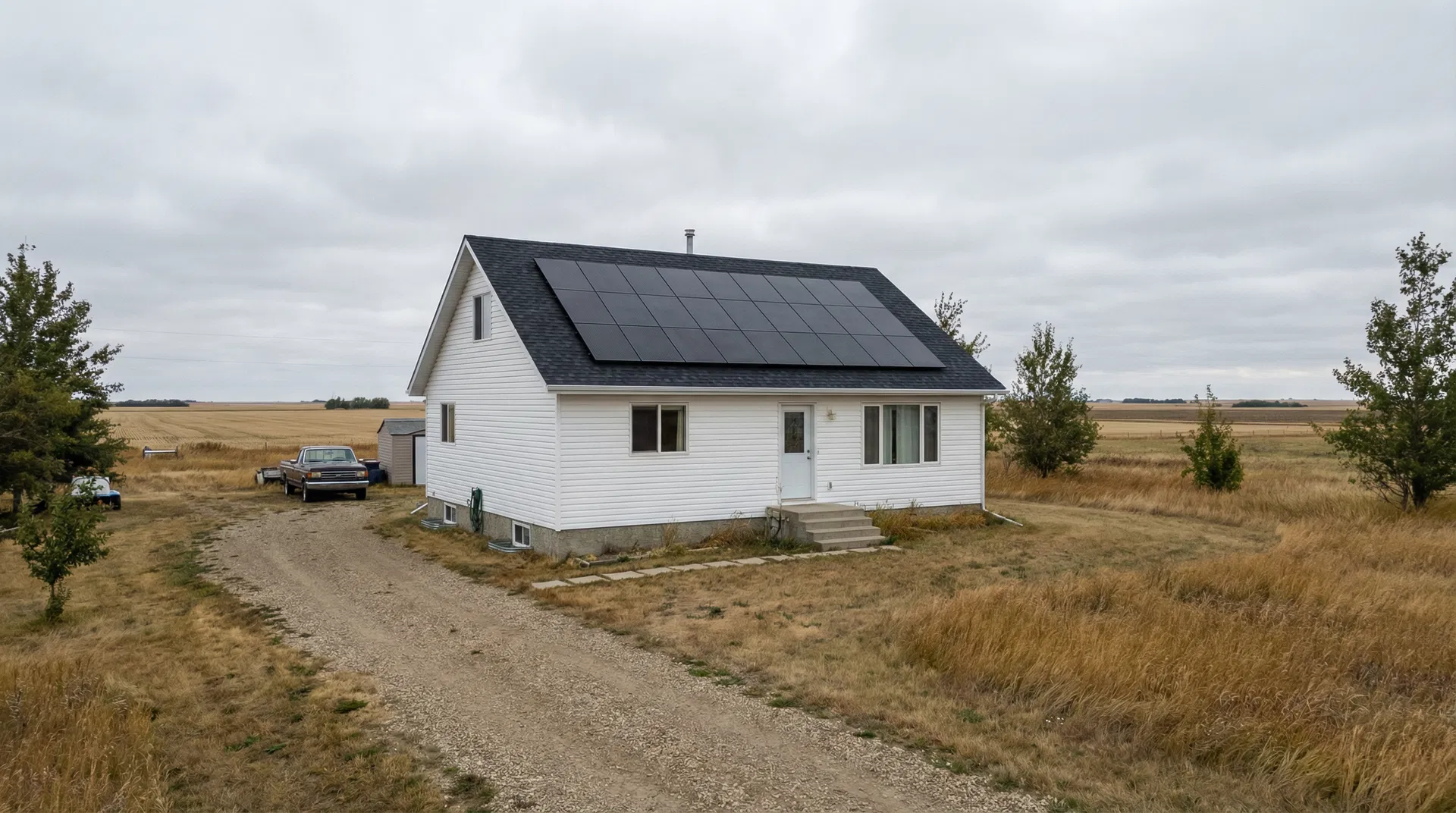
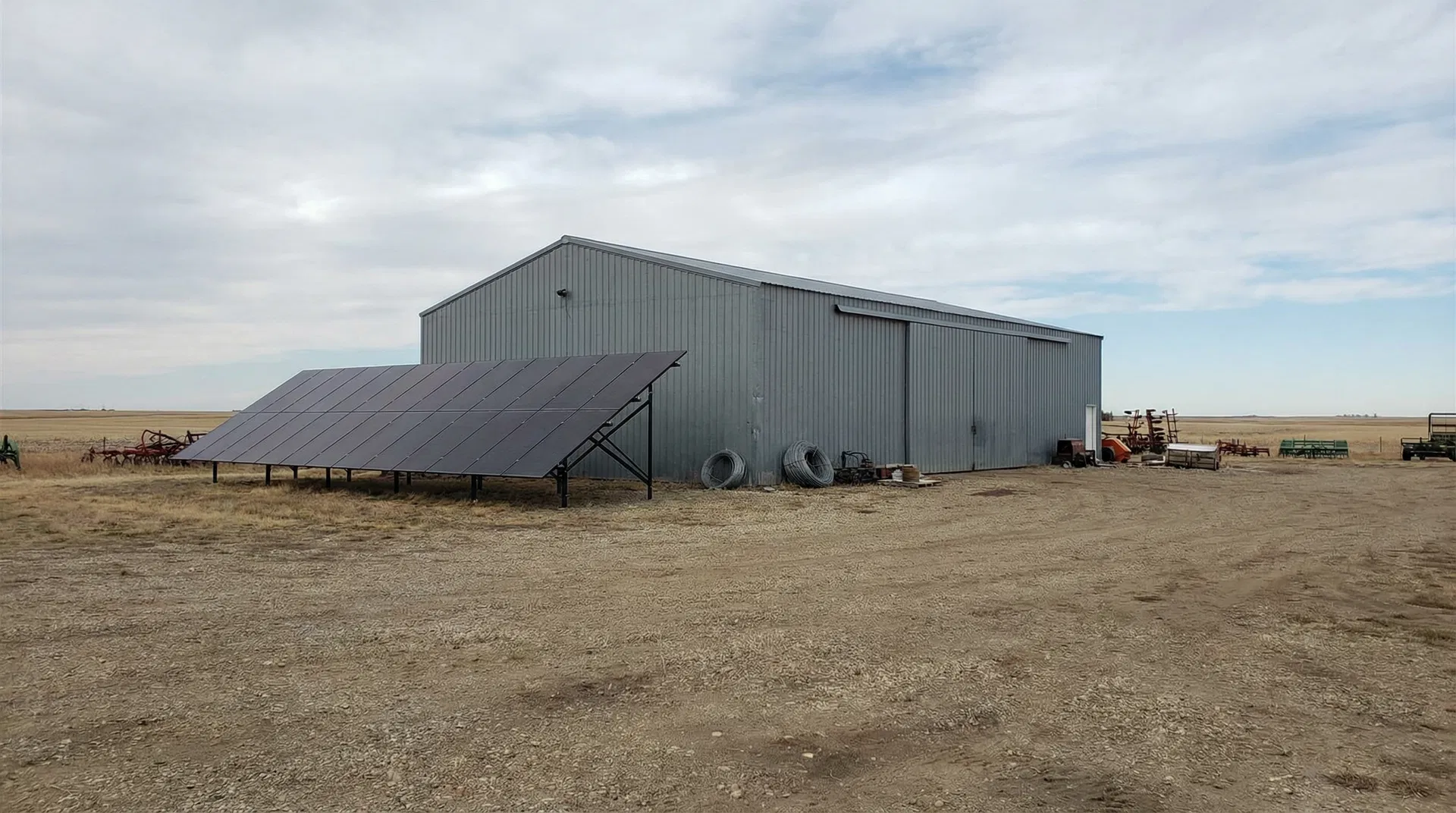
Rural properties tend to need bigger systems than a comparable house in town, simply because there's more to power: a home plus a shop, a well pump, maybe grain handling or irrigation equipment, all pulling from the same service. That's part of why the battery storage systems we design run across an 8-20 kW range rather than a single default size. Roof versus ground mount comes down to the property itself. If a roof has decent southern or western exposure and isn't shaded by trees or a grain bin, roof mount usually makes sense and keeps the footprint out of the yard. When the roof pitch is wrong, shading from mature trees or outbuildings is unavoidable, or there's simply open land available and a better solar window at ground level, a ground-mounted array is often the right call instead. Either way, we don't size a system off a rule of thumb like watts per square foot of roof. We pull the 12-month usage graph off your most recent power bill and build the design around your actual consumption pattern, including seasonal swings from things like a heated shop or well pump. Combined with a site visit to confirm roof or ground conditions, panel capacity, and phase service, that bill and that graph are what actually determine the system size and battery capacity we recommend, not a generic formula.
Typical Load Profiles We Design For Near Bowden
Home Plus Heated Shop
A house and a detached shop with electric or forced-air heat, both running off the same electrical service, is one of the most common profiles we design for on rural properties in this area. We pull the 12-month usage graph from your most recent power bill to see how shop heat shifts winter consumption before sizing the battery and solar array around it.
Acreage With Well Pump and Backup Needs
Properties running a well pump depend on power for water, which makes battery backup a bigger priority than it is for a typical in-town home. We design around the well pump's draw alongside regular household loads, using your most recent power bill and a site visit to size a battery that can carry essential circuits through an outage.
Property With Multiple Outbuildings
Some properties we design for have a home plus a couple of outbuildings, like a detached garage and a workshop, each with its own subpanel. We map out every circuit that matters during an outage and size the battery around what needs to stay powered, using the 12-month usage graph on your most recent power bill as the baseline.
FortisAlberta Interconnection in Bowden
FortisAlberta is the wire service for properties in this part of Red Deer County, including Bowden. Any battery storage system that ties into the grid, whether it's a straightforward solar-plus-battery setup or an AC-coupled addition to an existing array, needs a micro-generation application filed with FortisAlberta before it's energized. Range Road Solar handles that paperwork directly: single-line diagrams, equipment spec sheets, and the interconnection agreement all go through us, not through you. We coordinate with FortisAlberta on the technical review of your service entrance, meter base, and panel capacity as part of that application, since those details affect what the utility approves. We don't publish a fixed timeline for FortisAlberta's review or make claims about credit carryover, payout structure, or retailer-specific policy here, because those rules are set by the utility and your electricity retailer, and they can change. What we commit to is managing the interconnection process from design through energization, so you're not the one on the phone trying to figure out what a single-line diagram is.
Project Economics and Design Review
| System Size | Annual Production | Year 1 Savings | Payback Period |
|---|---|---|---|
| 8-20 kW range, 12 kW typical |
Production, savings, and payback figures require a property-specific design review and your most recent power bill, and we won't quote them without one.
How We Work in Bowden
Bill and Load Review
We review your power bill to understand your energy use in Bowden and size the system to your actual consumption, not a generic estimate.
Site Assessment
We assess your roof or ground area, south-facing exposure, electrical service, and utility interconnection requirements specific to your property.
Design and Utility Application
We produce a system layout, production estimate, and cost summary, then submit your micro-generation application to your utility on your behalf.
Installation and Commissioning
Our crew installs racking, panels, inverter, and electrical connections. All work is performed by licensed electricians. We commission and test before handoff.
Current Program and Interconnection Review
Utility connection review
FortisAlberta reviews every grid-tied battery storage application before a system is energized, covering equipment specs and the interconnection agreement. Range Road Solar prepares and submits that full design package on your behalf, including single-line diagrams and equipment documentation.
Current program review
Eligibility for any current commercial, farm, or residential program is checked against the rules in place at the time of your design, since those rules can and do change. We review your project against whatever applies at that point rather than assuming last year's terms still hold.
Frequently Asked Questions
Get a Solar Assessment for Bowden
Submit a recent power bill and we will review your consumption and provide an honest assessment for your Bowden property. No obligation.
(587) 330-7502 Book a CallMore Solar Services in Bowden