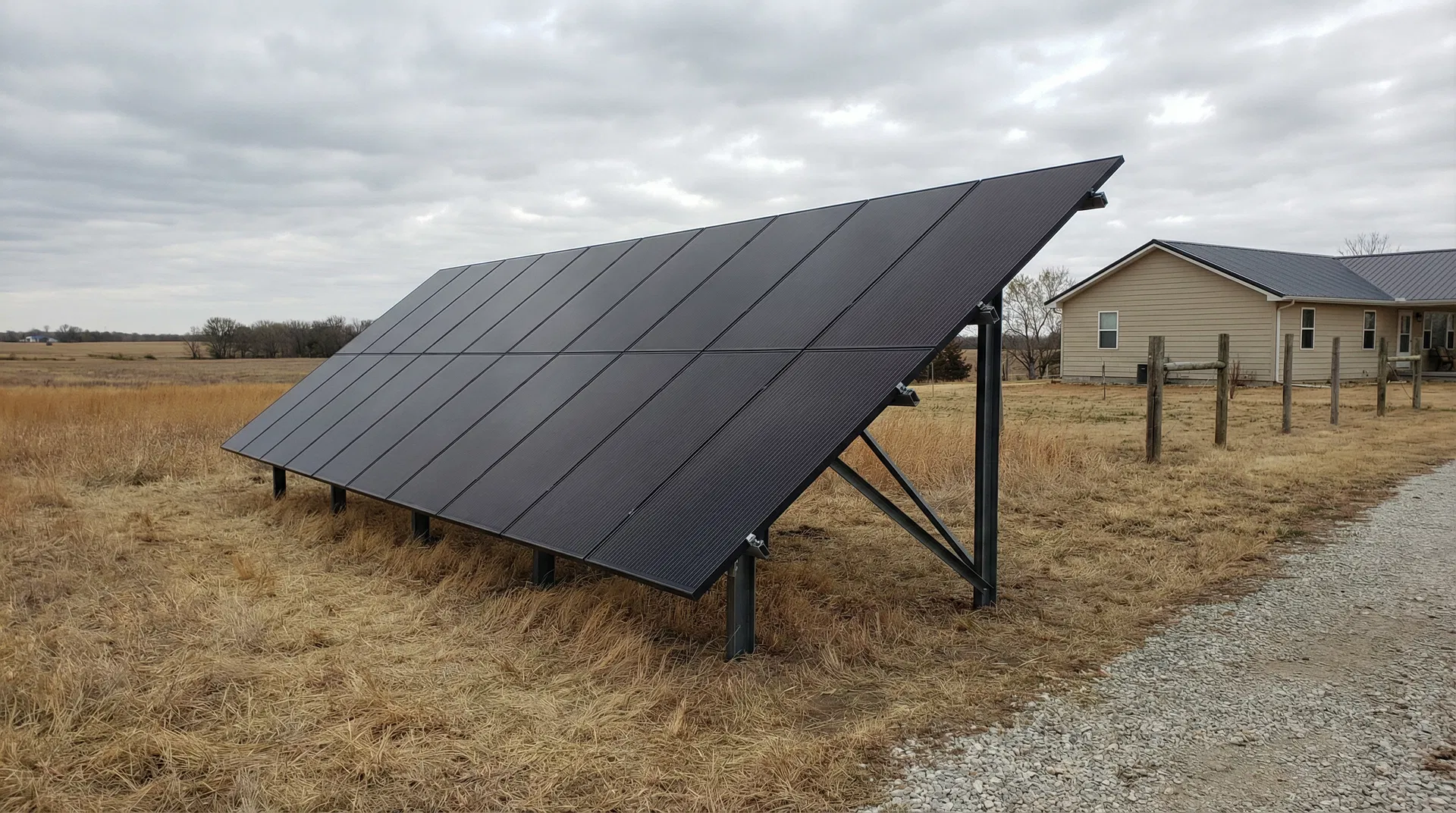
Off-grid solar in Stettler, Alberta means your system has to work as a complete power plant, not just a bill-reduction measure. Every install we do in this area combines LONGi solar panels with hybrid inverters and lithium battery storage sized to carry your loads through low-production periods without running a generator around the clock. LONGi panels are what we spec here because they deliver consistent output across a wide range of conditions and hold up on rural rooftops and ground-mounted frames that don't get the same maintenance attention as a city install. Hybrid inverters let the system manage the relationship between solar generation, battery state, and backup generation automatically. You don't have to babysit it. Lithium battery storage is the standard we install because it handles deep cycling better than older battery chemistries, and on a property where daily cycling is the norm rather than the exception, that matters. We size battery banks from your actual load profile, not a generic estimate. System sizes for off-grid installations typically run between 5 and 15 kW, with 8 kW being a common landing point for a home plus a moderate shop load. Properties running grain handling equipment, irrigation pumps, or multiple outbuildings often push toward the upper end of that range. We confirm the right size through site design and your most recent power bill.
Solar Planning for Stettler Properties
A lot of properties in and around Stettler sit far enough from the nearest ATCO Electric distribution line that a grid extension quote comes back looking more like a construction project than a utility connection. When that happens, off-grid solar stops being an alternative and starts being the practical answer. It's not just cabins and seasonal properties anymore. Acreage owners with year-round loads, heated shops, water systems, and outbuildings are sizing off-grid systems that handle everything a grid connection would. The math is straightforward: if extending the line costs more than a solar and battery system, independence wins on day one. Even for properties that already have grid power, the ATCO Electric infrastructure serving this part of Alberta can be subject to outages during weather events. A properly sized off-grid or hybrid system keeps critical loads running regardless of what the line is doing. We don't apply a one-size number to any property. Every design starts with your actual site, your actual loads, and your most recent power bill. That's what determines whether a 5 kW system handles your needs or whether you're looking at the upper end of the 5 to 15 kW range.
Electrical Site Review for Stettler Properties
Voltage Rise
Voltage rise happens when a solar system pushes current back toward the distribution line and raises the local voltage above acceptable limits. On longer rural distribution runs like those serving properties outside Stettler, the line impedance is higher, which means voltage rise potential is also higher. This affects how we size the inverter and whether output needs to be curtailed at certain times to stay within allowable limits.
Single-Phase vs Three-Phase
Rural properties near Stettler can be served by either single-phase or three-phase power depending on the infrastructure that reaches the yard. Three-phase service is common where there are larger motor loads like grain handling or irrigation. The phase configuration determines which inverter models are compatible and sets a ceiling on how much solar capacity can be balanced across the service.
Panel Infrastructure
Older acreage panels often don't have the breaker capacity to support a solar system without an upgrade. We check the panel age, the main breaker rating, and whether existing breaker slots can accommodate the solar feed without exceeding the 120 percent rule. If the panel can't support the system as designed, we include a panel upgrade in the project scope rather than work around a safety issue.
Service Entrance Review
The meter base and service entrance condition matters even on off-grid systems where an existing ATCO Electric connection stays in place as a hybrid backup. We check the meter base for weathering, seal integrity, and whether it meets current utility standards before submitting any interconnection documentation to ATCO Electric. If an upgrade is required, we identify it during the design review so there are no surprises on installation day.
Right-Sizing Solar for Stettler Properties
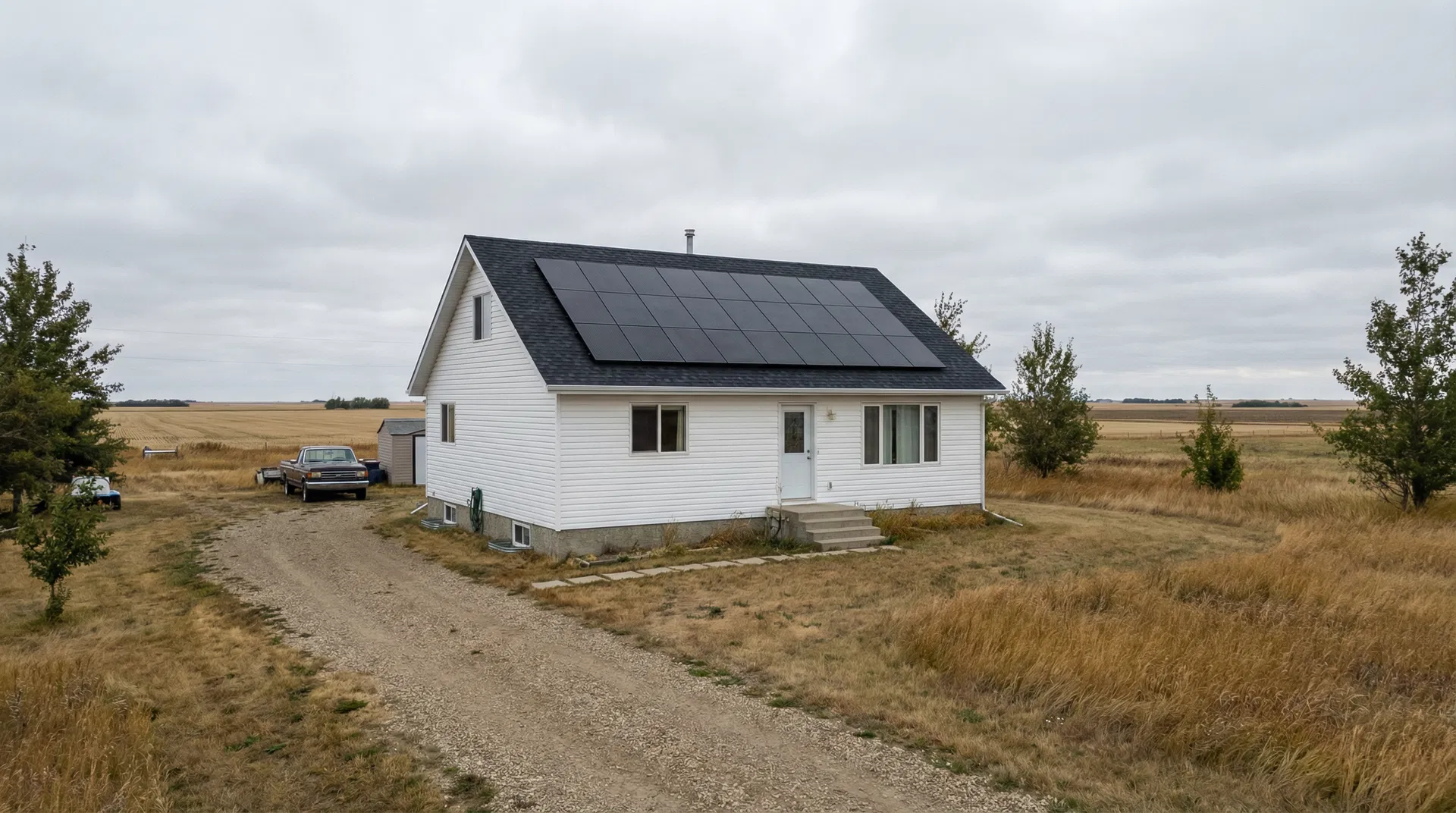
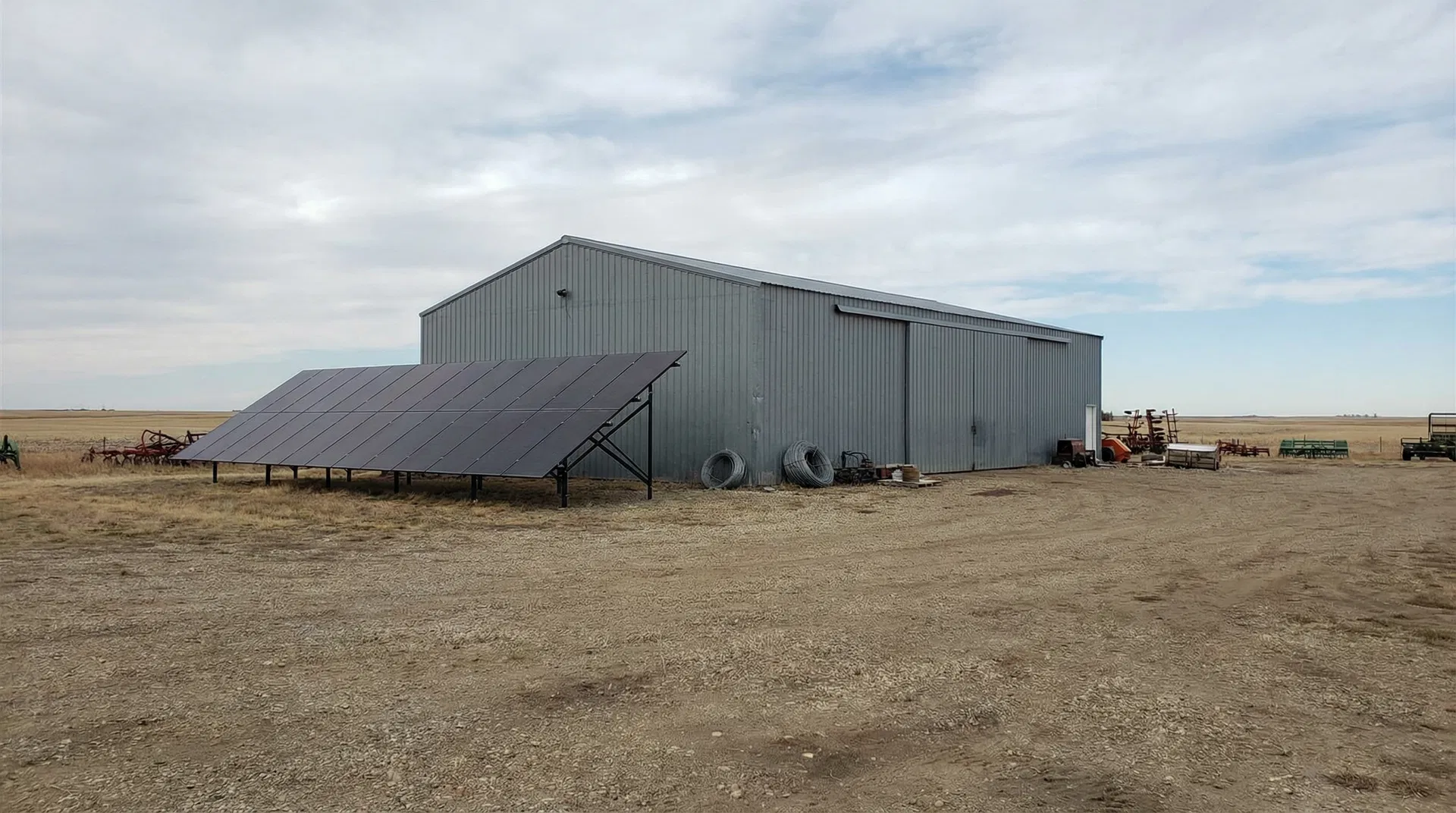
Properties around Stettler don't run on a single load. A typical acreage might have the house, a heated shop, a water treatment system, and seasonal loads like grain augers or livestock waterers all pulling from the same service. Off-grid sizing has to account for all of it, not just the house. That's why rural systems here consistently land above what you'd spec for a city home of the same square footage. Roof mounts work well when the structure faces the right direction and doesn't have significant shading from trees or adjacent buildings. A lot of rural shops and homes don't meet those conditions, or the roof area simply isn't large enough to fit the array needed for the total load. Ground mounts solve both problems. They can be oriented and angled for optimal production, placed away from shading, and scaled to whatever footprint the site allows. We use the 12-month usage graph on your most recent power bill as the starting point for sizing, not a rule-of-thumb number. That graph shows seasonal variation, which matters a lot when you're sizing battery storage to carry loads through shorter winter days. It also shows which months are pulling the hardest, which tells us where the design needs headroom. You don't need to gather a stack of old bills. One current bill from ATCO Electric gives us the usage history we need to build the right system.
Typical Load Profiles We Design For Near Stettler
Home + Heated Shop
A year-round residence combined with a heated shop is one of the most common off-grid load combinations we see on acreages in this area. The shop heating load in winter can be as significant as the entire house, so battery sizing has to reflect overnight draw on cold nights, not just daytime solar generation. We size the array and battery bank from the combined load profile on your most recent power bill, not separate estimates for each structure.
Remote Cabin or Seasonal Property
A seasonal cabin with a 2 to 3 kW average load is often the simplest off-grid application, but it still needs a battery bank large enough to carry through cloudy stretches without dropping to generator-only operation. Systems in this category typically land in the 5 to 8 kW array range with a battery bank sized to cover two to three days of typical use. Generator integration is usually included as a backup so the battery doesn't cycle too deep during extended low-production periods.
Acreage with Irrigation or Grain Handling
Properties running irrigation pumps or grain handling equipment have high intermittent loads that can spike well above the baseline draw of the house and shop combined. A 10 to 15 kW array paired with a hybrid inverter handles these spikes without forcing the battery bank to carry the full motor-start surge on its own. We model these load events separately during the design phase so the inverter and battery are rated for the actual peak demand, not just the average.
ATCO Electric and Off-Grid Installations Near Stettler
Off-grid systems on properties served by ATCO Electric don't require a micro-generation interconnection application because they aren't tied to the distribution network. That removes one layer of paperwork, but it doesn't mean the electrical side is simple. Your system still needs to meet Alberta Electrical Utility Code requirements, and if the property ever has any existing ATCO service, the isolation between the grid and your off-grid system has to be correctly designed and documented. For properties choosing a hybrid setup where some grid backup remains in place, ATCO Electric does administer the interconnection process, and Range Road Solar handles that application on your behalf. We prepare the design package, submit it, and follow up through approval. You don't have to navigate the utility paperwork. Whether you're going fully off-grid or building a hybrid system with an ATCO connection as a backstop, the design review process starts the same way: your site, your loads, and a clear picture of what you need the system to do.
Project Economics and Design Review
| System Size | Annual Production | Year 1 Savings | Payback Period |
|---|---|---|---|
| 5-15 kW range, 8 kW typical |
Production, savings, and payback estimates require a property-specific design and your most recent power bill.
How We Work in Stettler
Bill and Load Review
We review your power bill to understand your energy use in Stettler and size the system to your actual consumption, not a generic estimate.
Site Assessment
We assess your roof or ground area, south-facing exposure, electrical service, and utility interconnection requirements specific to your property.
Design and Utility Application
We produce a system layout, production estimate, and cost summary, then submit your micro-generation application to your utility on your behalf.
Installation and Commissioning
Our crew installs racking, panels, inverter, and electrical connections. All work is performed by licensed electricians. We commission and test before handoff.
Current Program and Interconnection Review
Utility connection review
For hybrid systems that maintain an ATCO Electric connection alongside the off-grid setup, ATCO Electric reviews and approves the interconnection application before the system can be commissioned. Range Road Solar prepares and submits the full design package on your behalf. We handle the communication with the utility so the process doesn't fall on you.
Current program review
Residential, acreage, and farm properties may be eligible for programs or incentives depending on current rules at the time of installation. We review eligibility at the design stage against the programs that are actually active, not outdated information. Commercial and agricultural applications are reviewed separately given the different program structures that may apply.
Frequently Asked Questions
Get a Solar Assessment for Stettler
Submit a recent power bill and we will review your consumption and provide an honest assessment for your Stettler property. No obligation.
(587) 330-7502 Book a CallMore Solar Services in Stettler