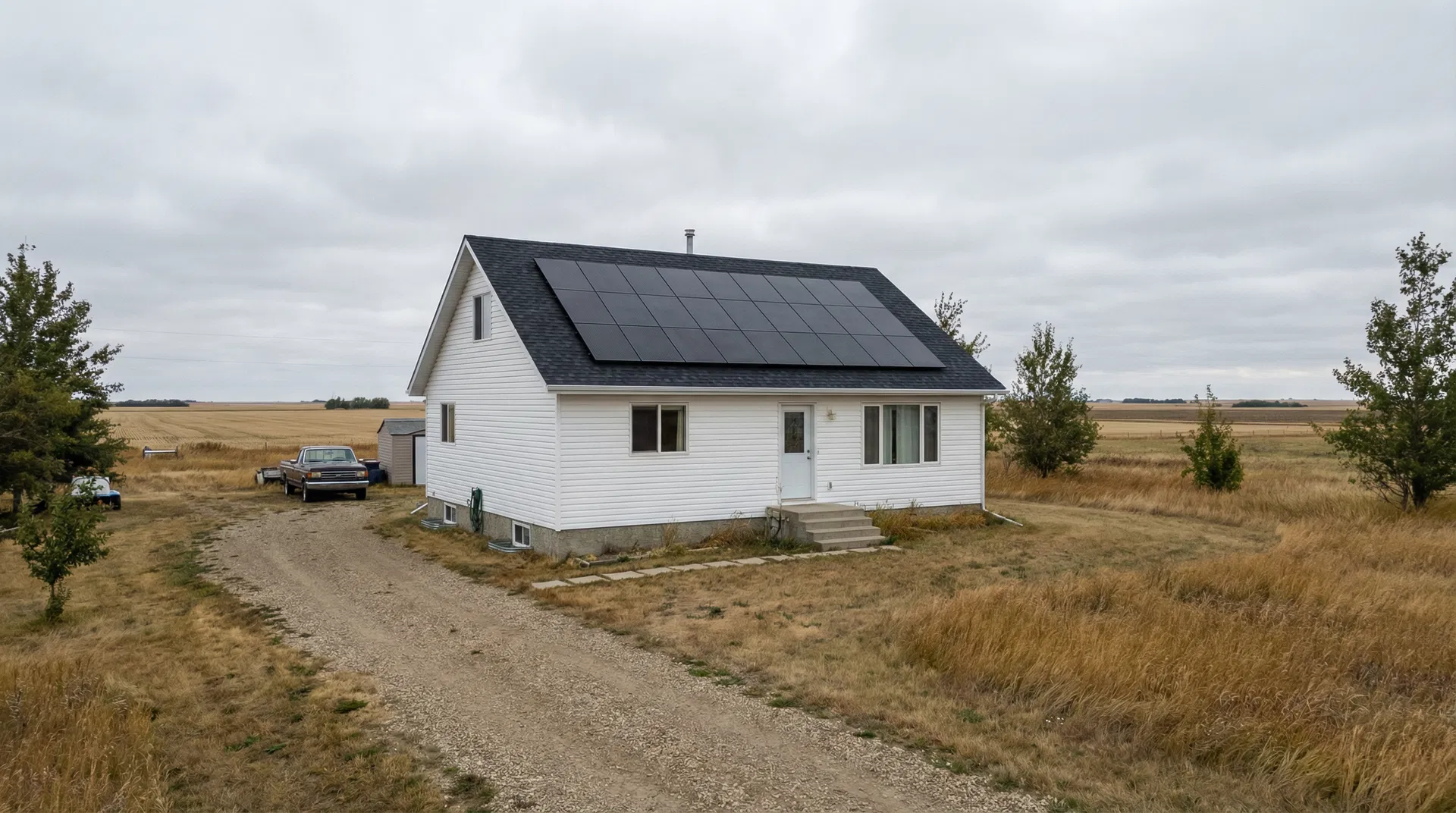
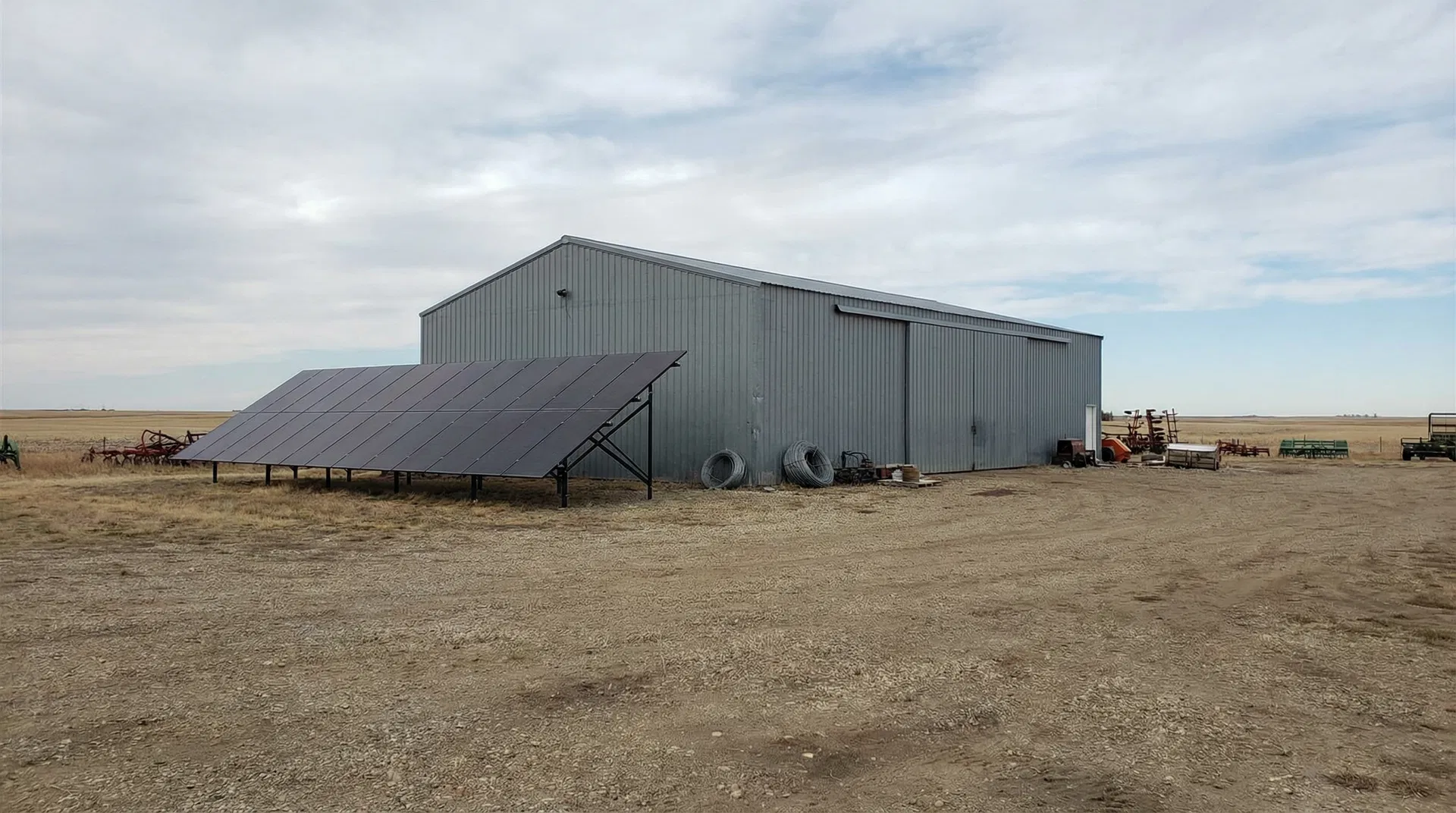
Acreage solar in Caroline starts with the property, not a spec sheet. Rural properties around here rarely run on one load: there's the house, and often a shop, a well pump, or outbuildings drawing power on their own schedule. We design around that whole picture rather than sizing for the house alone. Most of our acreage installs use LONGi panels paired with APsystems microinverters. The microinverter layout matters more on acreages than it does on a standard in-town roof, because outbuildings, shelterbelts, and grain bins throw shading patterns that a single string inverter handles poorly. With microinverters, one shaded panel doesn't drag down the output of the whole array, which is useful on a yard with trees on one side and a machine shed on the other. Roof mount and ground mount are both on the table. A steep or shaded roof, or a roofline that's already crowded with vents and chimneys, often points toward a ground-mount array instead, especially on properties with open land to spare. We walk that decision with you on-site rather than defaulting to one or the other. Every acreage system we quote falls in the 12-18 kW range, with 15 kW as a common landing point once we've reviewed a property's usage graph and load list. We don't finalize a number until we've seen both the site and the bill.
Solar Planning for Caroline Properties
Caroline, Alberta sits on FortisAlberta's wire service, the same utility that serves the acreages and farmsteads strung out along the highway corridor here. The Village of Caroline amalgamated into Clearwater County effective Jan 1, 2025, which changed the governance structure but not the interconnection process: FortisAlberta still owns the poles and wires, and a grid-tied solar system here goes through the same micro-generation application no matter which office issues the development permit. The population here sat at 470 as of the last census, down from 512 the count before, and the properties we design for run from small acreages to working yards near the Caroline Complex (Natural Gas Facility), a fixture of the local economy. That mix matters for sizing. A home with a heated shop or grain-handling equipment pulls a different load than a straight residential rooftop, and we account for that on the site visit rather than working from a template. We don't quote sunshine hours or production numbers before we've seen a property. What we can tell you is how the process works: a site visit to check roof pitch, shading, panel capacity, and service type, paired with the 12-month usage graph on your most recent power bill. From there, we build a system in the 12-18 kW range sized to what the property actually uses.
Electrical Site Review for Caroline Properties
Voltage Rise
Voltage rise happens when the voltage at a solar inverter runs higher than at the local transformer, which is more common on longer rural distribution runs. If it climbs too high, the inverter can clip output or shut down to protect itself. We check line conditions during the site visit and factor voltage rise into how we size and place the system.
Single-Phase vs Three-Phase
Rural properties around Caroline can have either single-phase or three-phase electrical service, and which one you have affects both inverter selection and how much system capacity the service can support. We confirm the service type on-site rather than assuming, since guessing wrong here means ordering the wrong equipment.
Panel Infrastructure
Older rural properties sometimes have electrical panels with limited breaker capacity or outdated components that weren't built with solar in mind. We check panel age and available capacity as part of the site review. If the panel can't support the new system, an upgrade to the panel or a service upgrade goes into the project scope before anything gets installed.
Service Entrance Review
We check the condition of the service entrance and meter base as part of every site visit, since the meter base has to support the micro-generation equipment before FortisAlberta will approve the interconnection application. If the meter base is outdated or undersized, we scope the upgrade up front so it doesn't stall the application later.
Right-Sizing Solar for Caroline Properties
Rural systems here tend to run bigger than a standard in-town rooftop install, and it's usually because there's more than one load on the property. It's not just the house: a heated shop, a well pump, an irrigation pump, or grain-handling equipment all draw from the same service, and a system sized only for the house leaves those loads uncovered. Roof or ground mount comes down to what the property actually looks like. A roof with heavy shading from shelterbelts or outbuildings, a steep or awkward pitch, or a roofline already crowded with vents and equipment often makes ground mount the better call, especially on a yard with open land to spare. A clean, unshaded roof with good orientation can make more sense to use as-is. We don't size a system off a rule of thumb like square footage or a flat per-person estimate. We size it off the 12-month usage graph printed on your most recent Alberta power bill, which shows exactly how the property draws power month to month, including seasonal spikes from a shop or irrigation pump. That graph, combined with a site design that accounts for roof or ground conditions, shading, and orientation, is what determines whether a property lands at 12 kW, 15 kW, or 18 kW.
Typical Load Profiles We Design For Near Caroline
Home + Heated Shop
This is the most common acreage pairing we see: a residential load plus a shop that's heated through the winter, whether for equipment storage, a workshop, or a small business. The shop's heating draw usually shows up as a distinct spike on the usage graph, and we size around that spike rather than the house load alone.
Home + Well Pump + Outbuildings
Properties running on a well pump along with a scatter of outbuildings, like a garage, a barn, or storage sheds, often have a lower baseline draw but real peaks when the pump kicks on or multiple buildings run at once. We look at how those loads stack on the usage graph before settling on a system size.
Home + Grain Handling
On properties with grain bins, augers, or dryers in the mix, the load profile gets seasonal and spiky rather than steady. Harvest-season draw can dwarf the rest of the year's usage, and a system sized only for average monthly use would miss that entirely. We build around the full 12-month graph so the fall spike gets accounted for, not just the winter and summer averages.
FortisAlberta Interconnection in Caroline
Properties in and around Caroline are served by FortisAlberta, and any grid-tied solar system here has to go through FortisAlberta's micro-generation interconnection process before it's energized. Range Road Solar handles that application as part of the install: the single-line diagrams, the equipment specifications, and the paperwork FortisAlberta requires to review a new connection. We don't quote how long FortisAlberta's review will take or promise a specific approval window, because that depends on FortisAlberta's queue and the specifics of the application, not on us. We also don't make claims about credit carryover, payout terms, or retailer billing treatment here. Those rules come from FortisAlberta and your electricity retailer, and we walk you through what's current at the time of your design review rather than quoting anything that might be stale by the time your system is installed.
Project Economics and Design Review
| System Size | Annual Production | Year 1 Savings | Payback Period |
|---|---|---|---|
| 12-18 kW range, 15 kW typical |
Production, savings, and payback figures require a property-specific design review and your most recent power bill; we don't quote them without seeing both.
How We Work in Caroline
Bill and Load Review
We review your power bill to understand your energy use in Caroline and size the system to your actual consumption, not a generic estimate.
Site Assessment
We assess your roof or ground area, south-facing exposure, electrical service, and utility interconnection requirements specific to your property.
Design and Utility Application
We produce a system layout, production estimate, and cost summary, then submit your micro-generation application to your utility on your behalf.
Installation and Commissioning
Our crew installs racking, panels, inverter, and electrical connections. All work is performed by licensed electricians. We commission and test before handoff.
Current Program and Interconnection Review
Utility connection review
FortisAlberta reviews every grid-tied solar application before a system can be energized, and Range Road Solar prepares and submits that design package on your behalf. We don't promise a specific timeline or outcome, since the review sits with FortisAlberta, but we make sure the application is complete and accurate before it goes in.
Current program review
Whether a property qualifies as residential, farm, or commercial for solar purposes affects how a project is scoped, and those rules can shift. We review eligibility against the current rules at the time of your design, rather than relying on what applied to a past project.
Frequently Asked Questions
Get a Solar Assessment for Caroline
Submit a recent power bill and we will review your consumption and provide an honest assessment for your Caroline property. No obligation.
(587) 330-7502 Book a CallRelated Resources