Mountain View County · Acreage solar systems
Acreage Solar in Sundre, AB
Rural properties west of Sundre carry bigger electrical loads than city homes. We design 12-18 kW systems built around your actual usage, not rule-of-thumb estimates.
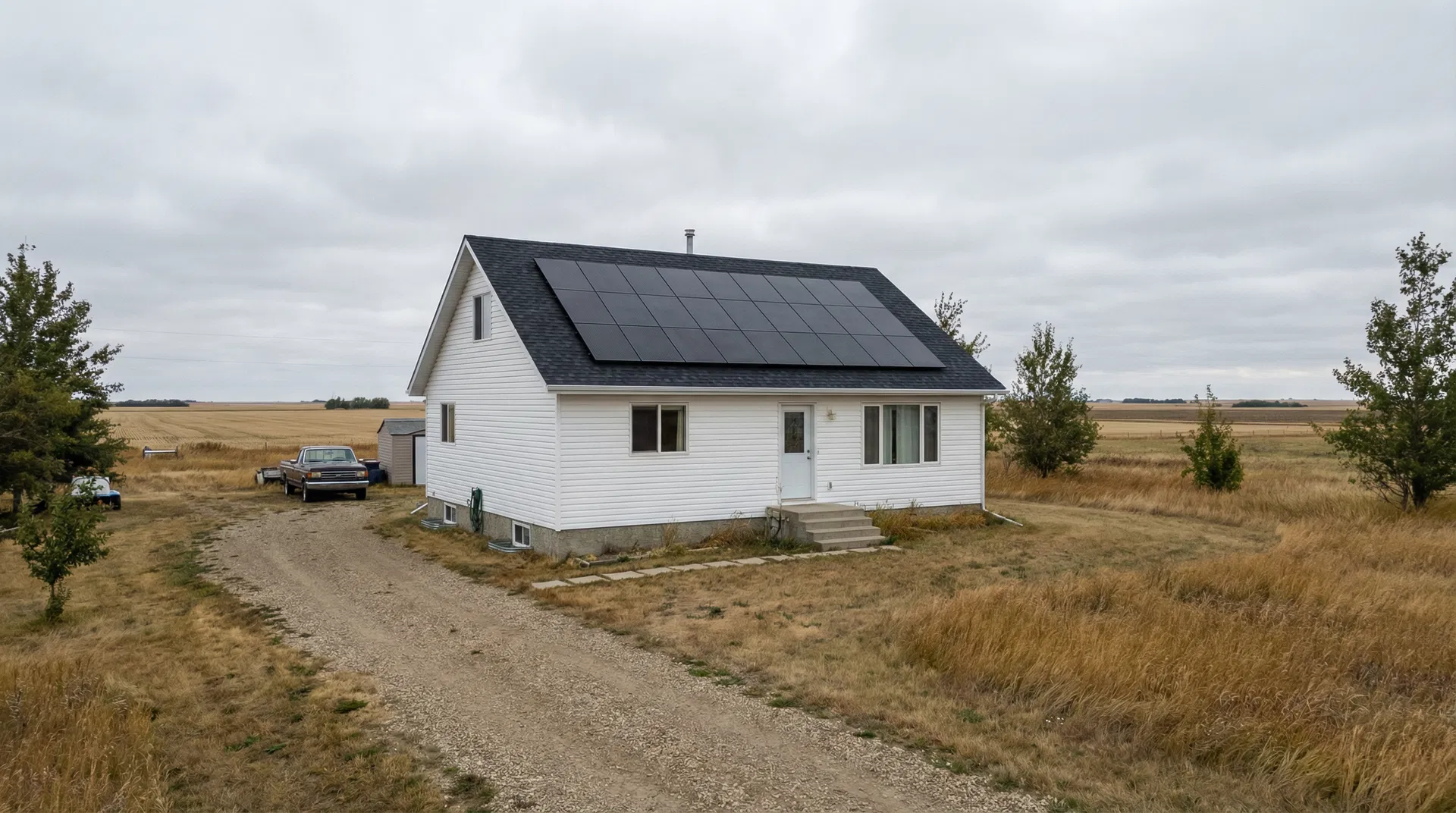
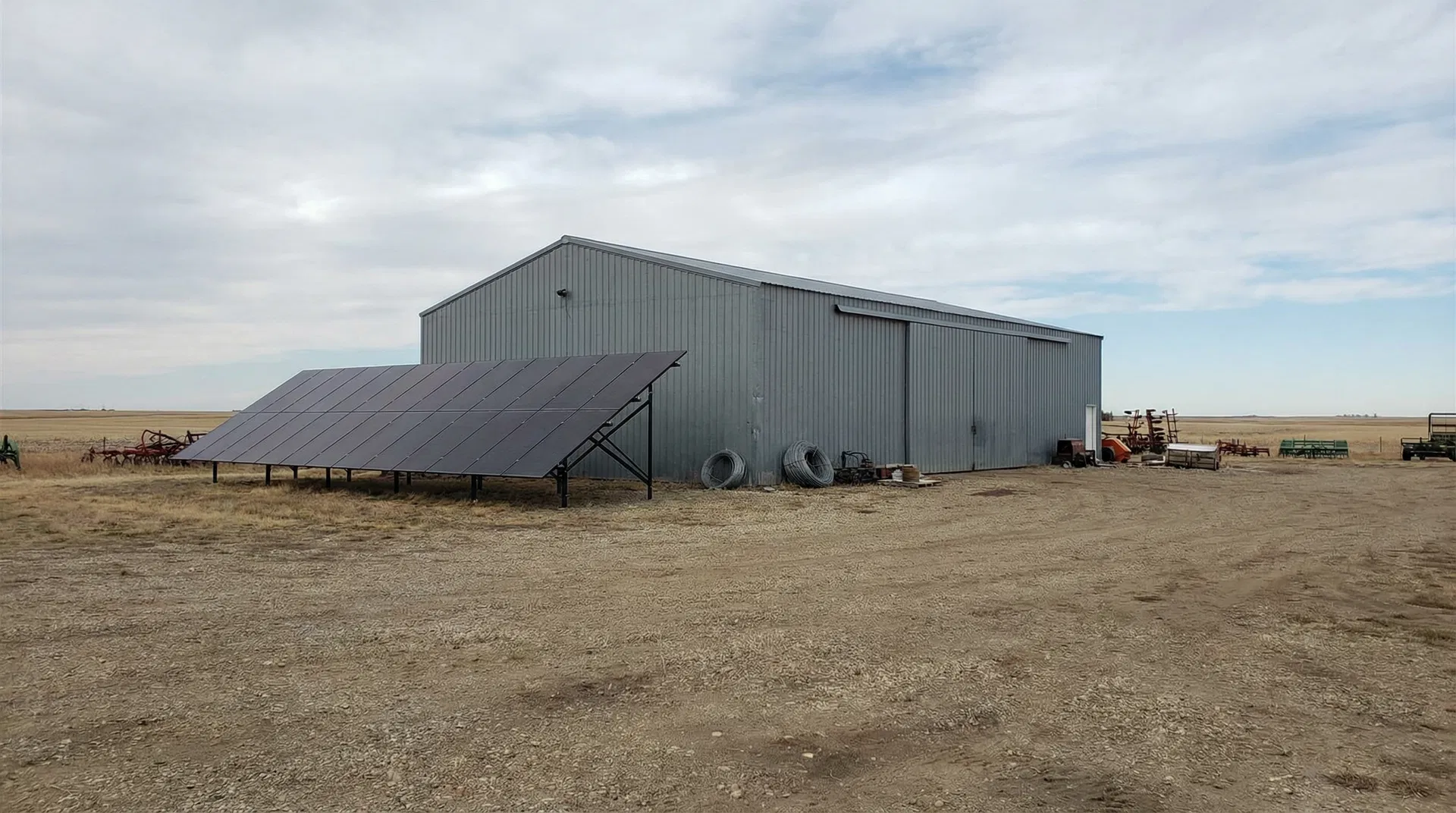
Acreage solar sundre inquiries typically come from property owners carrying loads that a standard residential system won't cover. Our systems for properties in this area run 12-18 kW, with 15 kW being a common target, though the right number always comes from your usage data and site conditions, not a default. We install LONGi solar panels across our acreage builds. LONGi produces a reliable, well-tested panel that holds up in rural Alberta conditions and performs consistently over the system's life. For inverters, we use APsystems microinverters on the majority of our acreage installs. Microinverters operate panel-by-panel, which matters on properties where partial shading from a barn, tree line, or adjacent building affects part of the array. If one panel underperforms, the rest of the system keeps producing at full capacity. That's a meaningful advantage on rural rooftops with complex shade patterns. Rooftop systems work well when you've got usable south-facing pitch and enough unshaded area to hit your target kW. When the roof doesn't cooperate, a ground-mount gives us full control over orientation and tilt without compromising yield. Some acreages end up with a split approach: rooftop panels on the house and a ground-mount near the shop, sized together to cover the full load. We bring both options to every design review so you can make an informed call.
Solar Planning for Sundre Properties
Acreages around Sundre don't run like city lots. You've got a house, likely a heated shop, possibly outbuildings, and maybe water or livestock infrastructure all pulling from the same service. That load profile is fundamentally different from a suburban home, and it changes how a solar system gets designed. A cookie-cutter 8 kW rooftop system won't cut it here. We start by looking at the 12-month usage graph on your most recent power bill. That graph tells us how your consumption shifts across seasons, which is exactly what we need to size a system that actually does its job year-round. FortisAlberta is the wire service for Sundre, and the interconnection process runs through their micro-generation program. We handle that application from design through approval, so you don't have to figure out a utility submission on your own. Properties in this area also vary a lot physically. Some have clear south-facing roof space. Others have mature trees, metal buildings with flat or east-west pitches, or large open yards that make a ground-mount the better call. We design around what your property actually looks like, not what's easiest to install.
Electrical Site Review for Sundre Properties
Voltage Rise
Voltage rise happens when solar generation pushes voltage on the local distribution line above acceptable limits. On rural lines with fewer properties sharing the infrastructure, the distribution conditions can make voltage rise more pronounced than in dense suburban areas. If voltage rise exceeds the utility threshold, your inverters will clip output or shut down to protect grid stability, which directly affects how much of your system's capacity you actually use. We account for local line conditions in our design so the system is sized and configured to stay within those limits.
Single-Phase vs Three-Phase
Rural properties in Alberta can be served by either single-phase or three-phase electrical service, and the distinction matters when selecting inverters and configuring system capacity. Three-phase service is common on properties with larger motors, grain handling equipment, or commercial loads, and it opens up different inverter options than single-phase allows. We confirm your service type during the site review and design the system accordingly so inverter selection and phase balancing are correct from the start.
Panel Infrastructure
Older acreage properties sometimes have main panels that weren't sized for a solar feed-in connection, either because the breaker capacity is already maxed out or because the panel itself is past its useful service life. We assess breaker capacity and panel condition during the site review, looking specifically at whether the panel can safely accommodate the solar backfeed breaker the system requires. If the panel needs an upgrade before we can proceed, we include that in the design scope so there are no surprises during installation.
Service Entrance Review
The service entrance and meter base are what FortisAlberta inspects as part of the micro-generation interconnection process. We check the meter base condition, the service entrance cable, and the overall configuration to confirm it meets FortisAlberta's requirements before we submit the application. If the meter base needs to be upgraded to support bi-directional metering, we identify that early so the work gets scheduled before the utility inspection, not after.
Right-Sizing Solar for Sundre Properties
Acreage systems around Sundre don't get sized the same way a city home does, and they shouldn't. A rural residential property often carries multiple distinct loads: the house itself, a heated shop running on 240V circuits, a garage, water pressure systems, and in some cases irrigation or livestock infrastructure. Stack those together and you've got a usage profile that demands a bigger system than the industry averages assume. That's why we work in the 12-18 kW range for acreage builds here, with 15 kW being a common landing point. But we don't pick a number and reverse-engineer a justification. We pull the 12-month usage graph off your most recent power bill, which shows us how your consumption shifts month by month across the full year. That graph tells us your baseline, your seasonal peaks, and where the system needs to perform hardest. From there, we look at the property layout. A good south-facing metal roof with open sky can host a full rooftop system efficiently. But if the shop roof faces east-west, or the house has significant tree shading from the north or west, a ground-mount often makes more sense. It gives us control over tilt and orientation without fighting the existing structure. Some builds use both: rooftop panels on the main house, a separate ground-mount near the shop, designed together as a single system. We bring both options to the design conversation. What we don't do is apply a one-size approach to a property we haven't assessed.
Typical Load Profiles We Design For Near Sundre
Home Plus Heated Shop
This is the most common profile we see on acreages near Sundre: a residential home combined with a heated shop running 240V circuits for welders, compressors, or woodworking equipment. The shop load pushes total property consumption well above a standard residential baseline. We size the system from the 12-month usage graph on your most recent power bill, which captures both the home load and the shop's seasonal heating demand together.
Home, Shop, and Water Infrastructure
Some acreages add well pumps, pressure tanks, or livestock waterers to the home and shop load, which extends peak draw periods and affects how the 12-month usage graph looks across seasons. A 15-18 kW system is often the right range for this profile, but the actual sizing depends on how those loads overlap throughout the day and year. We work through that layering in the design review before we commit to a panel count or array layout.
Home with Outbuildings and Seasonal Load
Properties that include a main residence, a secondary outbuilding used for storage or seasonal equipment, and a load that spikes in a specific season, like electric heating in winter or irrigation in summer, present a variable profile that simple averages miss. We use the full 12-month usage graph on your most recent power bill to capture those swings rather than designing to the average month, which would leave you undersized during peak periods.
FortisAlberta Interconnection in Sundre
FortisAlberta is the wire service for Sundre and the surrounding area. Any solar system connected to the grid here goes through FortisAlberta's micro-generation application process. That process involves a formal design submission, and the utility reviews it before your system can operate in a grid-tied configuration. We handle the full interconnection package on your behalf. That includes the system design documents, single-line diagrams, and all required application materials. You don't need to navigate FortisAlberta's submission process yourself. What we do need from you is your most recent power bill. It gives us the consumption data we need to size the system accurately, and it also tells us your current account details for the application. Once the application is submitted, FortisAlberta conducts their review. We don't control that timeline, but we submit complete packages the first time to avoid back-and-forth that slows things down. We'll let you know exactly where things stand throughout the process.
Project Economics and Design Review
| System Size | Annual Production | Year 1 Savings | Payback Period |
|---|---|---|---|
| 12-18 kW range, 15 kW typical |
Production, savings, and payback estimates require a property-specific system design and your most recent power bill.
How We Work in Sundre
Bill and Load Review
We review your power bill to understand your energy use in Sundre and size the system to your actual consumption — not a generic estimate.
Site Assessment
We assess your roof or ground area, south-facing exposure, electrical service, and utility interconnection requirements specific to your property.
Design and Utility Application
We produce a system layout, production estimate, and cost summary, then submit your micro-generation application to your utility on your behalf.
Installation and Commissioning
Our crew installs racking, panels, inverter, and electrical connections. All work is performed by licensed electricians. We commission and test before handoff.
Current Program and Interconnection Review
Utility connection review
FortisAlberta reviews grid connection applications for properties in the Sundre area under their micro-generation program. Range Road Solar prepares and submits the full design package on your behalf, including all documentation FortisAlberta requires for their review. We don't ask you to navigate the utility submission process yourself.
Current program review
Residential, acreage, and farm properties may have access to provincial or federal programs depending on their classification and the rules in effect at design time. We review current eligibility during the design process rather than making assumptions about what applies to your property. Rules change, and we confirm what's actually available when your project is being built.
Frequently Asked Questions
Get a Solar Assessment for Sundre
Submit a recent power bill and we will review your consumption and provide an honest assessment for your Sundre property. No obligation.
(587) 330-7502 Book a Call