Mountain View County · Commercial solar
Commercial Solar in Sundre, AB
Range Road Solar designs and installs commercial solar systems from 15 to 100 kW for Sundre businesses, farms, and mixed-use properties on FortisAlberta's distribution network.
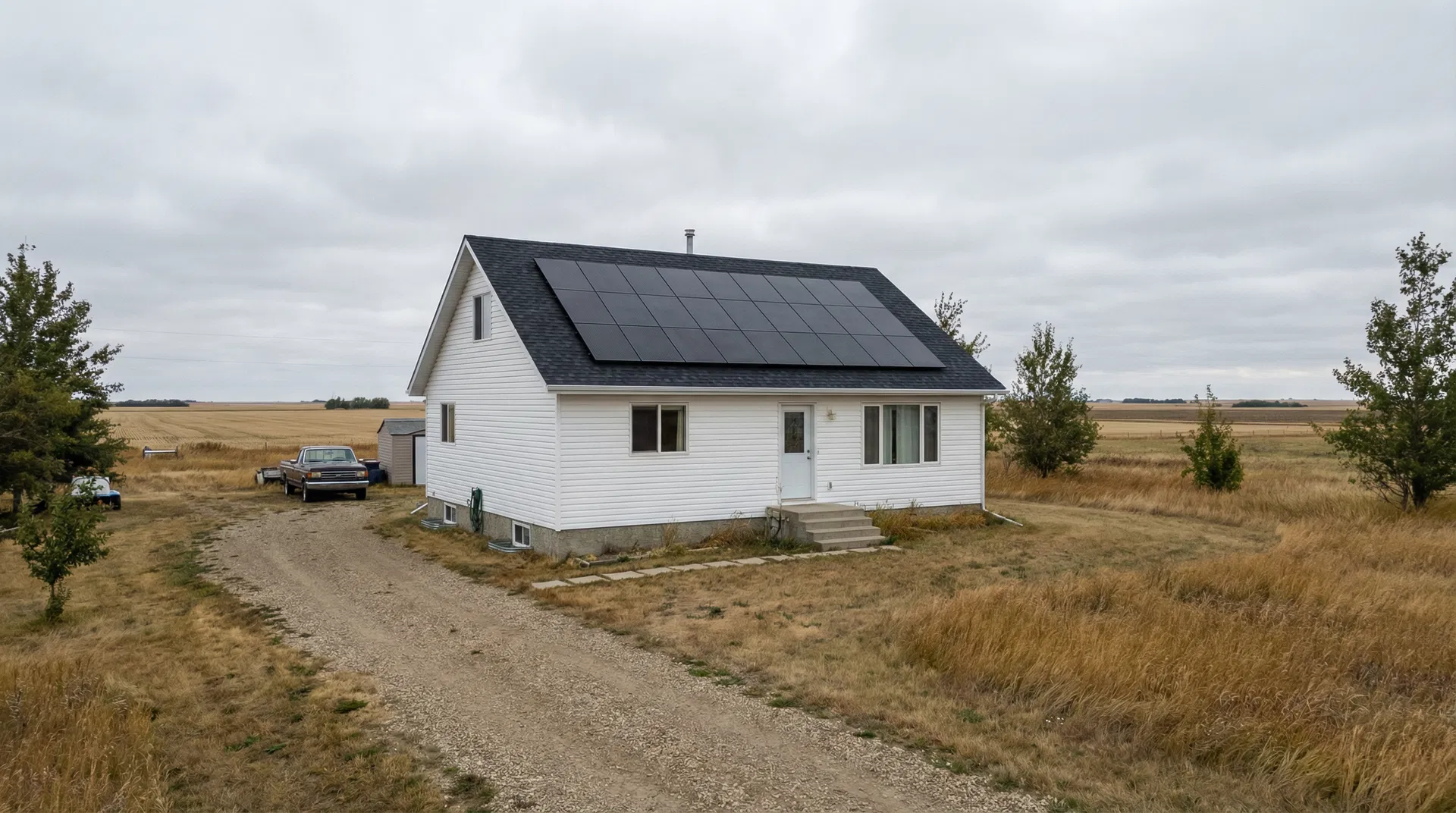
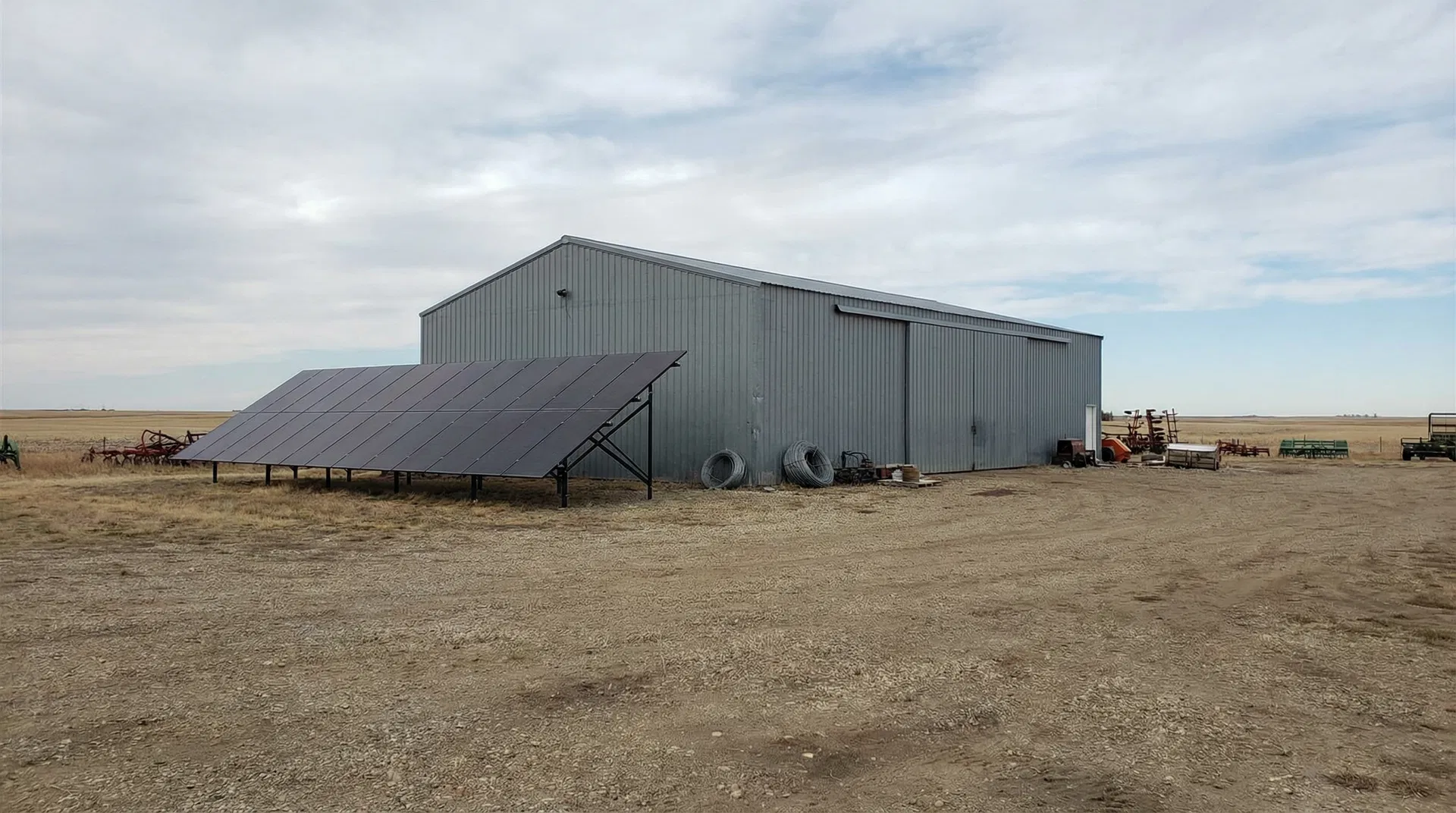
Commercial solar sundre projects we take on range from 15 kW up to 100 kW, with a typical install landing around 30 kW depending on the load profile and available mounting area. Every system uses LONGi panels, which are a proven module choice for Alberta's climate conditions and commercial warranty requirements. For systems in the 15-25 kW range, APsystems microinverters are often the right call. They eliminate single points of failure, allow panel-level monitoring, and handle mixed-orientation arrays well, which is common when you're working with commercial rooftops that don't all face the same direction. For larger systems pushing 50 kW and above, string inverters are typically the more practical architecture. They're easier to maintain at scale and better matched to the higher-current demands of a large commercial array. Businesses operating on FortisAlberta's distribution network near Sundre are eligible to apply for micro-generation status, which means surplus production offsets your billing rather than disappearing into the grid without credit. The CT ITC, the Canada Revenue Agency's capital cost allowance incentive for clean technology, is also worth reviewing with your accountant. We don't provide tax advice, but we can flag it as a conversation to have. Most commercial rooftops and yard areas we assess in this part of Alberta have usable south and west exposure. Whether that translates into a roof-mount, a ground-mount in the yard, or both depends entirely on the site. We'll tell you what the numbers actually look like after the design review, not before.
Solar Planning for Sundre Properties
Commercial properties in and around Sundre carry loads that most residential systems aren't built to handle. Shops with three-phase equipment, refrigerated storage, grain handling, irrigation pumps, and heated outbuildings all stack onto a single utility account. That's a fundamentally different design problem than a house with a furnace and a few appliances. FortisAlberta is the wire service for the area, and the micro-generation framework it operates under is what allows commercial customers to send surplus generation back to the grid and offset future billing. The application process has specific technical requirements, and getting the interconnection package right from the start avoids delays. We don't quote systems off rule-of-thumb numbers. A commercial install starts with your most recent power bill and a site walkthrough. The 12-month usage graph on that bill tells us how your load behaves across seasons, and the site visit tells us what's actually available for mounting, whether that's rooftop square footage, a south-facing ground area, or a combination of both. That's how we size accurately rather than over-promising and under-delivering.
Electrical Site Review for Sundre Properties
Voltage Rise
Voltage rise occurs when a solar system pushes current back up a distribution line that's already operating near its voltage ceiling. In rural areas where distribution lines run long distances with relatively few customers sharing the load, this effect can be more pronounced than in dense urban grids. If voltage rise limits aren't respected in the system design, the inverters will clip output to stay within safe operating range, which reduces what the system actually produces.
Single-Phase vs Three-Phase
Commercial and farm properties in rural Alberta can be served by either single-phase or three-phase service, and the distinction matters for inverter selection and how large a system can practically be built. A three-phase service allows for larger system capacities and matches better with commercial equipment loads like grain augers, compressors, or irrigation pumps. Single-phase properties aren't excluded from commercial solar, but the inverter architecture and system sizing decisions look different.
Panel Infrastructure
Older electrical panels on rural commercial properties often weren't sized with solar backfeed in mind, and breaker capacity can be a limiting factor when adding a system of 15 kW or more. We assess the panel's available capacity and the age of the breaker infrastructure during the site review. If the existing panel can't safely support the system, we'll identify what an upgrade involves before the project moves forward, so there are no surprises mid-install.
Service Entrance Review
FortisAlberta's micro-generation application requires that the meter base and service entrance meet current utility standards. If the existing meter base is an older socket type or shows signs of wear, FortisAlberta may require an upgrade before the interconnection application can be approved. We check the service entrance condition during the site review and flag any required upgrades early so they're factored into the project plan rather than discovered during the utility review.
Right-Sizing Solar for Sundre Properties
Commercial and farm properties in this part of Alberta often carry multiple independent loads running simultaneously. A shop with welding equipment and compressors, a heated office, refrigerated coolers, an irrigation pump, and grain handling equipment can all sit on one utility account. That stacked load profile is why commercial systems in the 15-100 kW range are the norm here, not the exception. Roof versus ground-mount isn't always obvious. A large commercial building with a clean south-facing metal roof is usually a roof-mount candidate. But if the roof has mechanical equipment blocking good sections, if it's multi-pitch with shading from parapets or adjacent structures, or if there's a clear open area in the yard with better orientation, ground-mount can produce a stronger result. Sometimes a split approach works best, using whatever roof area makes sense and filling in the rest with a ground array. We size every system from the 12-month usage graph on your most recent power bill. That graph shows how your consumption shifts between seasons, which is the right input for a commercial system where summer and winter loads can look completely different. Rule-of-thumb sizing, like estimating from square footage or a rough monthly average, leads to systems that are either too small to make a real dent or oversized relative to what the utility will credit. We provide honest production estimates based on your actual power bills and site conditions, not inflated projections. The design review is where the real numbers come together.
Typical Load Profiles We Design For Near Sundre
Commercial Shop with Office
A heated shop running 3-phase equipment alongside a climate-controlled office space typically sees heavy daytime draws from compressors, lighting, and HVAC year-round. Because most of that consumption happens during business hours, solar offsets align reasonably well with when the loads actually run. We size from the 12-month usage graph to account for seasonal variation in heating demand, not just the average monthly figure.
Agricultural Operation with Grain Handling
Grain handling facilities carry significant seasonal peak loads during harvest when augers, dryers, and conveyors run extended hours. A system designed for this profile needs to reflect what the load looks like across the full year, not just the peak months. Your most recent power bill and a site walkthrough give us the data to size a system that works outside of harvest as much as it works during it.
Small Business with Refrigeration
Properties running commercial refrigeration, like cold storage, food processing, or retail with large cooler banks, carry a relatively consistent daytime load that suits solar well. Refrigeration doesn't turn off in winter, which means the sizing conversation includes what the system contributes during shorter winter days, not just the summer peak. We work through that with the usage graph before committing to a panel count or inverter configuration.
FortisAlberta Interconnection in Sundre
FortisAlberta is the wire service for Sundre. Any commercial solar system installed here goes through FortisAlberta's micro-generation interconnection process before it can export to the grid. That process involves a formal application, a technical design package, and a review of your existing service entrance and metering infrastructure. FortisAlberta sets the technical requirements, and the application needs to meet them before an interconnection agreement is issued. Missing documentation or undersized service infrastructure are the most common reasons applications slow down. Range Road Solar handles the interconnection application on your behalf. We prepare the design package to FortisAlberta's current specifications and coordinate the submission. You won't be left figuring out the utility paperwork on your own. What we can't do is control FortisAlberta's internal review timeline, so we build the application process into our project schedule from day one rather than treating it as an afterthought.
Project Economics and Design Review
| System Size | Annual Production | Year 1 Savings | Payback Period |
|---|---|---|---|
| 15-100 kW range, 30 kW typical |
Production, savings, and payback estimates require a property-specific design review and your most recent power bill before any figures can be confirmed.
How We Work in Sundre
Bill and Load Review
We review your power bill to understand your energy use in Sundre and size the system to your actual consumption — not a generic estimate.
Site Assessment
We assess your roof or ground area, south-facing exposure, electrical service, and utility interconnection requirements specific to your property.
Design and Utility Application
We produce a system layout, production estimate, and cost summary, then submit your micro-generation application to your utility on your behalf.
Installation and Commissioning
Our crew installs racking, panels, inverter, and electrical connections. All work is performed by licensed electricians. We commission and test before handoff.
Current Program and Interconnection Review
Utility connection review
FortisAlberta reviews all micro-generation interconnection applications for commercial properties in Sundre and the surrounding service territory. Range Road Solar prepares the full design package to FortisAlberta's current technical specifications and handles the application submission on your behalf. We don't leave you to navigate the utility process independently.
Current program review
Commercial, farm, and mixed-use properties may be eligible for federal or provincial programs that affect project economics. Eligibility rules and program availability change, so we review what applies to your specific situation at design time rather than assuming a generic answer. Your accountant should be part of any conversation about tax-related incentives like the CT ITC.
Frequently Asked Questions
Get a Solar Assessment for Sundre
Submit a recent power bill and we will review your consumption and provide an honest assessment for your Sundre property. No obligation.
(587) 330-7502 Book a Call