Mountain View County · Farm and agricultural solar
Farm Solar in Sundre, AB for Agricultural Properties
Range Road Solar designs and installs 20-50 kW solar systems for farms and acreages near Sundre, Alberta. Sized from your actual loads, not rule-of-thumb estimates.
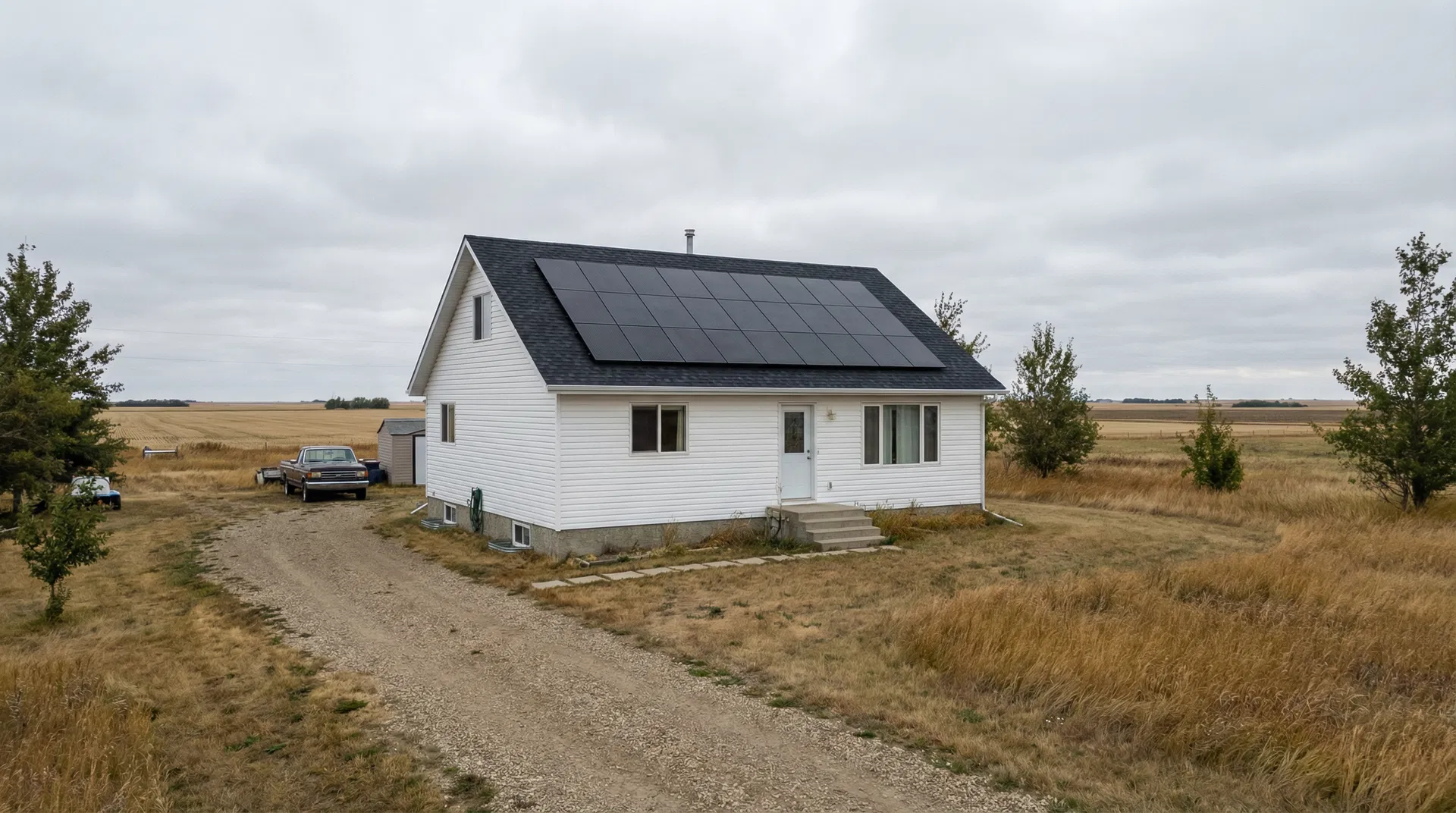
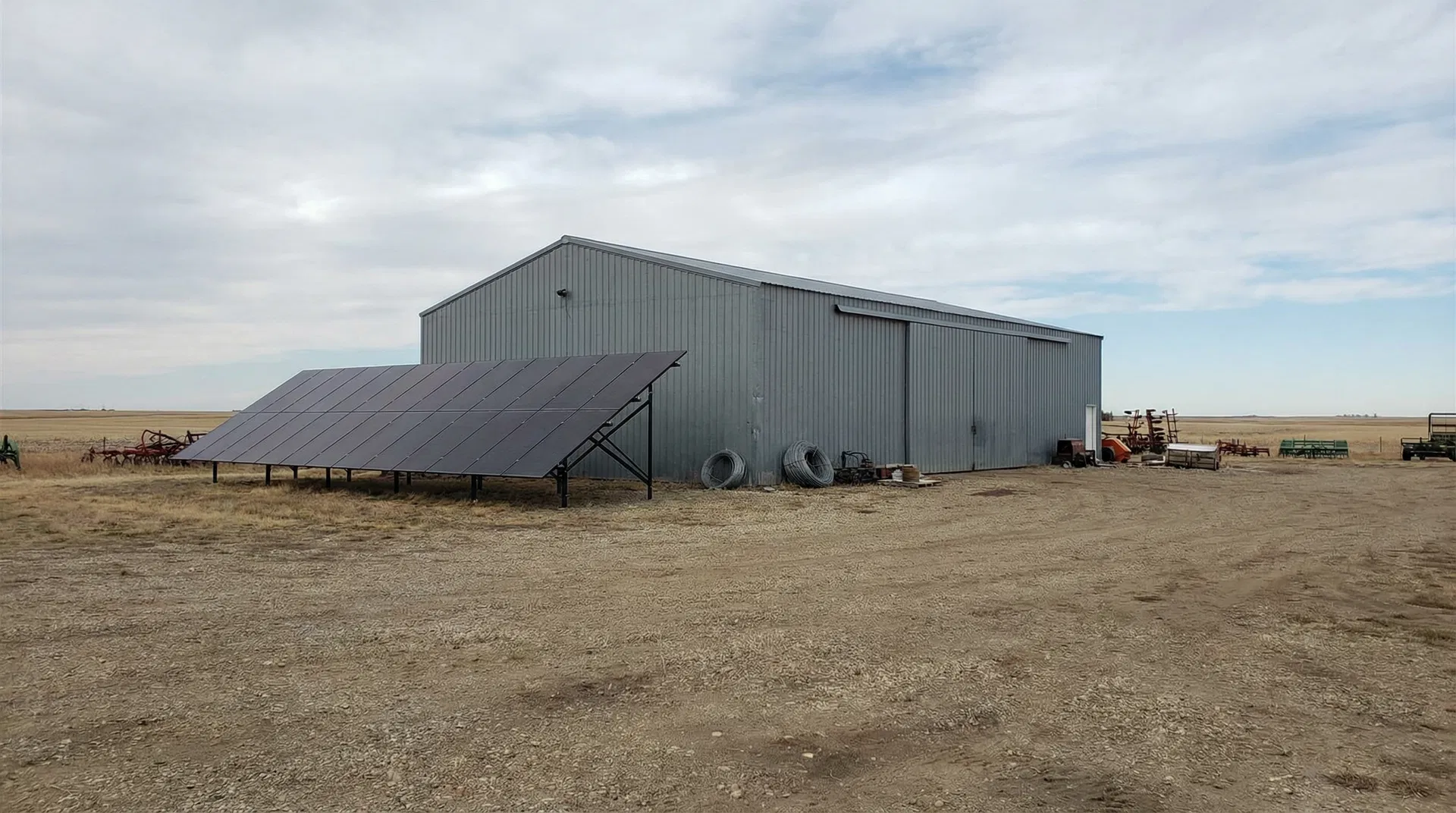
Farm solar Sundre inquiries almost always start with the same question: how big does the system need to be? The answer comes from your power bill and your site, not a brochure. For most agricultural properties in this area, systems fall in the 20-50 kW range. A 25 kW system is common for a mid-sized operation running a home plus a heated shop. Larger grain operations or properties with irrigation equipment often push toward the upper end of that range. We build the system to match what's actually on the property. We install LONGi panels on all of our farm systems. They're reliable, widely supported, and hold up to the kind of weather this part of Alberta sees. For larger farm arrays, we default to ground-mount racking. Rooftop installs work well on newer machine sheds with good south-facing pitch and minimal shading, but a ground-mount gives us full control over orientation, tilt, and row spacing without being constrained by an existing structure. For inverters, we use APsystems microinverters. On a farm system where panels can be spread across multiple rows or structures, microinverters mean one shaded or underperforming panel doesn't drag down the whole array. Each panel operates independently, which matters on a property where a grain bin shadow or a tree line might catch part of the array at certain times of day. Every install includes the full electrical review: panel capacity, service entrance condition, phase service, and voltage rise assessment. We don't quote a system size until we know the site.
Solar Planning for Sundre Properties
Farm properties in this part of Alberta carry electrical loads that most urban solar installers aren't designed to handle. A working farm isn't just a house on a big lot. It's a home, a heated shop, outbuildings, water systems, and sometimes grain handling or irrigation equipment all drawing from the same service. Those loads stack up, and a system sized only for the house misses most of the picture. Sundre sits in FortisAlberta territory, which means your interconnection application goes through their micro-generation program. We handle that paperwork directly, so you're not navigating utility rules on your own. We size every system from the 12-month usage graph on your most recent power bill. That graph shows seasonal swings, peak months, and whether your loads are concentrated in winter, summer, or both. A site visit confirms roof orientation, available ground space, shading from trees or buildings, and what your electrical infrastructure can support. Nothing gets assumed. We provide honest production estimates based on your actual power bills and site conditions, not inflated projections.
Electrical Site Review for Sundre Properties
Voltage Rise
Voltage rise happens when a solar system pushes power back onto the distribution line and raises local voltage above acceptable limits. On rural distribution lines that serve a small number of properties over long spans, this effect can be more pronounced than in dense urban areas. When voltage rise is a factor, it can cause inverters to clip output or shut down, which affects how large a system FortisAlberta will approve for a given service point.
Single-Phase vs Three-Phase
Rural properties near Sundre may be served by either single-phase or three-phase electrical service, depending on what FortisAlberta has extended to that part of the distribution network. This matters because three-phase service allows for larger inverter configurations and higher system capacity without the balancing constraints that come with single-phase. We confirm the phase service at your property before finalizing inverter selection and system sizing.
Panel Infrastructure
Older farm properties often have main panels that were sized for the loads of a different era, before heated shops and modern grain handling equipment became common. We assess breaker capacity and panel age during the site review to confirm the existing infrastructure can support a solar system safely. If the panel doesn't have the capacity or the breaker slots required, we'll identify what an upgrade involves before any equipment is ordered.
Service Entrance Review
The service entrance and meter base condition are reviewed as part of every FortisAlberta interconnection application. FortisAlberta requires that the meter base meet current standards before a micro-generation connection is approved. If the meter base needs an upgrade, we identify that early in the process so it can be addressed before the application is submitted, not after.
Right-Sizing Solar for Sundre Properties
Farm and agricultural properties carry a different electrical footprint than a residential lot. You're not sizing for a single house. You're sizing for a house, a heated shop, a well pump, outbuildings, and potentially grain drying or irrigation equipment running at the same time. Each of those loads contributes to your monthly consumption, and a system that only addresses one of them leaves most of your bill untouched. The roof-versus-ground-mount decision usually answers itself once we look at the property. A newer machine shed with a clean south-facing roof and no shading is a reasonable rooftop candidate. But a lot of farm roofs have obstructions: vents, skylights, or shade from adjacent bins and buildings that cut available panel space significantly. When that's the case, a ground-mount gives us the flexibility to orient the array correctly and spread it across open yard space without compromising output. We don't size systems from a square footage estimate or a rule of thumb. We start from the 12-month usage graph on your most recent power bill. That graph shows exactly how your consumption moves across the year, which months are your highest-draw periods, and whether the pattern is driven by heating loads, summer equipment, or both. Combine that with a site visit to confirm shading, orientation, and electrical infrastructure, and we've got what we need to build a system that actually fits the property. You won't need to dig up old records. Your most recent bill has the history we need.
Typical Load Profiles We Design For Near Sundre
Home + Heated Shop
This is the most common profile we see on mixed-use agricultural properties: a residence plus a shop with in-floor heat, a welder, and a compressor running through the winter months. The shop load often exceeds the house load in peak months, which shifts the system size well above what a residential-only design would suggest. We pull the combined load history from the 12-month usage graph on your most recent power bill and size the array to address both structures.
Grain Operation with Drying Equipment
Grain drying creates concentrated, high-draw usage periods that are distinct from typical residential or shop loads. A property running a grain dryer through harvest sees a spike in consumption that a system sized only for average monthly use won't address well. We design for the full seasonal pattern, including peak harvest months, so the system is genuinely useful during the periods when your bill is highest.
Livestock Operation with Water and Lighting Loads
Livestock operations often have continuous low-level loads: water heaters, barn lighting, ventilation fans, and freeze protection running around the clock through the winter. That baseline load doesn't look dramatic on a single bill, but it adds up across 12 months. A 20-30 kW system sized against that consistent annual draw can offset a meaningful portion of total consumption without being oversized for what the property actually uses.
FortisAlberta Interconnection in Sundre
Sundre falls under FortisAlberta's distribution network. Any solar system connected to the grid here goes through FortisAlberta's micro-generation application process. That process involves a technical review of your proposed system, your meter base, and your service entrance before approval is granted. Range Road Solar prepares and submits the full interconnection package on your behalf. That includes the single-line diagram, equipment specifications, and any supporting documentation FortisAlberta requires. You don't need to deal with the utility directly. Farm systems in the 20-50 kW range trigger a more detailed technical review than a small residential install would. FortisAlberta assesses the impact on the local distribution line, which can affect final system sizing and inverter configuration. We account for that early in the design process so there are no surprises at the application stage. What the utility ultimately approves, and on what timeline, depends on current grid conditions and internal review processes that we can't control. What we can control is making sure the application package is complete and technically accurate the first time.
Project Economics and Design Review
| System Size | Annual Production | Year 1 Savings | Payback Period |
|---|---|---|---|
| 20-50 kW range, 25 kW typical |
Production, savings, and payback estimates require a property-specific design and your most recent power bill.
How We Work in Sundre
Bill and Load Review
We review your power bill to understand your energy use in Sundre and size the system to your actual consumption — not a generic estimate.
Site Assessment
We assess your roof or ground area, south-facing exposure, electrical service, and utility interconnection requirements specific to your property.
Design and Utility Application
We produce a system layout, production estimate, and cost summary, then submit your micro-generation application to your utility on your behalf.
Installation and Commissioning
Our crew installs racking, panels, inverter, and electrical connections. All work is performed by licensed electricians. We commission and test before handoff.
Current Program and Interconnection Review
Utility connection review
FortisAlberta reviews all grid connection applications for properties in the Sundre area before a solar system can be energized. Range Road Solar prepares the full design package and submits it on your behalf. We handle the technical documentation so the application is complete and accurate when it lands with the utility.
Current program review
Farm and agricultural solar installs may be eligible for commercial or agricultural programs depending on your property structure and how the system is classified. Eligibility rules and program availability change, and what applied to a neighbour's install two years ago may not apply today. We review current options against your specific situation at design time.
Frequently Asked Questions
Get a Solar Assessment for Sundre
Submit a recent power bill and we will review your consumption and provide an honest assessment for your Sundre property. No obligation.
(587) 330-7502 Book a CallRelated Resources