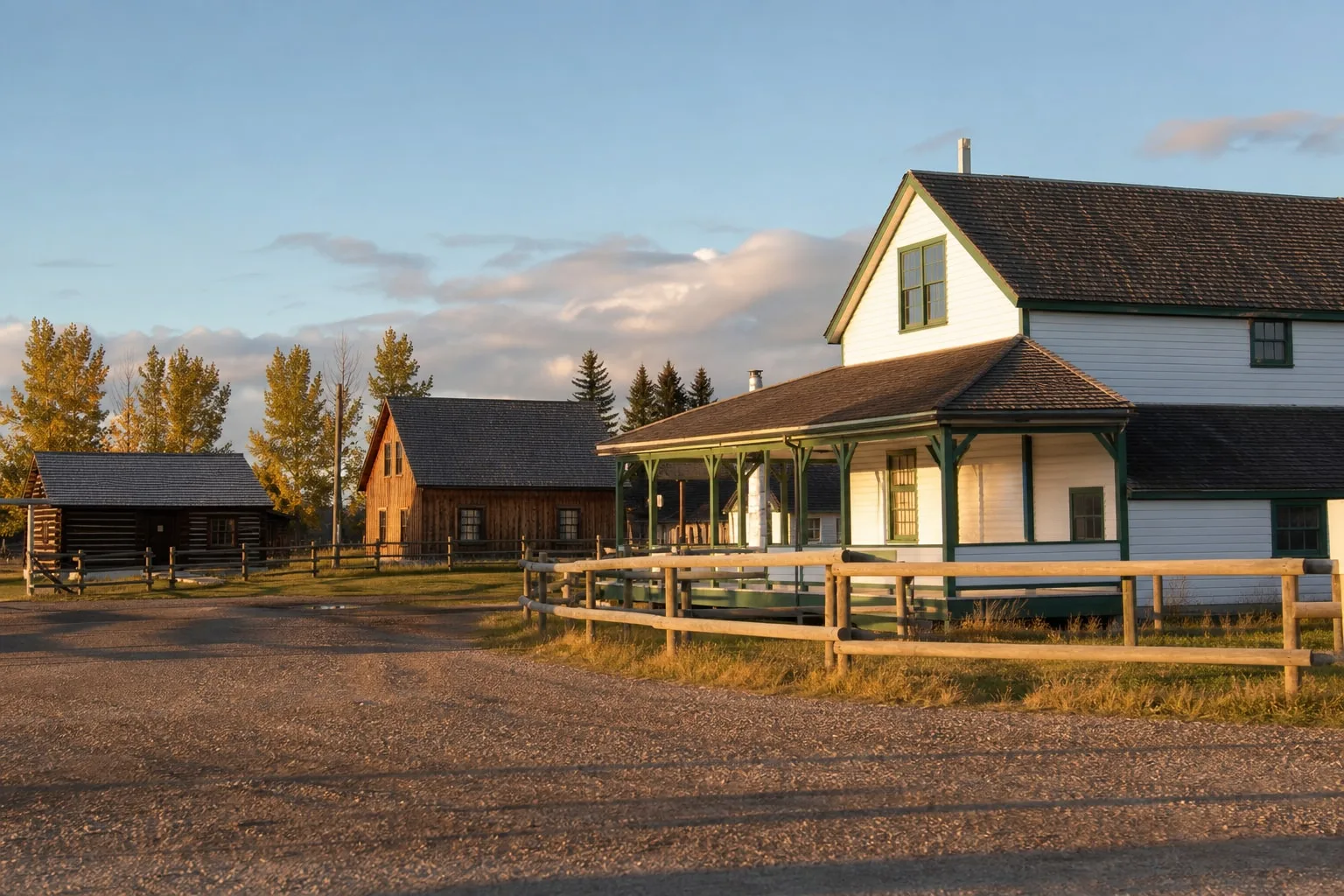
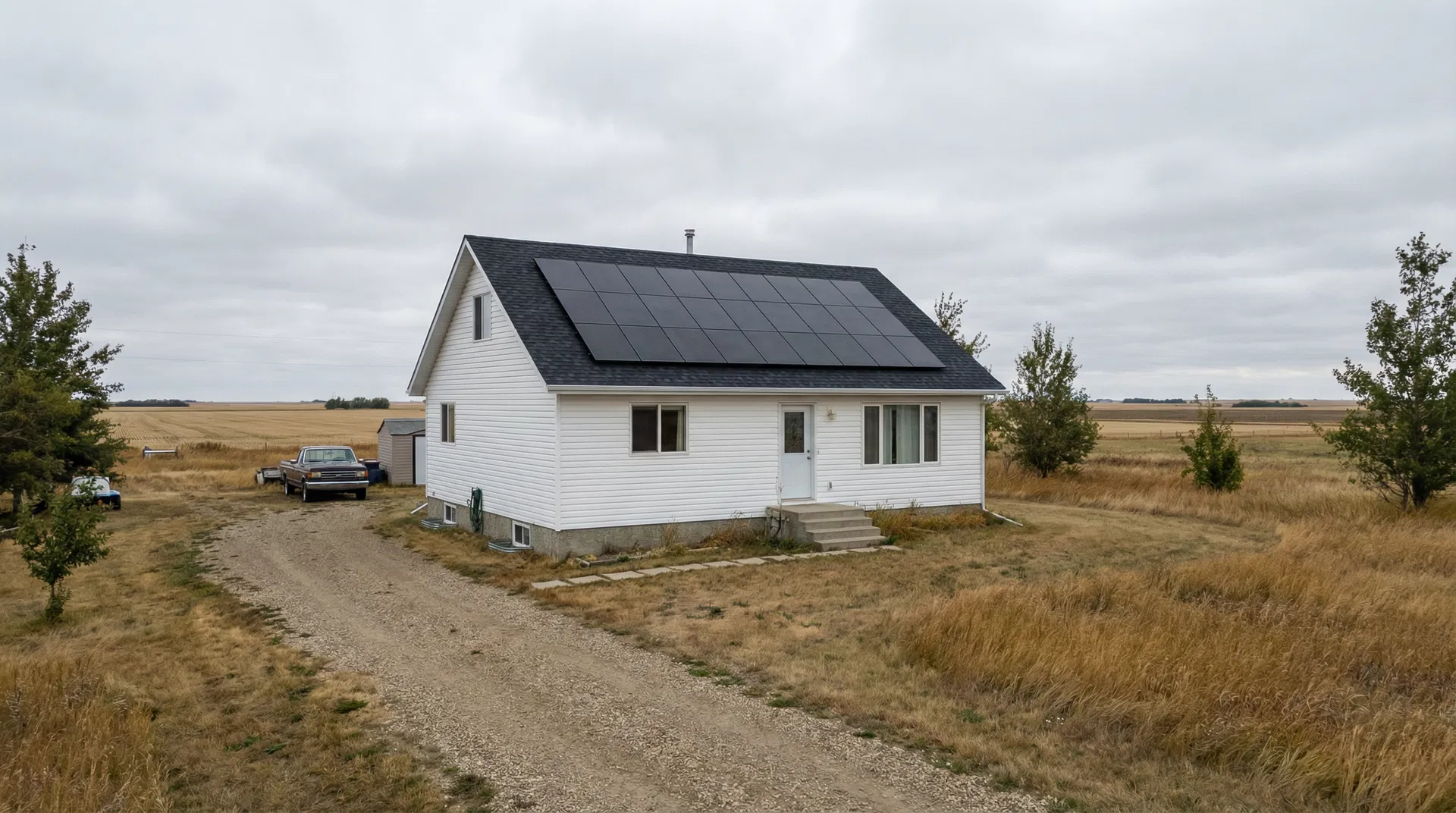
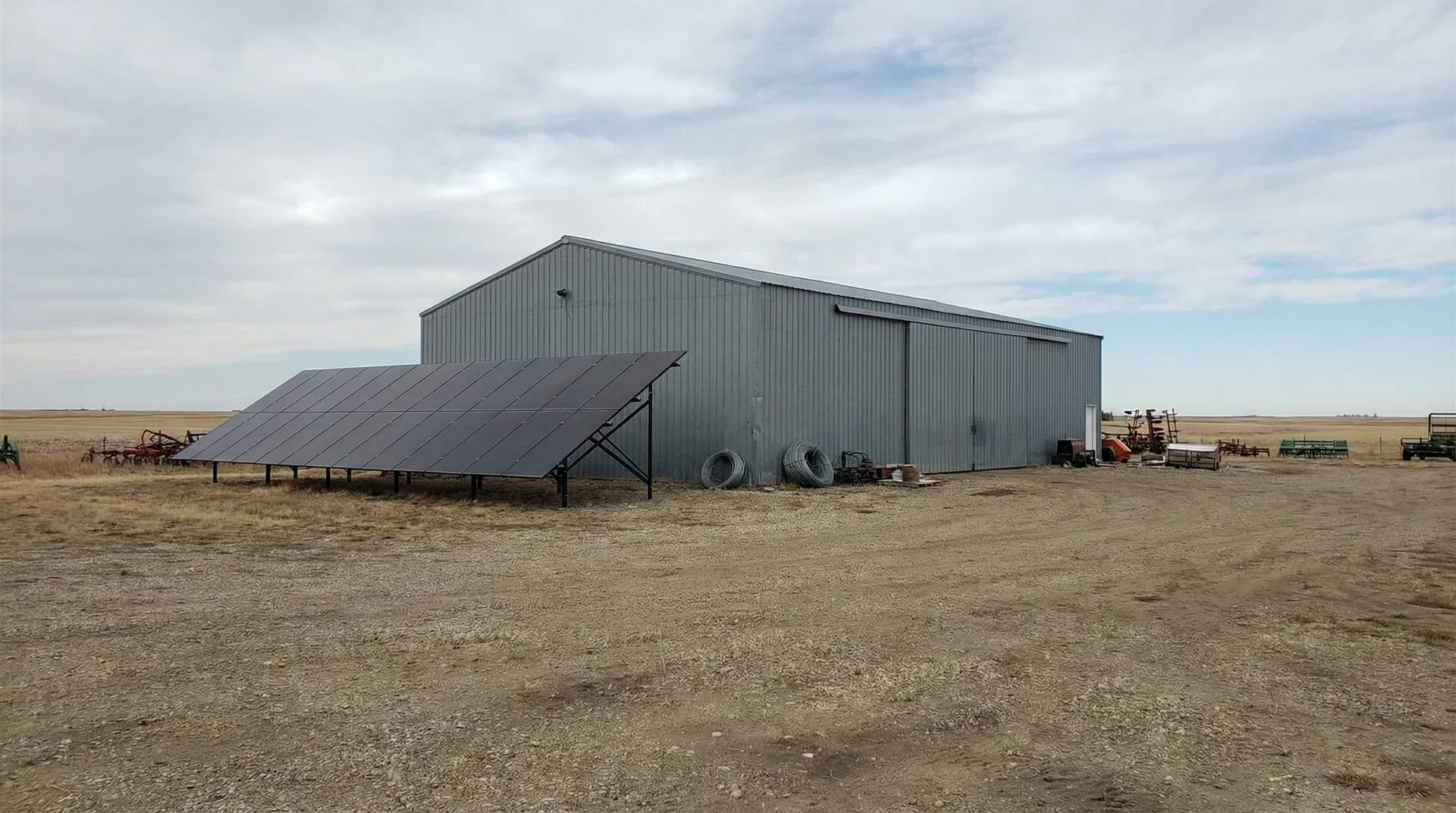
Solar Sundre installations generally fall into two categories: in-town residential roofs and acreage properties with a house plus a shop or outbuilding pulling extra load. Range Road Solar handles both end to end, from the first site visit through FortisAlberta interconnection. Every system we install uses LONGi panels for the array and APsystems microinverters instead of a single string inverter. On a roof with multiple shaded sections, hip angles, or dormers, that per-panel microinverter setup means one shaded or underperforming panel doesn't drag down the whole string, which matters more on older in-town homes with chimneys or mature trees than it does on a clear-span shop roof. For ground-mount installs, common on acreages with open yard space and poor roof orientation, we build a dedicated rack system sized to the same LONGi modules, oriented and tilted for the specific site rather than whatever pitch the existing roof happens to have. We size every system, residential or farm, from the 12-month usage graph on your most recent power bill rather than a generic per-square-foot rule, because a house with electric heat or a well pump draws very differently from one without. Breaker capacity, panel age, and service type, single-phase or three-phase, all get checked on-site before we finalize a design, and if the existing electrical service can't support the array we spec, we'll say so and scope the upgrade as part of the proposal, not as a surprise after the fact.
Solar Planning for Sundre Properties
Sundre, Alberta sits in Mountain View County, with a population of roughly 2,672 and an economy built around forestry, agriculture, and petroleum. Sundre Forest Products, a West Fraser mill, is one of the larger employers in the area, and it shapes the kind of property Range Road Solar sees most often here: working acreages with a house, a shop, and sometimes equipment sheds, alongside in-town lots with standard asphalt roofs. We don't plan a system off a regional average. Environment Canada's long-term climate normals list 2,396.3 hours of bright sunshine a year at the nearest station with a full normal period, Calgary International Airport, which we treat as a general regional reference point, not a promise for any specific roof. What actually drives a design here is your roof or ground-mount orientation, any shading from trees or outbuildings, your service type, and the 12-month usage graph on your most recent power bill. Range Road Solar confirms expected output and system size through that design review, not a brochure number. Whether you're inside town limits or out on an acreage bordering the county, the questions we ask and the equipment we spec, LONGi panels and APsystems microinverters, stay the same.
Electrical Site Review for Sundre Properties
Voltage Rise
Voltage rise happens when a solar inverter pushes power back through a service conductor, raising the voltage at the point of connection above what the grid delivers. Rural distribution lines tend to run longer with more transformer spacing than in-town feeders, which can make voltage rise more of a factor on some properties than others. We check conductor length and transformer distance during the site visit, since a tighter voltage rise margin can mean an inverter needs to clip output or a system needs to be sized down from what the roof could otherwise hold.
Single-Phase vs Three-Phase
Properties here run on either single-phase or three-phase electrical service, and which one you have affects both inverter selection and how much system capacity we can connect. Many in-town homes and smaller shops run single-phase, while larger farm operations and some commercial buildings run three-phase to handle heavier motor loads. We confirm your service type on-site before finalizing a design, since an inverter spec'd for the wrong phase configuration simply won't work.
Panel Infrastructure
A lot of rural properties are still running on an electrical panel that's decades old, sized for the loads of a different era rather than a house, shop, and solar array combined. We check breaker capacity, panel age, and busbar rating during the site visit to confirm it can handle the added generation without exceeding code limits. If the panel can't support the system, an upgrade gets scoped into the proposal upfront, covering a new panel and breaker, not discovered as a change order mid-install.
Service Entrance Review
The service entrance and meter base are where your property physically connects to FortisAlberta's grid, and their condition matters because FortisAlberta reviews that connection point as part of the micro-generation application. We check the meter base for age, rating, and whether it's set up to accept bi-directional metering equipment. If the service entrance needs an upgrade to meet current standards, we'll scope it as part of the project so the interconnection application isn't held up later.
Right-Sizing Solar for Sundre Properties
Rural Alberta properties typically need a bigger system than a comparable in-town house, simply because there's more to power: a home plus a heated shop, maybe a well pump, grain dryer, or irrigation setup, all pulling from the same service. That's part of why the typical system range for this service runs 8 to 15 kW rather than the smaller systems common on a standalone urban rooftop. Roof versus ground mount is a real decision, not a default. A roof with good south or west exposure and no shade from trees or outbuildings is often the simpler and cheaper option. But if the roof is shaded, pitched wrong, broken up by dormers and vents, or there's just more usable open yard than usable roof space, a ground-mount array on a dedicated rack can outperform a compromised roof installation, and it's common on acreages with room to spare. Either way, we don't size a system off a rule-of-thumb number like watts per square foot of roof or a flat per-person estimate. We size it from the 12-month usage graph printed on your most recent power bill, which shows how your actual draw moves across the year, paired with a site visit to confirm orientation, shading, and service capacity. That combination, your bill and your site, is what turns into a system size and layout, not a generic estimate applied to every property that looks similar from the road.
Typical Load Profiles We Design For Near Sundre
Home + Heated Shop
This is the most common rural load profile we see: a house plus a detached shop with electric heat, a welder, and maybe a compressor or block heaters running through winter. We pull the 12-month usage graph from your most recent power bill to see how much that shop adds on top of normal household draw, since a shop running occasional heavy tools looks very different from one running a space heater around the clock.
Farm Operation with Grain Handling
Grain dryers, augers, and bin fans create short, heavy load spikes rather than steady background draw, and that spiking pattern matters as much as total usage when we're sizing a system and picking inverter capacity. We look at how those loads show up on your power bill's usage history and design around the pattern, not just a monthly total.
Acreage with Irrigation or Well Pump
A well pump or irrigation system adds a load that's intermittent but can be substantial when it's running, especially on a property pulling water for livestock or crops. We size for that pattern using your site visit and most recent power bill rather than assuming a flat daily draw, since a pump that runs for twenty minutes a few times a day behaves very differently from continuous household load.
FortisAlberta Interconnection in Sundre
FortisAlberta is the wire service that distributes electricity to properties here. Any grid-connected solar system needs an interconnection application submitted to FortisAlberta before it can be energized, covering everything from the inverter's technical specs to the point of common coupling at your meter base. Range Road Solar prepares and submits that application as part of the project, so you're not the one tracking down single-line diagrams or equipment data sheets. We also coordinate the site-specific details FortisAlberta asks for: service entrance condition, meter base type, and whether your existing panel can support the added generation capacity. Rules and requirements get confirmed against FortisAlberta's current standards at the time of your design review rather than assumed from a past project, since utility requirements do change. If anything about your service, whether it's single-phase, three-phase, overhead, or underground, needs attention before an application can go in, we'll flag it during the site visit rather than after submission.
Project Economics and Design Review
| System Size | Annual Production | Year 1 Savings | Payback Period |
|---|---|---|---|
| 8-15 kW range, 10 kW typical |
Actual production, savings, and payback depend on a property-specific design review and your most recent power bill, not a generic estimate.
How We Work in Sundre
Bill and Load Review
We review your power bill to understand your energy use in Sundre and size the system to your actual consumption, not a generic estimate.
Site Assessment
We assess your roof or ground area, south-facing exposure, electrical service, and utility interconnection requirements specific to your property.
Design and Utility Application
We produce a system layout, production estimate, and cost summary, then submit your micro-generation application to your utility on your behalf.
Installation and Commissioning
Our crew installs racking, panels, inverter, and electrical connections. All work is performed by licensed electricians. We commission and test before handoff.
Current Program and Interconnection Review
Utility connection review
FortisAlberta reviews every new grid-connection application for micro-generation systems like residential and farm solar. Range Road Solar prepares the full design package, including inverter specs and single-line diagrams, and submits it on your behalf so you're not navigating that process solo.
Current program review
Residential, farm, and commercial solar projects are each reviewed against whatever incentive, tax, and eligibility rules are current at the time of your design, since those rules shift. We check eligibility for your specific property type and use case during that review rather than assuming last year's rules still apply.
Frequently Asked Questions
Get a Solar Assessment for Sundre
Submit a recent power bill and we will review your consumption and provide an honest assessment for your Sundre property. No obligation.
(403) 367-5999 Book a Call