Mountain View County · Shop and outbuilding solar
Shop and Outbuilding Solar in Sundre, AB
Grid-tied solar for rural shops, barns, and outbuildings near Sundre. FortisAlberta interconnection handled from design to approval.
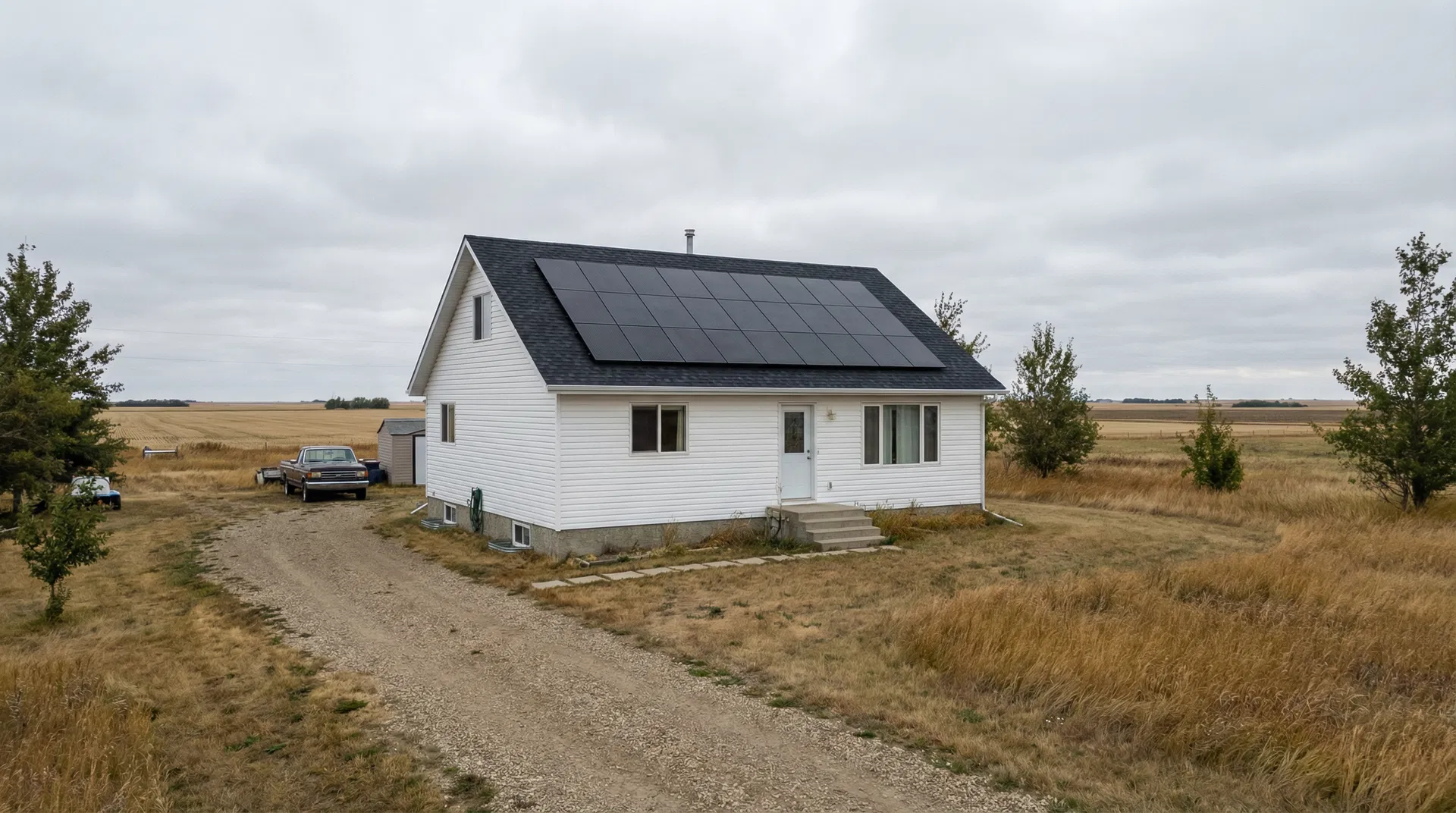
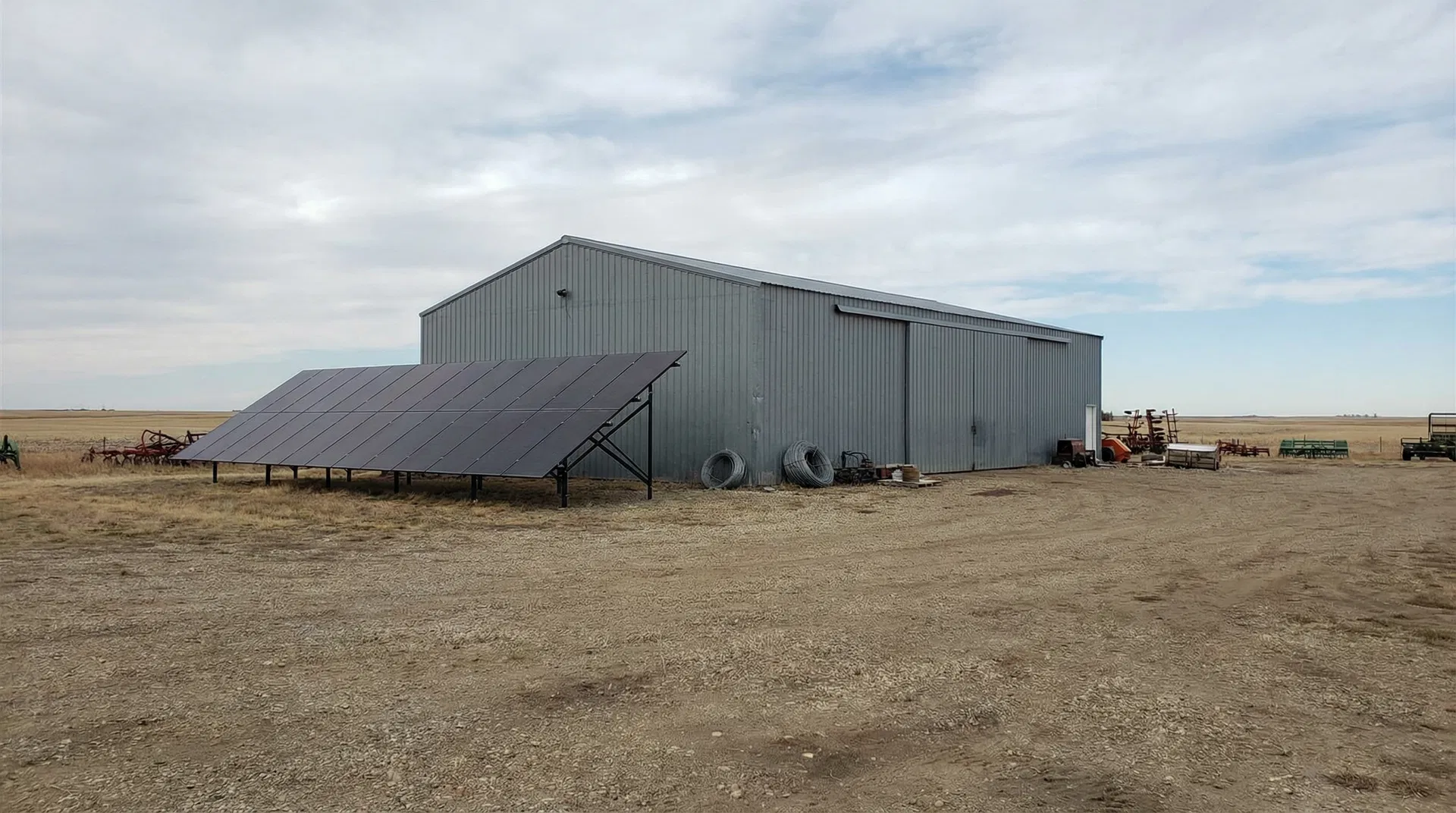
When we talk about solar sundre properties, we're talking about rural buildings that carry real electrical loads. A welding shop running 240-volt equipment, a barn with ventilation fans and heat lamps, a grain handling building with auger motors. These aren't the same as putting panels on a suburban bungalow, and we don't design them the same way. For shop and outbuilding solar, we work with LONGi panels and APsystems microinverters. LONGi panels are reliable, well-suited to Alberta roof loads, and available in configurations that work for both steep-pitched shop roofs and low-slope agricultural buildings. APsystems microinverters give us per-panel monitoring and eliminate single points of failure, which matters on properties where a system outage isn't immediately obvious from the house. System sizes for this service typically run between 8 and 20 kW, with a 12 kW system being common for a property combining a heated shop with a home. Larger operations with multiple outbuildings, irrigation loads, or grain handling equipment often land higher in that range. We size from your most recent power bill and a physical site review, not from assumptions. Rooftop and ground-mount configurations are both available. Which one makes sense depends on your roof condition, available yard space, orientation of the buildings, and whether shading from trees or adjacent structures limits a rooftop option. We'll walk through both scenarios with you during the design review so you're not guessing.
Solar Planning for Sundre Properties
Properties around Sundre tend to run more electrical load than a typical residential lot in a city. A heated shop, water systems, outbuildings, and a home all pulling from the same meter add up fast. That's not a complaint about rural life. It's just the context that shapes how we approach a solar design here. The right system size for a rural property isn't a number you can pull from a brochure. It depends on your actual usage pattern, your roof or ground-mount conditions, which outbuildings have usable surfaces, and what the FortisAlberta connection review requires. We start every project by looking at the 12-month usage graph on your most recent power bill. That graph tells us more about your property than any general estimate could. Shops and outbuildings often make excellent candidates for solar because they're purpose-built structures with unobstructed roof runs, good pitch, and clear orientation. But the electrical infrastructure inside matters too. Panel age, service entrance condition, and whether you're running single-phase or three-phase service all factor into what we design and how we size it. We confirm all of that before the design is finalized.
Electrical Site Review for Sundre Properties
Voltage Rise
Voltage rise happens when current from a solar system pushes back toward the grid and raises the voltage at the point of interconnection. Rural distribution lines can have higher impedance than urban lines, which makes voltage rise more pronounced on some properties. If rise is too high, inverters clip output or shut down to protect the grid, which affects how we size the system and where we draw the design limits.
Single-Phase vs Three-Phase
Rural properties in Alberta can be served by either single-phase or three-phase power depending on what the original service was built to handle. Three-phase service is common on farm operations running large motors for grain handling or irrigation. Knowing which service type you have matters because it affects which inverter configurations are available and how much capacity the system can export.
Panel Infrastructure
Older electrical panels on rural properties weren't designed with solar backfeed in mind. We assess breaker capacity and panel age as part of every site review, checking whether the main panel can handle the additional breaker required for the solar connection without exceeding the rated bus capacity. If the panel can't support the system, we'll spell out what an upgrade involves before any design work moves forward.
Service Entrance Review
The service entrance and meter base condition is something FortisAlberta reviews as part of the micro-generation application. We check the meter base for physical condition, ampacity rating, and whether it meets current interconnection requirements before we submit anything. If an upgrade is required, it needs to be completed before the application can proceed, and we confirm that with you upfront so there are no surprises mid-project.
Right-Sizing Solar for Sundre Properties
Rural properties typically carry loads that urban installs don't have to account for. A home is one thing. Add a heated shop, a barn with year-round ventilation, an outbuilding with a compressor, and seasonal irrigation or grain handling loads, and the total consumption picture looks very different from a city lot. That's why most systems we design for rural properties run larger than what you'd see quoted for a residential project in Calgary. We don't size systems from rule-of-thumb numbers. We work from the 12-month usage graph on your most recent power bill. That graph shows us how your consumption behaves across seasons, which is the only honest basis for sizing a system. A property that runs heavy in winter because of shop heating needs to be designed differently than one with summer-heavy irrigation loads. Roof versus ground mount is a real decision on properties with multiple buildings. A shop with a clean south-facing roof and no shading is often the best candidate for a rooftop array. But if the roof is older, has a poor pitch, or gets shading from trees or adjacent structures in the afternoon, a ground mount on available yard space can deliver better output and avoid the cost of re-roofing before solar goes on. We look at both options during the site review and present what makes sense for your layout, not just what's easiest to install.
Typical Load Profiles We Design For Near Sundre
Home + Heated Shop
This is the most common profile we see on acreages and rural lots: a house running normal residential loads alongside a shop that's kept heated year-round for vehicles or mechanical work. The shop heating load, whether it's a radiant tube heater or in-floor system, can pull as much electricity as the rest of the property combined in January. We size the system from the combined 12-month usage graph on your most recent power bill so the shop's winter draw is reflected in the design, not averaged away.
Agricultural Operation with Outbuildings
On farm properties with a barn, grain bins, and ancillary outbuildings, the load profile shifts with the season and the operation. Aeration fans during harvest, heat lamps in spring calving pens, and ventilation systems running through summer all add up to a profile that varies significantly month to month. A 16-20 kW system is often where these properties land once all active outbuilding loads are included in the design review.
Rural Commercial Shop or Yard
Properties running a small commercial operation out of a shop or yard, whether that's an equipment repair business, a welding operation, or a contractor's base, often have load profiles driven by 240-volt tools, compressors, and lighting over long operating hours. These loads tend to be consistent and weekday-heavy, which actually pairs well with solar generation. We confirm the load pattern from your most recent power bill and size accordingly, typically in the 12-20 kW range depending on operating hours and equipment.
FortisAlberta Interconnection in Sundre
FortisAlberta is the wire service provider for Sundre. Any grid-tied solar system installed here connects through FortisAlberta's micro-generation application process, and the design package we submit has to meet their technical requirements. We handle the interconnection application from start to finish. That includes preparing the single-line diagram, confirming equipment compliance, submitting the application to FortisAlberta, and following up through the review process. You don't need to navigate that paperwork yourself. What we need from your side is straightforward: your most recent power bill. That document gives us the 12-month usage graph we need to size the system, plus the account and service details that go into the application. For shops and outbuildings, the meter configuration matters. If the building has its own meter and service entrance separate from the house, we design for that account specifically. If it all runs through one meter, we design to that combined load. We confirm the meter setup during the site review, because submitting an application with incorrect service details creates delays that don't need to happen.
Project Economics and Design Review
| System Size | Annual Production | Year 1 Savings | Payback Period |
|---|---|---|---|
| 8-20 kW range, 12 kW typical |
Production, savings, and payback figures require a property-specific design and your most recent power bill to prepare accurately.
How We Work in Sundre
Bill and Load Review
We review your power bill to understand your energy use in Sundre and size the system to your actual consumption — not a generic estimate.
Site Assessment
We assess your roof or ground area, south-facing exposure, electrical service, and utility interconnection requirements specific to your property.
Design and Utility Application
We produce a system layout, production estimate, and cost summary, then submit your micro-generation application to your utility on your behalf.
Installation and Commissioning
Our crew installs racking, panels, inverter, and electrical connections. All work is performed by licensed electricians. We commission and test before handoff.
Current Program and Interconnection Review
Utility connection review
FortisAlberta reviews all micro-generation connection applications for properties in their service area, including those in and around Sundre. Range Road Solar prepares the full design package and submits the application on your behalf. We handle the technical documentation so you don't have to coordinate with the utility directly.
Current program review
Commercial, agricultural, and residential solar installations may be eligible for programs or incentives depending on the property type and current rules. We review eligibility against whatever programs are active at the time of your design review, not against a list we pulled from a year ago. Rules and program availability change, and we confirm what applies to your specific situation before you commit to anything.
Frequently Asked Questions
Get a Solar Assessment for Sundre
Submit a recent power bill and we will review your consumption and provide an honest assessment for your Sundre property. No obligation.
(587) 330-7502 Book a CallRelated Resources