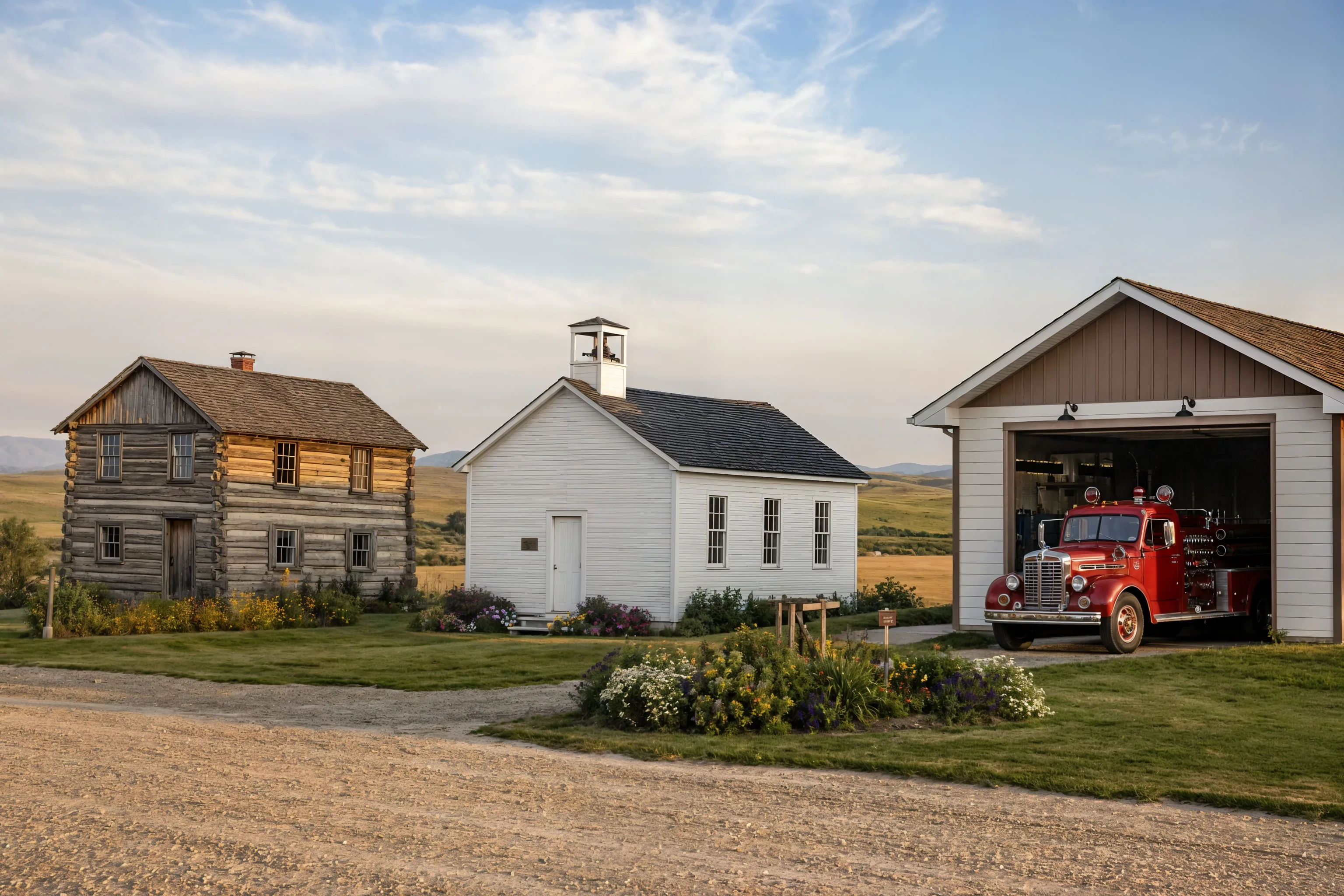
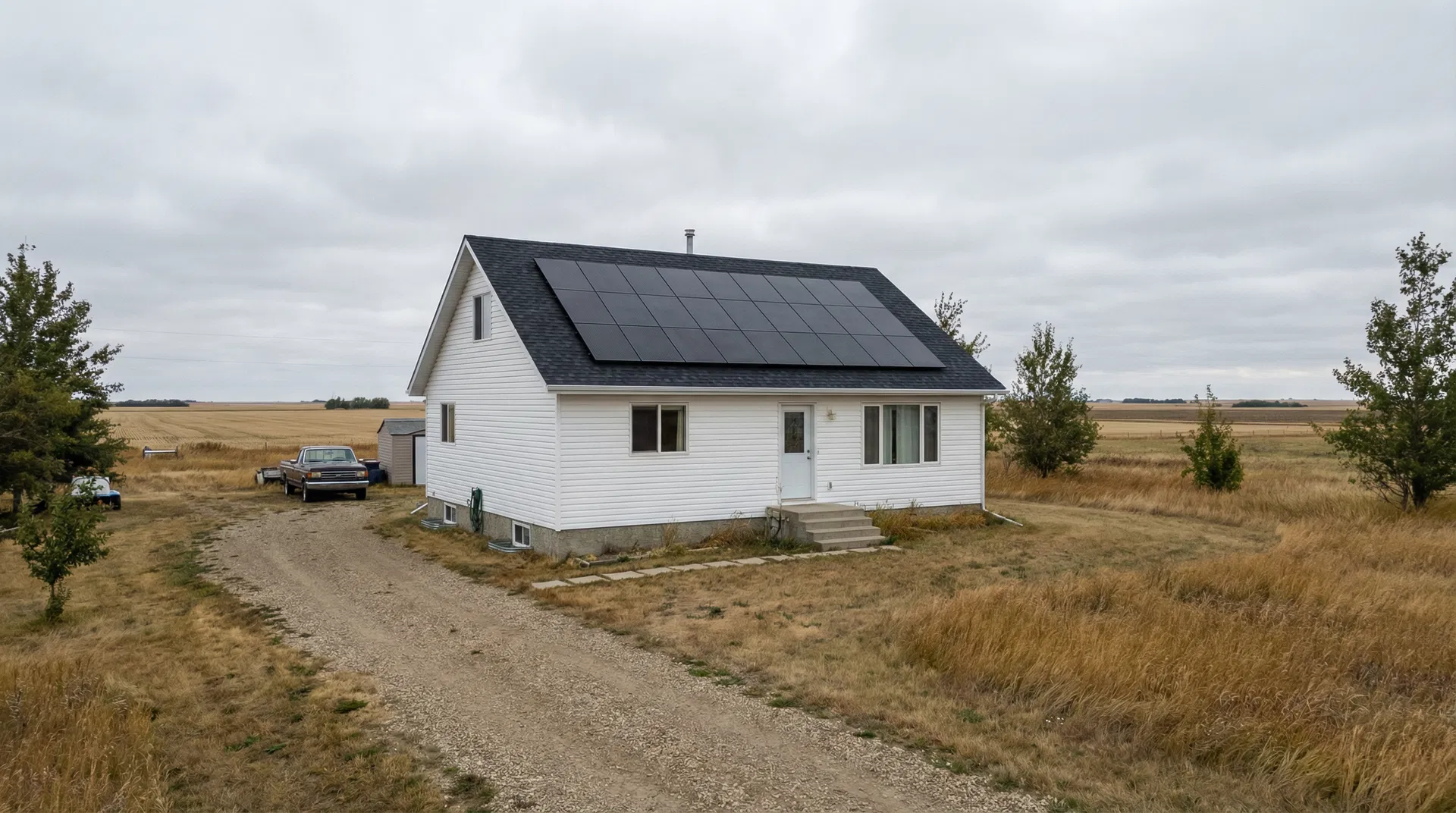
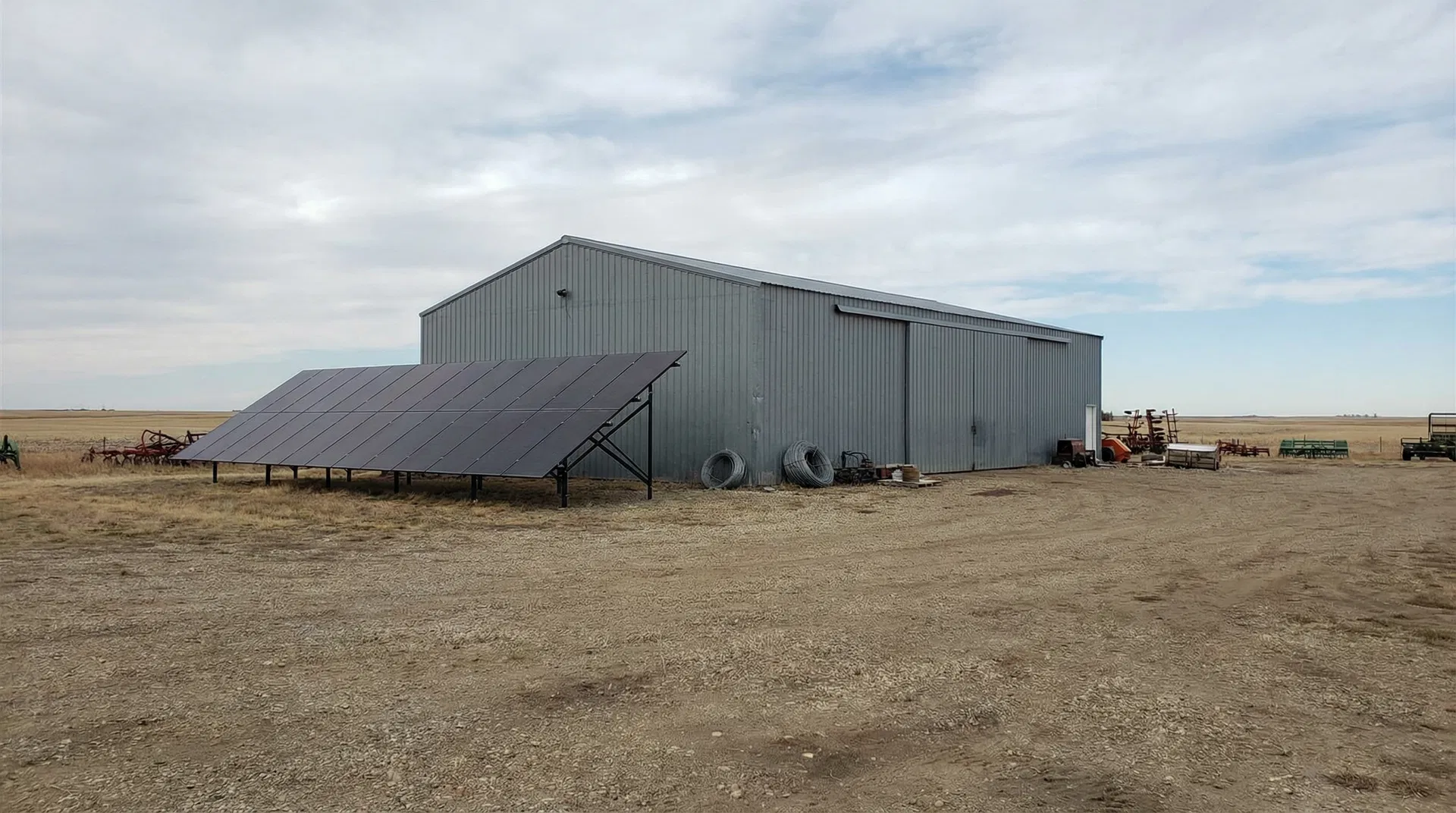
Solar caroline searches turn up plenty of generic solar company sites. What we actually install on shops, barns, and outbuildings here is more specific: LONGi panels paired with APsystems microinverters, in ground-mount or rooftop configurations depending on the building. A metal shop roof with a decent south or west exposure is often the simplest mount, and APsystems microinverters handle partial shading from a nearby grain bin or shelterbelt better than a single string inverter would, since each panel operates independently. When a roof doesn't have the right pitch, orientation, or structural capacity for the array size we're targeting, a ground-mount rack on open yard space is usually the better call, and it's easier to service down the road. These systems can run standalone, feeding the shop's own subpanel, or grid-tied through the main service, and which setup makes sense depends on how the building is wired now and what it needs to carry: a welder and compressor, a heated bay, block heaters, or grain-handling equipment. We size the array and inverter count to the building's actual draw, not a flat per-square-foot number. LONGi panels are our standard module for these installs because they hold up to the mounting and racking demands of an outbuilding project, whether that's a bolted rooftop array on a shop or a ground-mount frame set into the yard. Every project starts with a site walk: roof or ground conditions, existing panel capacity, and what's already running on the property, so the design matches the building instead of a generic template.
Solar Planning for Caroline Properties
FortisAlberta is the wire service here, the utility that reviews every micro-generation interconnection application for shops, barns, and outbuildings in the area. This is a small, close-knit community, home to about 470 people, where solar decisions get made around what a specific property actually needs rather than a one-size-fits-all package. As of January 1, 2025, the Village of Caroline amalgamated into Clearwater County, a shift that changed local governance but not how FortisAlberta processes a connection application. Properties near the Caroline Complex Natural Gas Facility often run compressors, welders, or other shop equipment that draws differently than a house alone, so we start with your most recent power bill and the specific loads on-site rather than a generic estimate. Whether you're running a heated shop, a machine shed, or a mixed-use outbuilding, we walk the property, look at roof pitch and orientation or available ground-mount space, and check what the service entrance can support before we ever talk system size. Range Road Solar confirms production and payback numbers through a site design and your actual utility data, not a sunshine chart. That's the only way a shop-and-outbuilding system in this area gets sized right the first time.
Electrical Site Review for Caroline Properties
Voltage Rise
Voltage rise happens when power pushes out along a long stretch of distribution line, and rural feeders can run longer than in-town circuits. On a system feeding a shop or outbuilding at the end of a line, higher voltage at the point of connection can push an inverter into clipping or shutdown before it reaches its rated output. We check line conditions at the site and factor that into inverter selection and system sizing, not after the fact.
Single-Phase vs Three-Phase
Properties around here may have single-phase or three-phase service, depending on when the building was wired and what it was built to run. A shop set up for three-phase equipment, like a larger compressor or certain welders, needs inverters and a system design matched to that service type, while a single-phase outbuilding is a simpler setup. We confirm which service type is on site before we spec equipment, since the wrong assumption changes both inverter selection and how much capacity the system can carry.
Panel Infrastructure
A lot of outbuildings on rural properties are running older electrical panels, sometimes with limited breaker capacity or aging components that predate the loads now hung off them. We check panel age and available breaker space as part of every site visit, since a shop panel maxed out on double-pole breakers can't just accept another circuit for a solar tie-in. If the panel can't support the system, an upgrade means a new panel or subpanel sized for both current loads and the new solar circuit.
Service Entrance Review
We check the condition of the service entrance and meter base as part of the site review, since FortisAlberta's micro-generation application requires that infrastructure to meet current standards before they'll approve a connection. An older or damaged meter base can hold up the whole application even if the rest of the system is ready to go. When an upgrade is needed, we scope it into the project plan upfront so it doesn't surprise anyone partway through.
Right-Sizing Solar for Caroline Properties
Rural systems tend to run bigger than an in-town residential install, and it's not because rural properties use more power for the same activities. It's because there's more to power: a house plus a shop, maybe an outbuilding or two, and depending on the property, irrigation or grain-handling equipment that draws hard for short stretches. A system sized for the house alone misses all of that. Roof versus ground mount comes down to what the property actually offers. If a shop roof has good south or west exposure, decent pitch, and no shading from trees or a neighboring structure, it's often the simpler and less expensive mount. When the roof is shaded, poorly pitched, or the building itself isn't a good structural fit, a ground mount on open yard space is usually the better call, and it gives more flexibility on array orientation. Either way, we size the system from the 12-month usage graph on your most recent power bill, not a rule-of-thumb watts-per-square-foot number. That graph shows the real pattern: seasonal spikes, baseline draw, and how much of that a given system size can realistically offset. Combined with a site walk to confirm roof or ground conditions, that's what turns into an actual system size and layout, not a generic estimate.
Typical Load Profiles We Design For Near Caroline
Home + Heated Shop
This is the most common setup we see: a house plus a detached heated shop running lights, tools, and a block heater or space heater through the colder months. We size the array using the combined draw from both structures, based on the 12-month usage graph on your most recent power bill, not two separate estimates. Depending on how the shop is used, standalone or grid-tied both come up here.
Shop + Livestock or Ag Equipment
Properties running livestock waterers, feed equipment, or seasonal ag machinery out of a shop have a different draw pattern than a home-only load, with spikes tied to specific equipment cycles rather than steady household use. We look at how that equipment runs, in short hard pulls or longer steady draws, when we size the inverter count and array. Your most recent power bill and a walk-through of what's actually plugged in tell us more than a generic per-building number would.
Multi-Building Yard (House + Shop + Outbuilding)
Some properties in the area have three or more structures on one service: a house, a main shop, and a second outbuilding like a machine shed or storage building. Rather than sizing each building separately, we look at the combined load across the property from your most recent power bill and design a system, standalone or grid-tied, that reflects how the whole yard actually uses power. Ground-mount often makes sense on these layouts since there's usually open yard space and multiple rooflines to work around.
FortisAlberta Interconnection in Caroline
FortisAlberta is the wire service for properties here, and any grid-tied shop or outbuilding system needs a micro-generation interconnection application processed through them before it goes live. Range Road Solar handles that application as part of the project: we prepare the technical package, including system size, equipment specs for the LONGi panels and APsystems microinverters, and the single-line diagrams FortisAlberta requires to review a connection request. If you're planning a standalone system for a shop or outbuilding that isn't tied to the grid, this step doesn't apply the same way, and we'll walk through what your setup actually needs during the design review. For grid-tied systems, we don't guess at FortisAlberta's current process. We confirm what's required at the time of your application and keep you updated as it moves through review. What we won't do is promise a specific approval timeline or credit arrangement upfront: those specifics come from FortisAlberta's current rules, and we check them fresh for every project.
Project Economics and Design Review
| System Size | Annual Production | Year 1 Savings | Payback Period |
|---|---|---|---|
| 8-20 kW range, 12 kW typical |
Production, savings, and payback figures are provided only after a property-specific design review using your most recent power bill.
How We Work in Caroline
Bill and Load Review
We review your power bill to understand your energy use in Caroline and size the system to your actual consumption, not a generic estimate.
Site Assessment
We assess your roof or ground area, south-facing exposure, electrical service, and utility interconnection requirements specific to your property.
Design and Utility Application
We produce a system layout, production estimate, and cost summary, then submit your micro-generation application to your utility on your behalf.
Installation and Commissioning
Our crew installs racking, panels, inverter, and electrical connections. All work is performed by licensed electricians. We commission and test before handoff.
Current Program and Interconnection Review
Utility connection review
FortisAlberta reviews every grid-tied micro-generation application before a shop or outbuilding system can connect, checking the technical package against their current standards. Range Road Solar prepares that package, including equipment specs and single-line diagrams, and submits it as part of your project.
Current program review
Commercial, farm, and residential properties are each reviewed against whatever program and eligibility rules are current at the time of your design, since these details change. We check what applies to your specific property type and project during the design review rather than assuming a blanket answer.
Frequently Asked Questions
Get a Solar Assessment for Caroline
Submit a recent power bill and we will review your consumption and provide an honest assessment for your Caroline property. No obligation.
(587) 330-7502 Book a CallRelated Resources