Mountain View County · Residential solar installation
Solar Installation in Sundre, AB
Grid-tied residential solar for Sundre properties. We handle design, engineering, and FortisAlberta interconnection from start to finish.
Every solar installation sundre project we complete starts with a design that fits the property, not a kit pulled off a shelf. We spec LONGi solar panels on every residential system. They're reliable, well-tested, and carry strong performance warranties that matter over a 25-year horizon. Paired with APsystems microinverters, each panel operates independently, which means shading on one corner of your roof doesn't drag down output from the rest of the array. APsystems microinverters also give you panel-level monitoring through their app. You can see exactly what each panel is producing in real time, which makes it straightforward to catch a shading issue or a connection problem before it sits unnoticed for months. For residential properties in this area, we typically work in the 8-12 kW range. A home with a single-car garage, a standard utility load, and no large outbuildings might size toward the lower end. Add a heated shop or an EV charger and the design moves higher. We confirm the right size through the 12-month usage graph on your most recent power bill, then cross-check it against your roof layout or available ground space. Installation includes the full electrical rough-in, panel and racking installation, inverter wiring, and the FortisAlberta micro-generation application. We handle the paperwork. You don't have to navigate the utility process on your own.
Solar Planning for Sundre Properties
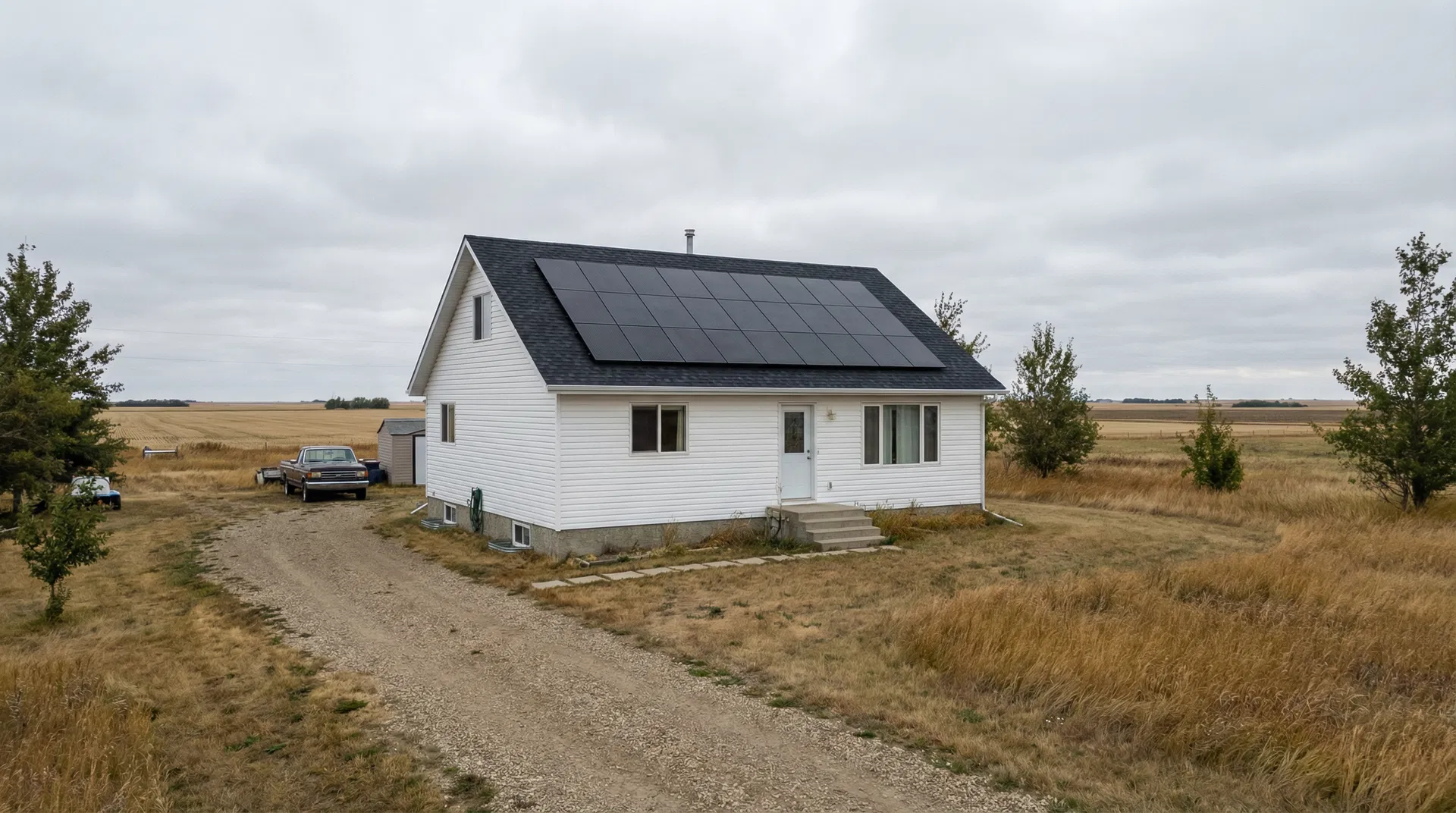
Sundre sits in a part of rural Alberta where properties tend to carry real electrical loads. A home with a heated shop, a well pump, and an electric hot water tank draws a very different load profile than a suburban house. That gap matters when you're sizing a solar system, because undersizing leaves money on the table every month and oversizing creates interconnection friction with FortisAlberta. We don't use rule-of-thumb estimates here. We pull the 12-month usage graph from your most recent power bill and build the system design from your actual consumption patterns. A property running a home plus outbuildings might land in the upper end of the 8-12 kW range. A single residence with modest loads might sit closer to 8 kW. The number follows the data, not a sales pitch. The properties around this area also vary in roof orientation, pitch, and shading from mature trees or surrounding structures. Those site conditions directly affect how we position panels and whether a ground mount makes more sense than a rooftop install. We work through all of it during the design review, before you commit to anything.
Electrical Site Review for Sundre Properties
Voltage Rise
Voltage rise happens when a solar system pushes power back toward the grid and the local distribution line voltage climbs above acceptable limits. In rural areas, longer distribution lines and varying grid conditions can make voltage rise a more significant constraint than it would be in a dense suburban setting. When voltage rise limits are tight, the inverter may clip output to stay within range, which affects how we size the system and position the array.
Single-Phase vs Three-Phase
Properties in rural Alberta can be served by either single-phase or three-phase electrical service, and the distinction matters for solar design. Single-phase service is standard for most residences, while properties with larger shop equipment or irrigation infrastructure sometimes have three-phase. The phase configuration on your service affects which inverter configuration we spec and how much system capacity the service can support.
Panel Infrastructure
Older electrical panels on rural properties don't always have the breaker capacity or the physical space to support a new solar circuit without upgrades. We assess the breaker rating, available slots, and panel age as part of every site review. If the existing panel can't safely accommodate the solar backfeed breaker, we'll include a panel upgrade in the project scope rather than leave it as a post-installation problem.
Service Entrance Review
The service entrance and meter base need to meet FortisAlberta's technical requirements before a micro-generation application can be approved. We inspect the meter base condition, the service entrance wiring, and the overall serviceability of the cutout during our site assessment. If the meter base requires replacement or the entrance needs work, we identify it early so it's factored into the project timeline and budget before we submit anything to FortisAlberta.
Right-Sizing Solar for Sundre Properties
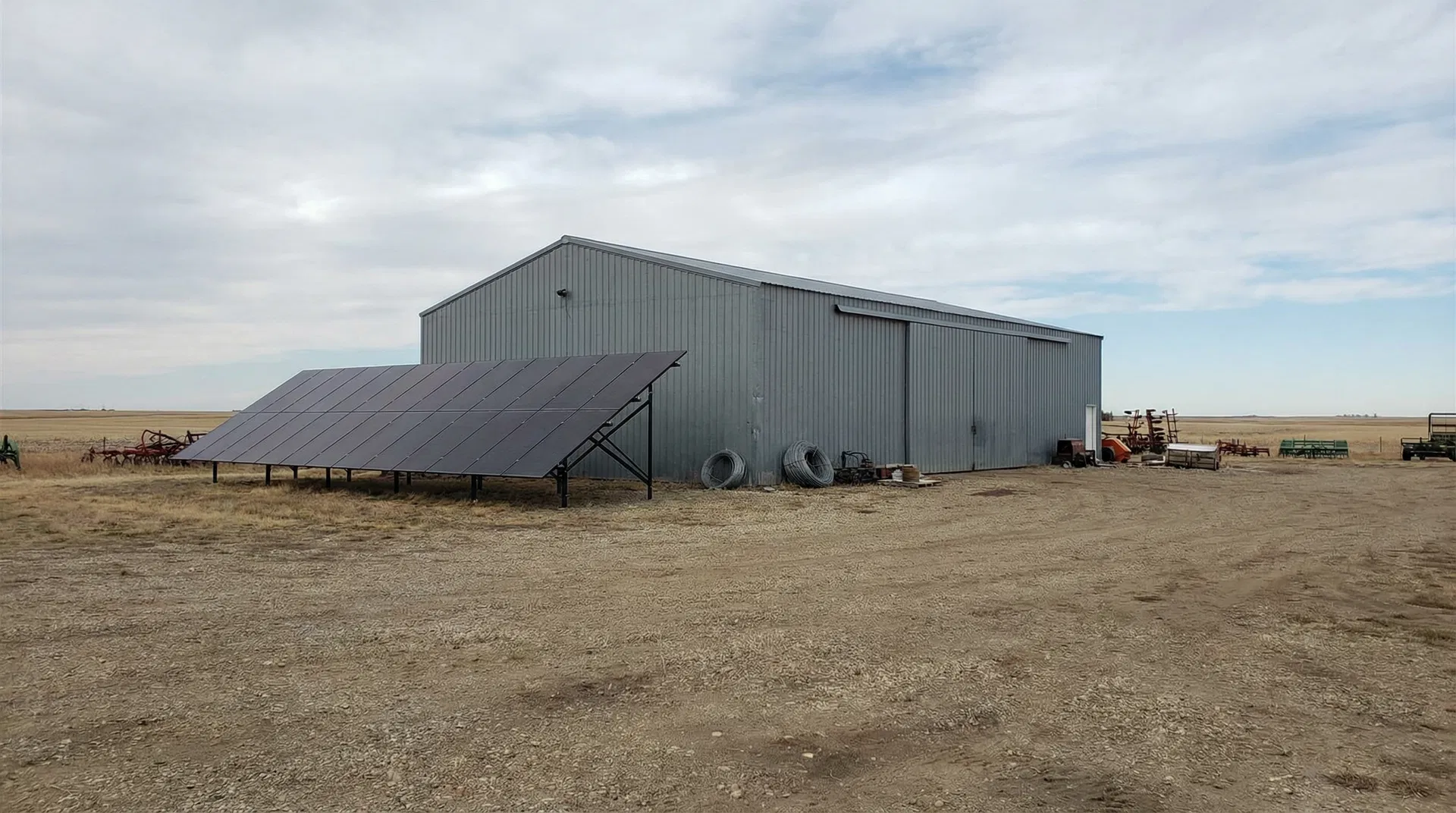
Rural properties don't size like city houses, and we don't design them like city houses. A home on an acreage near Sundre might be running the residence, a heated shop, a water well, exterior lighting, and seasonal loads like a grain auger or irrigation pump. Stack those together and you're looking at a consumption profile that justly lands in the upper half of the 8-12 kW range, sometimes higher depending on the shop heating setup. The roof-versus-ground-mount decision comes down to what the site actually offers. If the home has a good south-facing roof with minimal shading and enough square footage, a rooftop mount is usually the cleanest option. But on properties where the house is shaded by mature spruce trees, where the roof pitch isn't ideal, or where the yard has a wide-open south-facing run of land, a ground mount often outperforms whatever the roof can deliver. We look at both options during the site review and recommend the one that actually works for the property. For sizing, we don't start with a guess. We start with the 12-month usage graph on your most recent power bill. That graph shows us your peak usage months, your low months, and the overall annual consumption pattern. From there, we build a system that fits your real load, not an average suburban load that has nothing to do with how your property runs. That's the only honest way to size a system.
Typical Load Profiles We Design For Near Sundre
Home and Heated Shop
A residence paired with a heated shop is one of the most common load profiles we see on rural Alberta properties. The shop typically adds electric heating, compressors, and lighting to the household base load, which pushes annual consumption well above what a standalone home draws. We size the array from the 12-month usage graph on your most recent power bill, so the system reflects the shop's seasonal heating demand, not a generic residential estimate.
Acreage Home with Well and Outbuildings
Properties with a domestic water well, a small barn or equipment shelter, and standard household loads run a distributed electrical footprint that a single-number estimate won't capture accurately. The well pump cycles year-round and the outbuilding loads vary by season, which both show up in the usage graph on your most recent power bill. We use that data to build a system that covers the full property load, not just the house.
Single Residence, No Shop
Not every property near Sundre has a shop or outbuildings. A single-family home without large secondary loads typically sizes toward the lower end of the 8-12 kW range, with an 8-10 kW system covering most of the annual consumption depending on roof layout and orientation. We confirm the right size through the usage data on your most recent power bill and a shading assessment of the available roof or ground space.
FortisAlberta Interconnection in Sundre
FortisAlberta is the wire service for Sundre. Any grid-tied solar system installed here goes through FortisAlberta's micro-generation application process before it can be energized and connected to the grid. We handle that application as part of every installation. That includes preparing the single-line diagram, completing the interconnection package, and coordinating with FortisAlberta directly. You don't need to manage the back-and-forth with the utility. We do it. The application requires that the system meet FortisAlberta's technical requirements, including equipment compatibility and service entrance conditions. If anything on the property needs attention before the application can proceed, we flag it during the design review, not after the equipment is on the roof. It's a cleaner process for everyone when the electrical assessment happens up front. Once the application is submitted and approved, FortisAlberta coordinates the meter swap required for micro-generation billing. We provide honest production estimates based on your actual power bills and site conditions, not inflated projections.
Project Economics and Design Review
| System Size | Annual Production | Year 1 Savings | Payback Period |
|---|---|---|---|
| 8-12 kW range, 10 kW typical |
Production, savings, and payback estimates require a property-specific design and the usage data from your most recent power bill.
How We Work in Sundre
Bill and Load Review
We review your power bill to understand your energy use in Sundre and size the system to your actual consumption — not a generic estimate.
Site Assessment
We assess your roof or ground area, south-facing exposure, electrical service, and utility interconnection requirements specific to your property.
Design and Utility Application
We produce a system layout, production estimate, and cost summary, then submit your micro-generation application to your utility on your behalf.
Installation and Commissioning
Our crew installs racking, panels, inverter, and electrical connections. All work is performed by licensed electricians. We commission and test before handoff.
Current Program and Interconnection Review
Utility connection review
FortisAlberta reviews every grid-tied solar application for properties in its service territory, including Sundre. Range Road Solar prepares the full design and interconnection package required for that application. We handle the submission and manage communication with FortisAlberta so you're not navigating the utility process on your own.
Current program review
Eligibility rules for provincial and federal programs that apply to residential, farm, and commercial solar installations can change. We review current program availability and eligibility criteria at the time of your design review, so you're working with up-to-date information rather than outdated program details you may have found online.
Frequently Asked Questions
Get a Solar Assessment for Sundre
Submit a recent power bill and we will review your consumption and provide an honest assessment for your Sundre property. No obligation.
(587) 330-7502 Book a CallRelated Resources