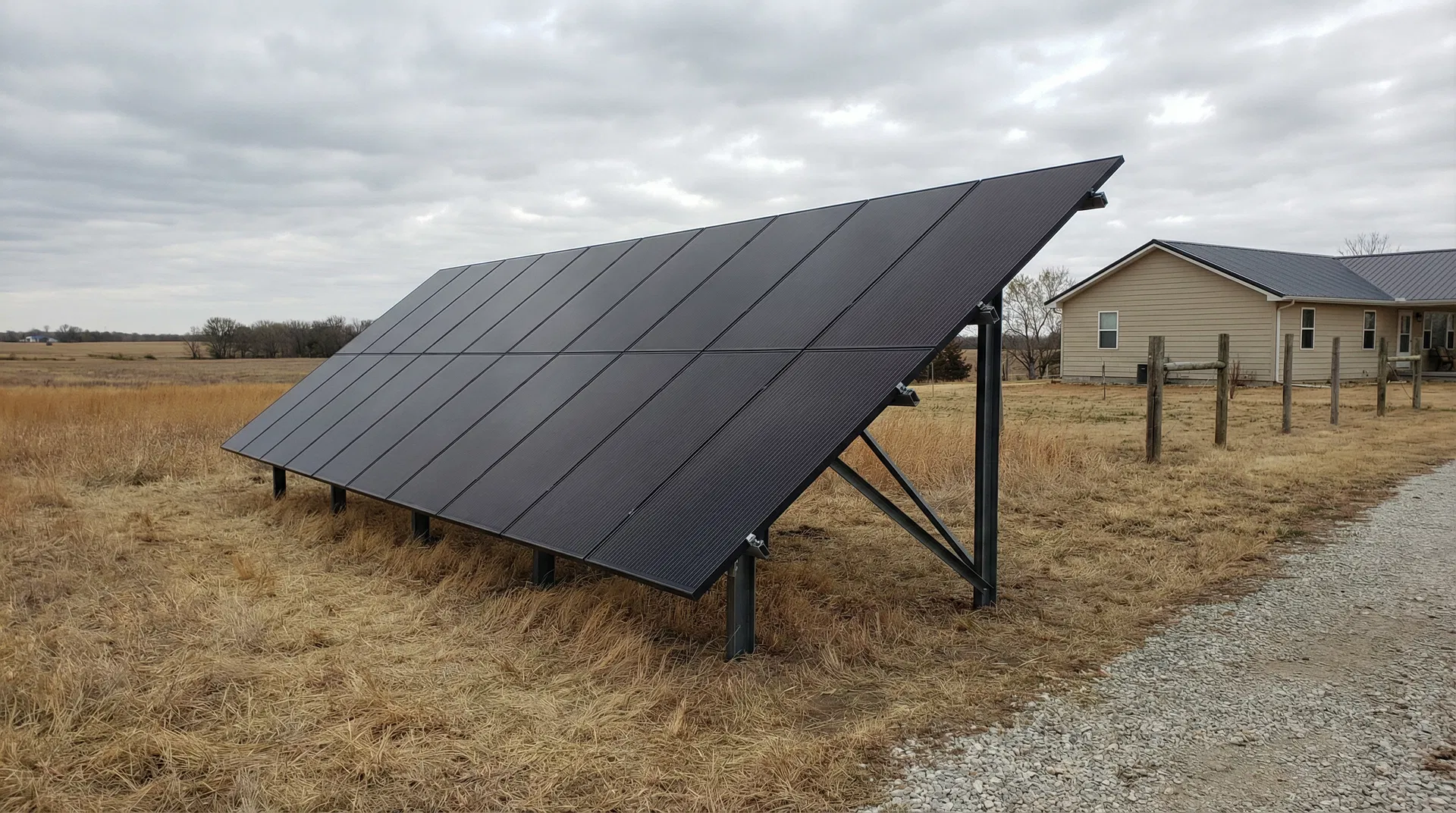
When we talk about farm solar Drumheller operations need, we're talking about systems built for commercial-scale agricultural loads, not residential installs with a barn thrown in. Our farm systems run in the 20 to 50 kW range, with 25 kW being a common starting point for a mixed grain and livestock operation. The right size depends entirely on your usage, your yard, and your electrical infrastructure. We install LONGi panels throughout our farm and agricultural systems. LONGi modules are a reliable workhorse in Canadian conditions, and they hold up well on exposed rural properties where UV exposure and temperature cycling are constant realities. For most farm systems in this range, we use APsystems microinverters. Microinverters let each panel operate independently, which matters on properties where partial shading from grain bins, outbuildings, or equipment can clip output on a string-inverter system. If one panel is shaded, the rest keep producing at full capacity. Ground-mount racking is the preferred configuration for most farm builds we do. It keeps the array off aging metal roofs, allows for precise south-facing orientation regardless of building layout, and makes future maintenance straightforward. That said, if a well-oriented shop roof with a solid structure makes more sense for a given property, we'll say so. The design decision follows the site, not a formula. Every install includes the interconnection design package required for ATCO Electric's micro-generation application. We handle that paperwork so you don't have to.
Solar Planning for Drumheller Properties
Farms around Drumheller run serious electrical loads. Grain handling equipment, heated shops, water systems, and the main residence can all draw from the same meter, and that combined consumption is exactly what makes a well-designed solar system worth evaluating seriously. The question isn't whether the sun shines enough. The question is whether your load profile, your yard layout, and the ATCO Electric interconnection process line up in a way that makes the numbers work for your operation. That's what we figure out in the design review. Agricultural properties in this part of Alberta tend to have the land available for ground-mount arrays, which removes a lot of the roof-orientation and shading constraints that limit urban installs. It also means you can orient panels for optimal output without being locked into whatever direction the shop roof faces. We don't size systems from averages or rule-of-thumb estimates. We pull the 12-month usage graph from your most recent power bill and build the design from your actual consumption pattern. We provide honest production estimates based on your actual power bills and site conditions, not inflated projections. If the numbers don't pencil out for your operation, we'll tell you that too.
Electrical Site Review for Drumheller Properties
Voltage Rise
Voltage rise happens when a solar system pushes electricity back onto the distribution line and the voltage at the interconnection point climbs above allowable limits. On long rural distribution lines, which are common in agricultural areas served by ATCO Electric, the line impedance can make voltage rise a real design constraint. When voltage rise limits are tight, it can affect how aggressively we can size the inverter output, and we account for that in the system design before the application goes to the utility.
Single-Phase vs Three-Phase
Rural properties in Alberta can be served by either single-phase or three-phase electrical service, and the distinction matters when we're selecting inverters and determining system capacity. Three-phase service is common on properties with grain handling equipment, large motors, or commercial irrigation, and the inverter selection needs to match the service type. We confirm the service configuration during the site review so the system design and interconnection application are built to the right electrical specification from the start.
Panel Infrastructure
Older electrical panels on farm properties often have breaker capacity that predates the loads now running through them, let alone the addition of a solar system. We assess the panel age, available breaker slots, and bus bar capacity as part of every site review. If the existing panel can't safely support the solar interconnection, we'll identify what an upgrade involves so that cost and timeline are factored into the project plan before any equipment is ordered.
Service Entrance Review
The meter base and service entrance are the point where ATCO Electric's infrastructure meets your property wiring, and their condition directly affects whether the micro-generation application can proceed without additional upgrades. We inspect the meter base enclosure, wiring condition, and mounting for compliance with current utility standards. If ATCO Electric requires a meter base upgrade as a condition of interconnection approval, we'll flag that during the design review so it doesn't become a surprise partway through the install.
Right-Sizing Solar for Drumheller Properties
Farm properties near Drumheller aren't sized like a city house. You're not offsetting one meter that runs a furnace and a few appliances. You're often running the residence, a heated shop with welders or compressors, grain drying or auger equipment, and sometimes irrigation or livestock water systems, all of which can hit the same billing account in different seasons. That combined load profile is why farm systems in this range start at 20 kW and can reasonably scale to 50 kW depending on the operation. The roof-versus-ground-mount question is one of the first decisions in the design process. A south-facing shop roof with a clean pitch and no shading from bins or trees can work well. But a lot of farm buildings weren't designed with solar in mind. Metal roofs that are 20 or 30 years old, rooflines broken up by ventilation stacks, or yards where a building shades the roof for half the day are all reasons we'd steer the design toward a ground-mount array instead. Ground-mount also lets you position the array independent of building orientation, which matters when the shop faces northeast and there's nothing you can do about that. We don't start with a rule-of-thumb number like 10 kW per $1,000 in bills. We start with the 12-month usage graph on your most recent power bill, which shows how your consumption shifts from month to month across the full year. That seasonal pattern tells us far more than an annual average, and it's the foundation of every system design we produce.
Typical Load Profiles We Design For Near Drumheller
Grain Operation with Drying Equipment
Grain farms in the Drumheller area often run high-amperage drying and auger equipment during harvest, with a much lighter load profile through winter. That seasonal swing is visible in the 12-month usage graph on your most recent power bill, and it shapes how we size the system. A system designed purely around harvest-peak loads would be oversized for most of the year, so we balance offset potential against the actual monthly pattern to arrive at the right array size for the operation.
Home + Heated Shop
A residence plus a year-round heated shop is one of the most common load combinations we size for on agricultural properties. The shop heating load through a Drumheller winter can be substantial, particularly if it's running electric infrared heaters or a forced-air unit. We look at both the summer and winter months on your power bill to make sure the system is sized for the consumption pattern across the full year, not just the peak month.
Mixed Livestock and Utility Buildings
Properties running waterers, heat lamps, ventilation fans, and utility lighting across multiple outbuildings carry a distributed load that's easy to underestimate when planning a solar system. Each building might draw modestly on its own, but the combined baseline can be significant across 12 months. We account for all metered loads tied to the interconnection point, not just the main house or shop, when we build the production model from your site design and power bill.
ATCO Electric Interconnection in Drumheller
Drumheller and the surrounding agricultural area falls under ATCO Electric's distribution territory. Any solar system connected to the grid here goes through ATCO Electric's micro-generation interconnection process. That process has its own application requirements, technical standards, and review steps. It's not the same as the process used in FortisAlberta or ENMAX territory, and the documentation package needs to reflect ATCO's specific requirements. Range Road Solar prepares and submits the full interconnection application on your behalf. That includes the single-line electrical diagram, equipment specifications for your LONGi panels and APsystems microinverters, and all supporting documents ATCO Electric requires to review the connection. We don't hand you a form and leave you to figure out the process. The application is part of the install. What we can't predetermine is approval timing, credit settlement terms, or export tariff details, as those depend on current ATCO Electric policy and your specific account. We'll walk you through what to expect during the design review so there are no surprises when you're waiting on the utility side of things.
Project Economics and Design Review
| System Size | Annual Production | Year 1 Savings | Payback Period |
|---|---|---|---|
| 20-50 kW range, 25 kW typical |
Production, savings, and payback figures require a property-specific design and your most recent power bill and cannot be accurately estimated without them.
How We Work in Drumheller
Bill and Load Review
We review your power bill to understand your energy use in Drumheller and size the system to your actual consumption, not a generic estimate.
Site Assessment
We assess your roof or ground area, south-facing exposure, electrical service, and utility interconnection requirements specific to your property.
Design and Utility Application
We produce a system layout, production estimate, and cost summary, then submit your micro-generation application to your utility on your behalf.
Installation and Commissioning
Our crew installs racking, panels, inverter, and electrical connections. All work is performed by licensed electricians. We commission and test before handoff.
Current Program and Interconnection Review
Utility connection review
ATCO Electric reviews all micro-generation interconnection applications for properties in Drumheller and the surrounding service territory. Range Road Solar prepares the complete design package required for that application, including equipment documentation and the single-line electrical diagram. We submit on your behalf and stay in contact with the utility through the review process.
Current program review
Eligibility for commercial, agricultural, and farm-scale solar programs can change from year to year, and the rules that apply to your operation depend on system size, account type, and current program availability. We review what's applicable at the time of your design, not based on programs that may no longer be active. We won't promise funding that isn't confirmed.
Frequently Asked Questions
Get a Solar Assessment for Drumheller
Submit a recent power bill and we will review your consumption and provide an honest assessment for your Drumheller property. No obligation.
(587) 330-7502 Book a CallRelated Resources
More Solar Services in Drumheller