Is solar worth it in Hanna?
For most properties around Hanna, the math works. A typical 12 kW system here produces about 15,521 kWh a year and trims roughly $2,793 off your first-year power bill, which puts payback at about 12.2 years. We size every system to your actual power bills and site conditions, not an inflated projection.
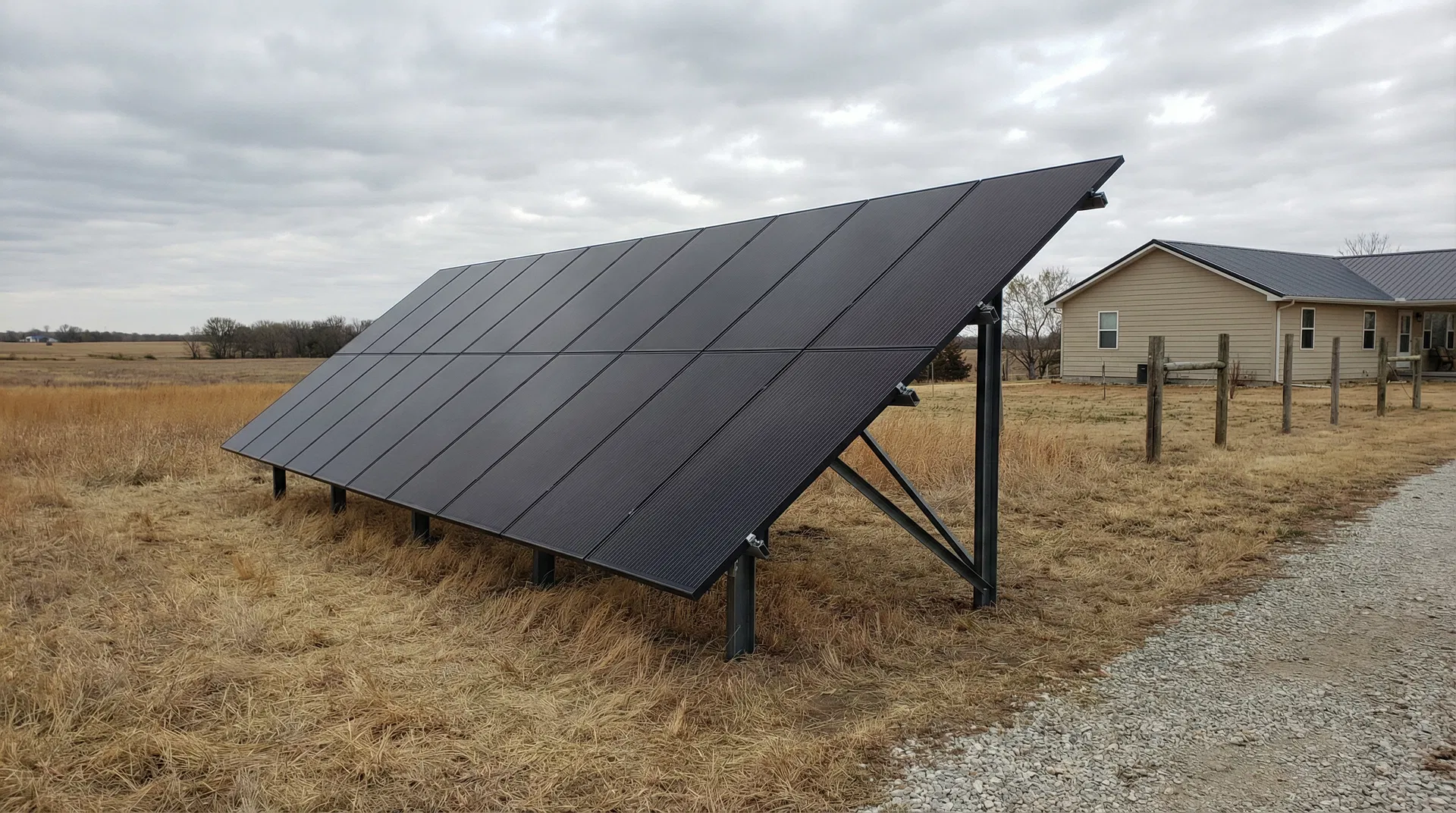
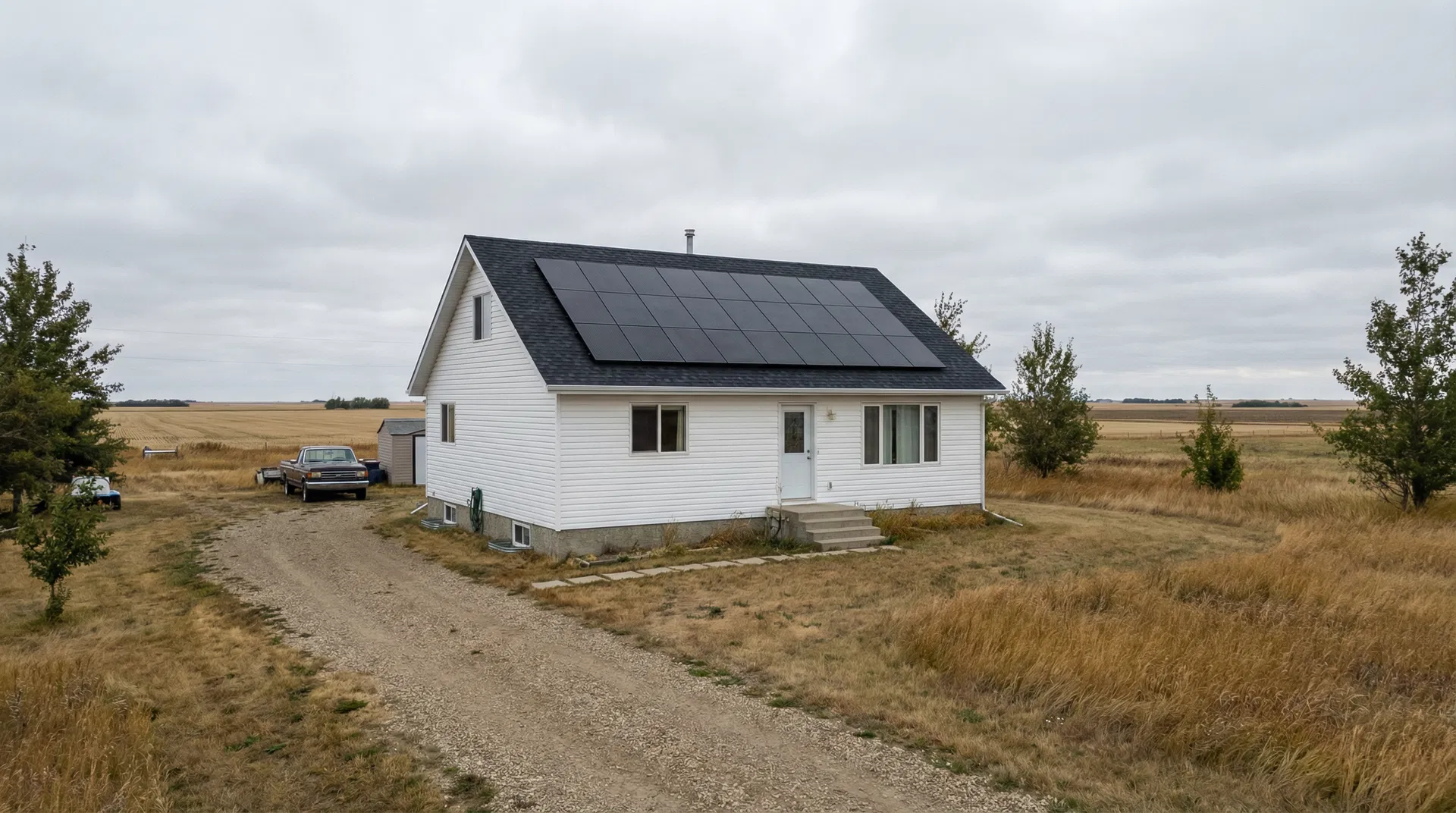
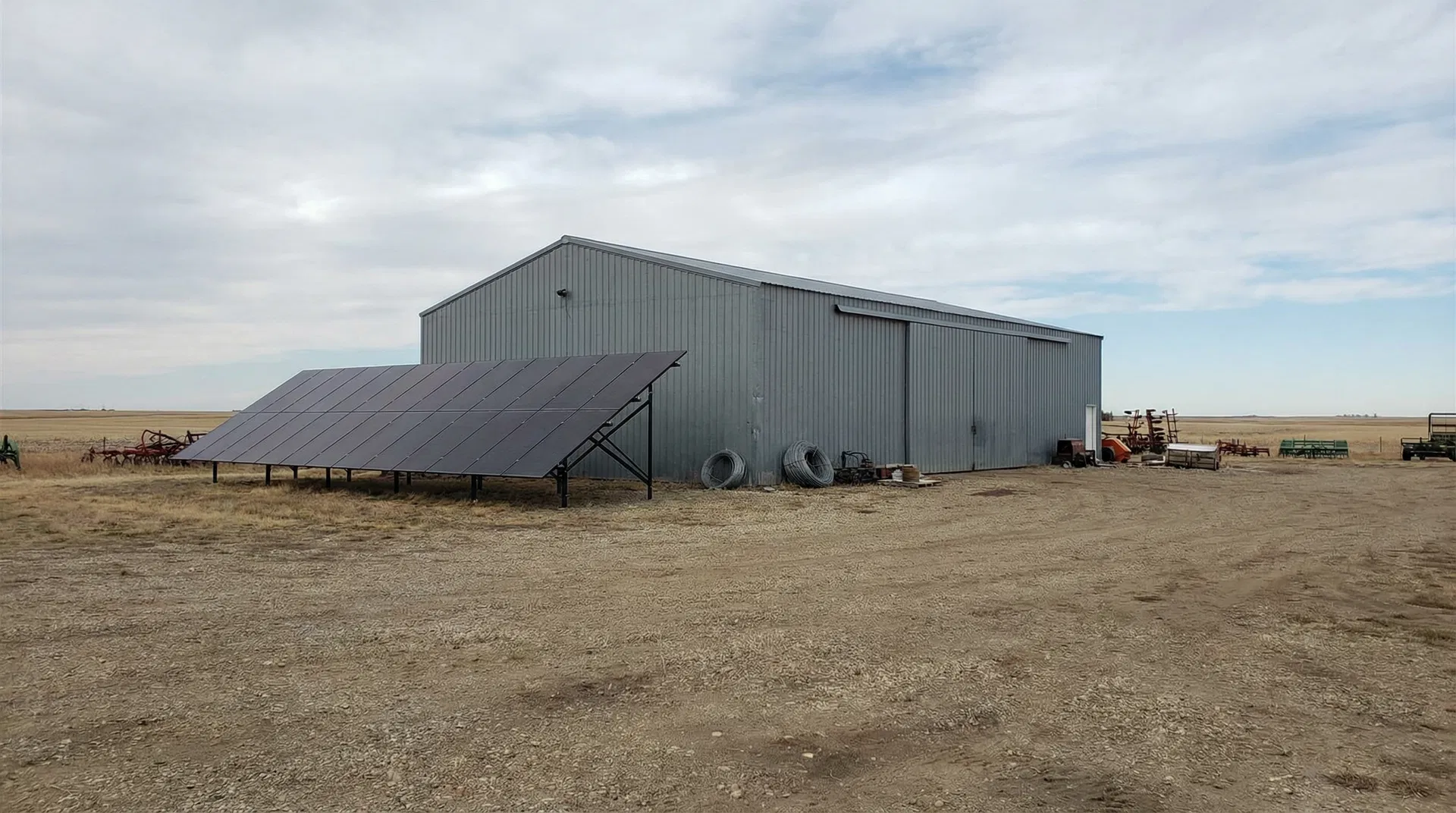
When people search solar hanna, most of them aren't thinking about their house. They're thinking about the shop. The heated shop that runs a welder, a compressor, and a unit heater from October through April. The bin site with aeration fans running all fall. The outbuilding that never had enough power and still got wired in anyway. We design grid-tied systems for exactly those buildings. System sizes for shops and outbuildings typically run 8 to 20 kW, with 12 kW being the most common starting point for a mid-size operation. We use LONGi panels for their proven output consistency in cold climates and APsystems microinverters for the flexibility they give us on roofs that aren't perfectly oriented or aren't perfectly pitched. Rooftop installs work well on newer steel buildings with a south or southwest face. On older buildings, or where the roof pitch isn't cooperative, a ground-mount array in the yard is often the cleaner call. We've done both on Special Areas No. 2 properties and we're not going to push you toward a configuration that doesn't fit the site. All grid-tied systems installed here connect through ATCO Electric's micro-generation program. Excess production you don't use in the building gets credited to your account. We handle the application and coordinate directly with ATCO Electric's Hanna district office so you're not navigating that paperwork on your own. Every design starts with your actual power bills, not a square footage estimate.
Why Solar Works in Hanna
Hanna sits in east-central Alberta at just over 51 degrees latitude, and the numbers are better than most people expect. The area averages 2,380 peak sun hours per year, which is enough to make a 12 kW system produce roughly 15,521 kWh annually. That's a meaningful offset against the bills that pile up in shops, heated buildings, and agricultural operations out here. Alberta's deregulated electricity market means your rate floats with the wholesale price. In 2024, the regulated rate option bounced between $0.10 and $0.22 per kWh depending on the season. Planning around $0.18 per kWh as a 2025 working estimate is reasonable, but when rates spike in winter, every kWh your panels produce is worth more. Rural properties on ATCO Electric typically carry bigger loads than urban homes, so the case for solar isn't built on sunshine hype. It's built on what you're already spending. Snow load zone S2 applies here, so any roof-mounted system we install is engineered for the snowpack this part of the province actually sees. If you've been watching your ATCO Electric bill climb through grain drying season or a hard winter, a well-sized system is worth a serious look.
Rural Electrical Service in Hanna: What You Need to Know
Voltage Rise
Voltage rise happens when solar production pushes electricity back up a long distribution line, causing the voltage at your meter to climb above the nominal level. On the long rural lines common in east-central Alberta, this effect is more pronounced than in town, and if voltage rises too high, your inverters will throttle output or trip offline to protect the grid. We size systems and configure inverters with voltage rise in mind so you're not losing production to a problem that could have been caught in the design stage.
Single-Phase vs Three-Phase
Most rural residences in Special Areas No. 2 are served by single-phase power, which is fine for homes and light shops. Working farms with grain handling equipment, large augers, or commercial-scale compressors often have three-phase service to handle the motor loads. The phase configuration at your service entrance directly affects which inverters we specify and how much capacity a grid-tied solar system can practically export, so we confirm this before anything else in the design process.
Panel Infrastructure
Older electrical panels on rural properties are common, and some of them were never sized for the loads they're running today, let alone a solar system on top. We assess breaker capacity, panel age, and whether the main breaker rating can support a solar backfeed without exceeding the panel's total capacity. If the panel needs an upgrade before the solar system can be safely connected, we'll tell you that upfront with a clear cost figure before you commit to anything.
Service Entrance Review
The meter base and service entrance are the first things ATCO Electric looks at when reviewing a micro-generation application. If the meter base is damaged, undersized, or not rated for a bi-directional meter, it will need to be upgraded before interconnection approval can proceed. We review the service entrance as part of our site assessment so there are no surprises during the ATCO Electric application process, and we coordinate any required upgrades directly.
Right-Sizing Solar for Hanna Properties
Properties around Special Areas No. 2 don't have simple load profiles. You're often looking at a house, a heated shop, a couple of outbuildings, and depending on the operation, grain aeration or irrigation on top of that. Stack those loads together and a $300 monthly bill is on the low end. Bills in the $500 to $800 range aren't unusual once harvest season hits and the bins are running fans around the clock. A $300 monthly bill typically points toward a system in the 10 to 12 kW range to offset the majority of usage. A $600 bill at the shop alone might warrant 16 to 20 kW if the roof and budget support it. We size based on your actual 12-month billing history, not a rule-of-thumb number pulled from a brochure. For roof-mounted systems, we need a building with a reasonably sound steel roof, a slope that works for Alberta's sun angle, and a face that gets good southern exposure without shading from grain bins or trees. A lot of older shops in this area don't tick all those boxes, and that's fine. Ground-mount arrays solve the problem cleanly: we pick the best spot in the yard, orient the array properly, and avoid the compromises that come with a problem roof. We provide honest production estimates based on your actual power bills and site conditions, not inflated projections. If a system doesn't pencil out, we'll tell you that too.
Typical Load Profiles We Design For Near Hanna
Heated Shop with Welding and Compressor
A standalone heated shop running a natural gas unit heater, a 240V welder, and a rotary screw compressor typically pulls $250 to $400 per month on its own meter. A 10 to 14 kW solar system offsets most of the daytime electrical load during the months when the sun is cooperating. For shops that run heaviest in fall and spring, the offset timing lines up well with peak production.
Grain Operation with Aeration Fans
Bin sites running multiple aeration fans through a 6 to 8 week fall drying window can add $600 or more to a power bill in a single billing period. A 16 to 20 kW system doesn't eliminate that bill, but it puts a meaningful dent in the shoulder-season loads that flank it, covering shop and yard light usage when the fans aren't running. We size these systems on a full 12-month view, not just the harvest spike.
Acreage with Shop and Home Combined
A rural property running a home and a 2,000 square foot shop off the same meter often sees combined monthly bills of $400 to $700 depending on the season and heating setup. A 14 to 18 kW system covers most of the year-round base load and offsets a significant share of the winter peaks. This combined load profile is one of the most common scenarios we see in Special Areas No. 2 and it's well suited to a ground-mount array sized against actual 12-month usage.
ATCO Electric Interconnection in Hanna
ATCO Electric is the wire service for Hanna and the surrounding Special Areas No. 2. Their distribution system office that covers this area operates locally out of Hanna, which matters for turnaround time on approvals and for getting questions answered without being bounced around a call centre. For any grid-tied system, we submit a micro-generation application to ATCO Electric on your behalf. Approval typically takes 2 to 6 weeks from submission, depending on the time of year and current application volume. Once approved, ATCO Electric installs a bi-directional meter that tracks both what you pull from the grid and what you send back. Credits for excess generation are applied against your distribution and energy charges under Alberta's micro-generation regulation. The credit rate is set by your retailer arrangement, so the exact value of exported power varies, but you're not giving it away for free. We handle the full application package: single-line diagrams, equipment specs, and any supporting documentation ATCO Electric requires. We've done this process with ATCO Electric before and we know what they need to move an application through without delays.
Estimated Savings and Payback
| System Size | Annual Production | Year 1 Savings | Payback Period |
|---|---|---|---|
| 8-20 kW range, 12 kW typical | 15,521 kWh | $2,793 CAD | 12.2 years (based on 12 kW at $2,850/kW installed) |
These estimates are based on a 12 kW system, 2,380 peak sun hours per year, and an assumed blended rate of $0.18/kWh. Actual system size, production, and payback period depend on your power bills and site conditions.
How We Work in Hanna
Bill and Load Review
We review your power bill to understand your energy use in Hanna and size the system to your actual consumption, not a generic estimate.
Site Assessment
We assess your roof or ground area, south-facing exposure, electrical service, and utility interconnection requirements specific to your property.
Design and Utility Application
We produce a system layout, production estimate, and cost summary, then submit your micro-generation application to your utility on your behalf.
Installation and Commissioning
Our crew installs racking, panels, inverter, and electrical connections. All work is performed by licensed electricians. We commission and test before handoff.
Rebates and Incentives Available in Hanna
Alberta Micro-Generation Regulation
Alberta's micro-generation regulation allows grid-tied solar system owners to receive credits on their electricity bill for power sent back to the ATCO Electric grid. Credits accumulate when your system produces more than the building is using, and those credits offset future consumption charges. The exact credit rate depends on your electricity retailer, but the mechanism means excess production isn't wasted.
Federal Clean Technology Investment Tax Credit
Farm and commercial operations may be eligible for the federal Clean Technology Investment Tax Credit, which covers a percentage of eligible capital costs for solar equipment placed into service. This applies to incorporated farming operations and businesses, not personal residences, so if your shop or grain operation is run through a corporation or farm entity, it's worth discussing with your accountant. The credit rate and eligible equipment categories can change with federal budgets, so confirm current details with a tax professional.
Frequently Asked Questions
Get a Solar Assessment for Hanna
Submit a recent power bill and we will review your consumption and provide an honest assessment for your Hanna property. No obligation.
(587) 330-7502 Book a Call