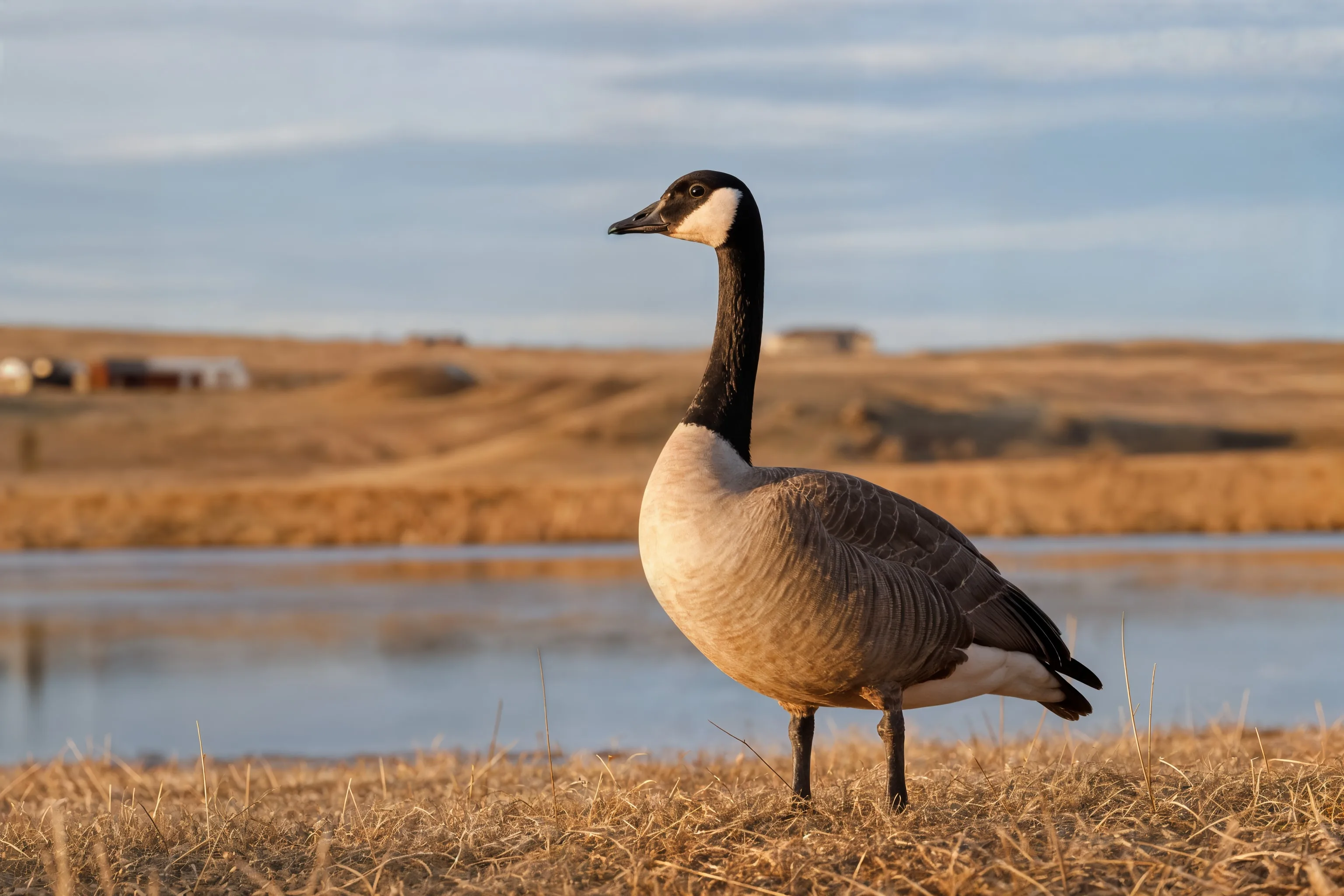
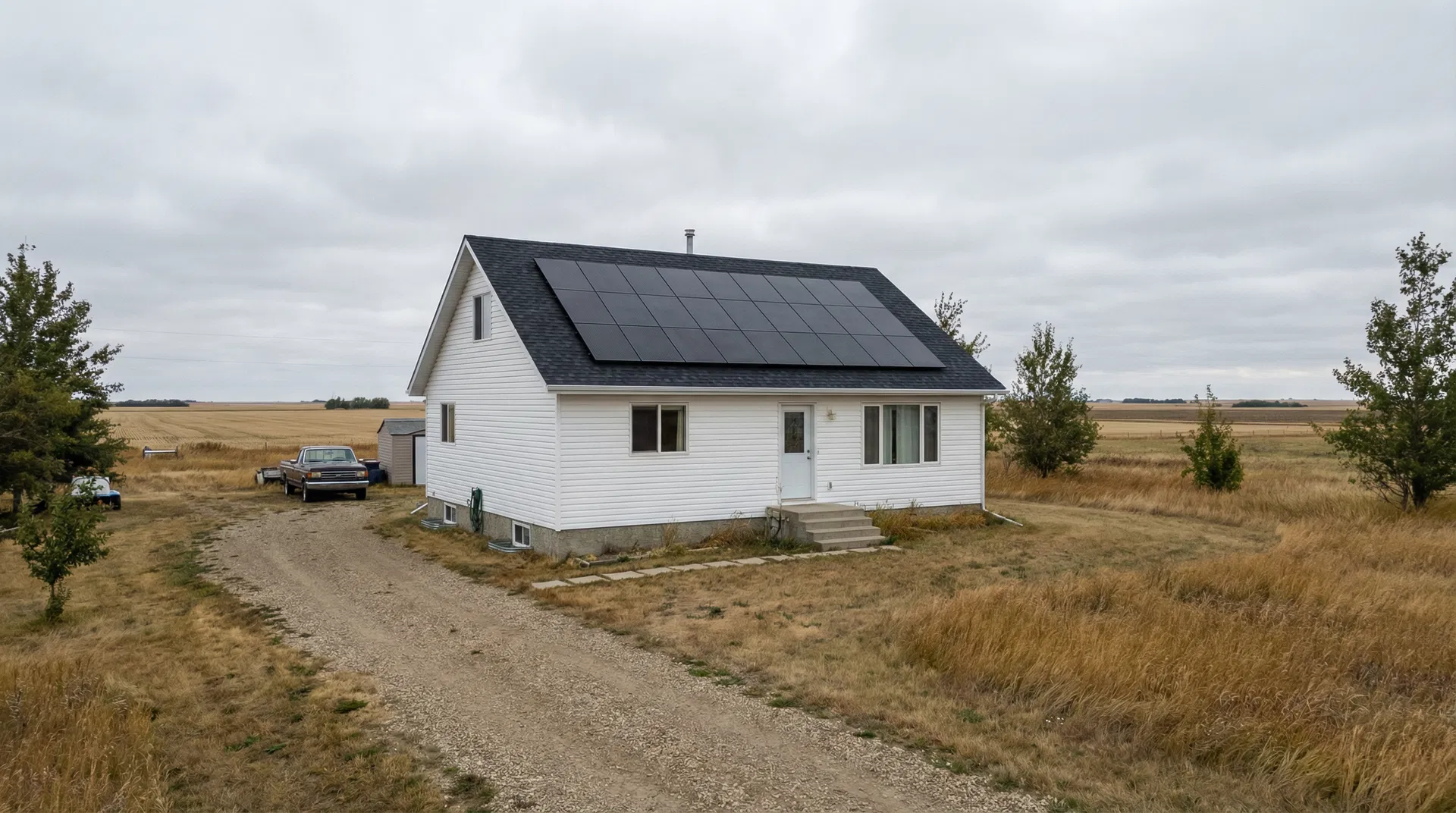
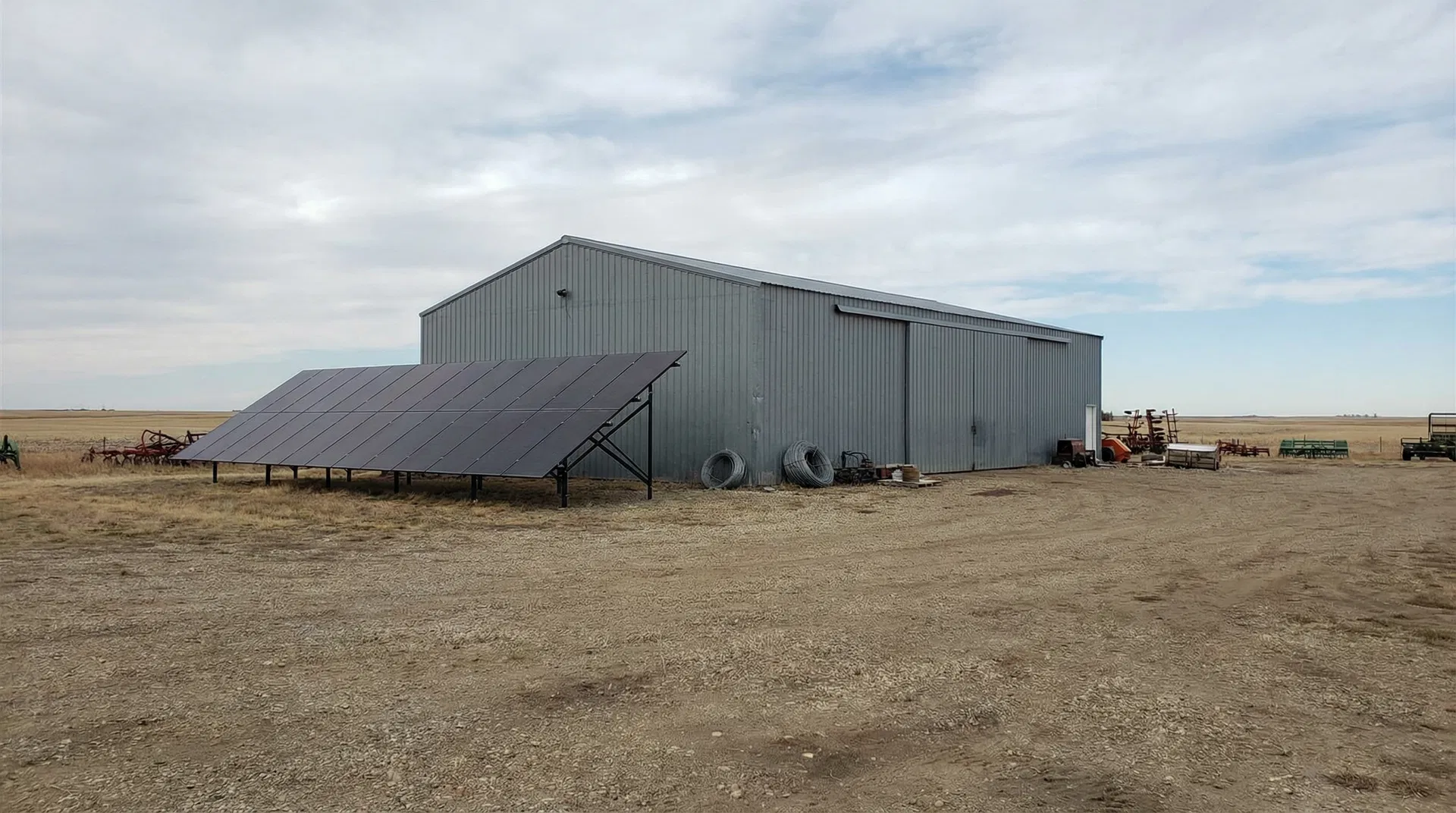
Farm solar in Hanna starts with the loads already running on the yard, not a generic rooftop package. We spec LONGi panels for the array and APsystems microinverters for monitoring down to the panel level, so a failed board in one string doesn't take out production from the rest of the roof or ground-mount field. For acreages and farms in this area, ground-mount is usually the preferred layout: open yard space, easier access for maintenance, and panel orientation that doesn't depend on whatever pitch and bearing the shop or barn roof happens to have. Rooftop arrays still make sense on newer outbuildings or homes with clean south or west-facing roof planes and no shading from grain bins or shelterbelts. Systems in the 20 to 50 kW range typically cover a home plus shop plus grain handling equipment, with 25 kW being a common starting point before we size up or down based on your actual load. Microinverter-level monitoring matters more on a farm than a house, because it lets us, and you, see exactly which part of a ground-mount array or roof section is underperforming, whether that's from snow drift, bin shading, or a wiring fault, without guessing. Every system we quote accounts for the specific loads on the property: well pumps, grain dryers, shop heaters, and anything else pulling power through the panel you already have.
Solar Planning for Hanna Properties
This area has been a Town since April 14, 1914, and farm and grain operations here have run on infrastructure built for working loads, not subdivision rooftops. ATCO Electric serves the wire connection for properties in and around town, and most operations we assess run a home, a shop, grain handling equipment, and sometimes irrigation off a single service. The population here sits at 2,394 as of the most recent census, and this remains a working agricultural area first. The Sheerness Generating Station nearby is a reminder that this part of Alberta has long been tied to large-scale power generation, but a farm solar system on your property is sized around what's actually drawn at the meter, not a regional average. We don't quote a system before reviewing your most recent power bill and walking the property. Ground-mount is common on farms in this area because open yard space is usually available and roof pitch on older outbuildings isn't always ideal for panel orientation. Every design starts with your actual usage, your actual roof or yard layout, and the service panel you already have, not a stock number pulled from a brochure.
Electrical Site Review for Hanna Properties
Voltage Rise
Voltage rise happens when a long rural distribution line causes the voltage at your meter to sit higher than what's typical closer to the substation. On longer rural runs, that elevated baseline voltage can push an inverter's output voltage past its clipping threshold sooner than it would on a shorter urban feeder. We check line voltage as part of the site assessment so your system is sized and configured to avoid unnecessary clipping losses.
Single-Phase vs Three-Phase
Rural Alberta properties run on either single-phase or three-phase service depending on when the yard was connected and what equipment it was built to support. That distinction matters because it determines which inverter models and configurations we can use and how much total capacity the service can carry. A three-phase farm with a grain leg and irrigation pump has different equipment options than a single-phase home and shop setup.
Panel Infrastructure
Older rural electrical panels weren't built with solar in mind, so we check breaker capacity, bus bar rating, and panel age before finalizing a design. A panel that's at or near its rated capacity, or one old enough that replacement parts are hard to source, can limit how much solar it can safely interconnect. When an upgrade is needed, that usually means a new panel or a supplemental load center sized to the system we're installing.
Service Entrance Review
We check the condition of the service entrance and meter base as part of every site visit, since both have to support the added interconnection equipment for a micro-generation application to ATCO Electric. A meter base that's corroded, undersized, or outdated can hold up that application until it's addressed. If an upgrade is required, we fold it into the project scope upfront instead of surprising you with it mid-install.
Right-Sizing Solar for Hanna Properties
Rural Alberta systems run bigger than a typical in-town house for a simple reason: there's usually more than one load on the meter. A home plus a heated shop plus grain handling equipment plus an irrigation pump draws a lot more than a house alone, which is why farm systems in the 20 to 50 kW range are common instead of the 6 to 10 kW typical of a standard residential roof. Deciding between roof and ground-mount comes down to the yard itself. If shelterbelts or outbuildings throw shade across the roof, or the shop roof pitch and orientation aren't close to ideal, ground-mount usually wins, especially on acreages and farms where there's open land available and no shortage of room to place an array facing the right direction. We don't size a system off a rule-of-thumb number per square foot of barn roof or a guess at your usage. We size it from the 12-month usage graph on your most recent power bill, which shows exactly how your draw moves through the year, whether that's a winter heating spike in the shop or a summer pump season. Combine that usage graph with a site visit covering your roof or yard layout, shading, and panel capacity, and we land on a system size that matches what you actually use instead of what a generic calculator assumes.
Typical Load Profiles We Design For Near Hanna
Home + Heated Shop
This profile covers a residence and an insulated, heated shop running power tools, maybe a vehicle lift, and space heat through the winter. The shop's heating load often rivals or exceeds the house itself, so we use your most recent power bill's usage graph to see how much of that draw is winter-driven before sizing the array and inverter configuration.
Grain Handling and Drying
This profile includes augers, aeration fans, and a grain dryer that run hard for a short, intense window at harvest and sit idle the rest of the year. Because the load is seasonal and spiky rather than steady, we look closely at your bill's monthly pattern to size a system that earns its keep without over-building for a demand that only shows up a few weeks a year.
Irrigation and Outbuilding Pump Loads
This profile covers a well pump, irrigation pump, or livestock waterer running on its own circuit, often with cycling loads that pull hard for short bursts. We size the inverter and string configuration to handle that cycling pattern, using your service panel capacity and usage graph rather than a flat per-acre estimate.
ATCO Electric Interconnection in Hanna
ATCO Electric is the wire service for properties here, and that's the utility we file the interconnection application with for any farm solar system we design. Range Road Solar handles that application and the technical package it requires, so you're not the one chasing down single-line diagrams or equipment specs. Because ATCO Electric's requirements and current rules can shift, we confirm the specifics of your application, including any inspection or metering steps, at the time we design your system rather than quoting a generic timeline upfront. This applies whether you're adding a 20 kW system on a shop roof or a 50 kW ground-mount array covering a home, grain operation, and irrigation pump. We stay in contact with you through the application process so you know where things stand, but we don't promise an approval window or credit-settlement outcome since those depend on ATCO Electric's current process, not on us.
Project Economics and Design Review
| System Size | Annual Production | Year 1 Savings | Payback Period |
|---|---|---|---|
| 20-50 kW range, 25 kW typical |
Production, savings, and payback figures require a property-specific design review and your most recent power bill; we don't quote them from a template.
How We Work in Hanna
Bill and Load Review
We review your power bill to understand your energy use in Hanna and size the system to your actual consumption, not a generic estimate.
Site Assessment
We assess your roof or ground area, south-facing exposure, electrical service, and utility interconnection requirements specific to your property.
Design and Utility Application
We produce a system layout, production estimate, and cost summary, then submit your micro-generation application to your utility on your behalf.
Installation and Commissioning
Our crew installs racking, panels, inverter, and electrical connections. All work is performed by licensed electricians. We commission and test before handoff.
Current Program and Interconnection Review
Utility connection review
ATCO Electric reviews the grid connection application for any micro-generation system before it goes live, and Range Road Solar prepares and handles that design package on your behalf. We don't promise a specific approval window or how any resulting credits get settled, since that's governed by ATCO Electric's current process.
Current program review
Commercial, farm, and residential solar projects are each reviewed against whatever program and eligibility rules are current at the time we design your system, since those rules can change. We check eligibility as part of the design review rather than assuming last year's rules still apply.
Frequently Asked Questions
Get a Solar Assessment for Hanna
Submit a recent power bill and we will review your consumption and provide an honest assessment for your Hanna property. No obligation.
(587) 330-7502 Book a CallRelated Resources