
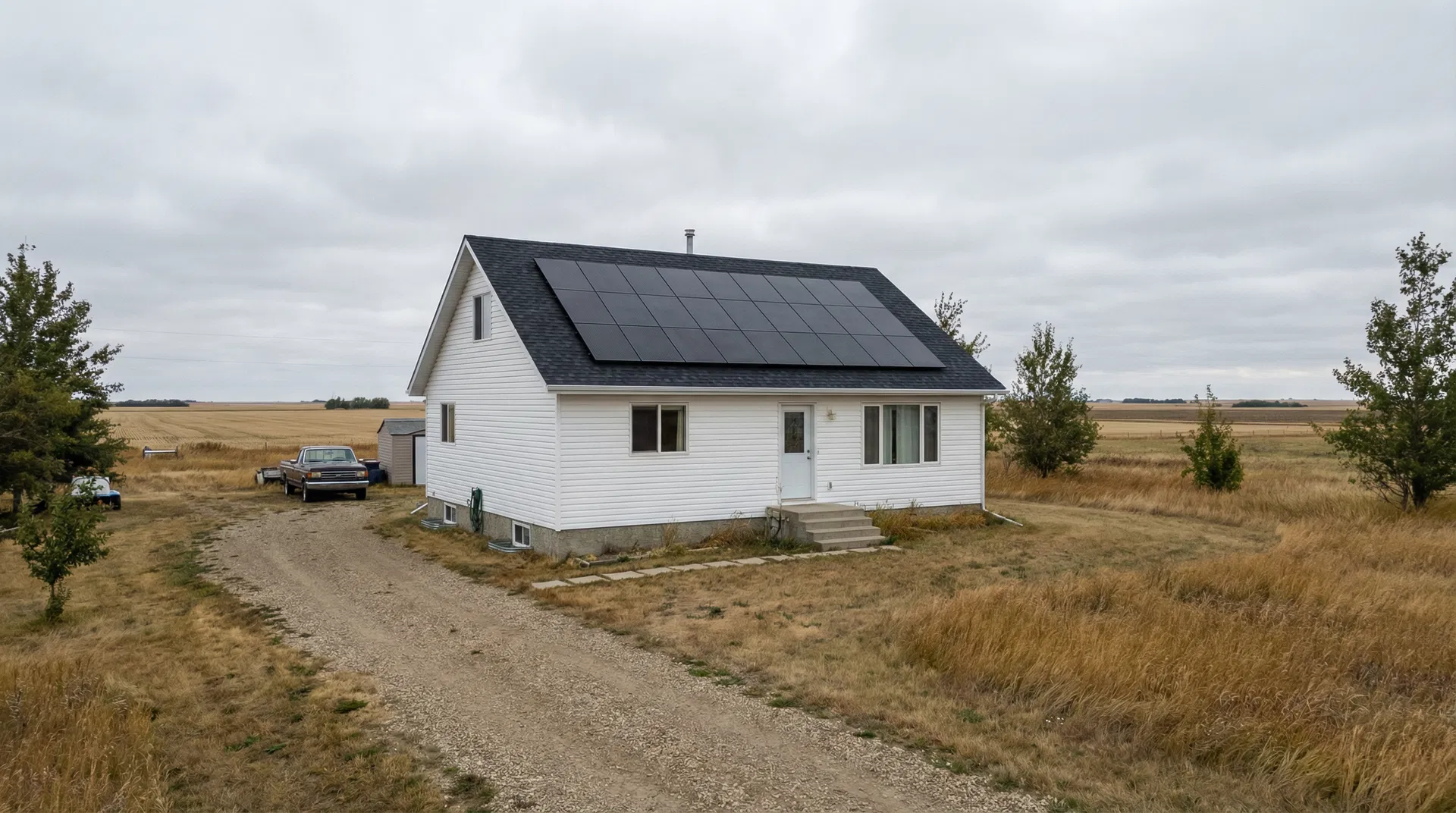
Residential solar installation in Hanna starts with a site visit, not a sales pitch. We install grid-tied systems using LONGi panels paired with APsystems microinverters, a combination that lets each panel operate independently so shading from a tree, an outbuilding, or a change in roof pitch doesn't drag down the whole array. That matters because properties here range from in-town bungalows on standard lots to acreages and farmyards with sheds, shops, and grain infrastructure competing for roof space and panel sightlines. For a town lot, we're usually looking at a straightforward roof-mount in the 8 to 12 kW range, with 10 kW being typical for a single-family home. For acreages and properties with outbuildings, we walk the whole site, not just the house roof, because a shop or a detached garage sometimes makes more sense for panel placement than the home itself. APsystems microinverters also simplify permitting and monitoring, since each unit reports production independently, which makes troubleshooting a single underperforming panel far easier than chasing a fault through a central string inverter. Every install includes the engineering package ATCO Electric requires for interconnection, plus the structural and electrical review needed to confirm your roof, panel, and service entrance can support the system size we're proposing. We don't sell a stock system size off a brochure. We size it from your most recent power bill and your property's actual layout.
Solar Planning for Hanna Properties
Hanna sits within Special Area No. 2, a rural administration that shapes how development and permitting decisions get made outside town limits. The town itself was incorporated on April 14, 1914, and it's carried a population of 2,394 in recent census counts, down from 2,559 the cycle before, numbers that tell you this is a tight community where word travels fast about who did the work right. Properties range from in-town lots to acreages and farmyards, with the Sheerness Generating Station sitting as one of the bigger pieces of electrical infrastructure in the surrounding area. That mix matters for solar: a bungalow on a town lot and a shop-plus-house setup outside the limits don't get sized the same way. Range Road Solar designs every system around your roof or ground conditions, your electrical panel, and what ATCO Electric requires for interconnection, not a one-size template. We don't guess at your usage. We pull the 12-month usage graph off your most recent power bill and build the system size and layout from there. Whether you're inside town limits or out on an acreage nearby, the process starts with the same site-specific design review before any number gets attached to the project.
Electrical Site Review for Hanna Properties
Voltage Rise
Voltage rise happens when the distance and wire gauge between a property and the nearest distribution transformer cause voltage to climb higher than expected under light load. On rural feeders, that condition can push grid-tied inverters toward their upper voltage limit, which triggers clipping and reduces how much of the system's output actually gets used. We measure voltage conditions at your service entrance and factor that into how we size and configure the inverter setup, not just the panel count.
Single-Phase vs Three-Phase
Rural Alberta properties show up with either single-phase or three-phase electrical service, and which one you have changes what inverter equipment and system capacity actually fit. A shop or grain-handling setup running three-phase motors needs an installation planned around that service type, while a single-phase home doesn't. We confirm your service type on-site before finalizing equipment, rather than assuming based on property type.
Panel Infrastructure
Older rural properties sometimes have electrical panels with limited breaker capacity or aging components that weren't built with solar backfeed in mind. We check panel age, busbar rating, and available breaker space during the site visit to confirm it can handle the proposed system safely. If the panel can't support it, an upgrade means a new panel sized for both existing loads and the solar backfeed, done before installation moves forward.
Service Entrance Review
We inspect the service entrance and meter base condition as part of every site visit, since ATCO Electric's micro-generation application requires confirmation that the existing equipment can safely support a grid-tied connection. A deteriorated or outdated meter base can hold up the application until it's addressed. When an upgrade is required, we coordinate it as part of the project scope so it doesn't become a separate surprise later.
Right-Sizing Solar for Hanna Properties
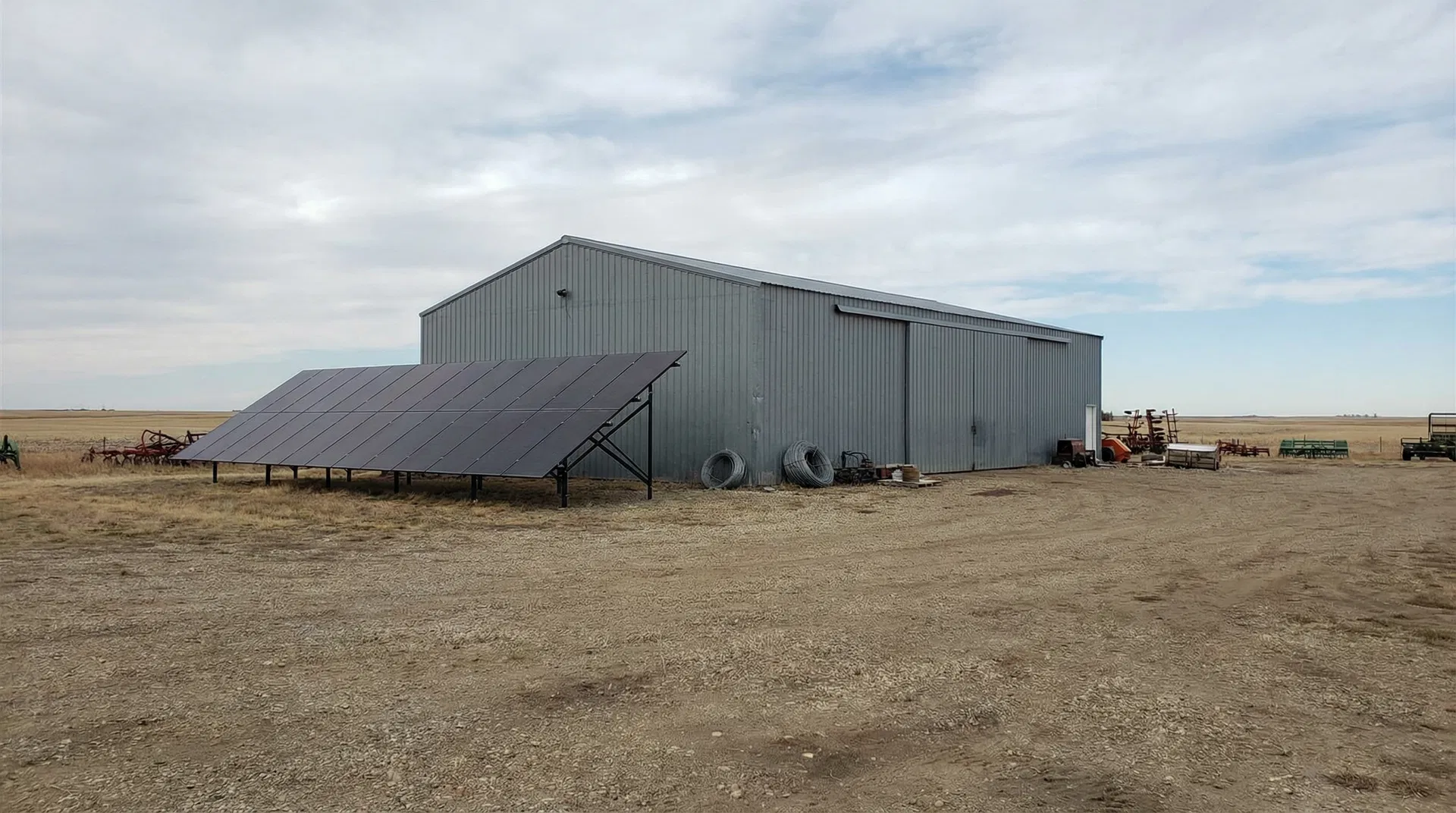
Rural properties typically need larger systems than a comparable house in a city, simply because there's more going on behind the meter: a home plus a heated shop, a well pump, grain-handling equipment, or irrigation infrastructure all draw from the same panel. That's why an 8 to 12 kW range isn't unusual out here, where a 10 kW system might be typical even though an in-town equivalent could get by with less. Roof versus ground mount comes down to what your site actually offers. If your roof has good southern exposure and no shading, a roof mount usually makes sense and keeps the footprint off usable land. But if trees or outbuildings shade the roof, the pitch is wrong, or you've got open yard space you're not using for anything else, ground mount often wins, especially on acreages with room to spread an array out for better orientation. We don't size systems off a rule-of-thumb number per square foot or per occupant. We pull the 12-month usage graph off your most recent power bill and look at how your consumption moves across the year, then combine that with a site visit covering your roof or yard layout, shading, and orientation. That combination, your actual usage pattern and your actual site, is what determines the system size we propose, not a generic estimate.
Typical Load Profiles We Design For Near Hanna
Home Plus Heated Shop
This is a common setup outside town: a house and a detached shop with electric heat, a welder, or an air compressor pulling power on top of normal household use. We size the system around the combined draw shown on your most recent power bill, not just the home's typical usage, since the shop can shift the load profile significantly depending on the season.
Acreage with Well Pump and Outbuildings
Properties with a well pump, detached garage, and a few outbuildings often have load spread across the yard instead of concentrated in one building. We look at how those loads cycle through the year on your power bill's usage graph and plan panel placement, sometimes split between roof and ground mount, to match where the draw actually happens.
Grain Handling and Farm Equipment
Grain dryers, augers, and other seasonal farm equipment create sharp spikes in usage that don't show up in a typical residential load profile. We factor those seasonal spikes into the system design using your actual billing history, so the system is sized for your real annual pattern instead of an average month.
ATCO Electric Interconnection in Hanna
ATCO Electric is the wire service for properties in and around Hanna, which means every grid-tied solar system here goes through ATCO Electric's interconnection and micro-generation application process before it's switched on. Range Road Solar prepares that application and the supporting engineering package as part of your installation, so you're not the one deciphering utility paperwork on top of managing a construction project. The application covers the technical details ATCO Electric needs to review: your proposed system size, equipment specifications for the LONGi panels and APsystems microinverters, and how the system ties into your existing service. We handle the submission and respond to any follow-up requests from ATCO Electric directly. We don't make claims here about how long that review takes or how credits get settled on your account, because those details depend on current ATCO Electric rules and your specific rate plan. What we can tell you is that the application gets prepared correctly the first time, based on your actual site conditions, so it isn't kicked back for missing information.
Project Economics and Design Review
| System Size | Annual Production | Year 1 Savings | Payback Period |
|---|---|---|---|
| 8-12 kW range, 10 kW typical |
Production, savings, and payback figures are only provided after a property-specific design review that uses your most recent power bill and actual site conditions.
How We Work in Hanna
Bill and Load Review
We review your power bill to understand your energy use in Hanna and size the system to your actual consumption, not a generic estimate.
Site Assessment
We assess your roof or ground area, south-facing exposure, electrical service, and utility interconnection requirements specific to your property.
Design and Utility Application
We produce a system layout, production estimate, and cost summary, then submit your micro-generation application to your utility on your behalf.
Installation and Commissioning
Our crew installs racking, panels, inverter, and electrical connections. All work is performed by licensed electricians. We commission and test before handoff.
Current Program and Interconnection Review
Utility connection review
ATCO Electric reviews every grid-tied connection application before a system goes live, and Range Road Solar prepares that full application and engineering package on your behalf. We handle the submission and follow-up communication so the process moves without you having to interpret utility forms yourself.
Current program review
Residential, farm, and commercial properties may qualify for different treatment under current utility and program rules, and eligibility can change depending on your property classification and system size. We review your specific situation against whatever rules are active at the time of your design, rather than assuming a blanket answer applies.
Frequently Asked Questions
Get a Solar Assessment for Hanna
Submit a recent power bill and we will review your consumption and provide an honest assessment for your Hanna property. No obligation.
(587) 330-7502 Book a CallRelated Resources