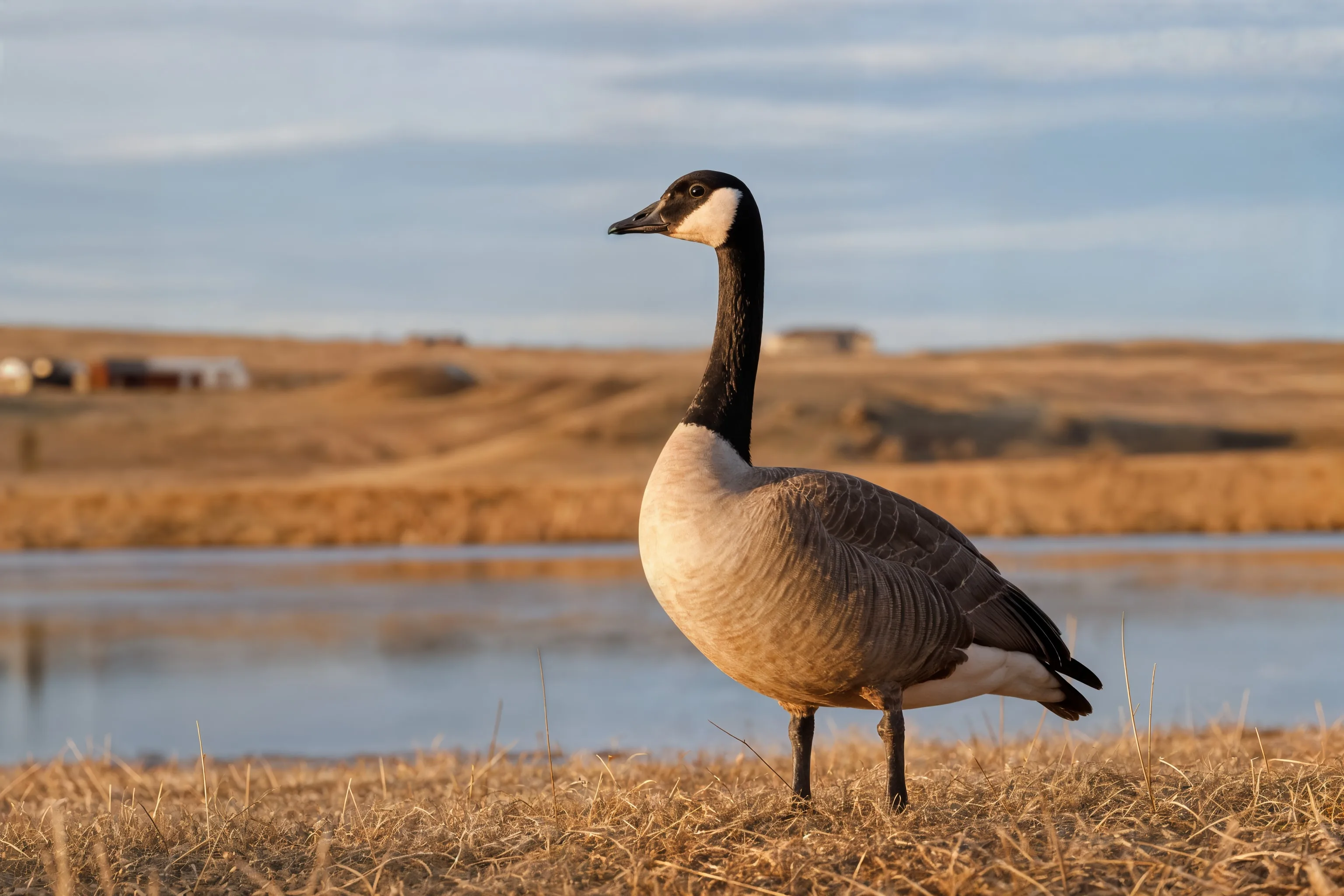
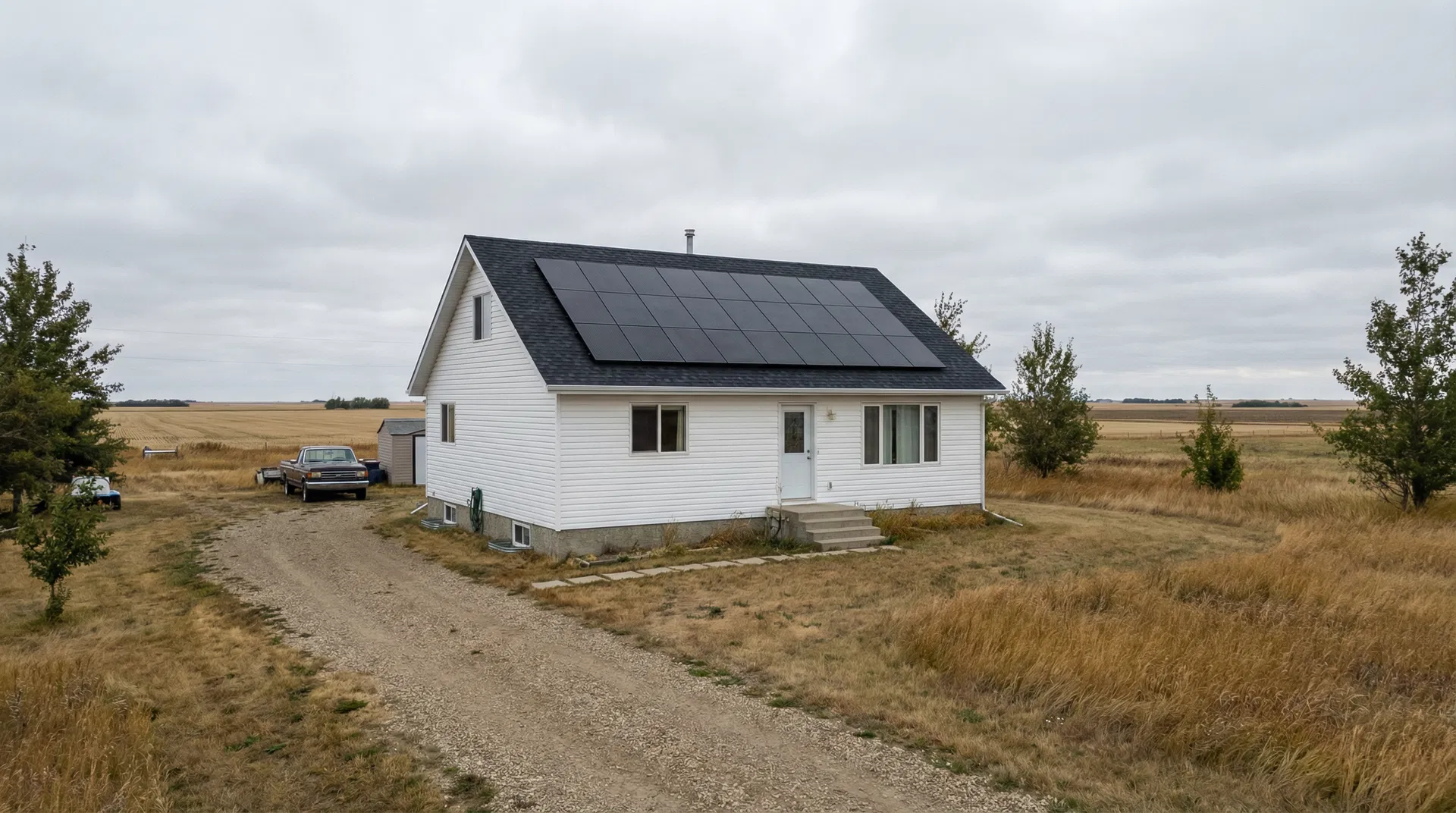
Type solar hanna into a search bar and you'll land on a mix of contractors, some built for subdivision roofs, some who've never had to size a system around a grain bin or a heated shop. Range Road Solar does the second kind of job. For homes, farmyards, and acreages in and around Hanna, we install LONGi panels paired with APsystems microinverters, sized in the 8 to 15 kW range depending on what the property actually draws. LONGi panels hold up well on exposed rural roofs and open ground mounts, and because APsystems microinverters manage each panel independently rather than running the whole array through one central inverter, a shadow from a grain leg or a shelterbelt tree on one panel doesn't drag down the rest of the system. That matters more on a farm layout than it does on a tidy subdivision lot. Our crews handle the full scope: racking on roof or ground mount, wiring, microinverter commissioning, and the paperwork that goes to ATCO Electric for interconnection. We work with asphalt shingle, metal, and ground-mounted racking, and we'll tell you plainly if your roof pitch or orientation makes a ground mount the better call instead of forcing panels onto a surface that doesn't suit them. Before anything gets ordered, you'll see a design based on your actual roof or yard and your most recent power bill, not a quote built off a satellite photo and a guess.
Solar Planning for Hanna Properties
Hanna was incorporated on April 14, 1914, and the surrounding land sits within Special Area No. 2, which runs its own local services outside the standard county structure. Statistics Canada's last census counted 2,394 people here, down from 2,559 the count before, and that smaller, spread-out population shows up in the kind of properties we're actually designing for: in-town homes with a detached garage, farmyards with a shop and a few bins, acreages where the house is one load among several. None of that history changes the physics of a solar array, but it does change what a good design looks like. A subdivision installer in Calgary doesn't have to think about a three-phase shop panel or a yard light on its own meter. We do. Every proposal for a property here starts with a walk-through or detailed photos of the roof or yard, a look at your most recent ATCO Electric bill, and a plain conversation about what else draws power on site. From there we size the array, decide on roof or ground mount, and build the interconnection package around what ATCO Electric actually requires, not a generic template pulled from a city job.
Electrical Site Review for Rural Properties
Voltage Rise
Voltage rise happens when the voltage at a solar system's connection point sits higher than normal because of the length and condition of the line feeding the property, which is common on rural distribution runs. If voltage rise is significant, inverters can clip output to stay within safe operating range rather than deliver full capacity. We check for this during the site review and factor it into system sizing and inverter selection so the design accounts for actual line conditions, not textbook ones.
Single-Phase vs Three-Phase
Rural Alberta properties come in with either single-phase or three-phase electrical service, and which one you have changes what equipment fits. A shop or grain-handling setup on three-phase power needs a different inverter and interconnection approach than a single-phase farmhouse. We confirm your service type early, because it affects both equipment selection and how much capacity the system can realistically support.
Panel Infrastructure
Older electrical panels on rural properties don't always have the breaker capacity or physical space to handle a new solar interconnection cleanly. We check the panel's age, amperage rating, and available breaker slots during the site assessment. If the existing panel can't support the system, an upgrade means swapping in a panel with adequate capacity and space before the solar connection goes in, which we scope and quote as part of the project.
Service Entrance Review
The service entrance and meter base are part of what we inspect before finalizing a design, since their condition affects whether the micro-generation application to ATCO Electric can proceed as planned. We look for signs of wear, outdated components, or capacity limits at the entrance point. If an upgrade is needed, we'll scope it alongside the solar installation rather than discovering it partway through the project.
Right-Sizing Solar for Rural Properties
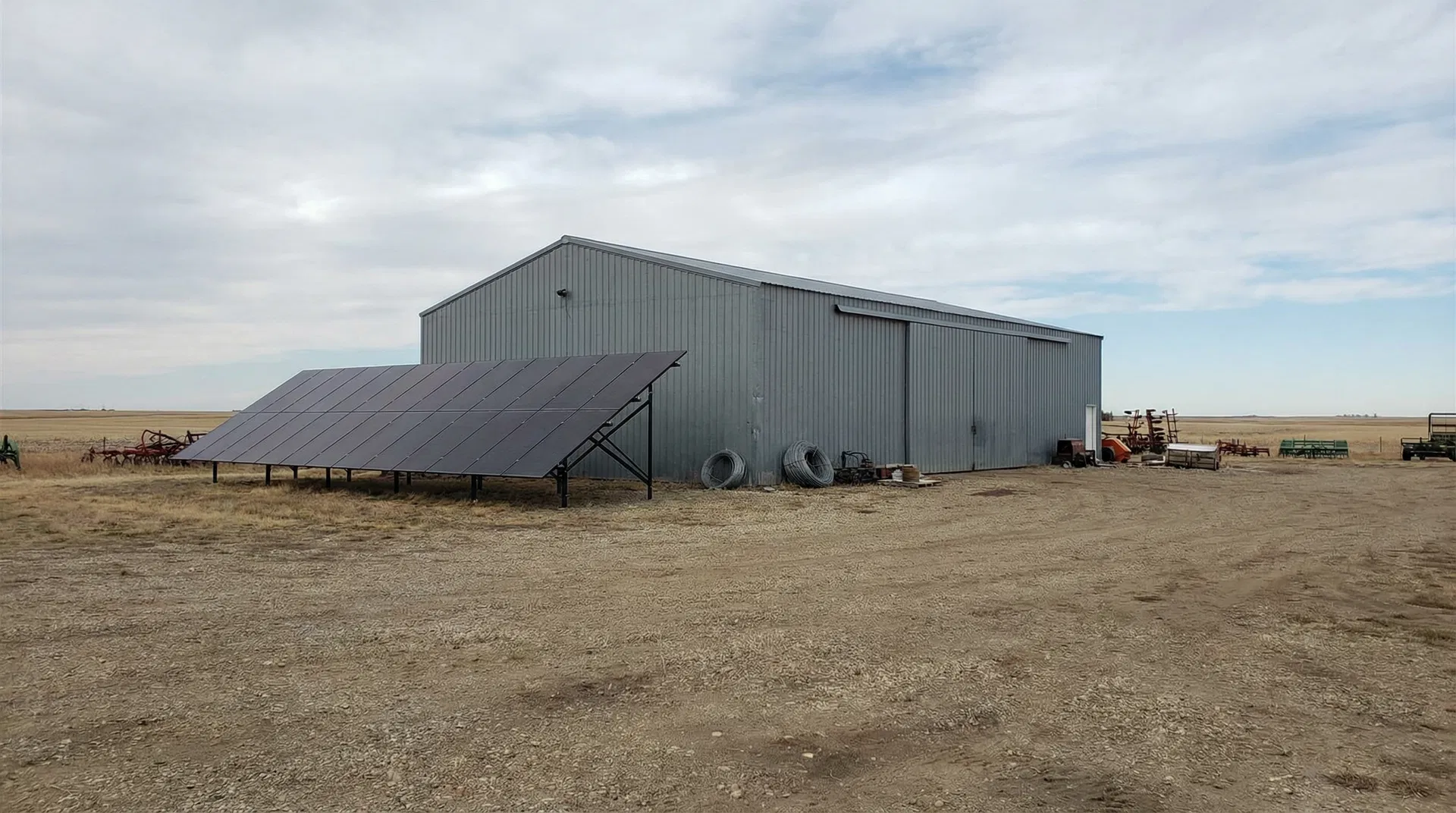
Rural systems in this area tend to run bigger than a typical city install, and that's because they're rarely sized for just a house. A property might carry a home, a heated shop, a grain bin yard, or an irrigation pump, all drawing from the same service, and the system has to account for all of it, not just the main residence. Roof or ground mount is the next decision, and it comes down to the property itself. If the roof has good southern exposure and isn't shaded by trees or outbuildings, it's usually the simpler and more cost-effective choice. If the roof pitch is poor, there's shading from a shelterbelt or a neighboring structure, or the yard has open land to spare, a ground mount often makes more sense and gives us more flexibility on orientation. We don't size systems off rule-of-thumb numbers like watts per square foot or a flat multiplier on square footage. We size them from the 12-month usage graph on your most recent power bill, which shows actual consumption patterns across the year, combined with a site design that accounts for your roof or yard conditions. That combination, your real usage and your real property, is what determines whether a system lands at the low end of the range, the high end, or somewhere in between.
Typical Load Profiles We Design For Near This Area
Home Plus Heated Shop
This is a common setup: a house and a separate heated shop building, each drawing power, sometimes on separate meters. We look at the combined load shown across your most recent power bill's usage graph and size the system to match what the house and shop draw together, not just the house alone.
Grain Handling and Drying
Grain bins, augers, and drying equipment can create seasonal spikes in power use that look very different from a steady residential load. We account for that seasonal pattern when reviewing your usage graph, since a system sized only for average monthly draw can miss what actually happens during harvest.
Acreage with Irrigation or Livestock Equipment
Acreages with a water pump, livestock waterers, or other equipment running intermittently through the year have a load profile that's harder to estimate by eye. We rely on the actual usage graph from your most recent power bill and a site walk-through to size a system around what the property really draws, rather than guessing at an average.
ATCO Electric Interconnection in Hanna
ATCO Electric is the wire service here, and any grid-connected solar system has to go through their micro-generation interconnection process before it's switched on. Range Road Solar handles that application as part of the project: the technical drawings, the equipment specifications, and the paperwork ATCO Electric needs to review the connection. We coordinate the meter work and inspection steps required to bring the system online, and we stay the point of contact with ATCO Electric so you're not the one chasing down forms. We don't quote an approval timeline or guarantee a specific outcome, because those details are set by ATCO Electric's own review process, not by us. What we do control is making sure the application package is complete and accurate the first time it's submitted, which is the part most likely to slow a project down when it's handled poorly.
Project Economics and Design Review
| System Size | Annual Production | Year 1 Savings | Payback Period |
|---|---|---|---|
| 8-15 kW range, 10 kW typical |
Actual production, savings, and payback figures require a property-specific design and your most recent power bill, and we won't put a number in front of you without both.
How We Work in Hanna
Bill and Load Review
We review your power bill to understand your energy use in Hanna and size the system to your actual consumption, not a generic estimate.
Site Assessment
We assess your roof or ground area, south-facing exposure, electrical service, and utility interconnection requirements specific to your property.
Design and Utility Application
We produce a system layout, production estimate, and cost summary, then submit your micro-generation application to your utility on your behalf.
Installation and Commissioning
Our crew installs racking, panels, inverter, and electrical connections. All work is performed by licensed electricians. We commission and test before handoff.
Current Program and Interconnection Review
Utility connection review
ATCO Electric reviews every grid-connected solar application for properties in this area through its micro-generation process. Range Road Solar prepares and submits the design package, the equipment specifications, and the technical drawings that application requires.
Current program review
Residential, farm, and commercial eligibility for any current solar-related programs is reviewed against the rules in place at the time of your design, not assumed in advance. We check what applies to your specific property and project when we build your proposal.
Frequently Asked Questions
Get a Solar Assessment for Hanna
Submit a recent power bill and we will review your consumption and provide an honest assessment for your Hanna property. No obligation.
(587) 330-7502 Book a Call