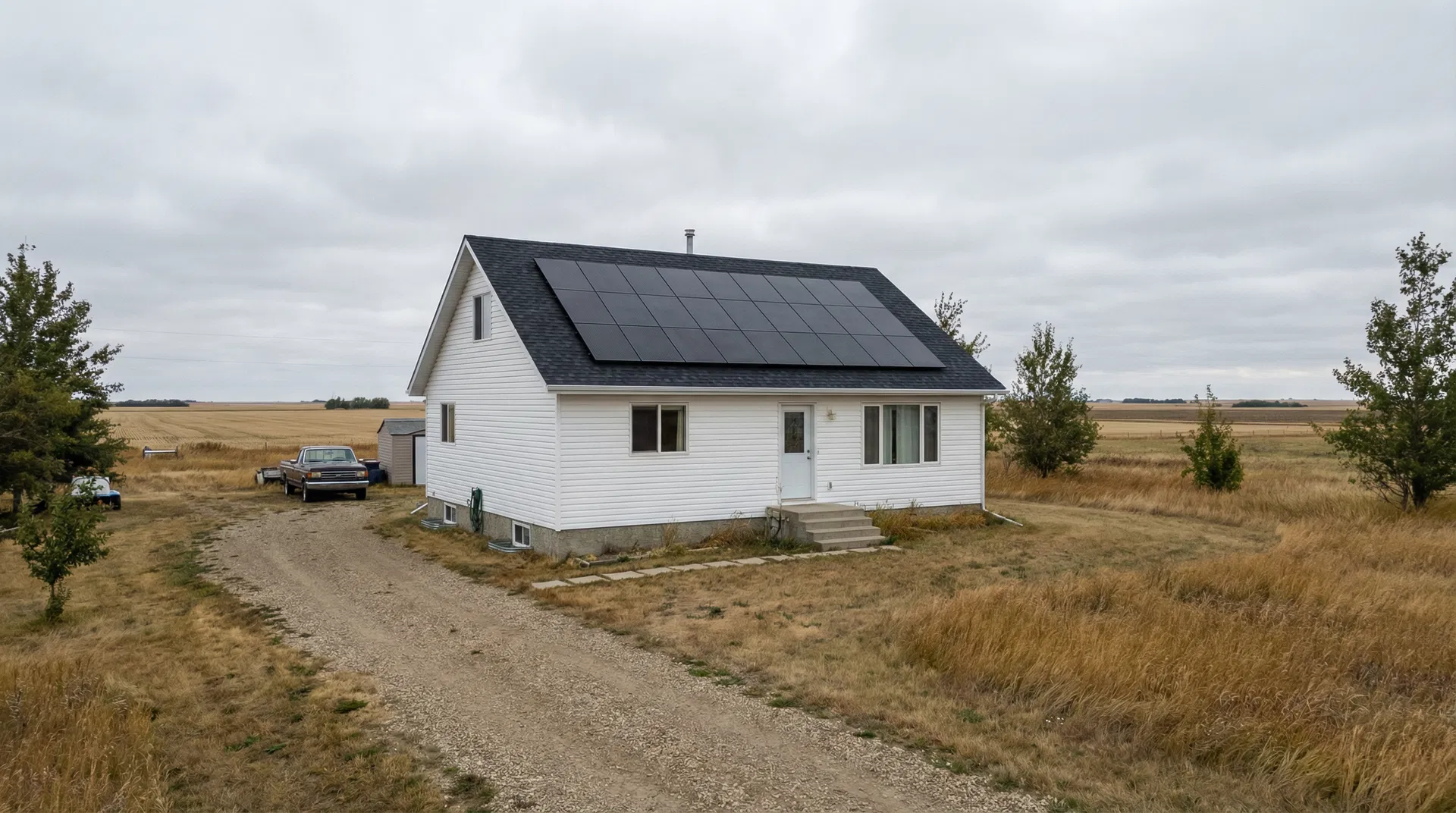
Solar installation in Fort Saskatchewan, Alberta means a grid-tied system built around LONGi panels and APsystems microinverters, matched to your roof, your usage, and your budget rather than a one-size package. We spec LONGi panels for their performance-to-price ratio and pair them with APsystems microinverters, which manage power at the panel level instead of a single string inverter for the whole array. That matters on properties where one section of roof gets afternoon shade from a neighboring tree or a taller outbuilding: a microinverter setup keeps the shaded panels from dragging down the output of the whole system. We see a real mix of roof types here, from newer trussed roofs on recent builds to older homes with steeper pitches and multiple dormers that need more careful panel layout. For acreages and larger lots on the outskirts, we also design ground-mount arrays when the roof isn't a good fit, whether that's orientation, shading, or a roof that's due for replacement soon. Every installation includes mounting hardware rated for Alberta wind and snow loads, conduit and wiring sized to the system, a monitoring app so you can see what the system is doing, and the full design package we submit to FortisAlberta for interconnection. We handle permitting, the electrical inspection, and commissioning, so the only real work on your end is signing off on the design and handing over your most recent power bill so we can size the system correctly.
Solar Planning for Fort Saskatchewan Properties
Fort Saskatchewan has grown to 27,088 residents, and a lot of that growth sits in newer subdivisions with straightforward asphalt-shingle roofs alongside older character homes closer to the core. Electricity distribution here runs through FortisAlberta, with EPCOR Energy Alberta GP acting as the regulated rate provider, which shapes how a grid-tied system gets connected and metered. The local economy leans industrial: Dow Chemical runs its Fort Saskatchewan Site nearby, and Shell Scotford's Energy and Chemicals Park anchors a big share of employment in the area. That industrial backbone doesn't change how we design a residential system, but it does mean we see a wide mix of property types, from tight infill lots to larger acreages on the outskirts where a shop or detached garage adds a second electrical load to plan around. Roof orientation, shading from mature trees, and the age of the existing electrical panel all factor into a design before we ever talk numbers. We don't guess at system size from a satellite photo. We walk the roof, or the yard if ground mount makes more sense, pull your most recent power bill, and build a design around what your property actually needs. That's the same process whether you're in a newer subdivision or on an acreage just outside the built-up area.
Electrical Site Review for Fort Saskatchewan Properties
Voltage Rise
Voltage rise happens when the distance and wire gauge between a property and the nearest transformer cause voltage to climb higher than expected at the point of interconnection. On some feeders that headroom is tighter than on others, which can push an inverter toward its upper voltage trip point. We check feeder conditions during the site visit so the inverter and string sizing account for it instead of clipping output or nuisance-tripping after installation.
Single-Phase vs Three-Phase
Properties in the area can have either single-phase or three-phase electrical service, depending on the age of the property and what's connected to it, like larger shop equipment or pumps. Inverter selection and total system capacity both depend on which one you have, since three-phase equipment and single-phase equipment aren't interchangeable. We confirm your service type early so we're speccing equipment that actually matches your panel, not swapping it out mid-project.
Panel Infrastructure
Older electrical panels weren't built with solar in mind, so we check the panel's age, its breaker capacity, and the busbar rating before finalizing a system design. Some panels can take a solar breaker with no changes; others are already at capacity and need a service upgrade or a load-side tap to add generation safely. We flag this during the site visit so it's part of the proposal, not a surprise change order after the crew shows up.
Service Entrance Review
We inspect the service entrance and meter base as part of every site visit, since their condition affects what FortisAlberta will approve on the micro-generation application. A meter base that's corroded, undersized, or already at its rated capacity can hold up the interconnection even after everything else is ready. When an upgrade is needed, we scope it as part of the project so it gets handled alongside the solar install instead of becoming a separate headache later.
Right-Sizing Solar for Fort Saskatchewan Properties
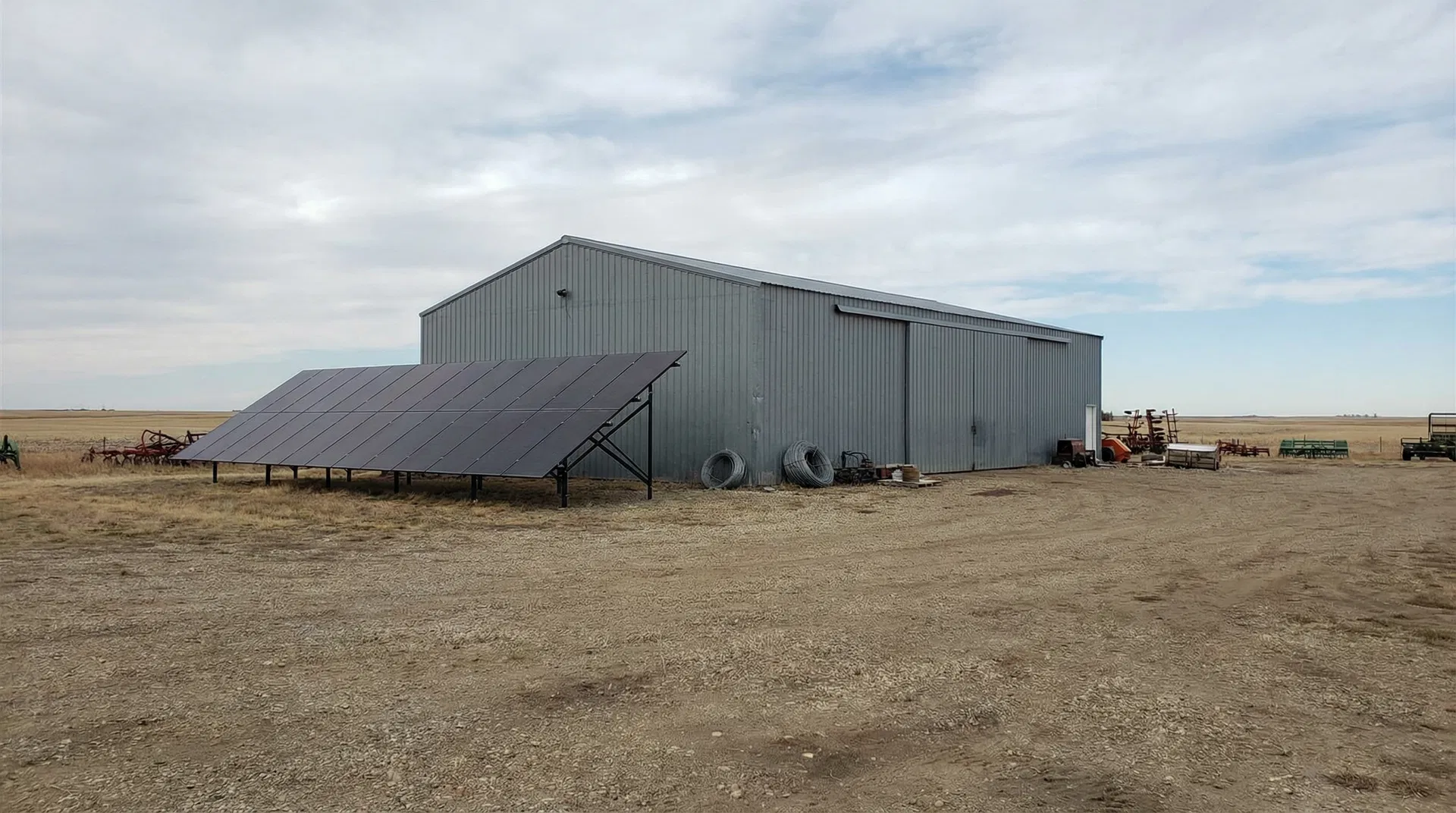
A property with a home, a heated shop, and maybe a well pump or grain-handling equipment draws a lot more than a house on its own, which is why systems on larger properties tend to run bigger than a typical in-town rooftop. We don't size off a rule of thumb like watts per square foot of roof; we size off the 12-month usage graph printed right on your most recent power bill, which shows the seasonal pattern of what you actually use, month by month, across the whole year. Roof mount is the default when the roof has decent southern or western exposure, isn't heavily shaded, and has enough usable area for the system size we land on. Ground mount becomes the better call when mature trees or a neighboring building shade the roof, when the roof pitch or orientation works against panel output, or when there's a spread-out yard with open ground that lets us build a bigger array than the roof alone could hold. Some properties end up as a mix: part roof, part ground, split across a house and a detached shop with its own panel. Whatever the layout, the starting point is the same. We pull your most recent bill, walk the property, and build the system size around real numbers instead of guessing.
Typical Load Profiles We Design For Near Fort Saskatchewan
Home + Heated Shop
This is one of the most common profiles we design for: a house plus a detached shop with in-floor heat or a furnace running through the colder months. The shop's heating load usually dominates the picture, so we size around the combined draw shown on your most recent power bill rather than treating the house alone as the target.
Home + Well or Irrigation Pump
Properties with a well pump or irrigation pump running seasonally show a different usage pattern than a straight residential load, with spikes tied to the pump cycle instead of a steady daily draw. We look at how those spikes show up across the year on your bill and design a system that accounts for them, not just the baseline household usage.
Home + Grain Handling or Farm Equipment
Grain dryers, augers, and other farm equipment can pull a lot of power for short, intense periods during harvest, which is a very different load shape than day-to-day household use. We build the system around that seasonal peak using your usage history, so the design reflects the property's real annual pattern instead of an average month.
FortisAlberta Interconnection in Fort Saskatchewan
FortisAlberta is the wire service here, which means any grid-tied solar system needs to go through their micro-generation interconnection process before it's allowed to operate in parallel with the grid. We prepare the full application package: single-line electrical diagrams, equipment specification sheets for the LONGi panels and APsystems microinverters, and the site details FortisAlberta needs to review the connection. We also coordinate the meter work a grid-tied system requires. What we don't do is promise a specific approval window or tell you how any credit or billing arrangement will be settled, because those details sit with FortisAlberta and your retailer, and they can change. What we can tell you is that we've built these applications before, we know what FortisAlberta's reviewers look for, and we'll flag anything on your property, an older service panel or an undersized service entrance, that could slow the process down before we submit anything.
Project Economics and Design Review
| System Size | Annual Production | Year 1 Savings | Payback Period |
|---|---|---|---|
| 8-12 kW range, 10 kW typical |
Production, savings, and payback figures are provided only after a property-specific design review using your most recent power bill.
How We Work in Fort Saskatchewan
Bill and Load Review
We review your power bill to understand your energy use in Fort Saskatchewan and size the system to your actual consumption, not a generic estimate.
Site Assessment
We assess your roof or ground area, south-facing exposure, electrical service, and utility interconnection requirements specific to your property.
Design and Utility Application
We produce a system layout, production estimate, and cost summary, then submit your micro-generation application to your utility on your behalf.
Installation and Commissioning
Our crew installs racking, panels, inverter, and electrical connections. All work is performed by licensed electricians. We commission and test before handoff.
Current Program and Interconnection Review
Utility connection review
FortisAlberta reviews every micro-generation application before a grid-tied system is allowed to operate, checking the equipment specs, the electrical design, and the site conditions we submit. Range Road Solar prepares and submits that full design package on your behalf, so you're not the one filling out utility paperwork or chasing down technical requirements.
Current program review
Eligibility for any current commercial, farm, or residential program is checked against the rules in place at the time we build your design, since requirements can change year to year. We review what applies to your specific project during the design phase rather than assuming last year's rules still hold.
Frequently Asked Questions
Get a Solar Assessment for Fort Saskatchewan
Submit a recent power bill and we will review your consumption and provide an honest assessment for your Fort Saskatchewan property. No obligation.
(587) 330-7502 Book a CallMore Solar Services in Fort Saskatchewan