Local Solar Guides · April 7, 2026 · 9 min read
Solar in Sherwood Park: Alberta's Biggest Hamlet, Mapped Bill by Bill
Sherwood Park runs on FortisAlberta wires, not EPCOR. Here is the sunshine data, the snow-load reality, and three real load profiles from Strathcona County, priced out honestly.
Ask someone from Calgary what Sherwood Park is and they will guess wrong. It is not a suburb of Edmonton in any legal sense, and it is not a city either. It is a hamlet, and at 75,575 people in Strathcona County's 2024 municipal census, it is the largest hamlet in Alberta. Big enough to be the province's sixth-largest city if it ever bothered to incorporate. It has not, and locals like it that way.
That matters for solar because a hamlet of this size has a housing mix no template fits: mature two-storey homes from the 1970s and 1980s, newer estates near Emerald Hills, townhomes and duplexes closer to Baseline Road, and a ring of urban-fringe acreages stretching east toward Ardrossan where Strathcona County's farmland starts. Different roofs, different bills, different systems. This post maps all three, with real numbers and honest labels on every estimate.
A Hamlet the Size of a City, Wired Like the Country
Here is the first thing most Sherwood Park homeowners get wrong about their own power: they assume EPCOR runs the wires because Edmonton is ten minutes west. It does not. Sherwood Park and all of Strathcona County sit in FortisAlberta territory. The poles, the transformers, the outage line at 310-WIRE, all FortisAlberta. You still pick your energy retailer for the commodity side of the bill, but the delivery half belongs to a company most residents have never thought about.
That detail changes your solar paperwork. Microgeneration applications in Sherwood Park go through FortisAlberta's customer generation process, not EPCOR's. The rules are the same provincial rules, but the portal, the meter swap scheduling, and the rural-line reviews are FortisAlberta's. Any installer quoting you in Sherwood Park should know that without being told. If they have to look it up, that tells you something.
The Sun Numbers, Measured Not Guessed
Sherwood Park sits at roughly 53.53 degrees north, and the nearest long-term Environment Canada station is Edmonton. The 1991 to 2020 climate normals for that station put bright sunshine at about 2,299 hours a year. That is not a marketing figure. It is counted sunshine hours from a federal weather station, and it puts the Edmonton region among the sunniest populated places in the country.
The seasonal shape of those hours matters for sizing:
- •June solstice brings over 17 hours of daylight, which is why May through August production can dwarf your air conditioning load.
- •December days run under 8 hours of daylight, so winter production is real but modest; your summer banked credits carry you through.
- •Cold is an advantage: panels produce more per sun hour below 25 degrees than they do in heat, and Sherwood Park has no shortage of cold.
- •August wildfire smoke is the one weather event that actually hurts; a smoky week can shave a noticeable slice off an otherwise strong month.
Net effect: a south-facing array in Strathcona County typically produces somewhere in the neighbourhood of 1,100 to 1,250 kilowatt-hours per installed kilowatt per year. We treat that as an estimate when we model your system, and we model from your actual bills, not a regional average.
Snow, Frost, and What Holds the Panels Up
Alberta snow is a racking question, not a production question. Roof systems in Sherwood Park are engineered to the snow loads in the Alberta Building Code for the Edmonton region, on racking rated well beyond them. Steeper suburban roof pitches shed snow on their own within days of a storm, and the cold, sunny weather that follows a snowfall is some of the best producing weather of the year.
Ground mounts east of town have a second requirement: frost. The Edmonton area's frost depth runs roughly 1.2 metres, and ground-mount posts have to go below it so heaving does not shift the array over the decades. Done right, a ground mount out here is the most boring equipment on your property. It just stands there and makes power for 30 years.
Three Bills We Actually See Around Sherwood Park
Every quote we build starts from a load profile. Around Sherwood Park and the Strathcona County fringe, three profiles cover most of what we assess. The bill figures below are honest estimates from the range of FortisAlberta bills we see; yours will land somewhere inside or outside them.
The townhome or paired home near Baseline Road. Electric heat is rare here, most heat is gas, and consumption centres on the usual draws: electric hot water in some builds, a garage fridge, summer air conditioning. Typical FortisAlberta bills run roughly $90 to $160 a month. A 5 to 7 kW rooftop system usually covers the year. Smallest job of the three, fastest payback relative to bill, and the condo-style townhomes are the one profile we often talk out of solar if the roof faces north and the condo board will not engage.
The acreage-style home with a heated shop. This is the classic Sherwood Park assessment: big two-storey or bungalow, detached garage or shop with a welder, compressor, and maybe a vehicle on a block heater all winter. Bills of $300 to $600 a month are common, and we have seen well past that. These homes usually need 10 to 14 kW, sometimes split between house roof and shop roof. The shop roof is often the better panel real estate: newer construction, cleaner geometry, fewer vent stacks.
The hobby farm east of town. Past the hamlet boundary toward Ardrossan and the Cooking Lake area, bills change character. Water pumps, barn lighting, a tractor block heater, freezers for the garden and the hunt, sometimes a small greenhouse. Bills of $400 to $800 a month are typical estimates here, and these are the properties where a ground mount starts making real sense: space is not the constraint, production is.
What It Costs, Spanning the Range Honestly
Our installed pricing in Strathcona County is the same as everywhere we work. Rooftop systems run $2.25 to $2.85 per watt depending on roof complexity, panel choice, and electrical panel condition. Ground mounts run $2.50 to $3.50 per watt because of the posts, trenching, and frost-depth engineering. Worked against the profiles above:
- •Townhome profile, 5 to 7 kW rooftop: roughly $11,250 to $19,950 installed.
- •Acreage home with shop, 10 to 14 kW rooftop: roughly $22,500 to $39,900 installed.
- •Hobby farm, 15 to 20 kW ground mount: roughly $37,500 to $70,000 installed.
Every one of those numbers spans the full range on purpose. A simple bungalow roof with a modern panel comes in low. A 1970s roof with two layers of shingles, a service upgrade, and a ground mount across a 60-metre trench comes in high. Anyone who quotes you a single number before seeing the site is guessing.
| Profile | Typical bill (estimate) | System size | Installed range | What drives the number |
|---|---|---|---|---|
| Townhome near Baseline Road | $90 to $160 / month | 5 to 7 kW roof | $11,250 to $19,950 | Roof pitch, shading from neighbouring two-storeys |
| Acreage-style home with shop | $300 to $600 / month | 10 to 14 kW roof | $22,500 to $39,900 | Panel capacity, shop roof vs house roof split |
| Hobby farm toward Cooking Lake | $400 to $800 / month | 15 to 20 kW ground | $37,500 to $70,000 | Trench length, frost-depth posts, rural-line review |
On payback, we will not invent a rate for you. Electricity prices move, and your retailer rate is yours to know, not ours to guess. What we can say honestly: with FortisAlberta delivery charges on top of every kilowatt-hour, Sherwood Park bills carry enough total cost per unit that systems sized to 90 to 100 percent of annual usage commonly land in the rough 8 to 12 year payback range on today's numbers. Treat that as a labelled estimate, and insist any installer show their math against your actual bills.
The incorporated business owners reading this get a separate column: the federal Investment Tax Credit returns 30 percent of system cost to a corporate owner in year one. On a $40,000 shop system, that is $12,000. The details live on our ITC page.
The Drive From Airdrie, and Why It Matters to You
Our shop is in Airdrie. Sherwood Park is roughly 275 kilometres up the QEII, about three hours on a good day, and we make it for assessments, installs, and service calls across the Edmonton metro. We are telling you the distance because it is relevant: we batch Sherwood Park assessments into dedicated Edmonton-run days, which keeps your site visit on schedule and keeps the crew that installs your system the same crew that assessed it.
From signed paperwork to a running system, the standard window is two to six weeks. Inside that window sits the FortisAlberta application, the electrical permit, the install itself, inspection, and the bi-directional meter swap. The one variable we cannot control is a rural-line technical review on acreage service east of town, which FortisAlberta can require on longer single-phase lines. We flag that risk at the assessment, not after you have signed.
Ground Mounts East of Town
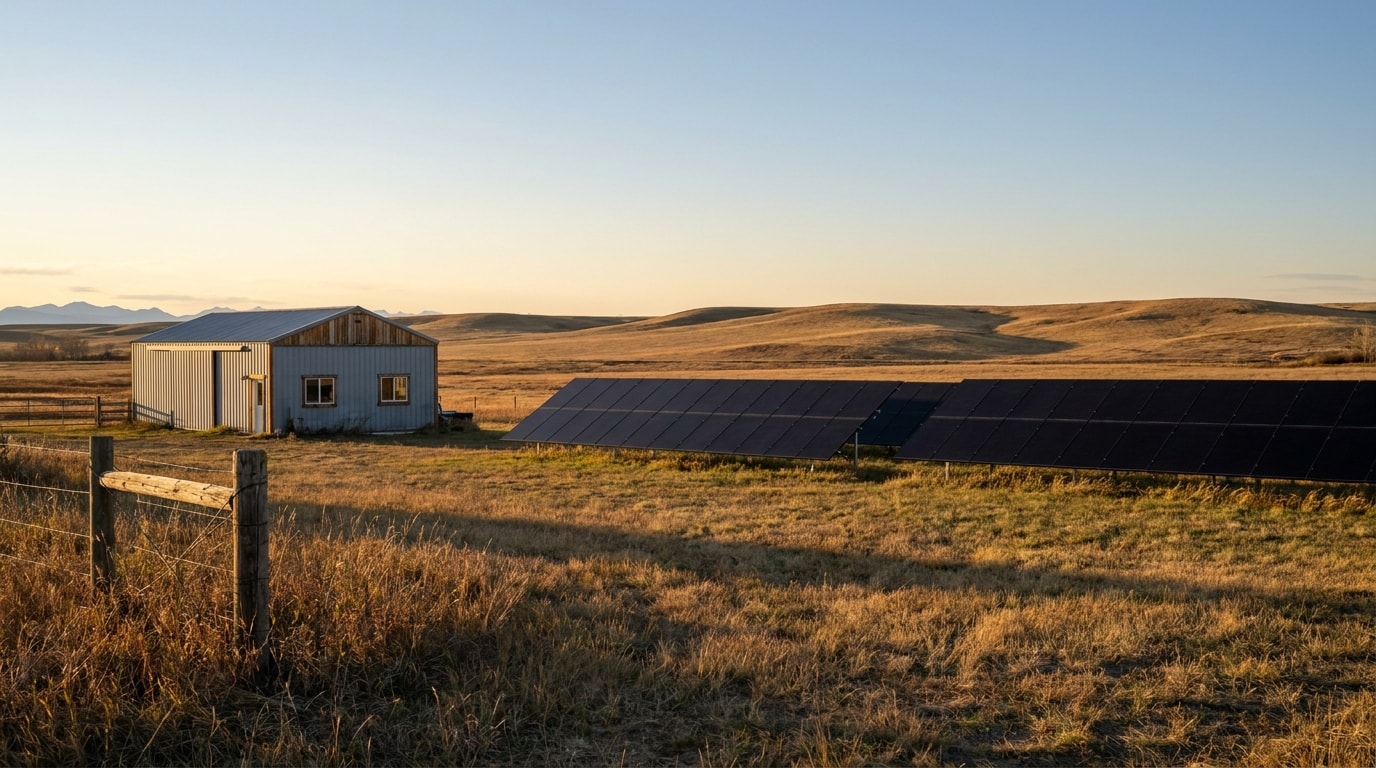
If your search for solar in Sherwood Park is really a search about an acreage east of the hamlet, ground mount deserves a hard look. You choose the azimuth and tilt instead of inheriting your roof's compromises, snow clears itself on a steep tilt, and service access takes minutes. East of Sherwood Park, toward Ardrossan, Hastings Lake, and the Cooking Lake area, lots are big enough that a 15 to 20 kW array barely uses the property.
Ground mounts cost more per watt, $2.50 to $3.50 versus $2.25 to $2.85 for rooftop, because of posts, trenching, and frost-depth engineering. On a hobby farm with a $500-plus monthly bill, the added production usually closes the gap. We size both options in the same assessment so you can compare them on paper, not in a sales pitch. More on acreage solar here.
What We Install, and Who We Are
Panels are LONGi, in the 440 to 600 watt range depending on the job. For inverters we standardize on APsystems DS3 series microinverters for most residential roofs: each microinverter runs two panels independently, so one shaded or snow-covered pair never drags down the rest of the array. For big acreage and hobby-farm systems with heavy shop loads or backup ambitions, we spec the Solis S6 10kW Hybrid or the Solis 1P 7.6K where the load profile calls for it.
Range Road Solar is Alberta-owned and Alberta-operated, out of Airdrie, with hundreds of installs across Alberta. Not a national franchise, not a call centre, not a lead site that sells your phone number to three bidders. When you call, you reach the people who will stand on your roof. The microgeneration rules we file under are the same for every installer in the province. The difference is who does the filing and who shows up after.
Frequently Asked Questions: Solar in Sherwood Park
Is Sherwood Park served by EPCOR or FortisAlberta?
FortisAlberta owns and maintains the power lines in Sherwood Park and all of Strathcona County, even though the community borders Edmonton. Your bill may come from whichever energy retailer you chose, but the delivery charges on it belong to FortisAlberta. Microgeneration works the same way: FortisAlberta approves the application, swaps your meter, and credits your exports against what you pull from the grid.
How much sun does Sherwood Park actually get?
Sherwood Park sits at about 53.53 degrees north, and Environment Canada climate normals for the Edmonton station record roughly 2,299 hours of bright sunshine a year. June days run over 17 hours of daylight. December is short, but cold panels outperform hot ones, so clear winter days still produce well. The real production killer most years is August wildfire smoke, not snow.
Will snow stop my panels from working?
Snow slides off steeper roof pitches on its own, and we set ground mounts at an angle that sheds. Racking is engineered to the snow loads in the Alberta Building Code for this region, and ground-mount posts go below the frost line, roughly 1.2 metres in the Edmonton area. After a fresh snowfall, production pauses on the covered panels, then rebounds hard on the clear, cold days that follow.
Ground mount or roof mount on an acreage east of Sherwood Park?
If you have the space, ground mount usually wins east of town. You pick the azimuth and tilt instead of accepting your roof's angle, cleaning takes minutes, and there is no debate about roof penetrations. Ground mounts run $2.50 to $3.50 per watt installed, versus $2.25 to $2.85 for rooftop. On an acreage with a shop and high bills, the extra production typically outweighs the premium.
How long does a Sherwood Park install take?
From signed paperwork to a running system, plan on two to six weeks. That window covers the FortisAlberta microgeneration application, the electrical permit, the roof or ground work itself, inspection, and the bi-directional meter swap. Acreages on longer rural lines occasionally trigger a FortisAlberta technical review that adds time. We run Sherwood Park site visits on dedicated Edmonton-area days from our Airdrie shop.
What does solar cost for a typical Sherwood Park home?
Rooftop systems run $2.25 to $2.85 per watt installed, so a 6 to 8 kW system on a typical two-storey runs roughly $13,500 to $22,800 depending on the roof and equipment. Acreage homes with shops often need 12 to 16 kW, and hobby farms more. We quote from your actual power bills, not a national average, and the site assessment is free, with a written number inside about 48 hours.
Can I really bring my FortisAlberta bill to zero?
Under Alberta's microgeneration rules, FortisAlberta credits your exported power against what you consume, so the usage side of the bill can drop to nearly nothing in strong summer months. A few fixed per-day charges stay on the bill regardless. Most Sherwood Park systems we model offset 90 to 100 percent of annual consumption, sized off your last 12 months of bills, not a guess.
Want your Sherwood Park bills run through the math?
Free site assessment, whether you are in the hamlet or out on an acreage toward Cooking Lake. Send your most recent FortisAlberta bill and we will show you exactly what your roof or yard can do, with the real numbers and no template.
Range Road Solar Team
Rural Alberta Solar Installers
Our team has been installing solar across rural and central Alberta since 2019. Over 218 installs on farms, acreages, shops, and homes. We write about what we have actually seen in the field — not what the brochures say.
Serving Sherwood Park & Area