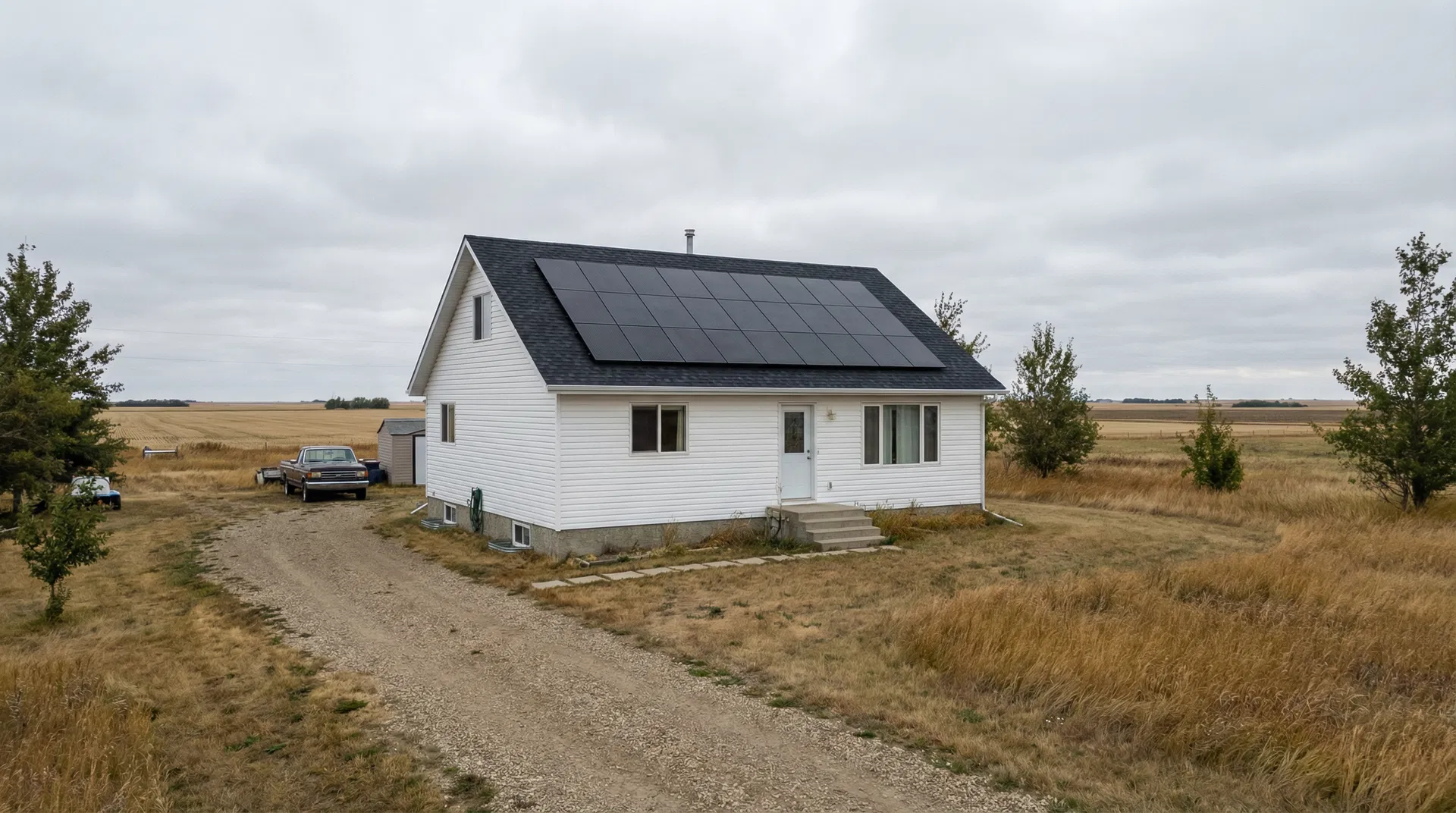
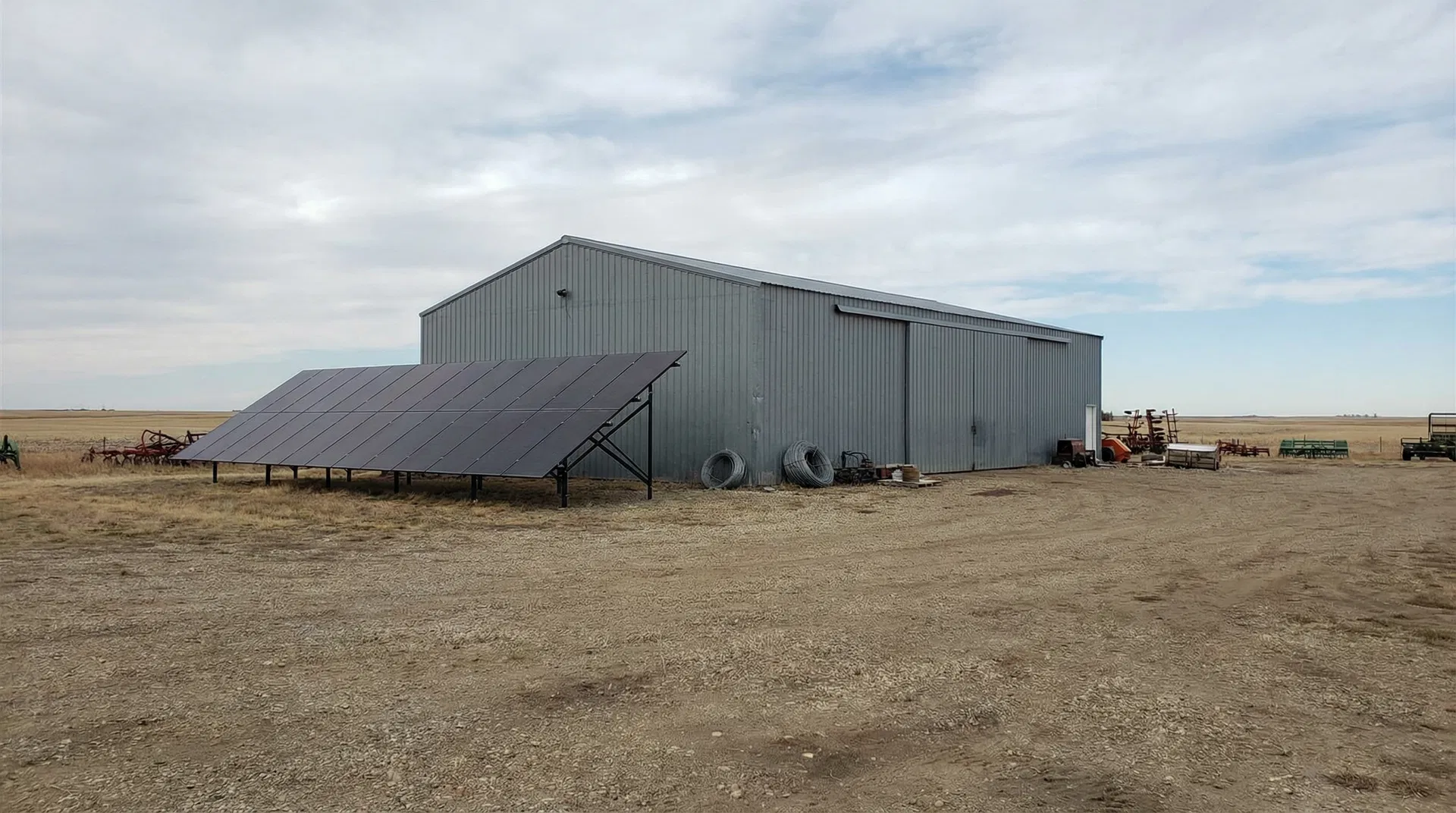
Solar Kneehill County shop and outbuilding projects typically run in the 8 to 20 kW range, sized to the specific building and the loads inside it. A machine shed with a couple of lights and an overhead door pulls a lot less than a heated shop running a welder, an air compressor, and a bay heater through the winter. We design both grid-tied and standalone systems, depending on whether the building is already tied into the yard's main service or sits far enough off that running conduit doesn't make sense. Every system we install uses LONGi panels and APsystems microinverters. APsystems microinverters let us put panels on a Quonset roof, a pole barn, and a ground-mount array at the same time and have each one report back independently, which matters on properties where the shop roof doesn't get full exposure all day. LONGi panels hold up under the kind of freeze-thaw cycling and wind loading that shop and outbuilding roofs see out here. We'll look at roof pitch, roof condition, and orientation on the shop itself, but we also look at whether a ground-mount array makes more sense if the yard has open land and the roof is shaded or angled wrong. Some properties end up with a mix: panels on the shop roof plus a small ground-mount bank closer to a grain bin or shop that draws heavier. The right configuration depends on what's actually on the property and what each building needs to run, which we confirm on a site visit before we finalize a design.
Solar Planning for Kneehill County Properties
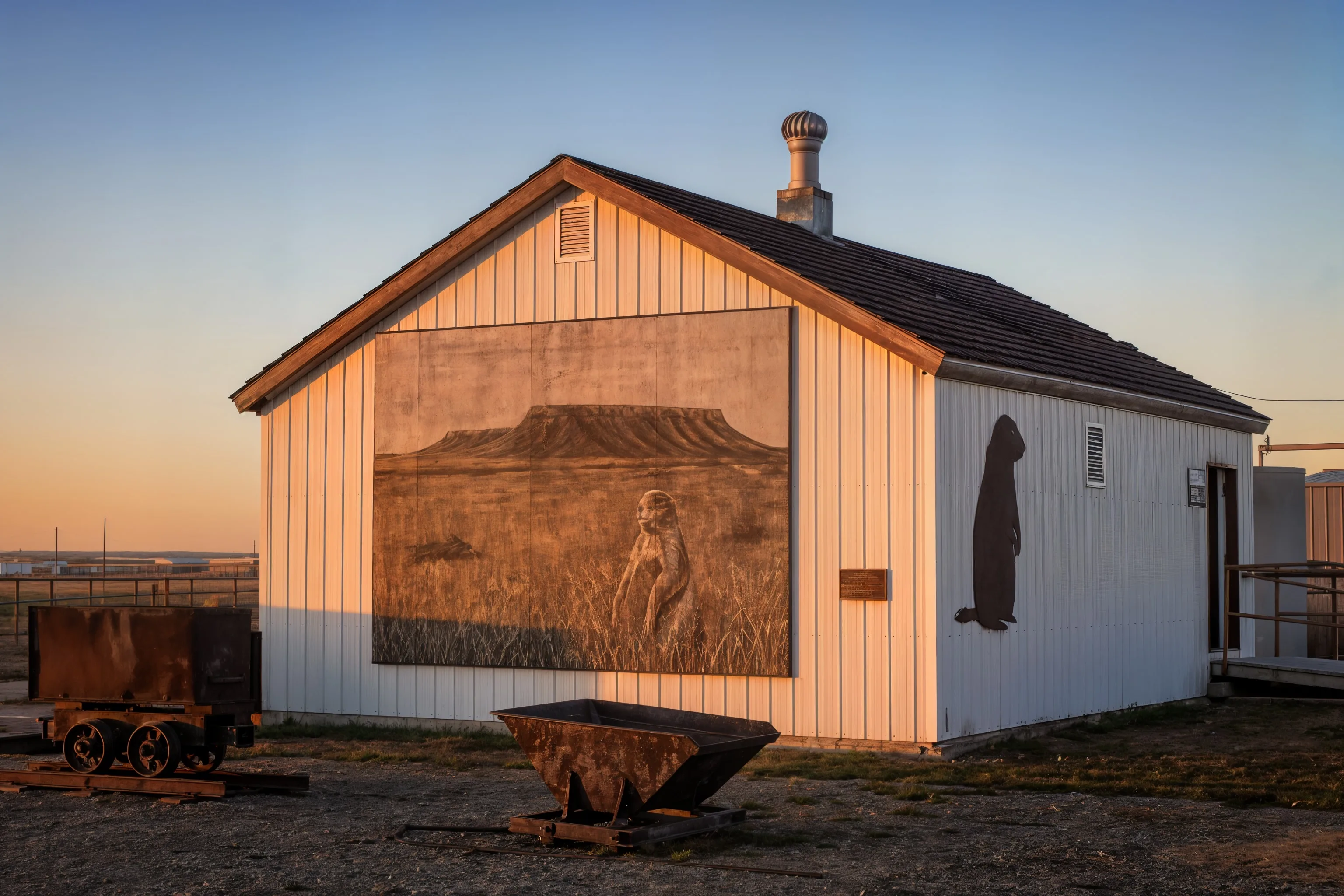
Kneehill County, Alberta is a stretch of hamlets and farmland near Trochu and Torrington, home to around 4,992 people spread across acreages, grain operations, and cattle yards. The local economy runs on agriculture (grain and cattle) and oil and gas, which means most properties here aren't just a house and a driveway. There's a shop, a Quonset, maybe a calving barn, and often a yard light running around the clock. Visitors passing through for the Torrington Gopher Hole Museum or a drive out to Horseshoe Canyon see the same thing locals already know: this is working land, and the buildings on it work hard too. That's exactly the kind of property we design for. A machine shed with a welder and air compressor draws differently than a heated shop with in-floor heat and a block heater outlet running all winter. Before we spec a system, we walk the property, look at the panel, and talk through what's actually running and when. ATCO Electric serves the wire connection for properties here, and we build every design around their interconnection requirements from the start rather than bolting it on after the fact. We don't guess at system size. We confirm it against your most recent power bill and the layout of the buildings we're actually powering.
Electrical Site Review for Kneehill County Properties
Voltage Rise
Voltage rise happens when power travels a long distance along a rural distribution line before it reaches your meter, and the farther out a property sits, the more it can show up. On a shop or outbuilding system, elevated voltage at the point of connection can push an inverter toward its clipping threshold sooner than the nameplate rating suggests. We measure voltage at the panel before finalizing system size, rather than assuming a textbook number.
Single-Phase vs Three-Phase
Rural Alberta properties run on a mix of single-phase and three-phase service, and which one feeds your shop changes what inverter hardware fits and how much capacity we can put behind it. A three-phase shop running bigger motor loads, like an auger or a compressor, often has more headroom for a larger array than a single-phase service of the same size. We confirm which service type is in place before specifying equipment, not after.
Panel Infrastructure
Older rural properties often carry a main panel that was sized for the building's original loads, not for a 12 kW solar system added decades later. We check breaker capacity, panel age, and busbar rating as part of every site visit, since an undersized or outdated panel can limit how much system it can safely carry. If the existing panel can't support the array, an upgrade means a new panel and breakers sized to the system, which we scope before the install rather than discover partway through it.
Service Entrance Review
We check the condition of the service entrance and meter base on every site visit, since that's where ATCO Electric's micro-generation application gets tied to the physical equipment on your property. A meter base that's corroded, undersized, or doesn't meet current code can hold up the application regardless of how the solar system itself is designed. When an upgrade is needed, we fold it into the project scope and schedule so it doesn't become a separate surprise after the design is already locked in.
Right-Sizing Solar for Kneehill County Properties
A rural property out here often runs more than one electrical load: the house, a shop, maybe a second outbuilding, and sometimes irrigation or grain handling equipment that draws hard for short stretches. That's a different sizing problem than a single urban rooftop, where it's one house and one bill. We start by looking at every building that's drawing power, not just the one with the most roof space. Roof mount makes sense when the shop or house roof has decent pitch, clear southern or western exposure, and isn't shaded by trees or a neighboring building. Ground mount becomes the better call when the roof is shaded, pitched wrong, or when the yard has open land sitting unused near the service, since a ground-mount array can be angled and oriented independently of any building on the property. Either way, we size the system from the 12-month usage graph on your most recent power bill, not a rule-of-thumb number per square foot or per building. That graph shows us the actual pattern of what you're drawing and when, across seasons, which tells us far more than a generic estimate. Combined with a site visit to confirm roof or ground conditions, that usage graph and your current bill are what actually drive the system size we recommend, not a one-size assumption applied to every shop in the area.
Typical Load Profiles We Design For Near Kneehill County
Home + Heated Shop
This pairs a main house with a heated shop running a welder, air compressor, and block heater through the winter months. We size this profile off the combined pattern on your most recent power bill, since the shop's load often shows up as a distinct bump against the house's baseline usage. Systems here commonly land in the 10 to 16 kW range, though the usage graph on your bill is what actually sets the number.
Shop + Grain Handling
This profile adds grain handling equipment, augers, fans, or a dryer, to a shop's existing draw, and those loads tend to run hard for short, seasonal stretches rather than steadily. We look at how that seasonal spike shows up on your power bill's usage graph before recommending a system size, since a system sized only for year-round baseline load would undersize for harvest season. These setups often sit toward the higher end of the 8 to 20 kW range.
Standalone Outbuilding (Off Main Service)
Some outbuildings, a detached shop or a secondary Quonset, sit far enough from the main service that a standalone system makes more sense than running conduit back to the house. We size these independently of the main property's usage, based on what's actually plugged in and running inside that specific building. These tend to be smaller systems, often toward the 8 to 12 kW end of the range, since they're covering one building's loads rather than a whole yard's.
ATCO Electric Interconnection in Kneehill County
ATCO Electric is the wire service here, and every shop or outbuilding system we design in the area runs through their micro-generation application process. That application covers the technical side of connecting a grid-tied system to ATCO's distribution network: inverter specifications, disconnect requirements, and metering setup for the specific building you're adding panels to. We handle the ATCO Electric paperwork as part of the project, from the initial application through the documentation ATCO requires before a system goes live. If your shop sits on a different service than your house, or if you're adding a standalone system to a building that isn't currently metered, we work through what that means for the application with you before we finalize the design. We don't quote approval timelines or make claims about how ATCO will handle a specific application, because that depends on the property, the existing service, and ATCO's own review of what's being proposed. What we can tell you is that we've built the interconnection paperwork into how we scope every project from the start, rather than treating it as an afterthought once a system's already designed.
Project Economics and Design Review
| System Size | Annual Production | Year 1 Savings | Payback Period |
|---|---|---|---|
| 8-20 kW range, 12 kW typical |
Actual production, savings, and payback figures depend on a property-specific design review and your most recent power bill, which we provide once we've assessed your site.
How We Work in Kneehill County
Bill and Load Review
We review your power bill to understand your energy use in Kneehill County and size the system to your actual consumption, not a generic estimate.
Site Assessment
We assess your roof or ground area, south-facing exposure, electrical service, and utility interconnection requirements specific to your property.
Design and Utility Application
We produce a system layout, production estimate, and cost summary, then submit your micro-generation application to your utility on your behalf.
Installation and Commissioning
Our crew installs racking, panels, inverter, and electrical connections. All work is performed by licensed electricians. We commission and test before handoff.
Current Program and Interconnection Review
Utility connection review
ATCO Electric reviews every grid-tied micro-generation application before a system is connected, covering the technical details of your specific installation. Range Road Solar prepares and submits that application package as part of the project, working from the system design we've already confirmed with you.
Current program review
Commercial, farm, and residential eligibility for any current solar program is reviewed against the rules in place at the time we design your system, since those rules can change. We check what applies to your specific property type and project during the design review rather than assuming a blanket answer.
Frequently Asked Questions
Get a Solar Assessment for Kneehill County
Submit a recent power bill and we will review your consumption and provide an honest assessment for your Kneehill County property. No obligation.
(587) 330-7502 Book a CallRelated Resources