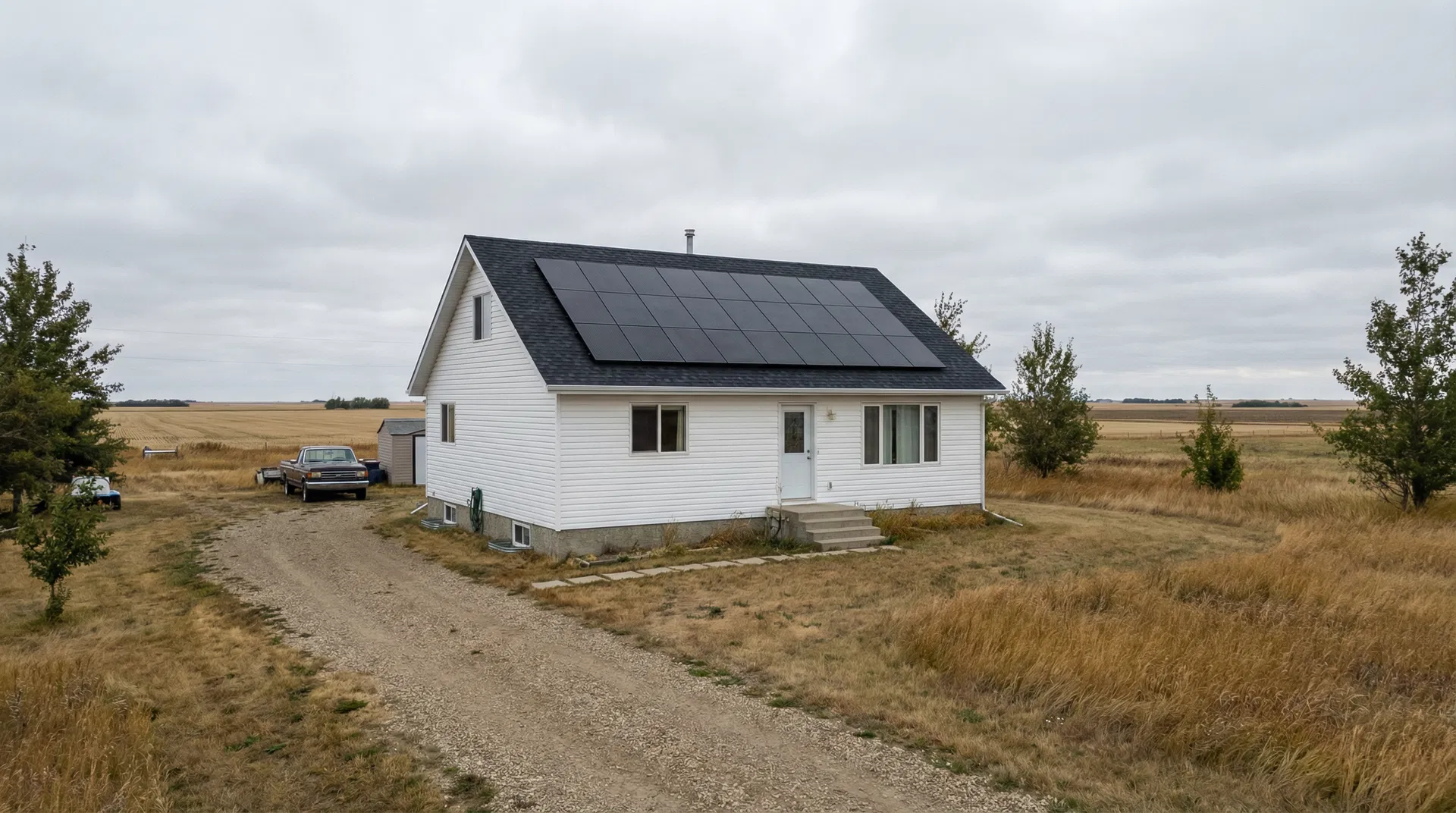
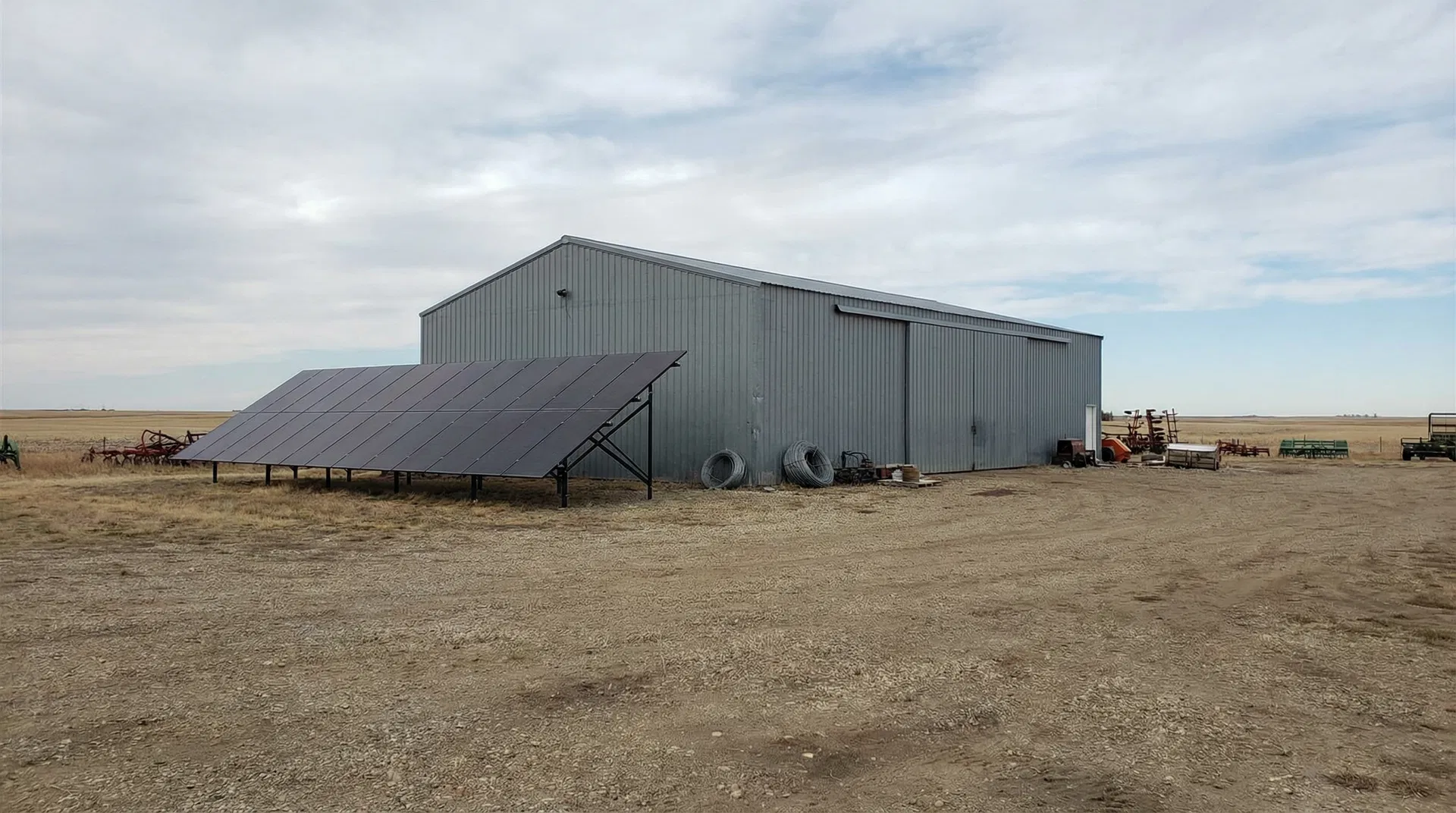
Solar installation in Kneehill County starts with a site visit, not a sales pitch. We walk the roof or the proposed ground-mount area, check the electrical panel, and look at how the property actually uses power before we draw up a system. Every design uses LONGi panels paired with APsystems microinverters. The microinverter setup matters on acreages where part of a roof faces a different direction than the rest, or where a shop and a house sit on separate planes: each panel operates independently, so one shaded panel or one section with a different pitch doesn't drag down the output of the whole array. For a property with a steel-roofed shop and a shingled house, that flexibility often decides whether we mount on the house, the shop, or split the array across both. Ground mounts come up often enough out here too, especially on yards with open space away from trees and outbuildings, where a rack-mounted array can be angled and oriented without fighting a roofline. System size for residential installs typically runs in the 8 to 12 kW range, with 10 kW being the most common install once we've looked at the home's usage pattern. We handle the full job: engineering and permitting, the physical install, and the application to ATCO Electric for interconnection. Nothing gets subcontracted out to a crew that's never seen the property. The same team that designs the system shows up to install it, which matters when a property has quirks a drawing can't capture, like an older panel that needs attention before it can carry a new 10 kW load.
Solar Planning for Kneehill County Properties
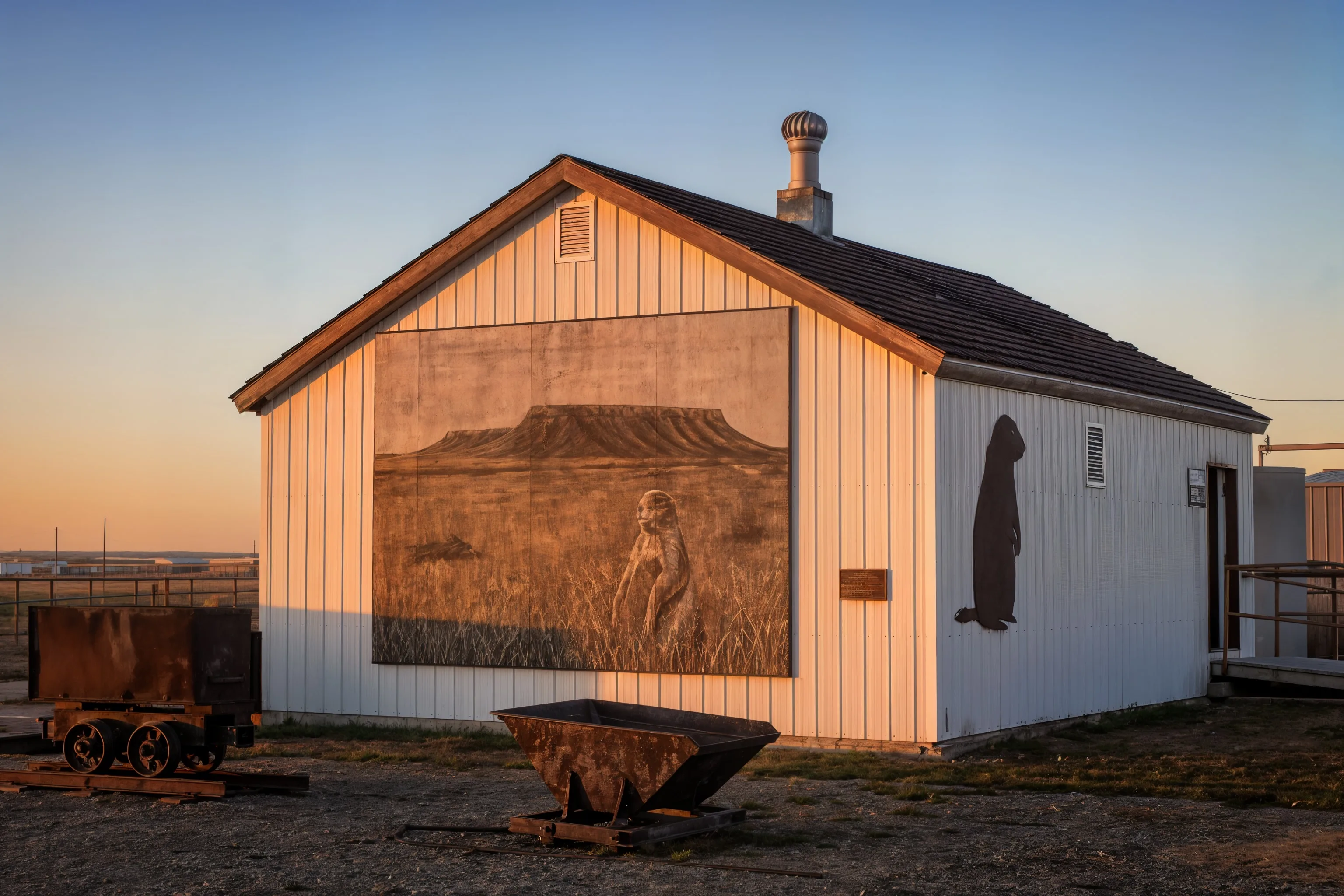
The area is home to about 4,992 people spread across farms, acreages, and small hamlets, with grain and cattle operations and oil and gas activity anchoring the local economy. That mix changes how we plan a solar system here. Properties often carry a home plus a shop, a barn, or irrigation equipment, all tied to one meter, and the wire service is ATCO Electric. Before we size anything, we pull the most recent power bill and walk the property to look at roof pitch, shading, and where the service panel sits relative to outbuildings. A hamlet like Torrington, home to the Torrington Gopher Hole Museum, sits in the same jurisdiction, Census Division No. 5, as acreage parcels nearer Trochu or Morrin, but the electrical setup on each property can be completely different. We don't quote a system off a map. We quote it off what's actually drawing power on your land, and what ATCO Electric's interconnection process requires for that specific service. That's the only way the number means anything.
Electrical Site Review for Kneehill County Properties
Voltage Rise
Voltage rise happens when the distance and wire gauge between a property and the nearest transformer cause voltage to climb as a solar inverter pushes power back onto the line. Rural services, especially ones at the end of a longer feeder, can run closer to the edge of the acceptable voltage range than a property near a substation. We check this during the site review because it affects how an inverter clips output and how we size the system to stay within range.
Single-Phase vs Three-Phase
Rural Alberta properties come with either single-phase or three-phase electrical service, and which one a property has shapes what inverter equipment we can use and how much capacity the system can carry. A shop or outbuilding with three-phase motors, like a grain auger or a large compressor, needs a different inverter setup than a house running entirely on single-phase. We confirm which service type is in place before finalizing equipment, since the wrong assumption here means redesigning the system later.
Panel Infrastructure
Older rural properties sometimes have an electrical panel that predates the breaker capacity a solar system needs, or a panel that's simply reached the end of its service life. We check the panel's age, its rated capacity, and how much room is left for a new solar breaker before we finalize a system size. If the panel can't support the install, an upgrade means a new panel sized to handle both the existing loads and the solar connection, done before the solar equipment goes in.
Service Entrance Review
The service entrance and meter base are part of every site review, since their condition affects whether ATCO Electric will approve a micro-generation connection at that location. We look for things like a corroded or outdated meter base, a deteriorated weatherhead, or a service mast that doesn't meet current standards. If an upgrade is needed, we scope it as part of the project so the application to ATCO goes in with a service entrance that's ready to support the new system.
Right-Sizing Solar for Kneehill County Properties
A residential system in town and a residential system on a rural acreage out here rarely look the same, because the loads are different. A house in a subdivision usually has one electrical panel and one set of loads. A rural property often has a house, a heated shop, a barn, and sometimes irrigation or grain-handling equipment, all drawing power through the same service. That's part of why rural systems tend to run larger than an urban equivalent, even before accounting for individual usage habits. The roof-versus-ground-mount decision comes down to what the property actually offers. A house with a steep, tree-shaded roof or a roofline that doesn't face a useful direction is often a worse candidate than open yard space with a clear view of the sky, especially on acreages where land isn't the constraint it is in town. Ground mounts also make sense when a shop roof is already committed to other equipment, or when splitting the array between a roof and a ground rack gets better output than forcing everything onto one surface. We don't size a system off a rule of thumb like watts per square foot of roof or a flat multiple of square footage. We size it off the 12-month usage graph on your most recent power bill, which shows how your actual draw moves through the year, paired with a site visit that confirms what the roof, panel, and yard can support. That combination, not a guess, is what sets the final system size.
Typical Load Profiles We Design For Near Kneehill County
Home + Heated Shop
This is one of the most common setups we see on acreages: a house plus a detached shop with electric or in-floor heat, both running off the same service. The shop heat alone can shift the usage pattern enough that a system sized for the house only would miss the mark. We size for this combined load using the 12-month usage graph on your most recent power bill, which captures the shop's heating season alongside normal household draw.
Grain Handling and Farm Equipment
Properties running augers, aeration fans, or grain dryers around harvest see usage spike in short, intense windows rather than spreading evenly across the year. That pattern looks very different on a power bill than a steady household load, and it changes both the system size and sometimes the service type we design around. We look at those seasonal spikes directly in your billing history rather than averaging them away.
Year-Round Household with Electric Heat or Hot Water
Some homes in the area run electric backup heat, a heat pump, or an electric hot water system on top of standard household appliances, which raises baseline usage across the colder months. That steadier, higher year-round draw calls for a different system size than a home heated primarily by another fuel source. Again, the most recent power bill's usage graph is what tells us which pattern a given home actually falls into.
ATCO Electric Interconnection in Kneehill County
ATCO Electric is the wire service here, and that's the utility we file your micro-generation interconnection application with. We handle that application as part of the install, not as an add-on: the single-line diagram, the equipment specifications for the LONGi panels and APsystems microinverters, and the paperwork ATCO needs to approve a grid-tied system on your account. Every property's existing service, whether that's single-phase or three-phase, and whatever condition the meter base and panel are in, feeds into how we fill that application out, so we review your electrical setup before anything gets submitted. We don't promise a specific approval timeframe or make claims about how credits or exports get settled on your account. Those are ATCO's rules, they can change, and we confirm the current version of them during your design review rather than quoting something that might be outdated by the time your system goes in. What we do control is getting the application filed correctly the first time, with a system designed to match what your service can actually support.
Project Economics and Design Review
| System Size | Annual Production | Year 1 Savings | Payback Period |
|---|---|---|---|
| 8-12 kW range, 10 kW typical |
Production, savings, and payback figures require a property-specific design and your most recent power bill before we'll put a number in front of you.
How We Work in Kneehill County
Bill and Load Review
We review your power bill to understand your energy use in Kneehill County and size the system to your actual consumption, not a generic estimate.
Site Assessment
We assess your roof or ground area, south-facing exposure, electrical service, and utility interconnection requirements specific to your property.
Design and Utility Application
We produce a system layout, production estimate, and cost summary, then submit your micro-generation application to your utility on your behalf.
Installation and Commissioning
Our crew installs racking, panels, inverter, and electrical connections. All work is performed by licensed electricians. We commission and test before handoff.
Current Program and Interconnection Review
Utility connection review
ATCO Electric reviews every grid-tied solar application against its current micro-generation rules before approving a connection. Range Road Solar prepares that full design package, including the single-line diagram and equipment specifications, so the application reflects what's actually being installed on your property.
Current program review
Eligibility for residential, farm, and commercial solar work gets checked against whatever rules are in place at the time we design your system, since requirements can shift year to year. We review your situation specifically rather than assuming what applied to a past project still applies to yours.
Frequently Asked Questions
Get a Solar Assessment for Kneehill County
Submit a recent power bill and we will review your consumption and provide an honest assessment for your Kneehill County property. No obligation.
(587) 330-7502 Book a CallRelated Resources