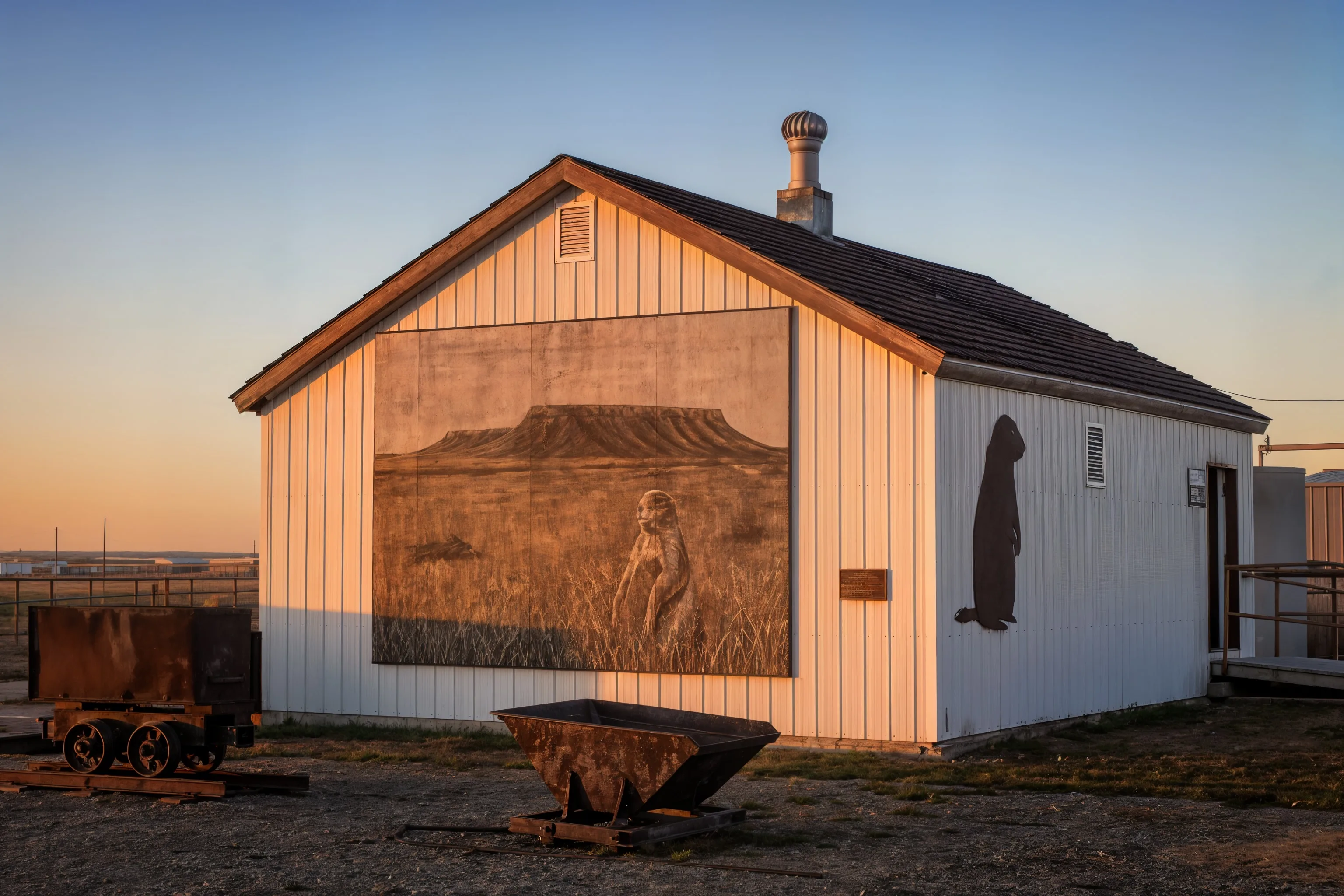
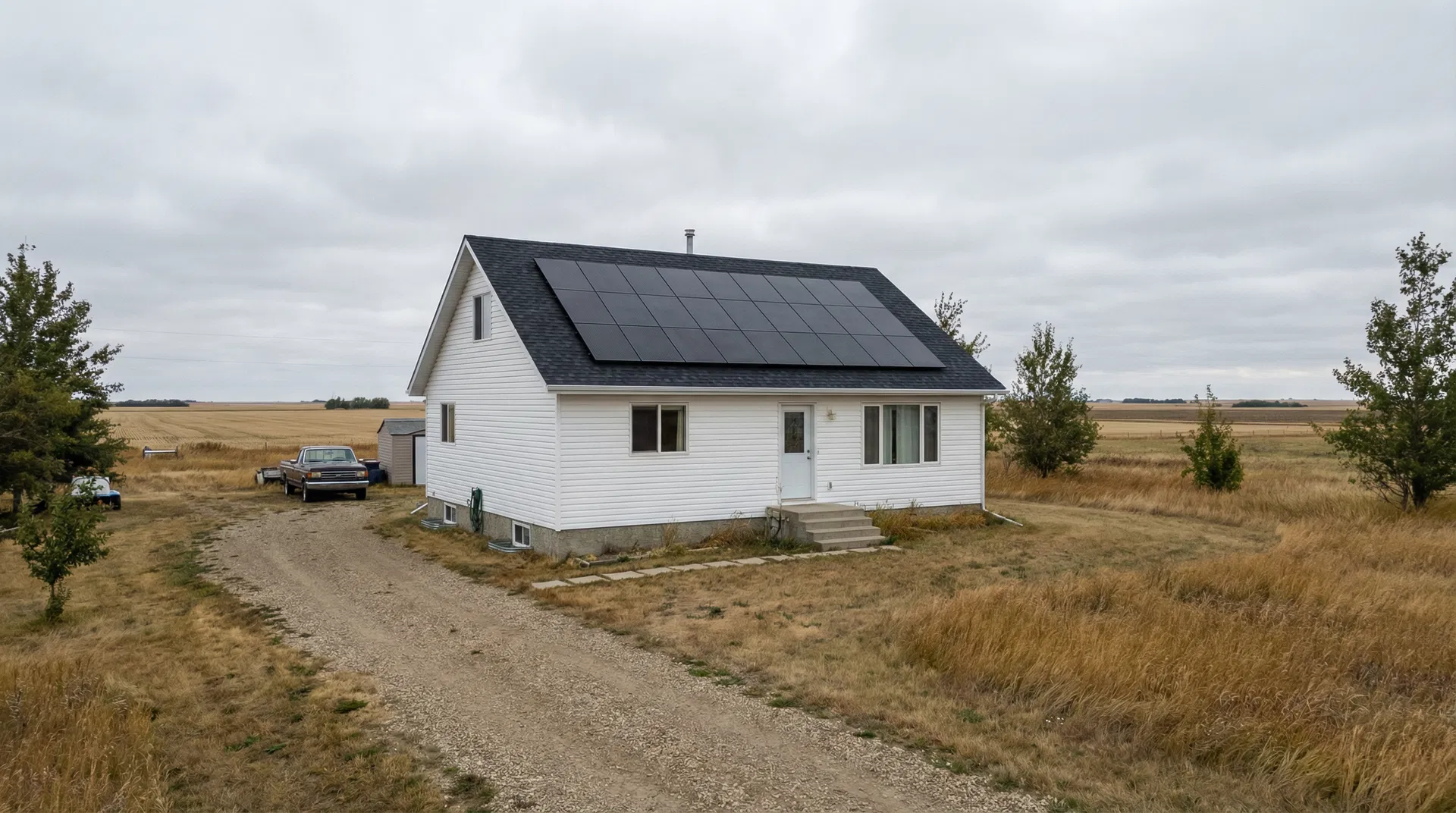
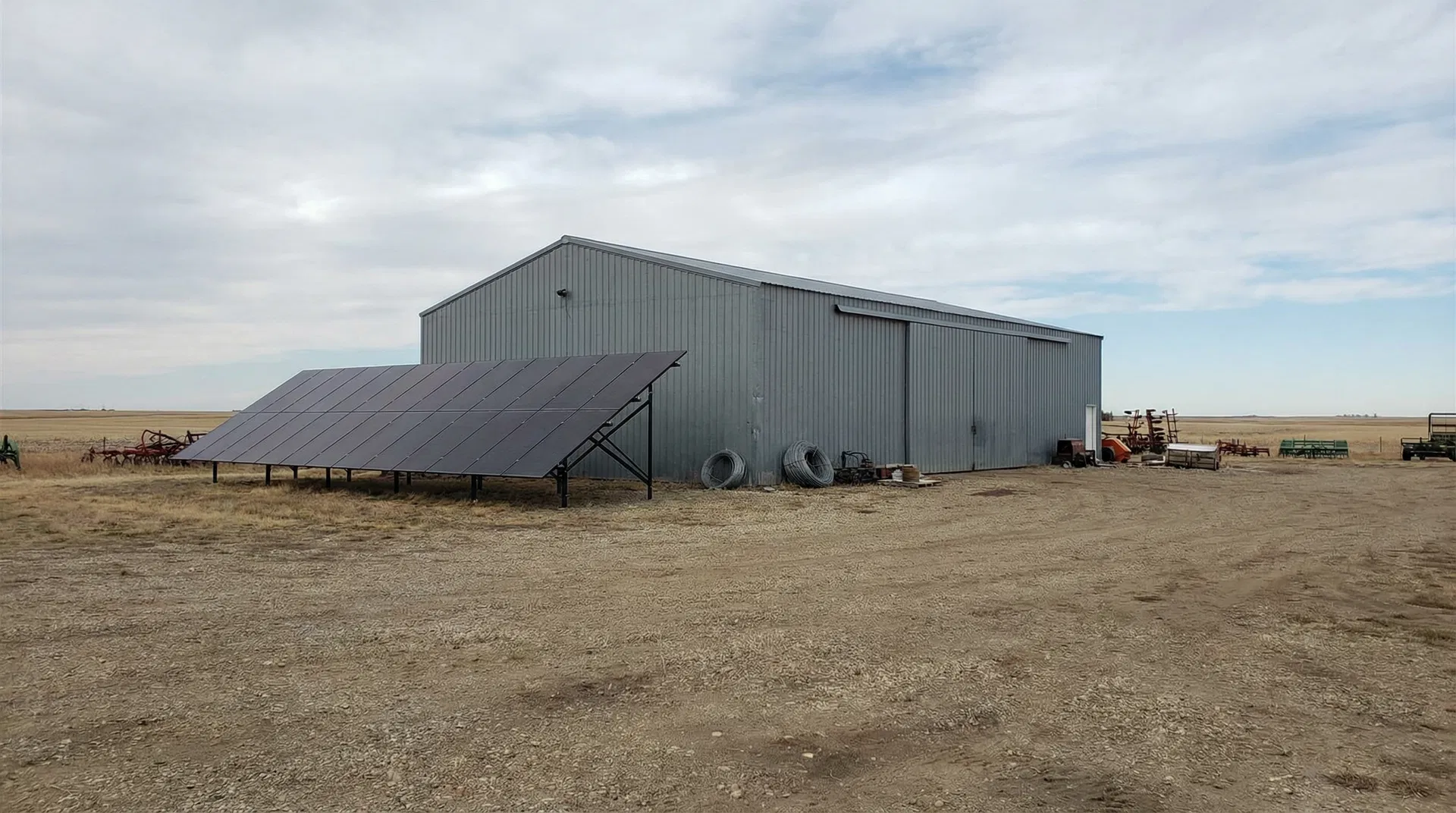
Acreage solar in Kneehill County means designing around a property's real loads, not a one-size rooftop kit. Systems here typically run in the 12 to 18 kW range, with most properties landing around 15 kW once we account for a house plus a shop, grain handling equipment, or a barn. We install LONGi panels, which hold up well on both standard asphalt shingle roofs and the metal roofing common on shops and outbuildings, paired with APsystems microinverters. Microinverters make sense for acreage layouts because each panel operates independently. If a shelterbelt throws shade across one corner of an array, or a vent pipe sits mid-roof, the rest of the panels keep producing at full output instead of the whole string dropping with them. For properties where the roof is shaded by trees, poorly pitched, or simply too small for the array size the loads call for, we design a ground-mount system instead, using the open yard space most acreages and farms in this area have available. Mounting choice comes down to what the site actually offers: roof orientation, shading patterns, structural condition, and how much open, unshaded ground is within reasonable cable-run distance of the electrical panel. We size every system from the 12-month usage graph on your most recent power bill rather than a generic per-square-foot estimate, because a property with a heated shop and a grain dryer draws very differently than a home alone. Every install gets a site-specific electrical review before we finalize equipment or system size.
Solar Planning for Kneehill County Properties
Kneehill County, Alberta covers a stretch of rolling farmland and ranch country in Census Division No. 5, home to roughly 4,992 people spread across acreages, grain operations, and cattle ranches rather than concentrated in one town centre. Properties out here run on ATCO Electric power, and most have loads a typical suburban house never sees: a home plus a heated shop, a grain dryer, an irrigation pump, or a barn full of equipment that all draw from the same panel. That's why acreage solar rarely looks like a standard rooftop kit in this part of Alberta. We start with your most recent power bill, which carries a 12-month usage graph showing exactly how your property draws power through the seasons, then walk the site to check roof orientation, shading from shelterbelts or outbuildings, and whether a ground-mount array makes more sense given the open land most acreages here have to work with. The area's economy still runs on agriculture (grain and cattle) and oil and gas, which means solar has to hold up next to working equipment, not just sit on a house roof. We don't guess at a system size from a rule of thumb. Every design gets confirmed against your actual usage and the physical realities of your specific property before we put a number on it.
Electrical Site Review for Kneehill County Properties
Voltage Rise
Voltage rise happens when the distance and wire gauge between a property and the nearest transformer cause voltage to climb as solar power flows back toward the grid, which is common on the longer rural distribution lines many rural acreages in this area sit on. If voltage at the point of connection is already running high, an inverter can clip its own output or shut down to protect itself rather than risk pushing voltage even higher. We measure voltage conditions at your service entrance during the site visit so system size and inverter settings account for it up front, instead of finding out after installation.
Single-Phase vs Three-Phase
Rural Alberta properties run on a mix of single-phase and three-phase electrical service, and which one your acreage has changes what inverter equipment and system capacity we can specify. Three-phase service generally supports larger combined loads and different equipment options than single-phase, so we confirm which service type is present at your property before finalizing a design. This isn't something we guess from the address. It's confirmed on site.
Panel Infrastructure
Older rural properties often carry an electrical panel that was sized decades ago for a house alone, before a shop, grain bins, or an irrigation system got added to the same yard. We check the panel's age, its rated capacity, and how much breaker space is actually available before we ever size a solar system against it. If the existing panel can't support the additional capacity, an upgrade gets scoped and priced as part of the design, not discovered as a change order mid-install.
Service Entrance Review
The service entrance and meter base are where the utility connection physically meets the property, and their condition matters directly to the micro-generation application ATCO Electric reviews. We check the meter base for age, rated capacity, and whether it's rated for the added solar connection before the application goes in. If the meter base needs to be upgraded to support the interconnection, that work gets scoped alongside the rest of the electrical review rather than surfacing as a surprise later.
Right-Sizing Solar for Kneehill County Properties
Solar systems on acreages in this area tend to run bigger than a typical in-town residential install, and that's mostly about what's plugged into the property, not the size of the house. A single meter might be feeding a home, a heated shop, grain handling equipment, and an irrigation pump all at once, which pushes total draw well past what a standard rooftop system is built for. That's part of why the range for this service sits at 12 to 18 kW rather than a single fixed number. The roof-versus-ground-mount decision comes down to what the property actually offers. A roof with good southern or western exposure, decent pitch, and no shade from trees or an adjacent building is often the simpler and more cost-efficient install. But when the roofline is shaded by shelterbelts or outbuildings, when the pitch is poor, or when the yard has plenty of open, unshaded land sitting unused, a ground-mount array is usually the better call, and it's common on acreage-sized lots. Either way, we don't size a system off a rule-of-thumb number per square foot of house or a guess based on similar homes. We pull the 12-month usage graph off your most recent power bill, which shows exactly how your property's draw moves through the seasons, and size the array and inverter setup against that real usage pattern together with what the site itself can support.
Typical Load Profiles We Design For Near Kneehill County
Home + Heated Shop
This is the most common load profile we see on acreages in this area: a house plus a heated workshop used for equipment storage, welding, or a home-based trade. The shop's heating and power tools add a load that runs independently of the house's schedule, often peaking at different times of day. We review your most recent power bill's usage graph to capture both loads together rather than sizing for the house alone and adding the shop as an afterthought.
Grain Handling and Drying
Grain operations add a seasonal spike: augers, aeration fans, and especially a grain dryer can pull a large load for a concentrated stretch of the year around harvest, then sit idle the rest of the time. That kind of load profile looks very different on a usage graph than a steady year-round draw, and it changes how we think about system size and timing. We design around the full seasonal pattern shown on your bill, not just an average month.
Livestock and Irrigation
Cattle operations and irrigation systems bring their own load pattern: stock waterers and heat tape running through winter, pumps and pivots drawing hard through the growing season. These loads often run on a different daily and seasonal rhythm than the house itself. We look at how that pattern shows up across your most recent power bill's usage graph before settling on a system size, since a property with heavy irrigation draw needs a different design than one without it.
ATCO Electric Interconnection in Kneehill County
Every acreage solar system we design here connects through ATCO Electric, the wire service for this area. That interconnection runs through ATCO's micro-generation program, which requires a completed application package before any system gets energized. Range Road Solar prepares and submits that application package for you, including single-line diagrams, equipment specification sheets for the LONGi panels and APsystems microinverters, and the site information ATCO requires to review the connection. We don't publish approval timelines or credit-settlement terms here because those are set and updated by ATCO directly, and they can change. What we can tell you is that we've built the paperwork process around getting it right the first time: incomplete or inaccurate applications are a common reason a connection gets held up, so we build the package to ATCO's current specification rather than a template from an old job. If a property already has three-phase service, or it's single-phase and the proposed system size needs a look at capacity, that gets flagged and addressed as part of the same design package, not as a surprise after the fact.
Project Economics and Design Review
| System Size | Annual Production | Year 1 Savings | Payback Period |
|---|---|---|---|
| 12-18 kW range, 15 kW typical |
Production, savings, and payback figures require a property-specific design review using your most recent power bill and current utility rules.
How We Work in Kneehill County
Bill and Load Review
We review your power bill to understand your energy use in Kneehill County and size the system to your actual consumption, not a generic estimate.
Site Assessment
We assess your roof or ground area, south-facing exposure, electrical service, and utility interconnection requirements specific to your property.
Design and Utility Application
We produce a system layout, production estimate, and cost summary, then submit your micro-generation application to your utility on your behalf.
Installation and Commissioning
Our crew installs racking, panels, inverter, and electrical connections. All work is performed by licensed electricians. We commission and test before handoff.
Current Program and Interconnection Review
Utility connection review
ATCO Electric reviews every micro-generation grid connection application before a system can be energized, checking the proposed system against its current technical requirements. Range Road Solar prepares and submits the full design package, including equipment specifications and site information, so the application reflects your actual system accurately.
Current program review
Eligibility for any current commercial, farm, or residential program is reviewed against the rules in place at the time of your design, since requirements can change from year to year. We check what applies to your specific property and project during the design review rather than assuming last year's rules still apply.
Frequently Asked Questions
Get a Solar Assessment for Kneehill County
Submit a recent power bill and we will review your consumption and provide an honest assessment for your Kneehill County property. No obligation.
(587) 330-7502 Book a CallRelated Resources