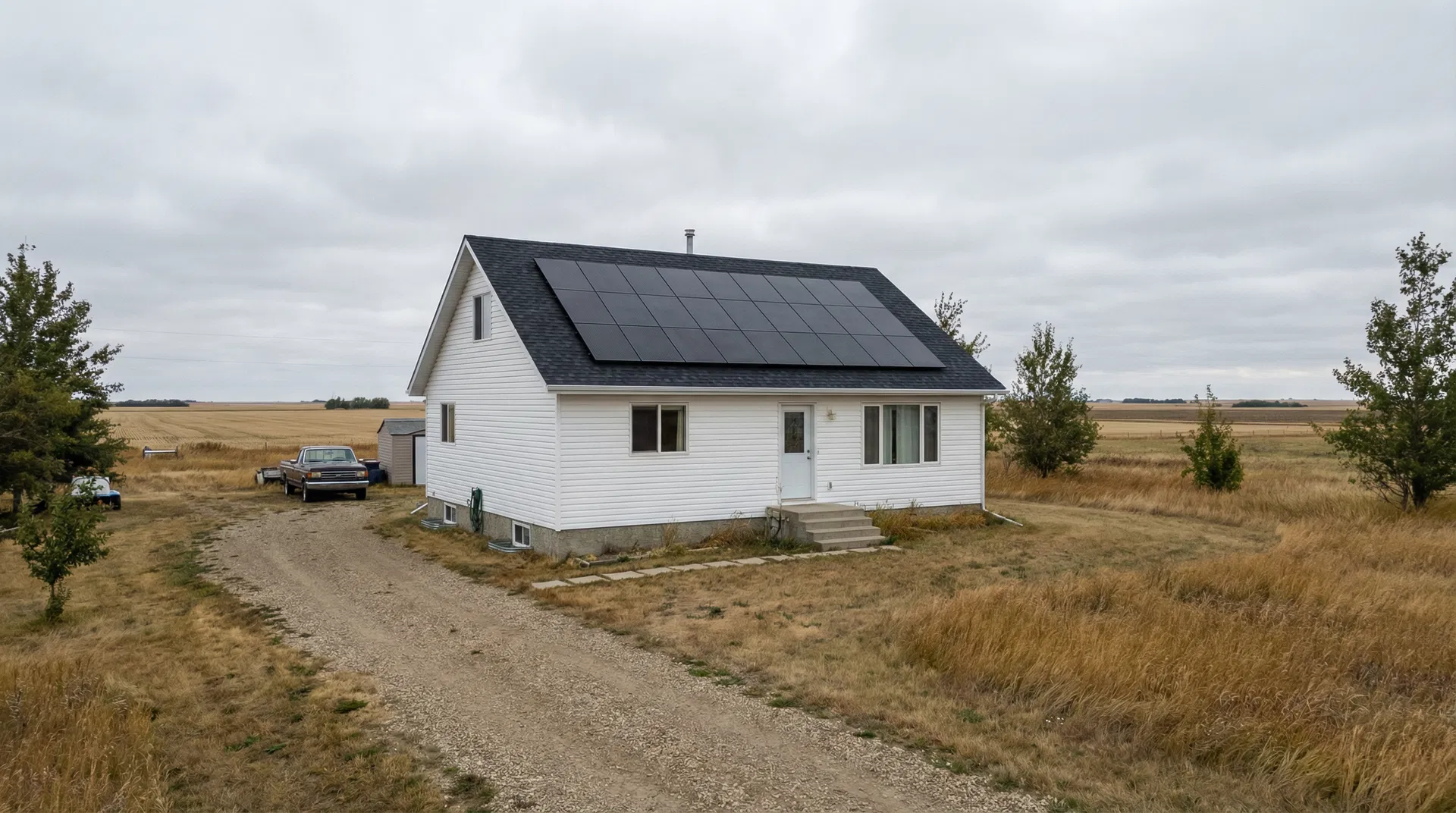
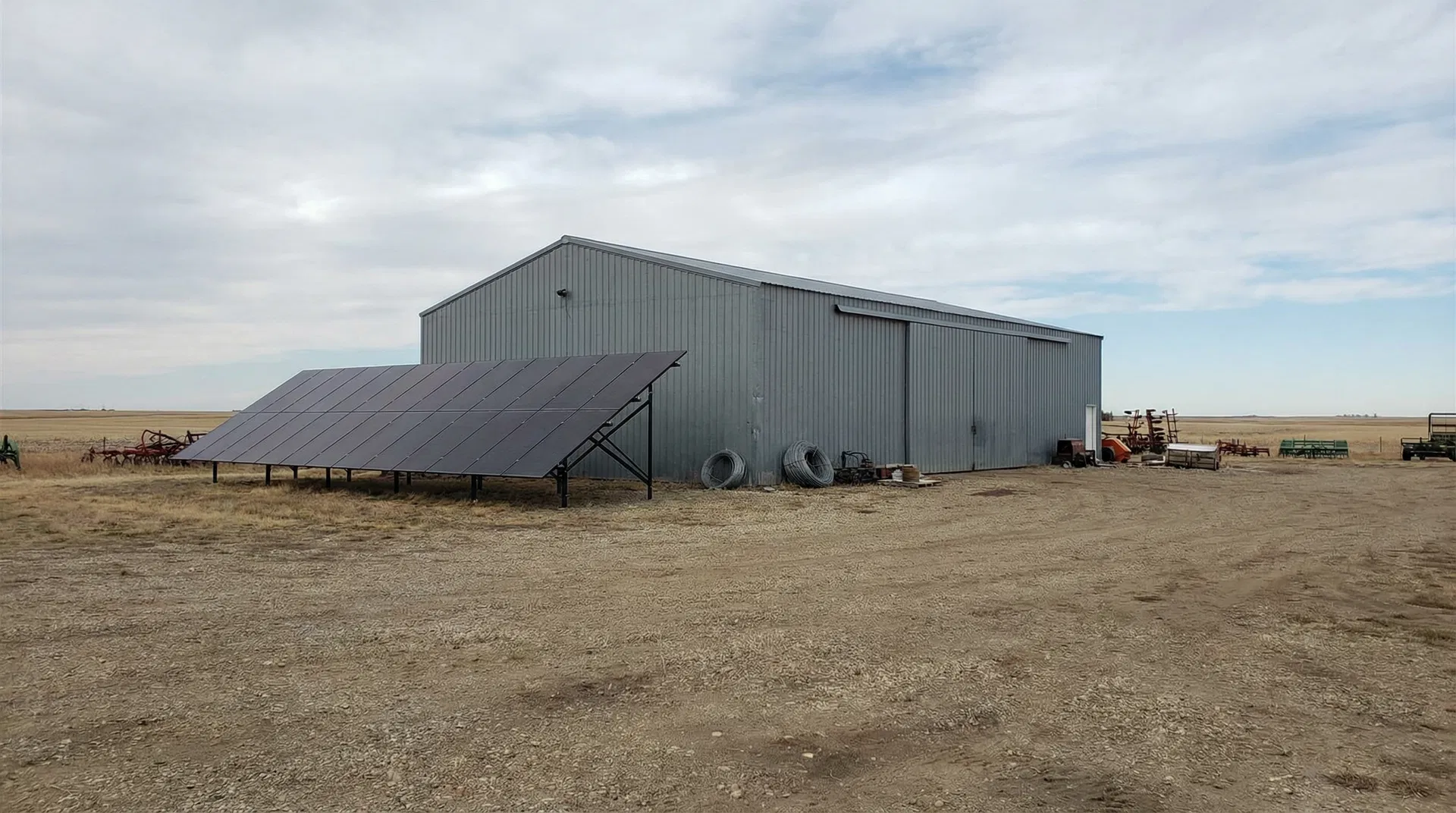
Acreage solar in Trochu, AB starts with a walk around the yard, not a rooftop-only quote. Properties out here often run a house alongside a shop, a barn, or other outbuildings, and a solar system needs to account for all of it, not just whatever roof faces south. We install both rooftop and ground-mount systems in the 12 to 18 kW range, with 15 kW as a common target for a property carrying a couple of major loads. Rooftop arrays make sense when the roof has clean, unshaded south or west-facing exposure and enough structural capacity. Ground-mount systems come into play when trees or outbuildings shade the house, when roof pitch or orientation isn't cooperating, or when there's open land available and it's easier to build a rack on the ground than fight a bad roofline. Every system we install uses LONGi panels paired with APsystems microinverters. The microinverter setup means each panel operates independently: if one panel gets shaded by a grain bin or a shelterbelt at some point in the day, it doesn't drag down the output of the whole array the way a single central inverter can. That module-level independence matters more on acreage layouts than on a typical subdivision roof, since acreage arrays are more likely to deal with partial shading from trees, outbuildings, or uneven terrain. We size every system from your site conditions and your most recent power bill, and we handle the ATCO Electric interconnection paperwork as part of the project.
Solar Planning for Trochu Properties
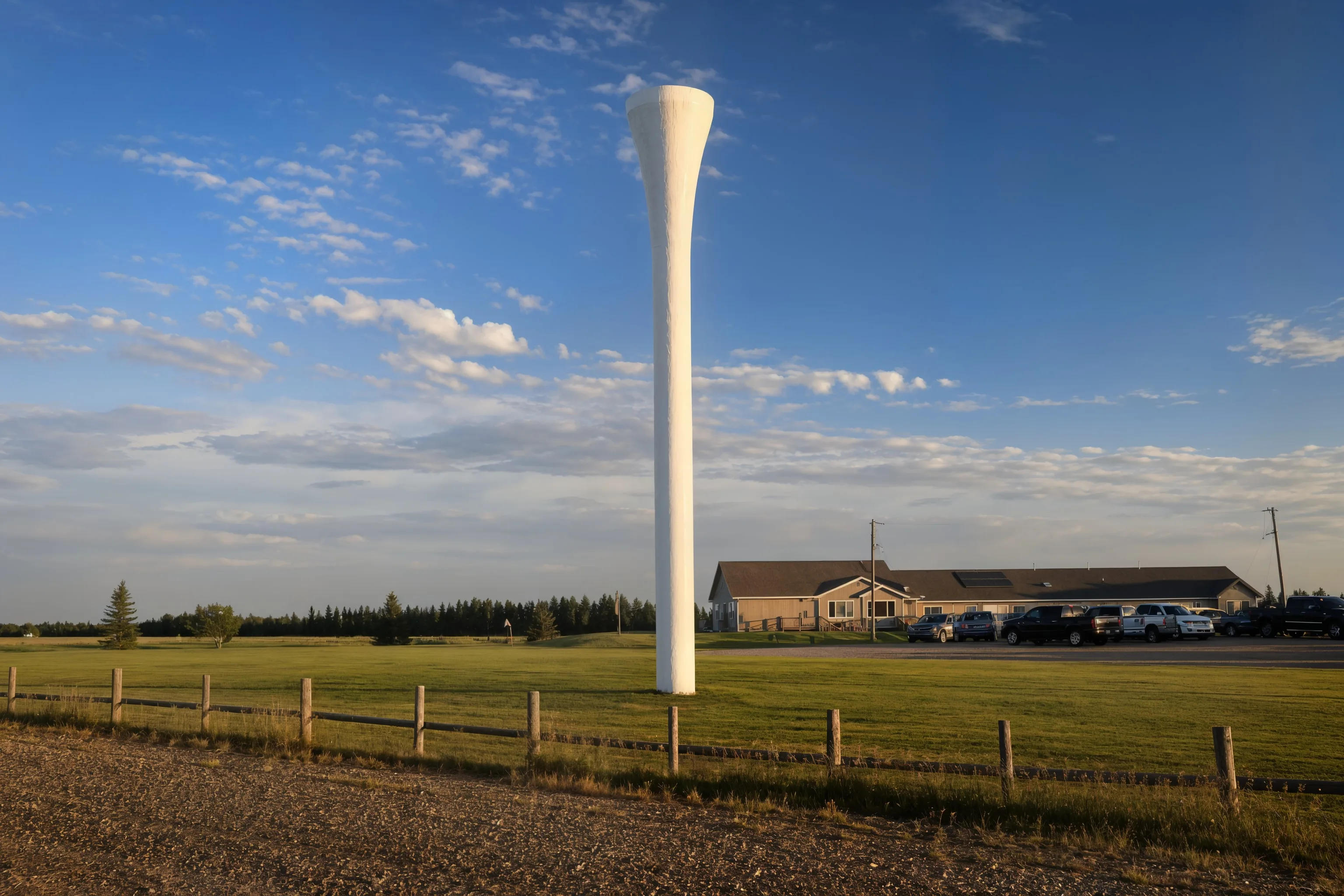
Population here sat at 998 at the last census count, down from 1,058 the count before, and that shift says something about how this area has changed: fewer new subdivisions going in, more established acreages where the owner already knows their property better than a stranger with a clipboard ever could. Properties in this size range usually run more than one electrical load: the house, a shop, maybe a well pump or grain-handling equipment, all pulling off the same service. That's a different design problem than a single-family lot in town, and it's why every quote starts with a site visit and your most recent power bill instead of a generic per-panel number. If you've driven past the World's Largest Golf Tee, you already know this is a place that pays attention to what gets built. We bring that same attention to a solar design: confirming service size, roof or ground-mount options, and actual usage before we talk numbers. A 12 to 18 kW system might suit a smaller acreage, while a larger yard with a heated shop could land at the top of that range or beyond it. Range Road Solar confirms the right size through site design and a look at your bill, not a rule of thumb.
Electrical Site Review for Trochu Properties
Voltage Rise
Voltage rise happens when the distribution line serving a property runs a longer distance from the transformer, which is common on rural feeders. Higher voltage rise conditions can push an inverter closer to its shutdown threshold at certain output levels, which is one reason we check line conditions before finalizing inverter count and system size. Getting this right up front avoids a system that clips output on strong sunny days instead of delivering what it's designed for.
Single-Phase vs Three-Phase
Rural Alberta properties can have either single-phase or three-phase electrical service, depending on how the property was originally built out and what loads it was designed to run. Three-phase service is more common where there's larger equipment like grain-handling motors or shop equipment, while many acreage homes run on single-phase. Which one your property has affects which inverter models we can use and how much capacity the system can support, so it's one of the first things we confirm on-site.
Panel Infrastructure
Older rural properties sometimes have electrical panels that were sized for the loads of decades ago, not a house, a shop, and a solar system all on one service. We check breaker capacity, panel age, and available space for the backfeed breaker a solar system needs before finalizing a design. If the panel can't support the added capacity, an upgrade means installing a new panel with the breaker space and rating the system requires, which we scope as part of the project, not as a surprise afterward.
Service Entrance Review
We check the condition of your service entrance and meter base as part of every site visit, since a worn or outdated meter base can hold up a micro-generation application to ATCO Electric. ATCO Electric reviews the meter base as part of approving the interconnection, so a component that's corroded, undersized, or otherwise doesn't meet current standards needs to be addressed first. If an upgrade is required, we handle it as part of the project scope so it doesn't stall your application.
Right-Sizing Solar for Trochu Properties
Acreage systems run bigger than a typical in-town rooftop for a simple reason: there's usually more than one load on the property. A house alone is one thing, but add a heated shop, a well pump, irrigation, or grain-handling equipment, and the total draw on the service climbs fast. That's why acreage systems in this range typically land between 12 and 18 kW, with 15 kW as a common starting point, rather than the smaller systems you'd see on a standard residential lot. Roof versus ground mount comes down to what the property actually offers. If the roof has clean, unshaded exposure and enough structural capacity, a rooftop array is usually the simpler and less expensive build. Ground mount makes more sense when trees or outbuildings shade the house, when the roofline doesn't have good south or west exposure, or when the yard is spread out enough that there's open land to work with and running a rack on the ground is more practical than fighting a bad roof angle. Either way, we don't size a system off a rule of thumb. We size it from the 12-month usage graph on your most recent power bill, which shows exactly how your usage moves through the year, plus a site visit to confirm shading, roof or ground conditions, and your electrical service capacity. That combination, your bill and your site, is what determines the final system size, not a generic per-square-foot estimate.
Typical Load Profiles We Design For Near Trochu
Home Plus Heated Shop
This is the most common acreage profile: a house plus a heated shop used for vehicle storage, a workshop, or equipment maintenance. Shop heat and shop power draw add a load pattern that's different from house usage alone, and it usually pushes the system toward the higher end of the acreage range. We read the 12-month usage graph on your most recent power bill to see how that shop load shows up across the year before we size anything.
Home Plus Well Pump and Outbuildings
Some properties run a house alongside a well pump, a barn, or smaller outbuildings without a heated shop. The load is generally steadier than a shop-heavy property, but well pumps can create short bursts of higher draw that we account for when picking inverter capacity. We confirm this pattern from your bill and a site walk rather than assuming a standard house-only profile applies.
Grain Handling and Farm Equipment
Properties running grain-handling equipment, augers, or larger farm motors have load spikes that a straightforward house system isn't built for. These loads often point toward three-phase service and a system sized closer to the top of the acreage range. We size around the equipment schedule and your most recent bill so the system matches how the equipment actually runs, not just its nameplate rating.
ATCO Electric Interconnection in Trochu
Properties here are served by ATCO Electric, the wire service responsible for the distribution lines and infrastructure in the area. Any grid-tied solar system needs to go through ATCO Electric's micro-generation interconnection process before it can be turned on, and that application is a formal step, not paperwork you can skip or handle after the fact. Range Road Solar prepares and submits that application as part of your project: the electrical design package, the equipment specifications for your LONGi panels and APsystems microinverters, and the site details ATCO Electric needs to review the connection. We coordinate directly with ATCO Electric on your behalf so you're not the one tracking down forms or chasing status updates. Because every property's service size and equipment are different, we review your specific setup, your panel or ground-mount plan, and your electrical service capacity as part of the design, then build the interconnection application around what your property actually has, not a generic template.
Project Economics and Design Review
| System Size | Annual Production | Year 1 Savings | Payback Period |
|---|---|---|---|
| 12-18 kW range, 15 kW typical |
Production, savings, and payback figures require a property-specific design review and your most recent power bill, and we don't publish general estimates that don't reflect your actual property.
How We Work in Trochu
Bill and Load Review
We review your power bill to understand your energy use in Trochu and size the system to your actual consumption, not a generic estimate.
Site Assessment
We assess your roof or ground area, south-facing exposure, electrical service, and utility interconnection requirements specific to your property.
Design and Utility Application
We produce a system layout, production estimate, and cost summary, then submit your micro-generation application to your utility on your behalf.
Installation and Commissioning
Our crew installs racking, panels, inverter, and electrical connections. All work is performed by licensed electricians. We commission and test before handoff.
Current Program and Interconnection Review
Utility connection review
ATCO Electric reviews every grid-tied solar application before a system can be turned on, and that review covers your service size, equipment specifications, and site details. Range Road Solar prepares the full design package and handles the submission on your behalf, so you're not the one interpreting utility paperwork.
Current program review
Whether a property is used residentially, for a hobby farm, or for a commercial operation, we review it against whatever current program rules and eligibility criteria apply at the time of your design. Rules and criteria change, so we confirm what applies to your project when we build your quote rather than relying on outdated information.
Frequently Asked Questions
Get a Solar Assessment for Trochu
Submit a recent power bill and we will review your consumption and provide an honest assessment for your Trochu property. No obligation.
(587) 330-7502 Book a CallRelated Resources
More Solar Services in Trochu