Off-grid solar in Trochu, Alberta is built around one question: what does this property actually use power for, day in and day out? We install LONGi panels paired with hybrid inverters and lithium battery storage, sized to keep a well pump, lighting, a fridge, and whatever else is on the system running through stretches of cloudy weeks without a grid to fall back on. For a hunting cabin or a seasonal yard site, that might mean a smaller array with enough battery capacity to carry a few overcast days in a row. For a year-round acreage home, or a shop with a welder and power tools running off the same system, the design needs to start bigger, both in panel count and in battery bank size. The hybrid inverter is the piece that makes this work day to day. It manages the flow between the panels, the batteries, and the loads in the building, and it's what lets the system prioritize charging the batteries first and running loads second, or the other way around, depending on how it's set up. The lithium battery bank size isn't a standard number either, it's confirmed through site design based on what the property actually needs to carry through its lowest-output stretches. Every off-grid design we build starts with a load list, not a standard package. We walk the property, look at what's drawing power and when, and size the array and battery bank from there instead of handing over a one-size-fits-all system.
Solar Planning for Trochu, Alberta Properties
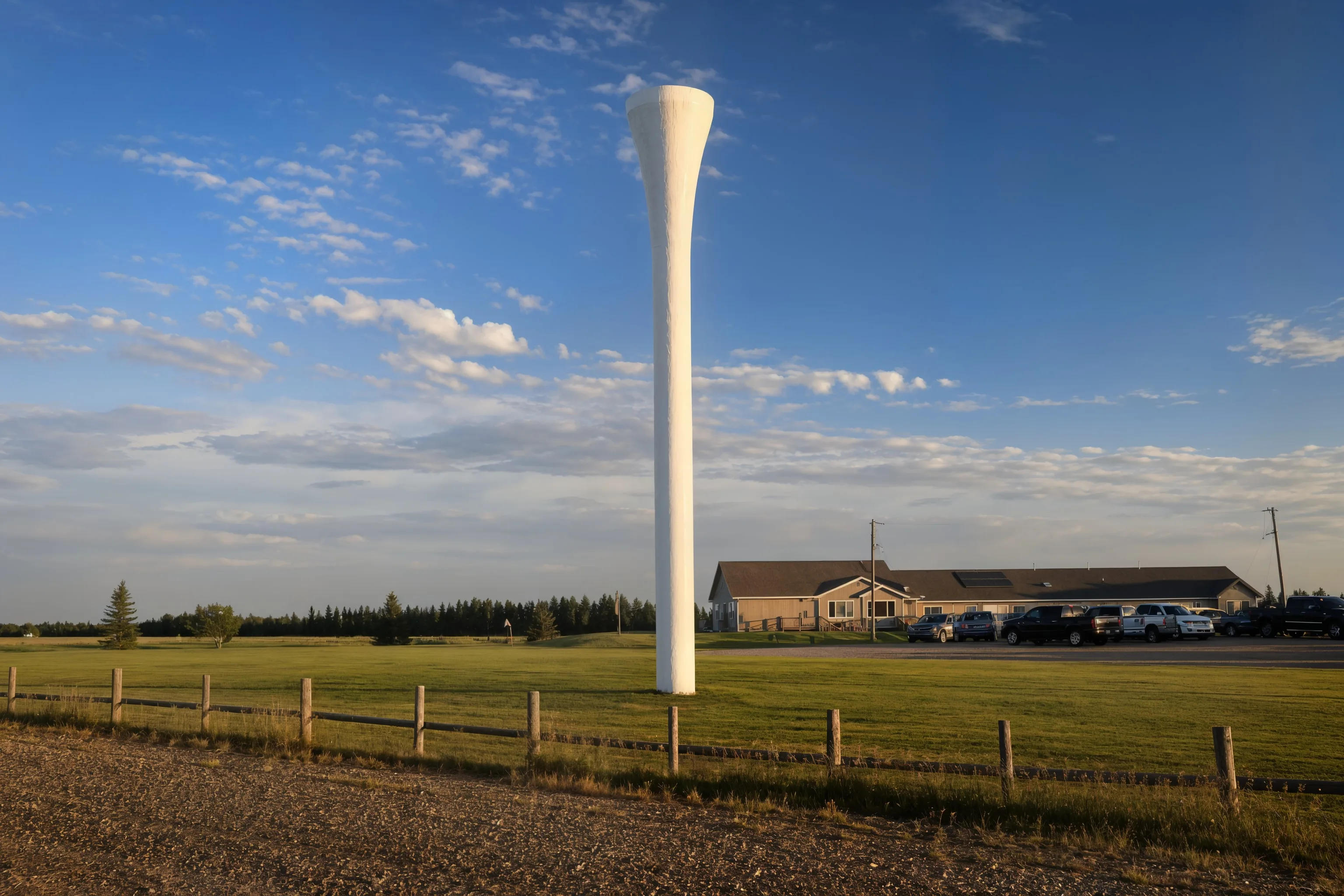
Trochu, Alberta sits in Kneehill County, with a population of about 998 people, and it's known locally for the World's Largest Golf Tee. Most of the properties we hear from aren't right in the core of Trochu, they're acreages, cabins, and farmsteads spread across the surrounding land, where the nearest power pole can be a lot farther off than it would be for a property closer in. That's where off-grid solar earns its keep. If a utility hookup means paying to run poles and wire a long distance, or you're putting something seasonal near landmarks like the Trochu Arboretum & Gardens that was never going to get a grid connection in the first place, an off-grid system with battery storage can make more sense than waiting on a connection quote. We don't guess at what a property needs. Every off-grid design starts with a walkthrough of what's actually drawing power, the well pump, the shop heater, the fridge running around the clock, and we size the panel array, batteries, and inverter around that specific load. A cabin used on weekends and a year-round acreage home need very different systems, even if they sit only a few kilometres apart.
Electrical Site Review for Trochu, Alberta Properties
Voltage Rise
Voltage rise happens when a property sits a long way from the nearest transformer or distribution point, and the line itself causes voltage to climb higher than expected at the point of connection. On rural ATCO Electric lines, that's more common the farther out you are, and it affects how an inverter responds, since most inverters are built to trip or curtail output if voltage climbs too high. We check for this during the site review because it changes how we size the inverter and whether derating needs to be built into the design from the start.
Single-Phase vs Three-Phase
Rural Alberta properties can have single-phase or three-phase electrical service, and which one you've got changes what inverter options are on the table. Three-phase service, more common on farms running larger motors or grain handling equipment, opens up inverter and system capacity options that a single-phase panel can't support. We confirm which type of service a property has early on, since it affects equipment selection before we ever get to panel count.
Panel Infrastructure
A lot of rural properties around here are running electrical panels that are decades old, and an older panel may not have the breaker capacity or physical space for a new solar connection. We check the panel's age, its amperage rating, and how much room is left in it before we finalize a system design. If the panel can't support the added circuits, an upgrade means a new panel sized for both the existing loads and the solar connection, done to current code.
Service Entrance Review
The service entrance and meter base are part of what we check on every site visit, since their condition matters for any micro-generation application filed with ATCO Electric. A meter base that's damaged, outdated, or not rated for the added equipment can hold up an application or create a safety issue during installation. If we find a problem here, we'll flag the upgrade before the system design moves forward, not after.
Right-Sizing Off-Grid Solar for Trochu, Alberta Properties
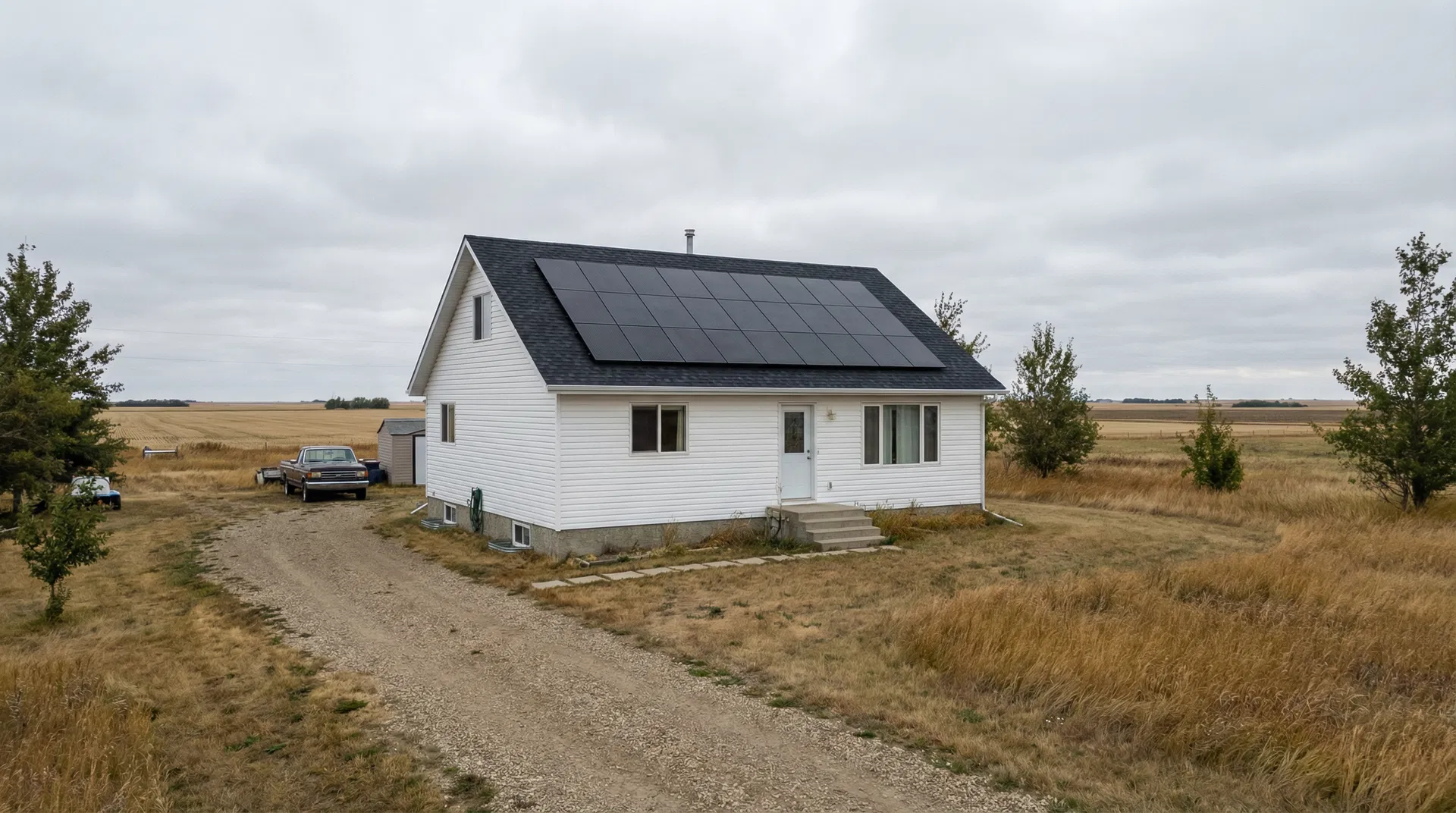
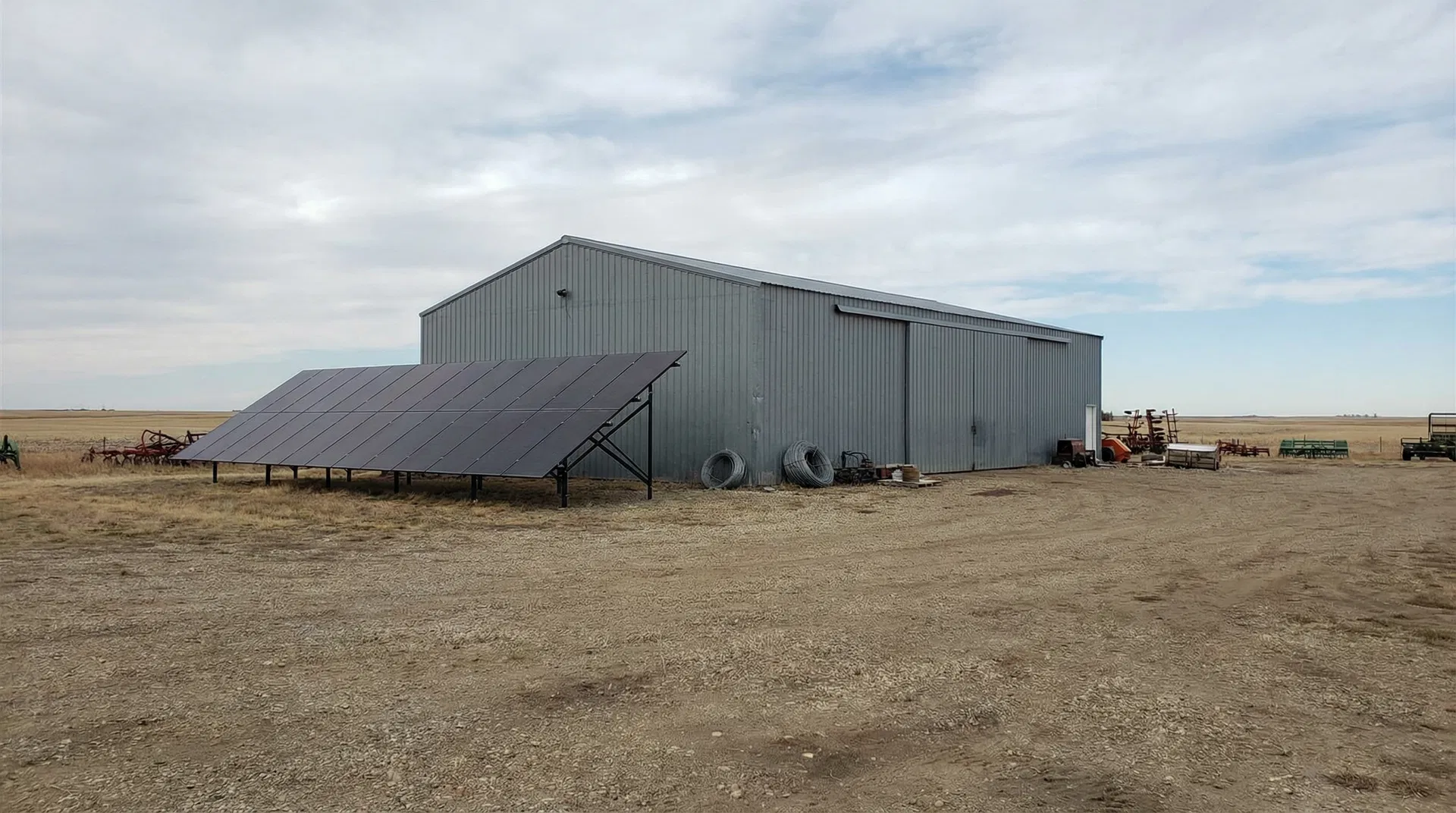
A system sized for a single rural home is rarely the right number once you add in everything else running on the property. A shop with a welder, an irrigation pump, grain handling equipment at harvest, a second outbuilding with its own lighting and heat, these all add load that a simple per-person or per-square-foot estimate misses entirely. That's why rural off-grid systems tend to run larger than a comparable in-town install. Roof mount versus ground mount comes down to what the site actually looks like. A roof with good southern exposure and no shading from trees or outbuildings is often the simpler and cheaper option. But if the roof pitch is wrong, shade from a shelterbelt or a grain bin falls across it for part of the day, or the yard is spread out with open land available, ground mount usually wins. It also gives you room to expand the array later if loads grow. We don't size off-grid systems from a rule of thumb. The 12-month usage graph on your most recent power bill shows actual draw across every season, including spikes most people don't think about, like a block heater running or an irrigation pump kicking in for weeks at a stretch. Combined with a site walk and your answers about what's running when, that usage graph is what tells us whether a property needs 5 kW, 15 kW, or somewhere in between.
Typical Load Profiles We Design For Near Trochu, Alberta
Cabin or Seasonal Yard Site
A weekend cabin or seasonal site usually needs to run lighting, a fridge, a water pump, and maybe a space heater for shoulder-season trips, nothing that draws power around the clock every day of the year. We size these systems around how many days in a row the place might sit unused with nobody there to check on it, which drives the battery bank size more than the panel count. Your most recent power bill, if the site has one, combined with a walkthrough of what's plugged in tells us where that balance sits.
Year-Round Acreage Home
A full-time acreage home is a different load profile entirely: furnace blower, well pump, kitchen appliances, lighting, and often a home office running every day of the year, not just on weekends. These systems need enough panel capacity and battery storage to carry the home through its lowest-production stretches, confirmed through site design rather than assumed. We build this profile from the usage graph on your most recent power bill and a conversation about what's non-negotiable if the system ever has to ration power.
Home Plus Shop or Outbuilding
Add a heated shop, a second outbuilding, or equipment like a welder or a grain handling motor, and the load profile changes again, since these draws tend to be short bursts of high demand rather than a steady draw. We size the inverter and battery bank to handle that kind of spike without undersizing the rest of the system for daily use. This is one of the most common profiles we see on properties like this, where the shop sees as much daily use as the house does.
ATCO Electric Interconnection in Trochu, Alberta
ATCO Electric is the wire service for this area, and that matters even for an off-grid system. Some properties we work with want to stay fully independent, no grid connection at all. Others want an off-grid-capable system now, with the option to tie into the ATCO Electric grid later, or a system that runs off-grid most of the time but has a connection point available. Either way, when a project involves any kind of utility-facing paperwork or inspection tied to ATCO Electric's service territory, we handle the application and the technical documentation it requires. That paperwork is a known process for us, not a guessing game for you. We also coordinate with your electrician on anything the service entrance or panel needs to meet code, since an off-grid system still has to be installed to the same electrical standards as a grid-tied one. If a property sits right at the edge of where ATCO Electric's lines run, that's exactly the kind of situation where an off-grid design review is worth having before getting a quote on bringing poles and wire out to the site.
Project Economics and Design Review
| System Size | Annual Production | Year 1 Savings | Payback Period |
|---|---|---|---|
| 5-15 kW range, 8 kW typical |
Production, savings, and payback numbers depend on a property-specific design and your most recent power bill, and we won't quote them without both.
How We Work in Trochu
Bill and Load Review
We review your power bill to understand your energy use in Trochu and size the system to your actual consumption, not a generic estimate.
Site Assessment
We assess your roof or ground area, south-facing exposure, electrical service, and utility interconnection requirements specific to your property.
Design and Utility Application
We produce a system layout, production estimate, and cost summary, then submit your micro-generation application to your utility on your behalf.
Installation and Commissioning
Our crew installs racking, panels, inverter, and electrical connections. All work is performed by licensed electricians. We commission and test before handoff.
Current Program and Interconnection Review
Utility connection review
ATCO Electric reviews grid-connection and micro-generation applications for any system in its service territory, including off-grid systems designed with an option to tie into the grid down the road. Range Road Solar handles the application paperwork and technical design package that ATCO Electric requires, start to finish. We keep you updated on where things stand, but we don't promise a specific timeline since that's set by the utility, not by us.
Current program review
Eligibility rules for commercial, farm, and residential solar projects change, so we check current program rules against your project type at the time we build your design, not off old information. This applies whether the system is going on a farm operation, a residential acreage, or a small commercial building in the area. We won't reference a program or incentive in your proposal unless it's active and confirmed at the time we're designing your system.
Frequently Asked Questions
Get a Solar Assessment for Trochu
Submit a recent power bill and we will review your consumption and provide an honest assessment for your Trochu property. No obligation.
(587) 330-7502 Book a CallMore Solar Services in Trochu