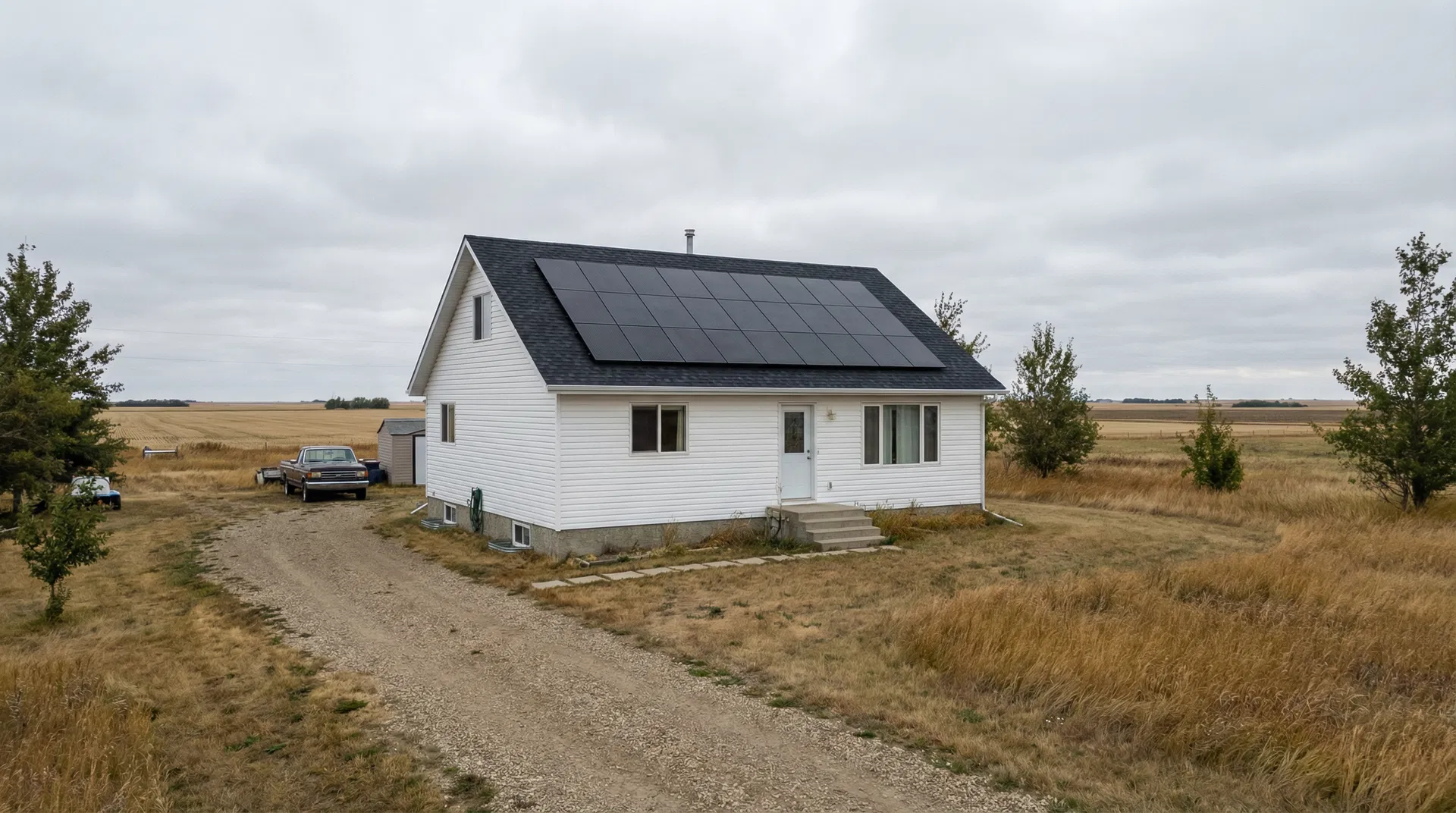
Solar financing in Trochu, Alberta starts with the power bill your new system is meant to replace. The monthly payment gets sized against that bill, so you're weighing a payment against the power cost it's meant to offset instead of guessing at a sales number. Payment amounts and structure are confirmed in your design review, once we know the system size and the usage pattern on your most recent power bill. Most acreage and farm projects we design land somewhere in the 8-15 kW range, with 10 kW as the typical starting point. That range covers a home with a heated shop and the everyday loads on most rural properties. The exact number depends on the usage graph and what the site can accommodate, so the 10 kW figure is a starting point for the conversation, not a quote. The system is built on LONGi panels paired with APsystems microinverters. Each panel runs through its own microinverter, so shade on one panel doesn't drag down the rest of the array. That matters in yards where a grain bin, a tree line, or an outbuilding throws shadows at different times of the day. Ground mounts and roofs both work with this setup, and the design review shows which layout gives you the most usable output. Acreage homes often have room for a ground mount, while farmyards are usually crowded with bins, sheds, and machinery. Heated shops add a second daily load pattern, so we look at the shop as its own load rather than an add-on to the house. Each property gets its own design, its own usage review, and its own payment figure. We'd rather resize a system than push a bigger one you don't need.
Solar Planning for Trochu Properties
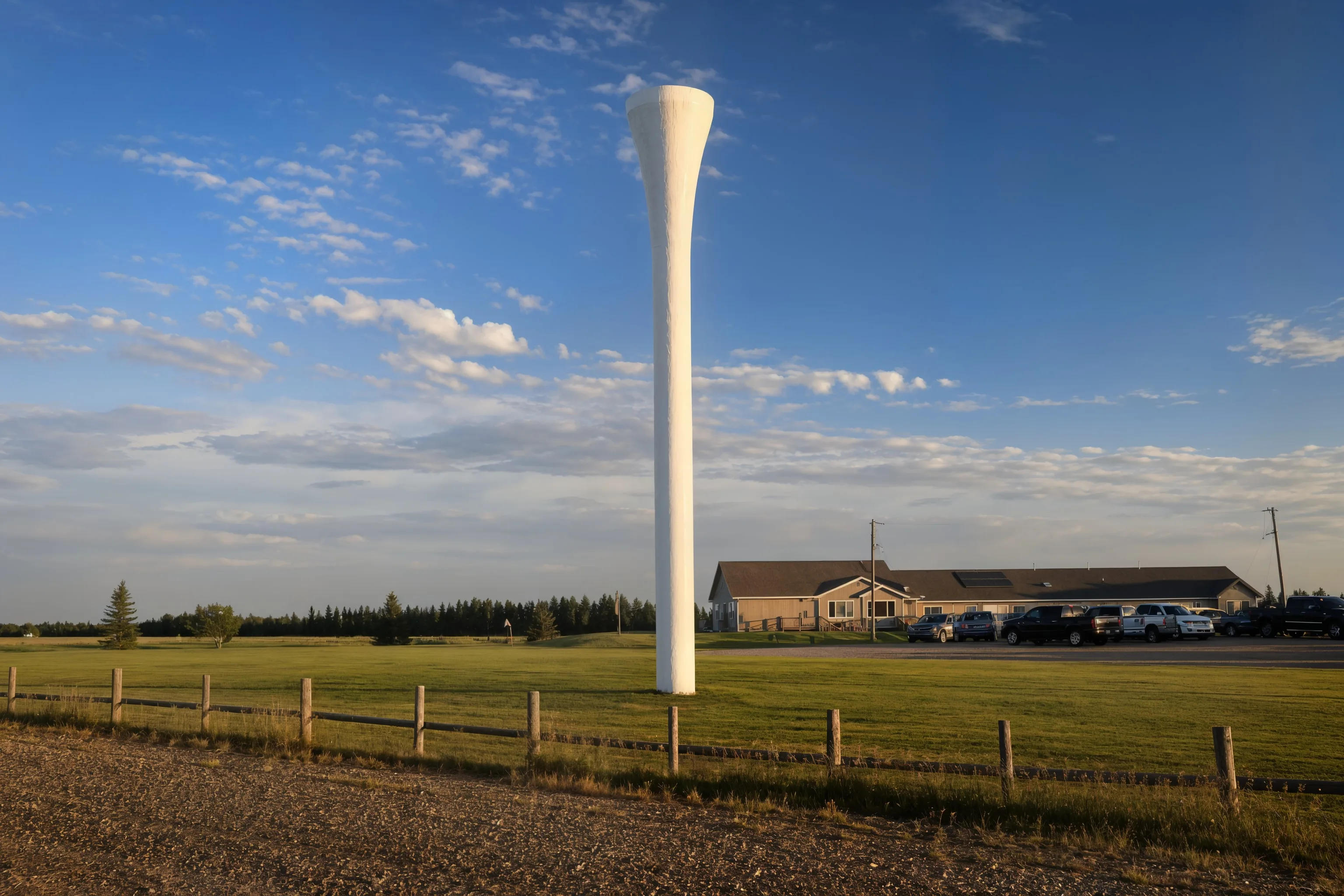
Most solar planning starts with the roof, but on a property like this one it starts with the whole place. The house, the shop, the yard light, and any outbuildings each pull power differently, and the system has to match how the property actually runs. Visitors know the area for the World's Largest Golf Tee, and the Trochu Arboretum & Gardens and Trochu & District Museum are worth a stop too. The questions that actually matter to your bill are quieter: how much power you use each month, when you use it, and whether your current service can carry a new source. We don't model anything until we've walked the site, looked at the roof or open ground, and checked the yard layout. Your most recent power bill gives us the usage pattern we need. From there, the design review turns that pattern into a monthly payment figure you can plan around. ATCO Electric serves this property, so the grid connection is part of the plan from day one. That means fewer surprises, and you'll get one clear package to review before anything gets signed.
Electrical Site Review for Rural Properties
Voltage Rise
Voltage rise is the increase in line voltage that can happen when a solar system pushes power back onto the distribution line. How much of it shows up depends on the conditions of the distribution line serving the property. When voltage climbs, an inverter may reduce its output to stay within its operating limits, which is why we factor it into the array size and inverter choice from the start.
Single-Phase vs Three-Phase
Rural properties can be served by single-phase or three-phase service, and we confirm which one you have before picking inverters. Single-phase and three-phase service handle different loads and support different inverter configurations. That difference sets how much system capacity the property can take on without a service upgrade.
Panel Infrastructure
Older electrical panels on rural properties were often installed for a much lighter load than a shop, a well pump, and a solar system now draw together. We check breaker capacity, panel age, and signs of wear before we add anything to the service. If the panel can't support the system, the upgrade usually means a larger panel, and we'll outline what that work involves in the design review.
Service Entrance Review
We review the service entrance and meter base for physical condition and rating before we finalize the design. The meter base matters because ATCO Electric reviews it alongside the micro-generation application, so a worn or undersized base can hold up the connection. If an upgrade is required, we'll explain what's involved and how it fits into the project before any work begins.
Right-Sizing Solar for Rural Properties
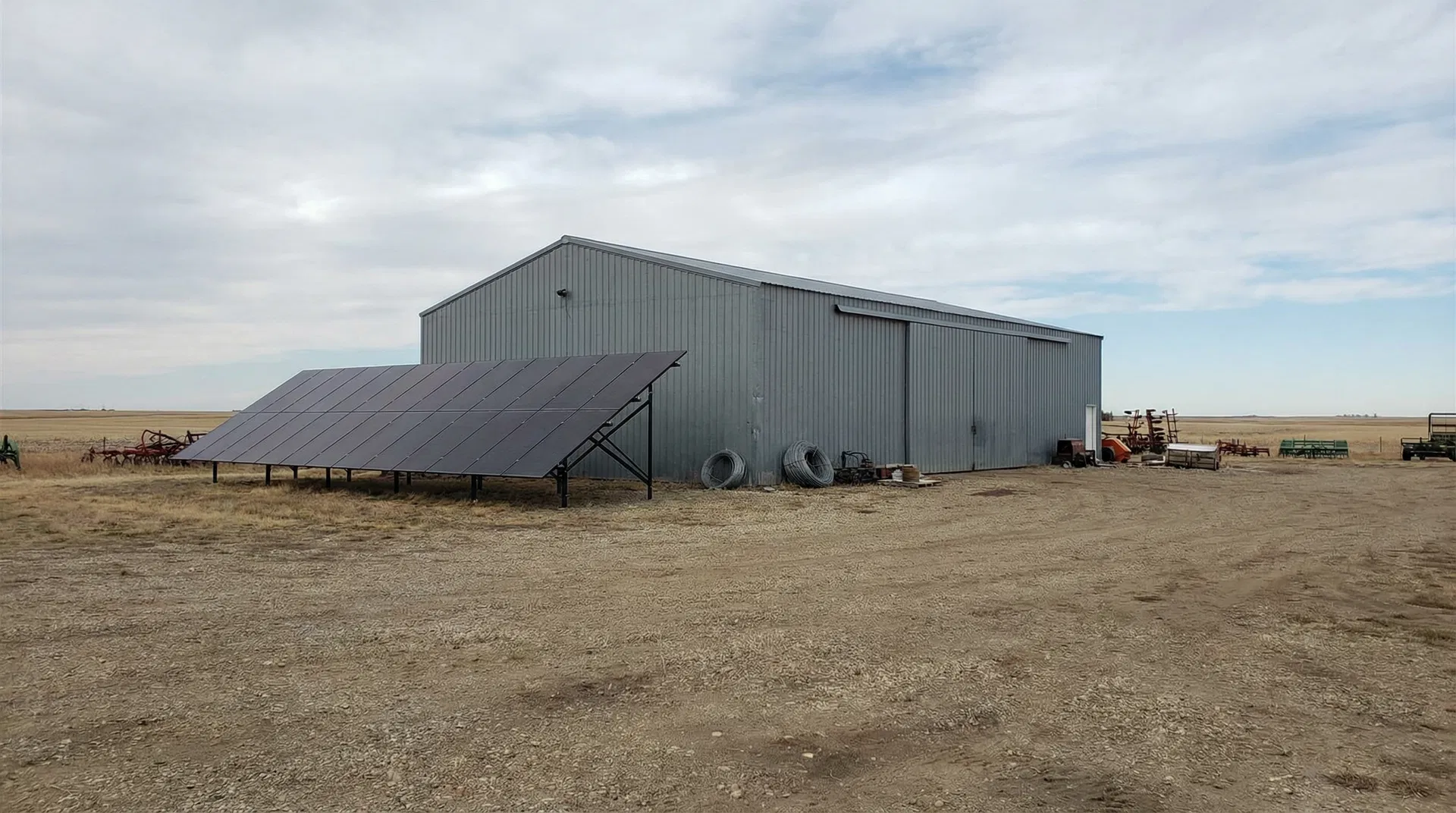
Rural Alberta systems often run larger than urban ones because a rural property puts more loads on one service. A home might share the meter with a shop, outbuildings, an irrigation pump, or grain handling equipment, and each one changes the daily pattern. An urban roof is usually sized around one house, but acreage and farm sites tend to have several loads running at different times of day. Roof or ground mount is the first real decision. A roof is usually the simplest install when the pitch works and nothing shades the surface. Ground mount makes more sense when trees or buildings shade the roof, when the pitch is poor, or when the yard is spread out and there's open land to spare. We look at the layout before picking one, because a ground array needs room for access and clearance from buildings and equipment. We don't size from a rule of thumb about house size. We size from the 12-month usage graph on your most recent power bill, which shows the seasonal shape of your usage and tells us far more than a single monthly total. Your current power bill and the site design together set the system size, and the design review shows how each option fits your actual usage.
Typical Load Profiles We Design For
Home and Heated Shop
A home with a 40 by 60 foot heated shop runs two loads that peak at different times. The house draws most in the morning and evening, while the shop runs through the working day when the heater and tools are on. We size from the 12-month usage graph on your most recent power bill, then check how the shop's pattern fills the gaps in the house's pattern.
Home with Grain Handling
Grain dryers and bin fans turn an otherwise quiet acreage into a seasonal load that can run for three or four weeks each fall. The house load usually stays steady through harvest, so the grain handling spike shows up clearly on the 12-month usage graph. We confirm with your most recent power bill and site design whether that seasonal spike changes the system size.
Home and Irrigation Pump
An irrigation pump on the same service often runs 6 to 10 hours on a summer day, which makes it one of the largest single loads on an acreage. Pump runtime is weighted toward daytime, which is when a solar array produces. The power bill and design review show how much of that daytime pump load the array can actually cover.
ATCO Electric Interconnection Review
ATCO Electric is the wire service for this property, so the grid connection side of your project runs through ATCO Electric. Before a solar system can operate alongside the grid, the connection has to be reviewed under ATCO Electric's micro-generation process. Range Road Solar handles the application package from start to finish. That covers the site details, the equipment specifications for LONGi panels and APsystems microinverters, and the design information ATCO Electric needs to review the connection. You won't have to work out which forms go where or guess what the utility is looking for. We build that package from the same design review that sizes your system, so the numbers in the application match the numbers in your proposal. If the meter base or service entrance needs attention before the connection can move forward, we flag it early and walk you through what the work involves. We can't set ATCO Electric's review timing, and we won't guess at it. What we can control is a complete, accurate package the first time it goes in.
Project Economics and Design Review
| System Size | Annual Production | Year 1 Savings | Payback Period |
|---|---|---|---|
| 8-15 kW range, 10 kW typical |
Production, savings, and payback depend on a property-specific design and your most recent power bill, so this page doesn't list any of those figures.
How We Work in Trochu
Bill and Load Review
We review your power bill to understand your energy use in Trochu and size the system to your actual consumption, not a generic estimate.
Site Assessment
We assess your roof or ground area, south-facing exposure, electrical service, and utility interconnection requirements specific to your property.
Design and Utility Application
We produce a system layout, production estimate, and cost summary, then submit your micro-generation application to your utility on your behalf.
Installation and Commissioning
Our crew installs racking, panels, inverter, and electrical connections. All work is performed by licensed electricians. We commission and test before handoff.
Current Program and Interconnection Review
Utility connection review
ATCO Electric reviews grid connection applications for the properties it serves, and Range Road Solar prepares the design package that goes with each one. You'll see what's in that package before it's submitted.
Current program review
Commercial, farm, and residential eligibility is reviewed against current rules at design time, so the financing plan reflects what applies to your property. We check those rules as they stand when your design is prepared, not when this page was written.
Frequently Asked Questions
Get a Solar Assessment for Trochu
Submit a recent power bill and we will review your consumption and provide an honest assessment for your Trochu property. No obligation.
(587) 330-7502 Book a CallMore Solar Services in Trochu