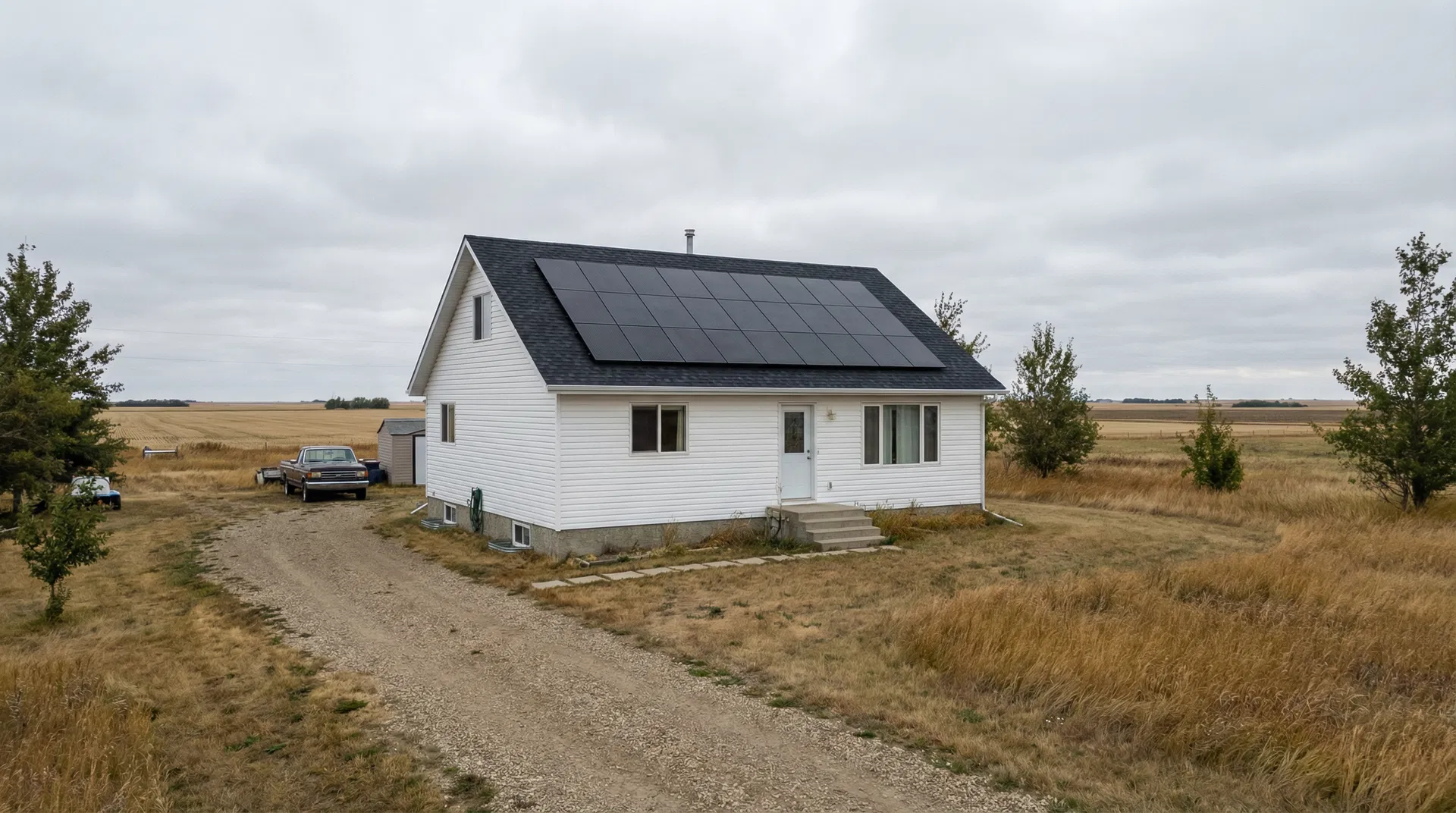
Solar financing in Three Hills, Alberta pairs a fixed monthly payment against the power bill the system replaces, sized from your actual usage rather than a generic online calculator. For most residential properties here, that means a system in the 8 to 15 kW range, with 10 kW being the typical middle ground once we've walked the roof or ground-mount site and reviewed your panel. We build every system around LONGi panels and APsystems microinverters. LONGi panels give us a durable, well-tested module we can warranty with confidence, and APsystems microinverters let each panel operate independently, so partial shading from a tree line, an outbuilding, or a grain bin doesn't drag down the whole array's output. That microinverter-level independence matters on properties with mixed rooflines or ground-mount arrays split across more than one section of yard. Financing terms get structured around your monthly payment fitting near what you're currently paying the utility, which means the underwriting conversation starts with your bill, not a sales target. We walk through system size, mounting type, roof or ground-mount siting, and your electrical panel's capacity before we ever talk numbers on a financing term sheet. For acreage and farm properties with a home plus a shop or outbuildings on one meter, financing gets sized against the combined load, not just the house alone. The design comes first, and the payment gets built around what the design actually needs.
Solar Planning for Three Hills Properties
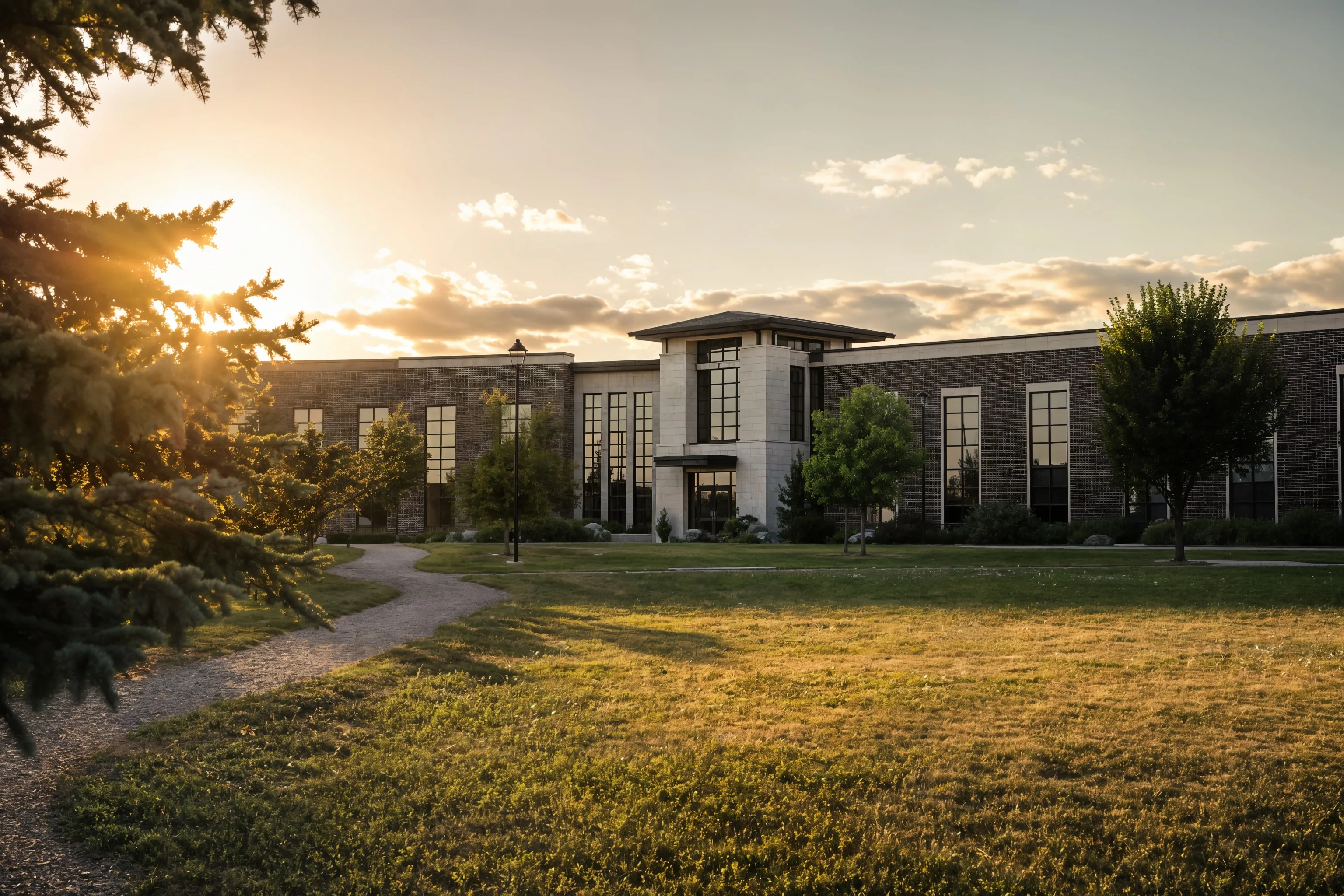
Three Hills sits at 3,042 people as of the last census, down from 3,212 the count before that, and that shift matters for how we plan a system here. A smaller population base doesn't change the physics of a solar array, but it does change what we see on site: older panels, additions built over decades, and outbuildings wired in whatever way made sense at the time. Local records put the community's incorporation as a village on June 14, 1912, with town status following on January 1, 1929, so a lot of the housing stock and infrastructure we work around predates modern code by a long stretch. Prairie College, formerly Prairie Bible Institute, anchors a good chunk of the local economy and campus-adjacent housing, and design work near institutional buildings like that means extra care around setbacks and shared service lines. The Three Hills Water Tower is the landmark most people use to find their bearings, and it's a decent shorthand for the age of infrastructure we're working around on the wider property base. Every plan we put together starts the same way: we look at the roof or the ground-mount site, we look at the electrical panel, and we look at your most recent power bill. Nothing about system size gets decided before that.
Electrical Site Review for Three Hills Properties
Voltage Rise
Voltage rise happens when the distance and wire gauge between a solar inverter and the utility connection point cause voltage at the inverter to climb higher than what's at the panel. On properties with longer runs between the house, shop, or outbuildings and the main service, that rise can push an inverter toward its upper voltage limit and trigger it to curtail or clip output. We measure this during the site review so system sizing accounts for it up front instead of discovering it after install.
Single-Phase vs Three-Phase
Rural Alberta properties show up with both single-phase and three-phase electrical service, depending on when the property was built and what kind of equipment it was wired to run. Three-phase service, common on properties with certain shop or grain-handling equipment, changes which inverter models are compatible and how system capacity gets calculated. We confirm which service type your property has before we finalize equipment selection, because the wrong assumption here means the wrong inverter on order.
Panel Infrastructure
Older rural properties often run electrical panels installed decades ago, with breaker capacity that was never sized with solar in mind. We check panel age, total amperage, and available breaker space as part of every site review, since a full panel with no room for a solar breaker changes the scope of the project. If the existing panel can't support the added capacity, an upgrade means a new panel and breaker configuration sized to handle both the home's existing loads and the new solar circuit.
Service Entrance Review
We check the condition of the service entrance and meter base as part of every site visit, since that's the physical point where ATCO Electric's connection meets your system. An aging or undersized meter base can hold up the micro-generation application to ATCO Electric, because the utility needs confidence the connection point can safely handle a two-way flow of power. When an upgrade is needed, we scope it as part of the project plan so it's priced and scheduled before financing gets finalized, not discovered midway through install.
Right-Sizing Solar for Three Hills Properties
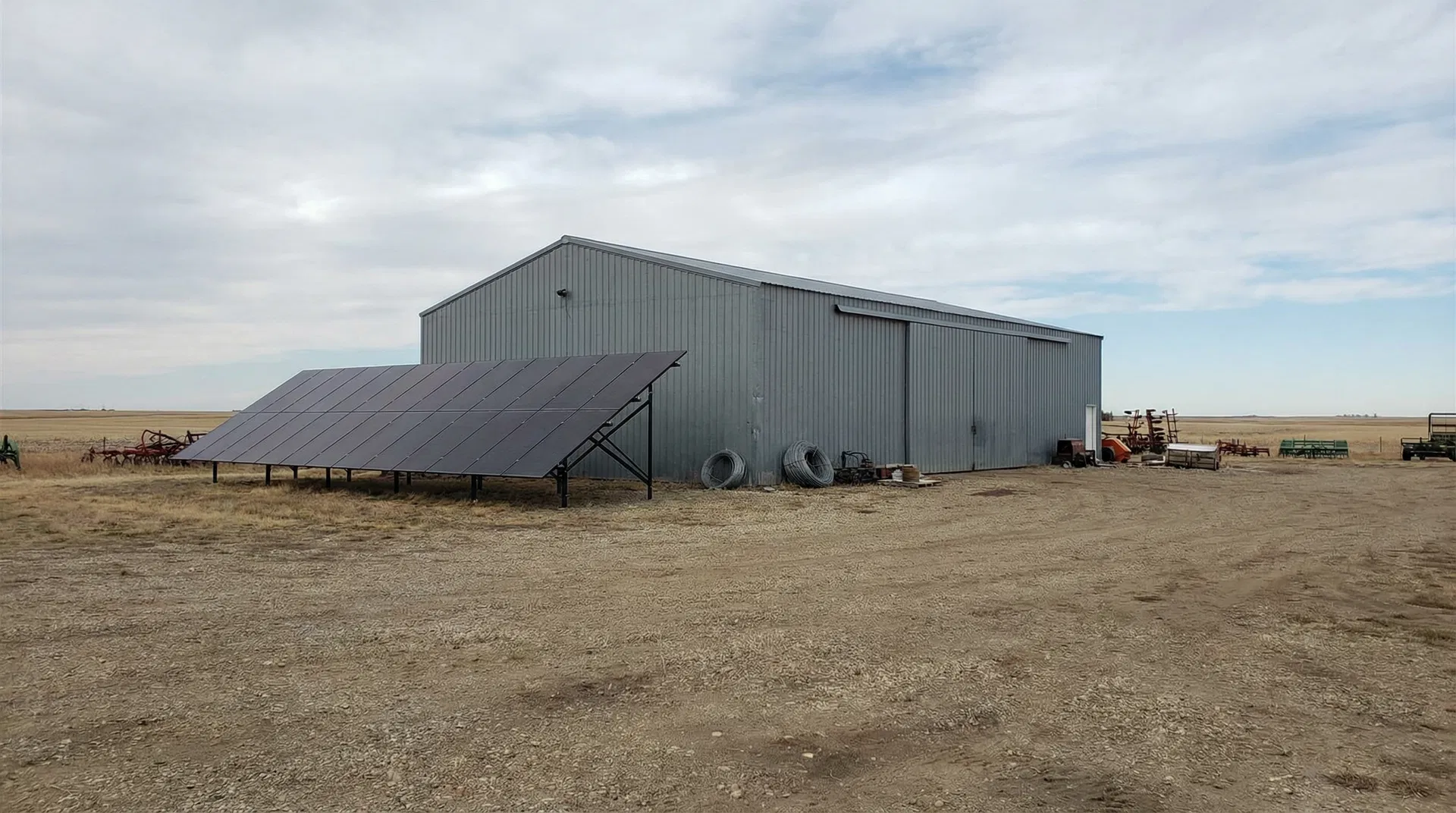
Rural properties around here typically need more solar capacity than a comparable house in town, and it's usually not because the house itself uses more power. It's because one meter often covers a home, a shop, maybe a grain bin or irrigation pump, and outbuildings that all draw off the same service. We size for all of it, not just the house. Roof mount makes sense when the roof has clear southern or western exposure, a pitch that works for panel angle, and no major shading from trees or nearby structures. Ground mount becomes the better call when the roof is shaded, poorly pitched, or when the yard has open, unused land that makes an array easier to access for maintenance and easier to expand later if the load grows. Neither option is automatically better. It depends on what the property actually looks like. What we don't do is size a system off a rule-of-thumb number or a generic per-person average. We size off the 12-month usage graph printed on your most recent power bill, which shows exactly how your load moves through the year, month by month. That graph, combined with a walk of the site to confirm roof or ground conditions, shading, and panel capacity, is what turns an 8 to 15 kW range into a specific number for your property.
Typical Load Profiles We Design For Near Three Hills
Home Plus Heated Shop
This is one of the most common load profiles we see on properties in the area: a house plus a heated, insulated shop used for equipment storage or a side business. The shop adds a load that runs independent of the house's daily pattern, especially through winter heating months. We size for this combined load using the usage graph on your most recent power bill and a walk of both the house and shop panels, not a house-only estimate.
Acreage With Grain Handling or Irrigation
Properties running a grain dryer, auger, or irrigation pump carry seasonal spikes that don't show up in a flat, year-round average. Solar for these properties gets sized to work alongside that seasonal pattern rather than against it, using the shape of the usage graph on your bill to see when those loads actually hit. We look at panel capacity and service type for this profile especially closely, since grain and irrigation equipment often runs on three-phase service.
Acreage With Multiple Outbuildings
Some properties run several outbuildings off one main service: a garage, a barn, maybe a second shop, each with its own smaller load. Individually those loads look minor, but combined on one meter they add up to a bigger baseline draw than the house alone. We size these systems off the combined picture on the power bill and confirm during the site visit which outbuildings share a service versus running on a separate one.
ATCO Electric Interconnection in Three Hills
ATCO Electric is the wire service here, and every grid-tied system we finance and install gets built around their interconnection requirements from the start. Before we finalize a financing structure, we prepare and submit the micro-generation application to ATCO Electric on your behalf, so you're not the one chasing down forms or reading through utility paperwork on top of everything else. That application covers the technical details of your system: panel and inverter specifications, single-line diagrams, and the site-specific information ATCO Electric needs to review a grid connection. We don't guess at what ATCO Electric will require. We build the application from your actual site conditions and equipment list, using LONGi panels and APsystems microinverters with documented specifications ATCO Electric's review process expects to see. If your property's service entrance or panel needs an upgrade before interconnection can move forward, we flag that during the design review, not after your financing is already locked in.
Project Economics and Design Review
| System Size | Annual Production | Year 1 Savings | Payback Period |
|---|---|---|---|
| 8-15 kW range, 10 kW typical |
Production, savings, and payback figures are specific to your property and require a design review built around your most recent power bill.
How We Work in Three Hills
Bill and Load Review
We review your power bill to understand your energy use in Three Hills and size the system to your actual consumption, not a generic estimate.
Site Assessment
We assess your roof or ground area, south-facing exposure, electrical service, and utility interconnection requirements specific to your property.
Design and Utility Application
We produce a system layout, production estimate, and cost summary, then submit your micro-generation application to your utility on your behalf.
Installation and Commissioning
Our crew installs racking, panels, inverter, and electrical connections. All work is performed by licensed electricians. We commission and test before handoff.
Current Program and Interconnection Review
Utility connection review
ATCO Electric reviews every grid-tied solar application for technical compliance before a system can connect to their network. Range Road Solar handles the design package and application submission on your behalf, built around your specific equipment and site conditions.
Current program review
Residential, farm, and commercial solar projects are each reviewed against current eligibility rules at the time of design, since those rules can differ by property type and change over time. We check what applies to your specific property as part of the design review rather than assuming a blanket rule.
Frequently Asked Questions
Get a Solar Assessment for Three Hills
Submit a recent power bill and we will review your consumption and provide an honest assessment for your Three Hills property. No obligation.
(587) 330-7502 Book a CallRelated Resources
More Solar Services in Three Hills