
About Three Hills
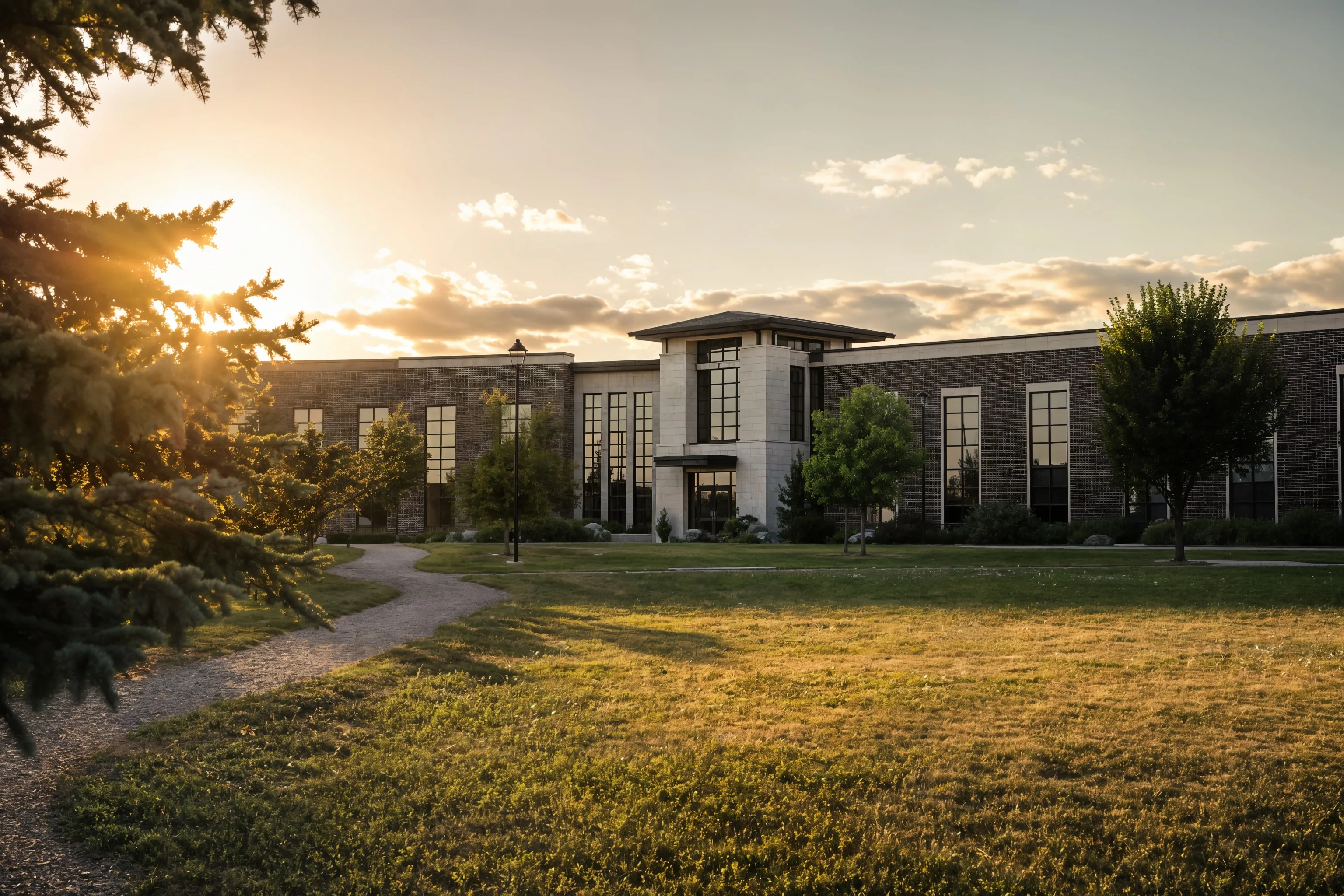
Three Hills sits in the heart of Kneehill County, a grain farming community of roughly 3,500 people about 115 minutes and 130 km from our shop. The town's best-known landmark is Prairie College, which opened classes on the McElheran family farm in October 1922 under founder L. E. Maxwell as Prairie Bible Institute. It grew into one of Canada's best-known missionary training centers and remains the town's largest institutional campus today, now operating as an interdenominational Christian college.
Outside of the college, Three Hills is a working agricultural town. Grain farms and cattle operations surround the town in every direction, and the properties range from in-town lots to full quarter sections. That mix, a dense institutional campus on one end and open farmland on the other, is exactly the range of roof-mount and ground-mount projects we design for.
Solar Potential in Three Hills
Three Hills sits at latitude 51.706 and receives approximately 2,370 hours of bright sunshine per year. A 7.6 kW reference system here produces about 9,790 kWh annually, roughly 1,288 kWh for every installed kW, enough to offset a typical household's full annual consumption with room to spare on a well-sized array. A 10 kW system scales that up to around 12,880 kWh a year.
| Property type | Typical system | Installed cost range | Est. annual production |
|---|---|---|---|
| In-town home or village lot | 6-8 kW roof-mount | $13,500 - $22,800 | ~7,730 - 10,300 kWh |
| Farmyard or acreage shop | 8-12 kW roof-mount | $18,000 - $34,200 | ~10,300 - 15,450 kWh |
| Grain farm or quarter section | 10-15 kW ground-mount | $25,000 - $52,500 | ~12,880 - 19,320 kWh |
Pricing is a range because roof condition, panel count, and electrical work all move the final number. Incorporated farms and businesses can also claim 30% back through the federal Investment Tax Credit on the install cost. We confirm the exact figure at the site visit, not before.
Snow Load, Wind, and the Local Build
Three Hills falls in snow load zone S2 (approximately 1.3 kPa ground snow load under NBC 2020) and wind load zone R4, a combination that reflects Kneehill County's distance from the chinook belt that moderates conditions closer to Calgary. Standard residential panels rated for 1.6 to 2.4 kPa mechanical load meet the local snow requirement, and racking is engineered for the open-prairie wind exposure common on sites around Three Hills rather than a one-size-fits-all spec.
Design frost depth for the area is approximately 2.0m, so ground-mount posts are set at 2.2m or deeper to keep margin below the frost line through sustained cold winters. Cold, clear days are actually a production advantage here: panels are semiconductors, and they output more power per watt in Alberta winter cold than in summer heat. A 10kW system in the Three Hills area typically produces 450 to 600 kWh in January, with roughly 10,500 to 12,000 kWh over a full year.
Grid Connection and Net Metering
ATCO Electric owns and operates the distribution lines serving Three Hills and the surrounding part of Kneehill County, under an Electric Distribution System Franchise Agreement with the Town of Three Hills. We prepare and submit the micro-generation interconnection application, coordinate the technical review, and schedule the bi-directional meter swap. Approval typically takes 4 to 8 weeks from a complete application. During that window your system is installed and inspected but not yet exporting power.
Once the meter is swapped, Alberta's net metering rules apply: your panels produce, your meter spins backward against your usage, and you draw from the grid when production is low. Long summer days around Three Hills build up credits that carry forward into shorter winter days, so the annual bill, not any single month, is what matters.
Six Steps From Power Bill to Power Producer
Power Bill Review
We review the 12-month usage graph on your most recent power bill to understand your consumption patterns and identify the right system size.
Site Assessment
We visit your property to assess roof or ground conditions, shading, electrical service, and interconnection requirements.
System Design
We produce a system layout, production estimate, and cost summary based on your site and usage data.
Permits and Interconnection
We apply for building and electrical permits and submit your micro-generation interconnection application to ATCO Electric.
Installation
Our crew installs the racking, panels, inverter, and electrical connections. Work is performed by licensed electricians.
Commissioning and Inspection
The system is commissioned, inspected by the authority having jurisdiction, and connected to the grid through ATCO Electric.
Frequently Asked Questions
See what our clients say
Real reviews from Alberta homeowners and farmers.
Get a Free Solar Assessment
We serve Three Hills and surrounding areas. No obligation.
Also Serving Nearby Areas
Ready to Assess Your Property?
Submit a recent power bill and we will review your consumption and provide an honest assessment of what solar can do for your Three Hills property. No obligation.
Curious about your estimated system ROI? calculate your Three Hills solar payback.
More Solar Services in Three Hills
Also Serving Nearby Communities