Kneehill County · Acreage solar systems
Acreage Solar in Three Hills, Alberta
Rural properties in this part of Alberta carry serious electrical loads. We design rooftop and ground-mount systems sized for the whole property, not just the house.
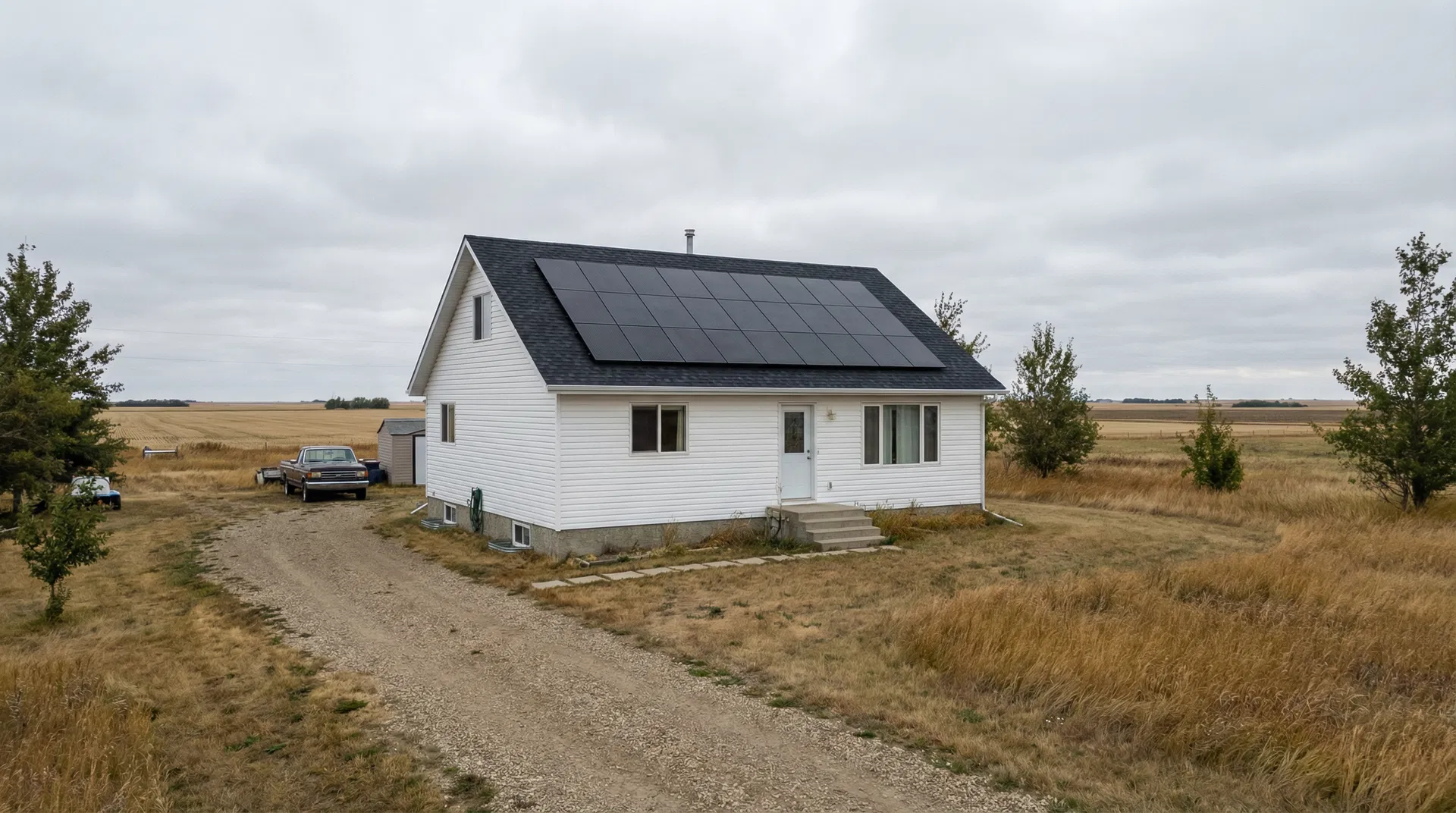
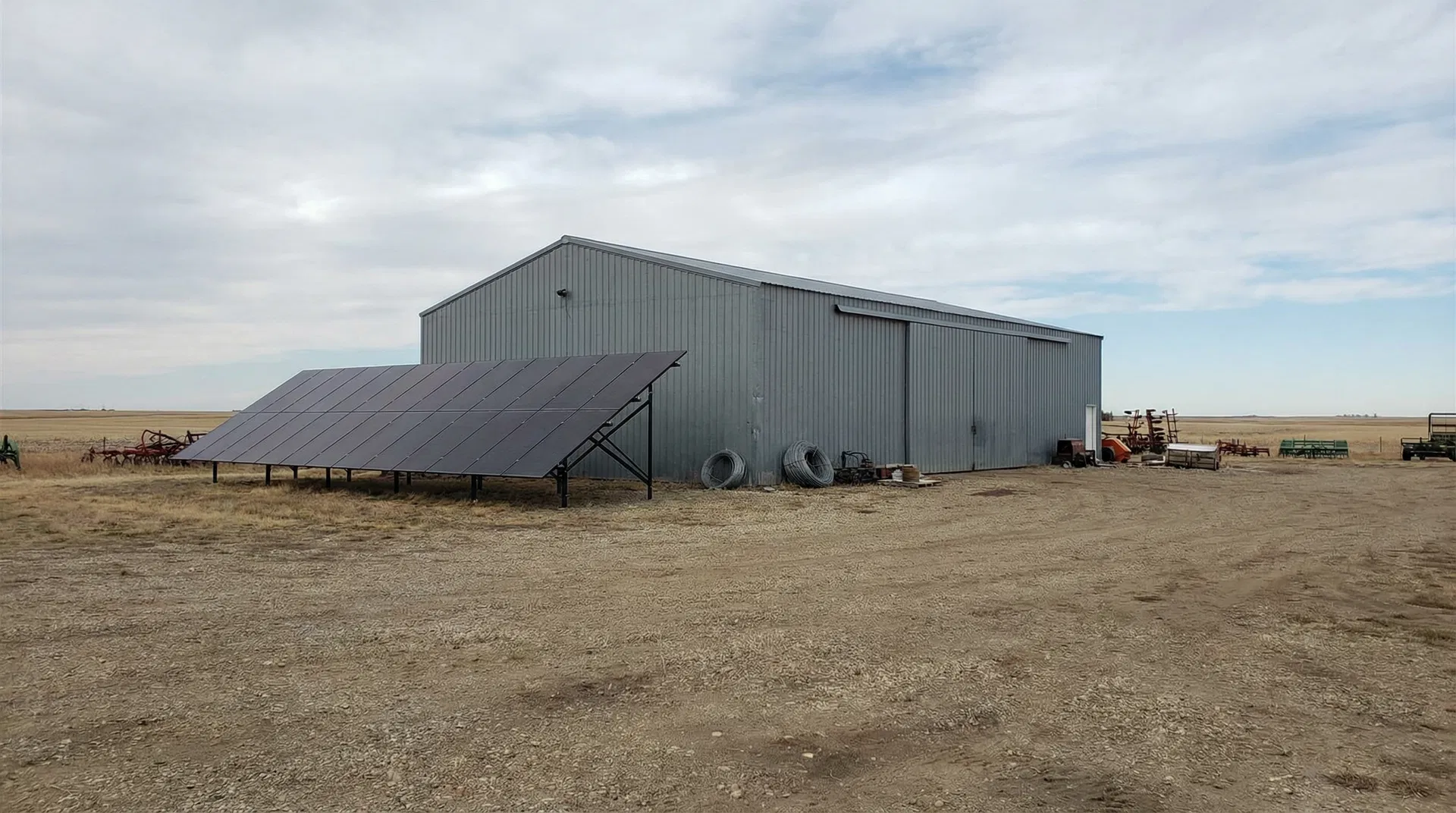
Acreage solar three hills installations aren't a single template. Some properties need a rooftop system on the house. Some need a ground mount in the yard because the shop roof faces the wrong direction or the house has too much tree shading. Some need both. We work with the layout you have, not the layout a sales sheet assumes. Every system we install uses LONGi solar panels, which carry strong performance warranties and hold up well under the freeze-thaw cycling that's part of life on a central Alberta acreage. We pair them with APsystems microinverters, which operate at the individual panel level. That matters on properties where partial shading from a shop, a grain bin, or a row of trees can affect part of an array without dragging down the whole system. Microinverters also make monitoring straightforward: you can see exactly which panels are producing and flag any issues without guesswork. For rooftop installs, we assess pitch, orientation, structural condition, and available unshaded surface before any equipment gets ordered. For ground mounts, we look at yard layout, wire run distances back to the main panel, and available land away from traffic and equipment paths. We don't start designing until we've reviewed your most recent power bill and confirmed the site can support the system.
Solar Planning for Three Hills Properties
Acreage owners around Three Hills aren't working with the same load picture as a city homeowner. You've likely got a house, a heated shop, maybe outbuildings, and seasonal loads that spike in ways a standard residential system won't keep up with. That combination drives up your bills and makes solar worth doing right the first time. ATCO Electric is the wire service for properties in this area, which means your micro-generation application goes through ATCO's interconnection process. We handle that paperwork. We don't hand it back to you and hope for the best. What we need from you is your most recent power bill. Alberta utility bills include a 12-month usage graph on the back, and that graph is the foundation of everything we size. We don't guess at your consumption based on square footage or a rule of thumb. We look at what you actually used, month by month, then design a system around that. Systems in the 12 to 18 kW range are typical for acreage properties here, with many landing around 15 kW depending on the load profile. Your property might need more or less. That's what the design review is for.
Electrical Site Review for Three Hills Properties
Voltage Rise
Voltage rise occurs when a solar system pushes electricity back toward the grid and the local distribution line voltage increases beyond acceptable limits. On longer rural lines, which are common in this part of Alberta, the conductors and transformer conditions can make voltage rise more likely. If rise limits aren't managed in the system design, the inverters will clip output to stay within utility tolerances, which affects how much the system produces.
Single-Phase vs Three-Phase
Rural acreage properties in Alberta can be served by single-phase or three-phase power, depending on what loads the property has historically run. If you've got a large shop with three-phase equipment, your service may already be three-phase. That distinction matters because inverter selection, system capacity, and how the solar system ties into your service panel all depend on which phase configuration you have. We confirm your service type during the site review before any equipment is specified.
Panel Infrastructure
Older electrical panels on rural properties sometimes don't have the breaker capacity to support a solar system without an upgrade. We assess the panel's age, available breaker space, and rated amperage as part of the site review. If the existing panel can't safely support the system, we'll include a panel upgrade in the project scope rather than flag it as a surprise after installation.
Service Entrance Review
The meter base and service entrance are part of what ATCO Electric reviews when processing a micro-generation interconnection application. If the meter base is older or doesn't meet current ATCO standards for a bi-directional meter, an upgrade will be required before the application can proceed. We check the service entrance condition during our site review so that requirement is known and budgeted from the start.
Right-Sizing Solar for Three Hills Properties
Acreage systems are almost always larger than what you'd put on a city house, and that's not an upsell. It's a reflection of what you're actually running. A rural property might include the house, a heated and lit shop, a separate outbuilding or garage, water pumps, and depending on the operation, grain handling equipment or irrigation loads. Stack those together and you're working with a consumption profile that's meaningfully different from a 2,000-square-foot bungalow in town. The 12 to 18 kW range we work in for acreage properties reflects that reality. Where you land in that range depends on your specific loads, not on a number we pull from a brochure. Once we've got your most recent power bill, we pull the 12-month usage graph from it. That graph shows us your seasonal peaks, your low-use months, and the overall annual consumption pattern. That's what we size from. We don't use rule-of-thumb multipliers. Whether the system goes on the roof or goes on the ground is a decision we work through with you based on your roof's orientation and condition, how much shading you've got from trees or outbuildings, and whether there's open land on the property positioned well for a ground mount. Some properties are clear candidates for rooftop. Others, where the shop faces south and the house doesn't, are better served by a ground array. A few need both to cover the full load.
Typical Load Profiles We Design For Near Three Hills
Home Plus Heated Shop
This is the most common load profile we see on acreage properties in central Alberta. The house carries standard residential loads, and the shop adds electric heat, lighting, compressors, and welders running on their own panel. Combined, these two structures often push annual consumption well above what a single residential system covers, which is why sizing from your actual 12-month usage graph matters more than estimating from floor plans.
Acreage With Water and Pump Loads
Properties with dugouts, water wells, or pressurized livestock watering systems carry persistent pump loads that run year-round and spike seasonally. A 15 kW system on a property like this is sized differently than a 15 kW system on a property without those loads, because the usage profile looks different month to month. We design around the actual consumption curve, not a flat annual average.
Home, Shop, and Grain Handling Equipment
Where a property includes grain augers, bin aeration fans, or dryer equipment, the electrical load during harvest can be substantially higher than any other point in the year. A system designed without accounting for those seasonal spikes won't offset as much of the annual bill as the owner expects. We factor in those peak-load months when reviewing your most recent power bill so the system is sized to match the real usage pattern.
ATCO Electric Interconnection in Three Hills
ATCO Electric is the wire service provider for Three Hills and surrounding rural properties in this corridor. Before a solar system can export to the grid, it needs to go through ATCO's micro-generation interconnection process. That involves a formal application, a design package that meets ATCO's technical requirements, and approval before the system is energized. We handle the interconnection application on your behalf. That includes preparing the design documentation ATCO requires and submitting it through the correct channel. We don't expect you to navigate utility paperwork on your own. What we can't do is predict ATCO's approval timeline, because that's driven by their internal review queue and current grid conditions in your area. What we can tell you is that the application won't go in until the system design is solid and all technical requirements are accounted for. If there are any site conditions that could affect the interconnection review, we flag those before the application goes out, not after.
Project Economics and Design Review
| System Size | Annual Production | Year 1 Savings | Payback Period |
|---|---|---|---|
| 12-18 kW range, 15 kW typical |
Production, savings, and payback estimates require a property-specific system design and your most recent power bill and cannot be determined before that review.
How We Work in Three Hills
Bill and Load Review
We review your power bill to understand your energy use in Three Hills and size the system to your actual consumption — not a generic estimate.
Site Assessment
We assess your roof or ground area, south-facing exposure, electrical service, and utility interconnection requirements specific to your property.
Design and Utility Application
We produce a system layout, production estimate, and cost summary, then submit your micro-generation application to your utility on your behalf.
Installation and Commissioning
Our crew installs racking, panels, inverter, and electrical connections. All work is performed by licensed electricians. We commission and test before handoff.
Current Program and Interconnection Review
Utility connection review
ATCO Electric reviews all micro-generation interconnection applications for properties in its service territory, including Three Hills. Range Road Solar prepares the full design package that ATCO requires and submits the application on your behalf. We don't pass that process back to you.
Current program review
Eligibility for available programs varies depending on whether the property is classified as residential, farm, or commercial, and rules change. We review current eligibility against your property and system design at the time of your consultation, so you're working with accurate information rather than outdated summaries.
Frequently Asked Questions
Get a Solar Assessment for Three Hills
Submit a recent power bill and we will review your consumption and provide an honest assessment for your Three Hills property. No obligation.
(587) 330-7502 Book a CallRelated Resources