Kneehill County · Shop and outbuilding solar
Shop and Outbuilding Solar in Three Hills, AB
We design and install grid-tied solar for shops, barns, and outbuildings across Three Hills and the surrounding area. ATCO Electric territory, 8-20 kW systems, no guesswork.
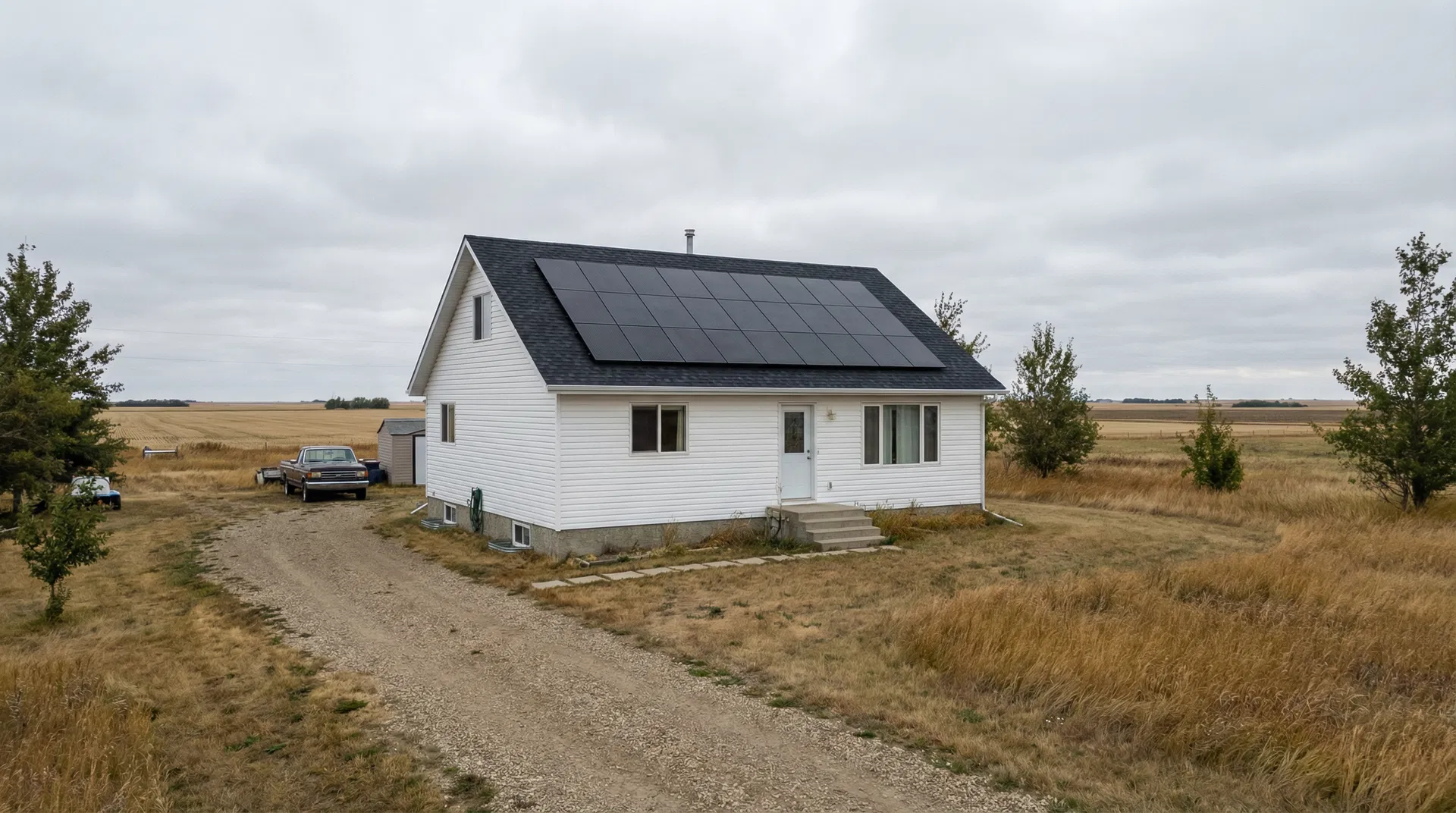
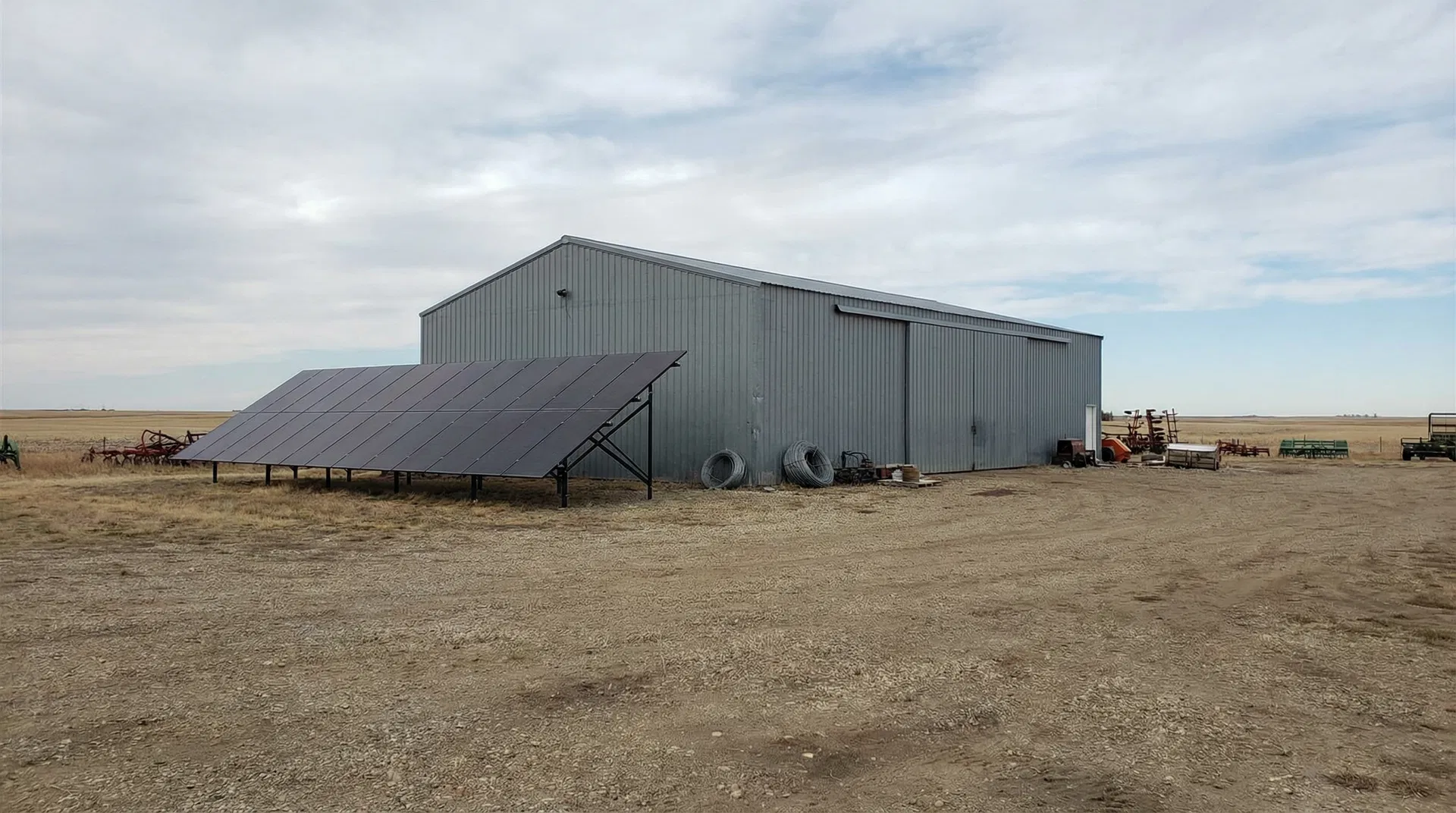
When people search solar Three Hills, they're usually thinking about a shop, a barn, an equipment shed, or some combination of buildings drawing from the same service. That's our focus here. Range Road Solar installs grid-tied solar systems for agricultural and rural commercial buildings in the 8-20 kW range, with 12 kW being a common starting point for a heated shop on its own service. We use LONGi solar panels across all our installations. They're a workhorse panel with a track record that holds up in real Alberta conditions. For inverter technology, we install APsystems microinverters. On a shop or outbuilding where partial shading from a neighbouring structure, a grain bin, or a row of trees can affect part of the array, microinverters let each panel operate independently. One shaded panel doesn't drag down the rest of the system. Rooftop installs on metal-clad shops work well when the pitch and orientation line up. We assess the roof structure, the panel layout, and the wire run to the main panel before we commit to a rooftop design. When the roof isn't the right fit, a ground-mount array on a clear section of the yard gives us full control over tilt, orientation, and row spacing. Both configurations are common on acreages and farmsteads in this part of Alberta, and we're comfortable with either. Every installation includes the full electrical work: panel connections, conduit runs, inverter mounting, and the meter base and service entrance review required for the ATCO Electric application. We handle the paperwork.
Solar Planning for Three Hills Properties
Properties around Three Hills tend to carry electrical loads that add up fast. A heated shop, a grain bin aeration system, a water well, and a house on the same meter can push monthly consumption well past what a typical urban household sees. That's exactly the kind of load profile where a well-sized solar system starts to make sense on paper, and where a sloppy design leaves money on the table. ATCO Electric serves this area, and the micro-generation rules that apply here aren't the same ones you'd find in an ENMAX or FortisAlberta territory. That distinction matters when we're building your interconnection application and production model. We don't use generic Alberta averages. We pull the 12-month usage graph from your most recent power bill and build the design around your actual consumption pattern. Roof-mount and ground-mount are both on the table. A lot of shop roofs in this part of central Alberta have the pitch and orientation to work well. Others don't, and we'll tell you that straight. If a ground-mount array in a clear section of yard gives you better production and a cleaner installation, that's what we'll recommend. The goal is a system that performs, not one that looks good in a brochure.
Electrical Site Review for Three Hills Properties
Voltage Rise
Voltage rise happens when power exported from your solar array pushes the line voltage above the acceptable operating range at your service point. On rural distribution lines that can run long distances between customers, this effect is more pronounced than in dense urban grids. If voltage rise at your property is significant, it can cause your APsystems microinverters to clip output or shut down to stay within operating limits, which affects how we size and configure the system.
Single-Phase vs Three-Phase
Rural properties in Alberta can have either single-phase or three-phase service depending on what was installed when the building was connected to the ATCO Electric grid. Shops with large motors, welders, or grain handling equipment are sometimes served by three-phase. This matters because inverter selection and system capacity planning differ between the two configurations, and we confirm your service type before finalizing any design.
Panel Infrastructure
Older electrical panels on rural shops and farmsteads don't always have the breaker capacity to accept a solar backfeed connection without upgrades. We assess the panel age, the available breaker slots, and the current load before we finalize the design. If the panel can't support the system safely, we'll specify what an upgrade involves and include that in the project scope so there are no surprises at installation.
Service Entrance Review
The service entrance and meter base are part of every site review we do for ATCO Electric territory. The condition of the meter base affects whether the interconnection application will clear ATCO's technical review without requiring additional work. If the meter base is outdated or doesn't meet current standards, an upgrade is required before the application can proceed, and we factor that into the project plan upfront.
Right-Sizing Solar for Three Hills Properties
Rural properties carry more electrical load than a house in town, and that changes how we approach system sizing. A typical acreage or farmstead near Three Hills might have a house, a heated shop, a water well, grain bin aeration, and security lighting all drawing from the same service. Each of those loads shows up on the power bill, and each one factors into how large a system makes sense. That's why systems in the 8-20 kW range are common here, rather than the 6-10 kW systems you see on urban homes. Roof-mount works well when the shop has a metal roof with decent pitch and a south or west-facing slope that isn't blocked by a grain bin, a tall shelter belt, or another building. When those conditions aren't there, we don't force a rooftop design. A ground-mount array on a clear section of the yard gives us full control over tilt and orientation, and on a rural property with available land, it's often the cleaner option. We size every system from the 12-month usage graph on your most recent power bill, not from rule-of-thumb numbers based on square footage or average Alberta consumption. That graph tells us how your loads shift across seasons, whether there's a spike in winter from shop heating, and where the biggest offset opportunities are. We won't recommend a system size we can't justify from your actual data. That's how we keep the production estimates honest.
Typical Load Profiles We Design For Near Three Hills
Heated Shop with In-Floor Heat
A standalone heated shop with in-floor radiant heat runs a boiler or electric heating element that draws heavily through the winter months, often making it the dominant load on the property. We size the array to offset as much of that seasonal heating load as the roof or ground-mount footprint allows, using the 12-month usage graph to confirm where the consumption peaks. A system in the 10-16 kW range is common for this profile depending on shop size and heating setup.
Grain Farm with Bin Aeration and Yard Lighting
Grain operations running bin aeration fans, a grain dryer, and yard security lighting put consistent load on the meter across harvest and post-harvest periods. The aeration fans in particular can run for extended periods, and they show up clearly on a 12-month usage graph as seasonal spikes. We design systems for this profile with enough capacity to make a real dent in those higher-consumption months, typically starting around 14-20 kW depending on the number of bins and dryer type.
Home Plus Shop on a Single Meter
When a house and a shop share a single meter, the combined consumption profile can support a larger system than either building would justify on its own. We treat the entire 12-month usage history as the baseline and size the array to offset the combined load rather than guessing at what belongs to the house versus the shop. This profile often falls in the 12-18 kW range and is one of the most common configurations we see on acreages in central Alberta.
ATCO Electric Interconnection in Three Hills
Three Hills falls under ATCO Electric's distribution territory. That means your micro-generation application goes to ATCO, not to a municipal utility or another wire service. The process, the forms, and the technical requirements are specific to ATCO's grid, and they differ from what you'd encounter in other parts of Alberta. Range Road Solar prepares and submits the full interconnection application on your behalf. That includes the single-line diagram, the equipment specifications for the LONGi panels and APsystems microinverters, and the protection settings documentation ATCO requires. You don't need to navigate that process yourself. What we can't do is promise you a specific approval timeline or tell you exactly what credit settlement looks like for your account. Those details depend on ATCO's current rules, your retailer agreement, and the specifics of your service. What we can do is make sure your application package is complete and accurate the first time, so there are no unnecessary back-and-forth delays. We'll walk you through what to expect before we submit anything.
Project Economics and Design Review
| System Size | Annual Production | Year 1 Savings | Payback Period |
|---|---|---|---|
| 8-20 kW range, 12 kW typical |
Production, savings, and payback estimates require a property-specific design and the 12-month usage graph from your most recent power bill.
How We Work in Three Hills
Bill and Load Review
We review your power bill to understand your energy use in Three Hills and size the system to your actual consumption — not a generic estimate.
Site Assessment
We assess your roof or ground area, south-facing exposure, electrical service, and utility interconnection requirements specific to your property.
Design and Utility Application
We produce a system layout, production estimate, and cost summary, then submit your micro-generation application to your utility on your behalf.
Installation and Commissioning
Our crew installs racking, panels, inverter, and electrical connections. All work is performed by licensed electricians. We commission and test before handoff.
Current Program and Interconnection Review
Utility connection review
ATCO Electric reviews all micro-generation interconnection applications for properties in Three Hills and the surrounding service area. Range Road Solar prepares the full design package, including equipment specifications and the single-line diagram, and submits the application on your behalf. We don't claim a specific timeline or credit settlement outcome because those depend on ATCO's current rules and your service agreement.
Current program review
Eligibility for commercial, agricultural, and residential incentive programs changes over time, and the rules that apply to a shop or outbuilding installation may differ from those for a residential system. We review current program eligibility as part of the design process so you have an accurate picture of what applies at the time of your project. We don't build project economics around programs we haven't confirmed are active and applicable to your situation.
Frequently Asked Questions
Get a Solar Assessment for Three Hills
Submit a recent power bill and we will review your consumption and provide an honest assessment for your Three Hills property. No obligation.
(587) 330-7502 Book a CallRelated Resources