Kneehill County · Solar rebates and incentives
Solar Rebates and Incentives in Three Hills, Alberta
We review current rebates, credits, and the ATCO Electric interconnection process against your specific property, whether it's a farm, an acreage, or an in-town lot.
Solar rebates and incentives in Three Hills, Alberta change based on program rules that shift year to year, so we review your eligibility at the time of design rather than pointing you to a generic list. Range Road Solar's review covers three angles: the ATCO Electric micro-generation interconnection application, any current municipal or provincial program tied to the property, and, for farms and registered businesses, the federal Clean Technology investment tax credit, which we check against your operation's structure. Every system we design for properties here uses LONGi panels paired with APsystems microinverters. APsystems' module-level design means one shaded panel, whether from a grain bin, a shelterbelt, or a neighboring roofline, doesn't drag down the output of the whole array, which matters on farmyards with mixed structures and on lots with mature trees. For an 8 to 15 kW system, that panel count typically spans a home roof plus part of a shop or outbuilding, or a ground-mount array where roof space is tight. We size the rebate and incentive review around the same site data we use for system design: your most recent power bill, your panel and service entrance condition, and how the property is actually used, not a flat percentage applied to every address.
Solar Planning for Three Hills Properties
Three Hills was incorporated as a village on June 14, 1912, and became a town on January 1, 1929, and the property types here still reflect that agricultural history: century-old lots downtown, working farms on the edge of town, and newer acreages spread through Kneehill County. Range Road Solar treats each property on its own terms. A downtown lot with a smaller roof faces different mounting and shading questions than a farmyard with a shop, grain bins, and open field for a ground mount. Environment Canada's climate normals for the region, measured at the Calgary International Airport station, list 2,396.3 hours of bright sunshine a year, and Natural Resources Canada's photovoltaic potential maps put the area's specific yield at roughly 1,276 kWh per kWp installed. Those are regional planning inputs, not a promise for your roof or your bill. We don't quote a production number off a map. We pull the 12-month usage graph from your most recent power bill, walk the property, check your service panel and meter base, and build the system size and layout from what we actually find. For a property within Kneehill County, that also means accounting for ATCO Electric's interconnection process from the start of the design, not as an afterthought once panels are already ordered.
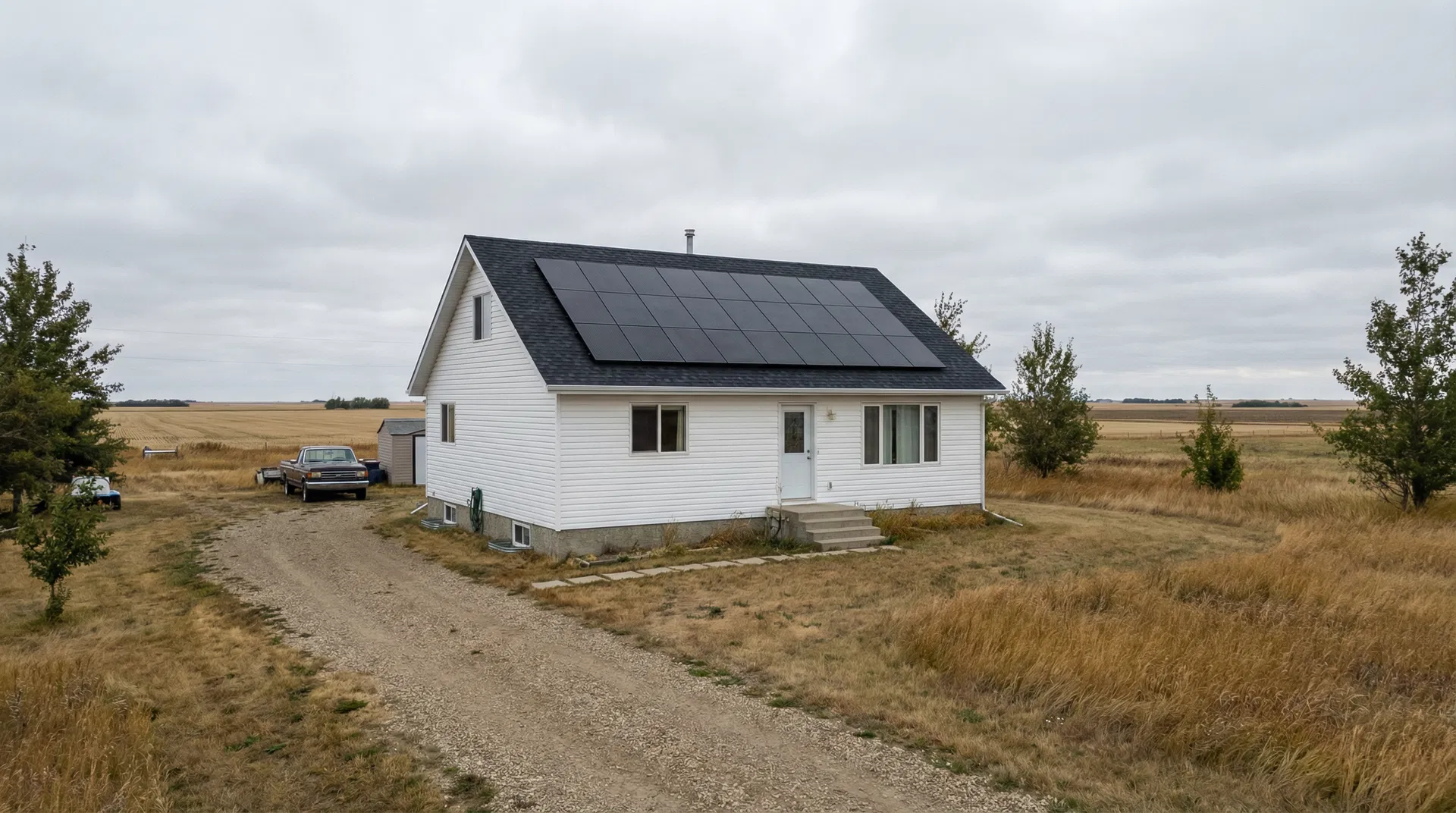
Electrical Site Review for Rural and In-Town Properties
Voltage Rise
Voltage rise happens when a property sits far down a rural distribution line, and the line's natural resistance changes the voltage the inverter sees at the point of connection. On some feeders in this area, that can push voltage toward the edge of what a microinverter is rated to tolerate, which is a factor we check before finalizing equipment selection. We factor voltage conditions on your specific line into how APsystems microinverters are configured and into overall system sizing so the array doesn't experience nuisance clipping or shutdowns.
Single-Phase vs Three-Phase
Rural Alberta properties can run on single-phase or three-phase electrical service depending on when the property was built and what it was built to support, and this area has a mix of both. The service type on your property determines which APsystems microinverter models are compatible and how we group panels across strings. Getting this wrong at the design stage means equipment that doesn't match your actual service, so we confirm phase configuration on site before finalizing a layout.
Panel Infrastructure
Older rural properties sometimes carry an electrical panel installed decades before solar was part of the plan, with limited spare breaker capacity or an amperage rating too low for an added solar circuit. We check your panel's age, brand, breaker space, and main service rating as part of every site visit. If the panel can't support the added solar breaker, an upgrade to the panel, and sometimes the service entrance, becomes part of the project scope before installation can proceed.
Service Entrance Review
The service entrance and meter base are where ATCO Electric's connection meets your property's wiring, and their physical condition matters directly to the micro-generation application. We inspect the meter base for corrosion, outdated components, and whether it can physically accommodate the production metering a grid-tied system requires. If the meter base needs an upgrade before ATCO will approve the interconnection, we scope that work into the project plan rather than surprising you with it partway through.
Right-Sizing Solar for Rural Alberta Properties
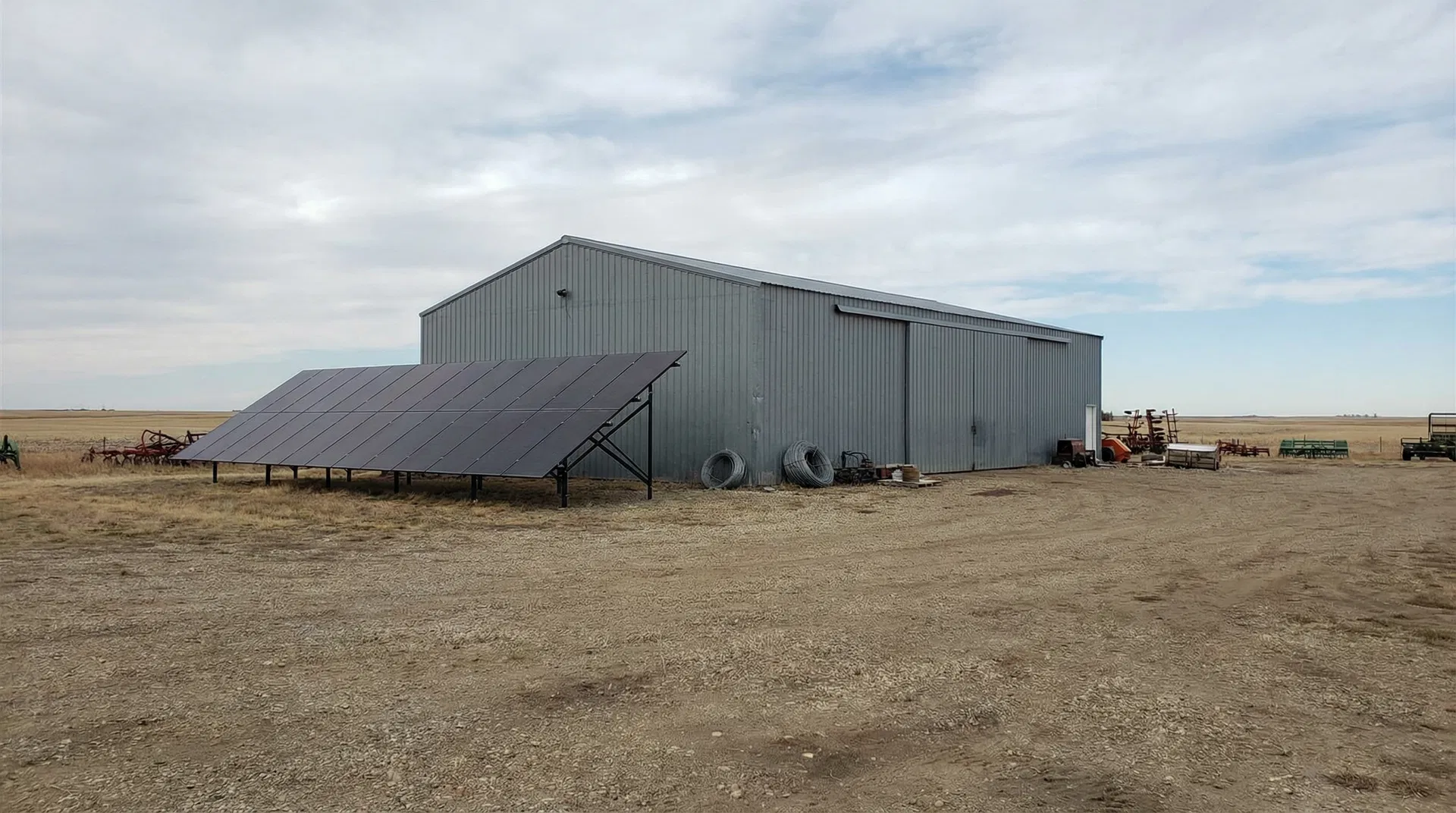
Rural properties in this area usually need a bigger system than a comparable house in a city subdivision, and the reason is straightforward: a farmyard or acreage often runs more than one load. There's the home itself, plus a heated shop, plus outbuildings, plus sometimes irrigation pumps or grain-handling equipment that draws hard for a few weeks a year and sits idle the rest. All of that shows up on one power bill, and it all factors into how we size the array. Roof versus ground mount is a decision we make case by case. A roof with good south or west exposure and no shading is often the simpler, less expensive build. But when a roof is shaded by shelterbelt trees or nearby buildings, when the pitch or orientation works against panel output, or when the yard has open land and the roof doesn't have the space, a ground mount usually makes more sense. We don't size a system off a rule of thumb like watts per square foot of roof or a flat multiplier on your address. We pull the 12-month usage graph off your most recent power bill and match array size to what that graph actually shows: peak months, base load, and any seasonal spikes from equipment like grain dryers or block heaters. That bill, paired with a site walkthrough, is what turns into a system size and layout, not a generic estimate.
Typical Load Profiles We Design For on Area Properties
Home + Heated Shop
This is one of the most common profiles we design for on the edges of town: a house plus a detached shop with its own heat source, block heater outlets, and sometimes a welder or compressor. The shop's load often runs opposite the home's daytime pattern, which changes how we read the usage graph on your bill. We size the array and inverter string layout around both buildings' combined draw, not just the house meter.
Acreage with Irrigation or Well Pump
Properties with a well pump, cistern system, or seasonal irrigation see load spikes that don't show up evenly across the year. Those spikes matter when we're reading the usage graph on your most recent power bill, since a system sized only for average monthly use would undersize the array for pump season. We build irrigation and well-pump draw into the design instead of treating it as background load.
Grain Handling and Farm Equipment
Grain dryers, augers, and bin fans pull hard for a short, intense window at harvest and then sit unused most of the year, a different pattern than steady home or shop use. We look at how that seasonal spike shows up on your bill's usage graph and weigh whether the array should be sized to offset it directly or sized around baseline year-round use instead. That's a conversation we have with you during design, not a default we apply to every farm.
ATCO Electric Interconnection in Three Hills
ATCO Electric is the wire service for this property, and any grid-connected solar system here goes through ATCO's micro-generation interconnection process before it's energized. Range Road Solar prepares and submits that application package as part of your project: single-line electrical diagrams, equipment specification sheets for the LONGi panels and APsystems microinverters, and the site-specific details ATCO requires to review a connection request. We handle the paperwork end of that relationship so you're not the one tracking down forms or chasing status updates. What we don't do is promise how long ATCO's review will take, what credit or payout structure applies to your account, or which retailer plan makes sense for your usage. Those depend on your specific service agreement and retailer, not on us. We walk you through what ATCO actually confirms once your application is in, and we build your expectations from that confirmation, not from a general estimate.
Project Economics and Design Review
| System Size | Annual Production | Year 1 Savings | Payback Period |
|---|---|---|---|
| 8-15 kW range, 10 kW typical |
Actual production, savings, and payback figures come from a property-specific design review built on your site conditions and your most recent power bill, not a general estimate.
How We Work in Three Hills
Bill and Load Review
We review your power bill to understand your energy use in Three Hills and size the system to your actual consumption — not a generic estimate.
Site Assessment
We assess your roof or ground area, south-facing exposure, electrical service, and utility interconnection requirements specific to your property.
Design and Utility Application
We produce a system layout, production estimate, and cost summary, then submit your micro-generation application to your utility on your behalf.
Installation and Commissioning
Our crew installs racking, panels, inverter, and electrical connections. All work is performed by licensed electricians. We commission and test before handoff.
Current Program and Interconnection Review
Utility connection review
ATCO Electric reviews every micro-generation grid connection application on its own merits, and that review is a required step before any grid-tied system here gets energized. Range Road Solar prepares the full design package, single-line diagrams, equipment specs, and site details, and submits it on your behalf so the process moves through ATCO's system correctly the first time.
Current program review
Rebate, credit, and tax incentive rules for residential, farm, and commercial solar in Alberta change from year to year, so we check what applies to your property type and structure at the time we design your system rather than relying on a list that may already be out of date. That review covers residential, farm, and registered business eligibility differently, since the rules aren't the same across those categories.
Frequently Asked Questions
Get a Solar Assessment for Three Hills
Submit a recent power bill and we will review your consumption and provide an honest assessment for your Three Hills property. No obligation.
(587) 330-7502 Book a CallRelated Resources
More Solar Services in Three Hills