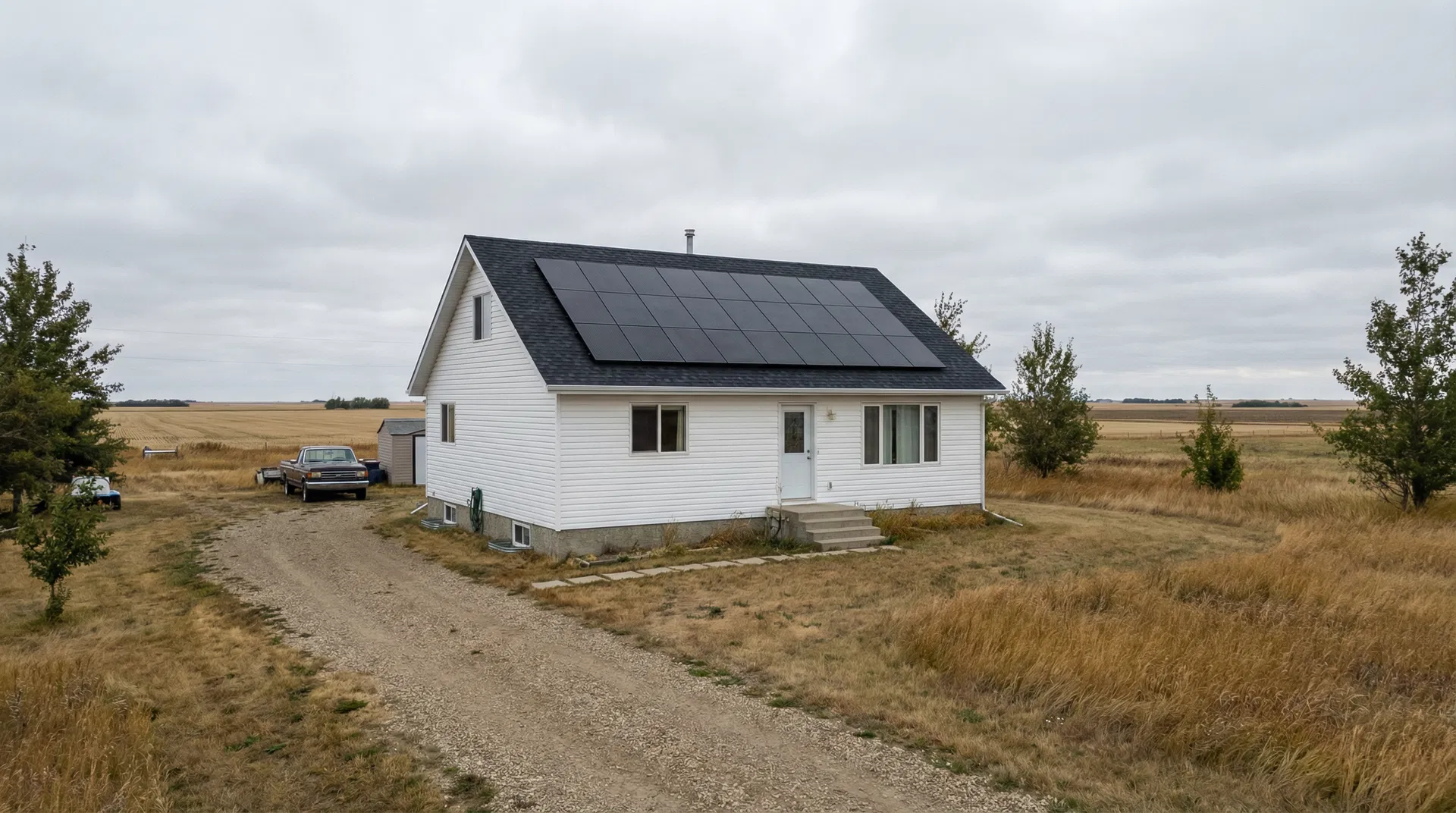
Solar quotes in Three Hills, Alberta start with a real site design, not a drone photo of your roof from a call center three provinces away. We ask for your most recent power bill first, because the 12-month usage graph on that bill tells us more about your actual load than any rule-of-thumb calculator. From there we walk the property, check roof pitch and shading, or for acreages, look at open ground for a ground-mount array. Every quote we prepare specs LONGi panels paired with APsystems microinverters, matched to the property's usage pattern rather than a generic package size. For a lot with a modest roof, that might mean an 8 kW system tucked over the garage. For a property with a home, a heated shop, and outbuildings, the design can run closer to the 15 kW end of the range. We also look at the electrical panel, the service entrance, and whether the property runs single-phase or three-phase power, because those details change what inverter configuration makes sense before we ever put a number on paper. The quote you get back isn't a ballpark. It's a system size, an equipment list, and a design built around what your property actually uses, ready to submit to ATCO Electric once you sign off.
Solar Planning for Three Hills Properties
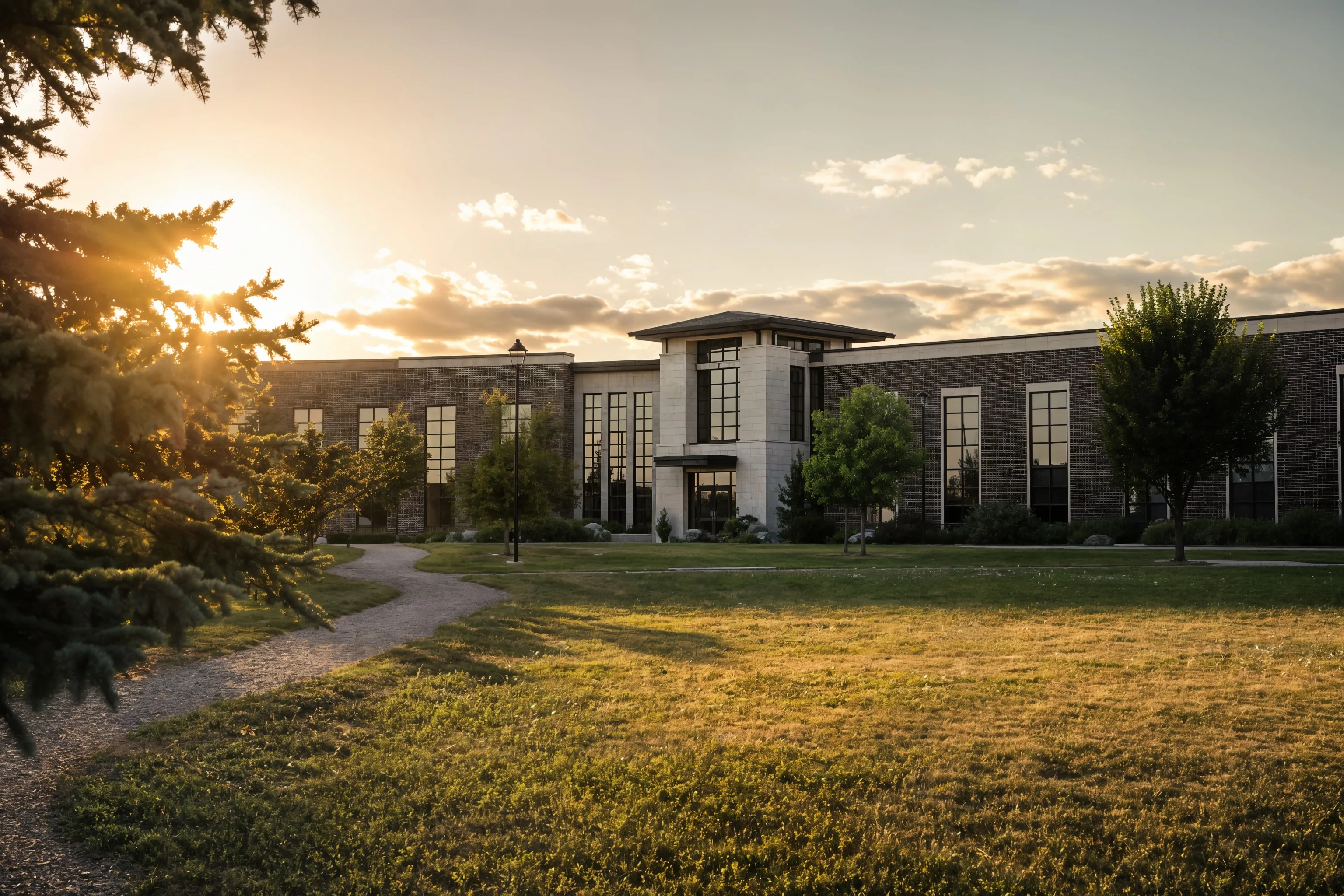
Local roots here go back to June 14, 1912, when the settlement was incorporated as a village, and it became a town on January 1, 1929, a history that still shows up in the mix of properties we work with today: century-old lots close to downtown, newer subdivisions, and acreages on the edge of the area. Prairie College, formerly Prairie Bible Institute, anchors the local economy and keeps a steady base of housing and rental properties tied to the school. That mix matters for solar planning. A downtown lot with a smaller roof and older wiring calls for a different layout than an acreage with a shop and open ground for a ground-mount array. ATCO Electric serves the wire connection here, and any grid-tied system needs to go through their micro-generation application before it's turned on. We don't hand out a generic package. Every quote starts with a walk-through of the property, a look at roof or ground conditions, and your most recent power bill before we size anything. That's the only way to know if an 8 kW system covers the load or if the property needs closer to 15 kW.
Electrical Site Review for Three Hills Properties
Voltage Rise
Voltage rise happens when the distance and wire gauge between a property and the nearest ATCO transformer cause voltage to climb as solar power feeds back onto the line. On longer rural runs, that rise can push voltage high enough to trigger inverter clipping, where the inverter throttles output to stay within its safe operating range. We check line conditions during the site visit so system sizing accounts for this before it becomes a problem after install.
Single-Phase vs Three-Phase
Properties in this area can have either single-phase or three-phase electrical service, depending on when the property was built and what it was originally set up to run. Three-phase service, often found on properties with larger shop equipment or grain handling gear, supports different inverter options and higher system capacity than single-phase. We confirm which service type a property has before recommending microinverter configuration or total system size.
Panel Infrastructure
A lot of rural properties still run on older electrical panels, and breaker capacity and panel age both affect whether it can safely support a new solar system. During the site review we check the panel's rated capacity, its condition, and whether there's room for the additional breakers a solar system needs. If the panel can't handle it, an upgrade means a new panel sized for both existing loads and the solar system, done before installation starts.
Service Entrance Review
We check the condition of the service entrance and meter base as part of every site visit, since ATCO Electric's micro-generation application requires the meter base to meet current standards before a system can be connected. An older or damaged meter base can hold up the application even after everything else is ready. If an upgrade is needed, we scope it into the project plan so it's handled alongside the solar install rather than causing a delay later.
Right-Sizing Solar for Three Hills Properties
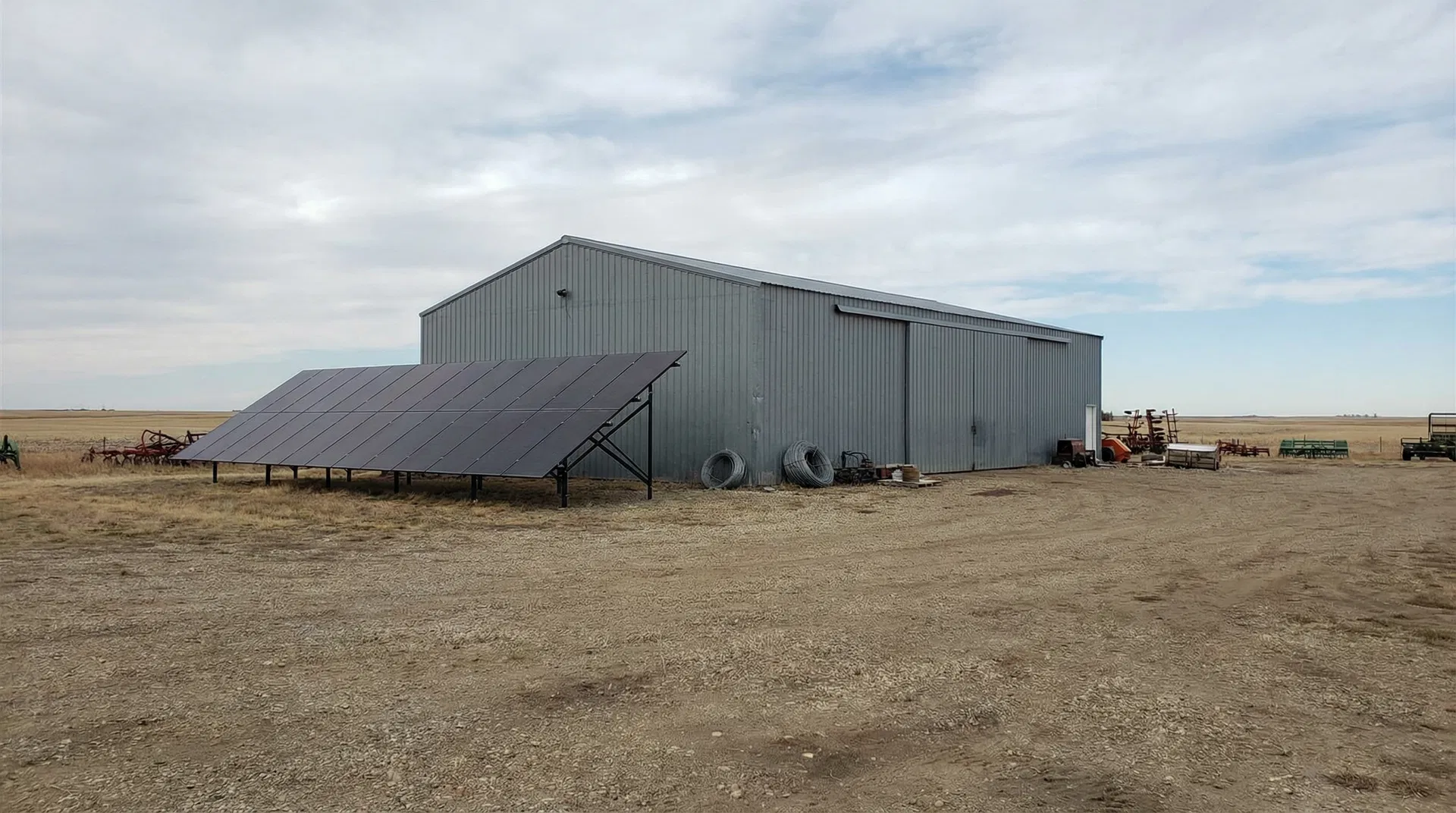
Rural properties typically need more solar capacity than a comparable in-town home, and it's usually not about the house alone. A property might be running a home plus a heated shop, plus a well pump, grain handling equipment, or irrigation, and each of those loads adds to what the system needs to cover. That's why systems in this range often land higher than a basic residential install. Roof versus ground mount comes down to the specifics of the property. A roof with good south or west exposure and no shading is often the simplest option. But if trees or outbuildings shade the roof, if the pitch or orientation isn't ideal, or if the yard has open ground to spare, a ground-mount array can make more sense and gives more flexibility on panel angle. We don't size a system off a rule of thumb like watts per square foot of house. We size it from the 12-month usage graph on your most recent power bill, which shows exactly how load shifts across the year, whether that's heating in winter, irrigation in summer, or a shop running steady year-round. Combined with a site design that accounts for shading, orientation, and available space, that bill is what tells us whether a property needs 8 kW or closer to 15 kW.
Typical Load Profiles We Design For Near Three Hills
Home Plus Heated Shop
Many properties combine a house with a heated workshop or garage, and that shop load can rival or exceed the home's own usage depending on how often it's heated and what's running inside it. We size for both loads together using the usage graph on your most recent power bill, not just the home's typical draw. That often pushes the system toward the upper half of the 8 to 15 kW range.
Grain Handling and Farm Equipment
Properties with grain bins, augers, or drying equipment see load spike hard for short stretches during harvest season rather than staying steady all year. A system sized off a flat average would miss that pattern entirely. We look at how those seasonal spikes show up on your power bill's usage graph so the system design reflects real farm operations, not just an average month.
In-Town Home with Standard Usage
A smaller lot close to downtown with a single-family home and no major secondary loads is usually the most straightforward property we design for. The usage graph on the most recent bill tends to show a fairly consistent pattern month to month, aside from seasonal heating or cooling swings. These properties typically land toward the lower end of the 8 to 15 kW range, though we confirm that with a site visit rather than assuming it.
ATCO Electric Interconnection in Three Hills
ATCO Electric is the wire service here, and any grid-tied solar system needs to go through their micro-generation interconnection process before it's energized. Range Road Solar handles that application as part of every quote: we prepare the technical package, the single-line diagram, and the paperwork ATCO requires, and we submit it on your behalf. You won't need to figure out the forms yourself or chase down what documentation the utility wants. What we can't do is promise how long ATCO's review will take or what specific credit or billing arrangement applies to your account. Those details depend on ATCO's current process and your service agreement, and we confirm them as part of your design review rather than guessing up front. If your property has an older service entrance or a panel that needs upgrading before it can support a new system, we flag that during the site visit so it's part of the plan from the start, not a surprise after the application is already in.
Project Economics and Design Review
| System Size | Annual Production | Year 1 Savings | Payback Period |
|---|---|---|---|
| 8-15 kW range, 10 kW typical |
Production, savings, and payback figures are provided only after a property-specific design review using your most recent power bill.
How We Work in Three Hills
Bill and Load Review
We review your power bill to understand your energy use in Three Hills and size the system to your actual consumption, not a generic estimate.
Site Assessment
We assess your roof or ground area, south-facing exposure, electrical service, and utility interconnection requirements specific to your property.
Design and Utility Application
We produce a system layout, production estimate, and cost summary, then submit your micro-generation application to your utility on your behalf.
Installation and Commissioning
Our crew installs racking, panels, inverter, and electrical connections. All work is performed by licensed electricians. We commission and test before handoff.
Current Program and Interconnection Review
Utility connection review
ATCO Electric reviews grid connection applications for any new solar system in its service territory, and that review is a required step before a system can be energized. Range Road Solar prepares the full design package, technical documentation, and application on your behalf as part of every quote.
Current program review
Eligibility for residential, farm, and commercial properties is checked against whatever current rules apply at the time your project is designed, since those rules can change. We review your property against current requirements during the design phase rather than assuming what applied to a past project still applies.
Frequently Asked Questions
Get a Solar Assessment for Three Hills
Submit a recent power bill and we will review your consumption and provide an honest assessment for your Three Hills property. No obligation.
(587) 330-7502 Book a CallMore Solar Services in Three Hills