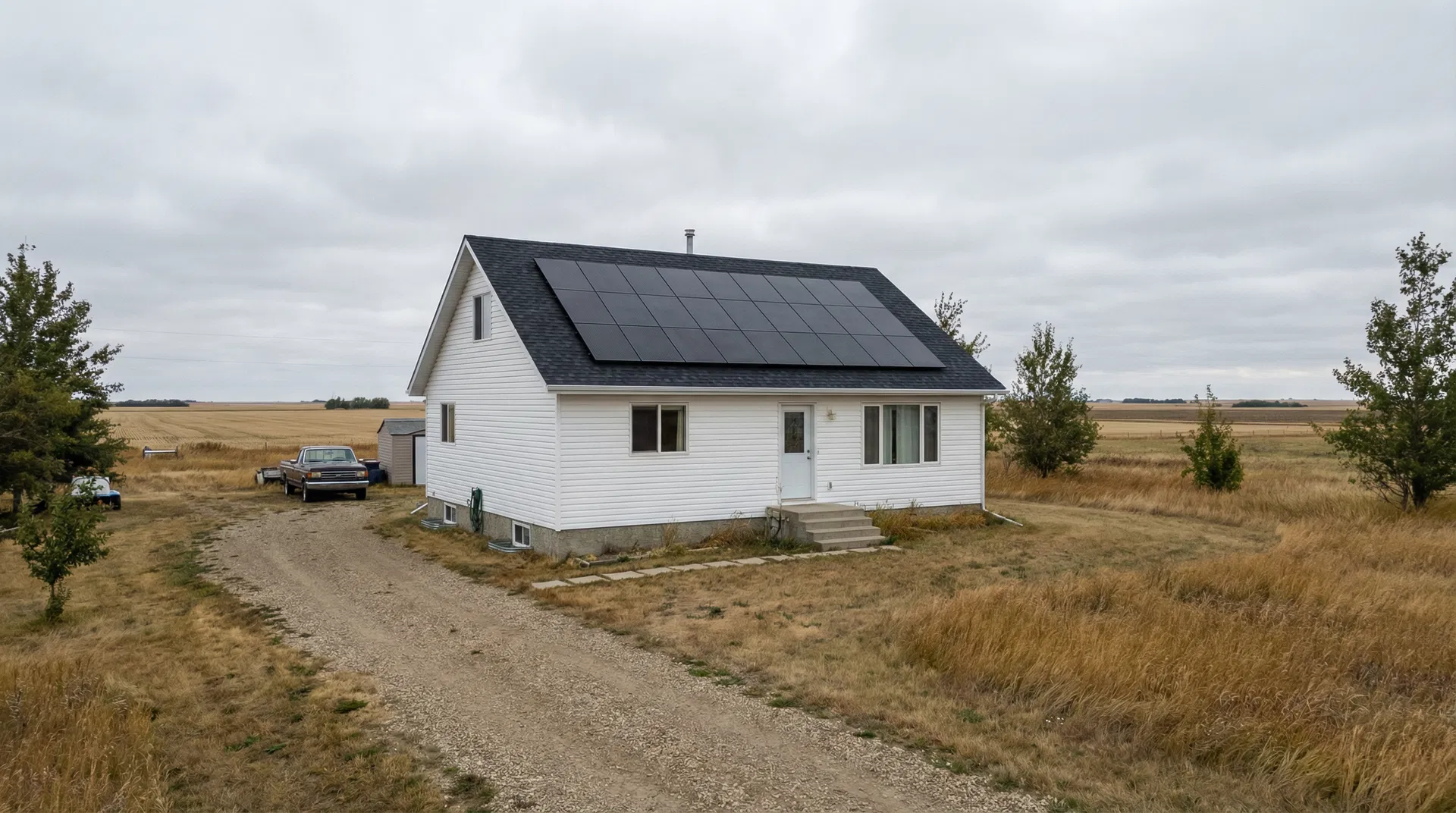
Off-grid solar in Three Hills, Alberta means designing a system that runs independent of the grid, built for cabins, acreages, and remote sites where a utility connection costs more than going it alone. Every system starts with LONGi panels, the same panel line we use across our grid-tied installs, paired with a hybrid inverter and lithium battery storage instead of the grid-tied microinverter setup we'd spec for a home connected to ATCO Electric's lines. That's the core difference: a grid-tied system built around APsystems microinverters exports power back to the grid and doesn't need to store it. An off-grid system has nowhere to send excess power, so it has to store what it generates and manage it through a hybrid inverter that handles charging, battery discharge, and load balancing in one unit. For properties around here, that typically means a 5 to 15 kW array, sized to the specific loads on site, whether that's a hunting cabin running lights and a fridge, an acreage with a well pump and a shop, or a remote parcel with no realistic path to a utility pole. Lithium battery storage gives you days of runway during stretches without much sun, and the hybrid inverter is set up to prioritize which loads run first if the battery bank gets low. We size every system from a walk of the property and a conversation about what actually needs power, not a standard package. If part of the property could reasonably tie back into the grid later, we can talk through what a hybrid, grid-interactive design with APsystems microinverters would look like instead.
Solar Planning for Three Hills Properties
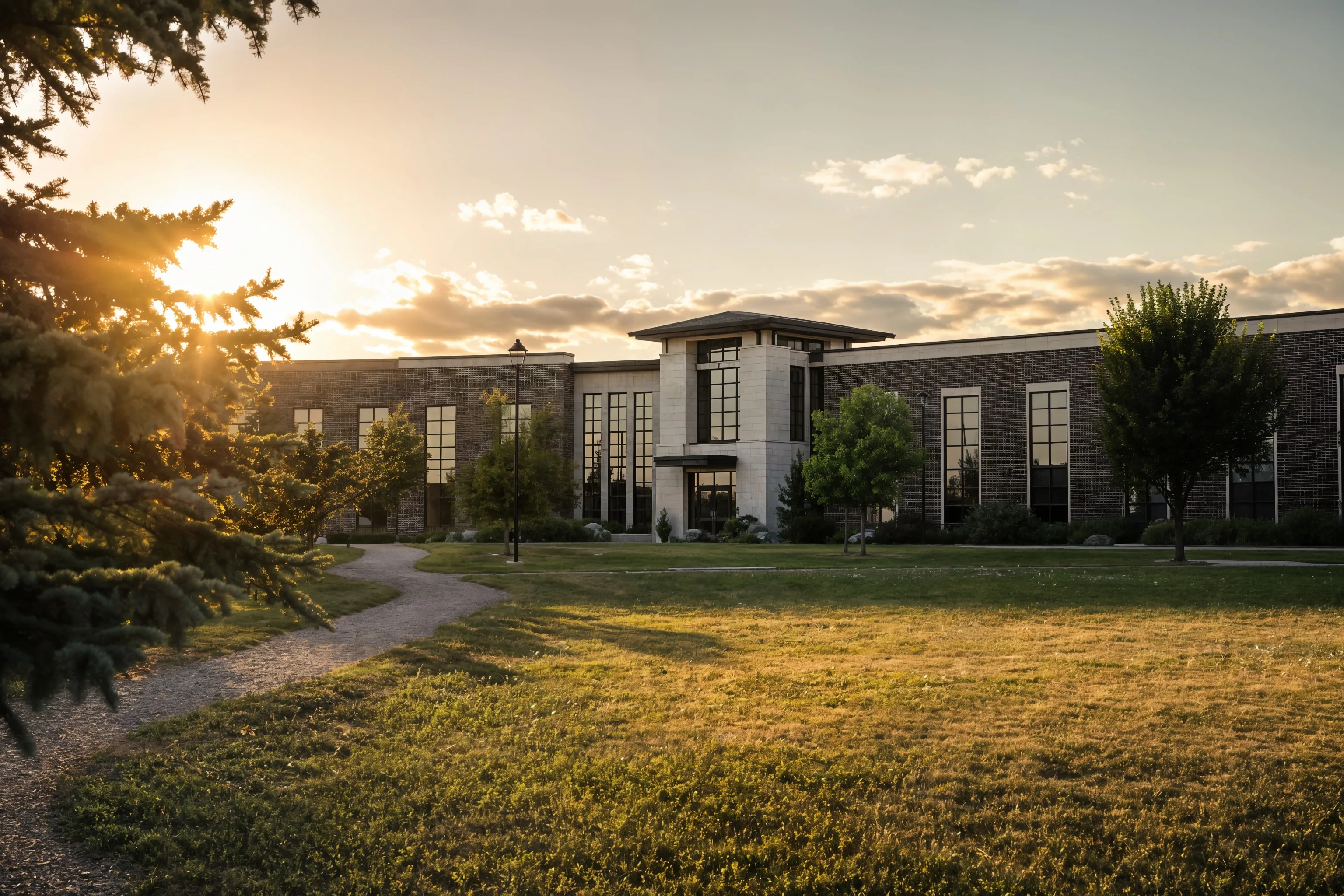
Three Hills, Alberta is a town within Kneehill County, incorporated as a village on June 14, 1912, and as a town on January 1, 1929. It's home to Prairie College (formerly Prairie Bible Institute), one of the area's longest-standing institutions, and the property types around it range from town lots to acreages and remote parcels with no utility line nearby. The population sits at 3,042 as of the most recent census, down from 3,212 the census before, and that shift matters less for solar planning than what's actually connected to a property's panel: a home, a shop, a well pump, grain handling equipment, or some combination of all of it. Older rural properties in this area often carry electrical panels and services that don't match current loads, and some sites sit far enough from the nearest utility pole that running a wire costs more than building independence into the property itself. For a cabin, acreage, or remote parcel here, the question isn't whether solar can work. It's whether grid connection or off-grid independence makes more sense for that specific site. We start every conversation with a walk of the property and a look at what actually draws power, not a generic assumption about what a "typical" rural property needs.
Electrical Site Review for Off-Grid Properties
Voltage Rise
On long rural distribution lines, voltage can rise as it travels from the transformer to the point of use, especially on lightly-loaded lines common outside town. That rise affects how much headroom an inverter has before it clips output to stay within safe voltage limits. We check line conditions and voltage at the panel as part of sizing an off-grid or hybrid system so the inverter and battery bank are matched to what the site can actually deliver.
Single-Phase vs Three-Phase
Some rural properties run single-phase service, while others, especially larger farm or shop operations, have three-phase power. That distinction matters for off-grid design because inverter selection and battery bank capacity depend on matching the phase configuration and load type of whatever the system needs to run. We confirm which service type a property has before specifying equipment, not after.
Panel Infrastructure
Older rural properties often have electrical panels sized for the loads of decades ago, with breaker capacity that doesn't leave room for a hybrid inverter and battery bank. We check panel age and available breaker space as part of every site visit. If the panel can't support the added equipment, an upgrade to a panel with adequate capacity is part of the project scope before the solar system goes in.
Service Entrance Review
We look at the condition of the service entrance and meter base at every property we assess, since a well-maintained entrance point matters even on a fully off-grid system that skips the ATCO Electric micro-generation application, and it's essential on any hybrid design that does file one. Corroded or undersized components at the service entrance can hold up that application or create a safety issue on their own. If an upgrade is needed, we scope it as part of the project before installation begins.
Right-Sizing Solar for Three Hills Properties
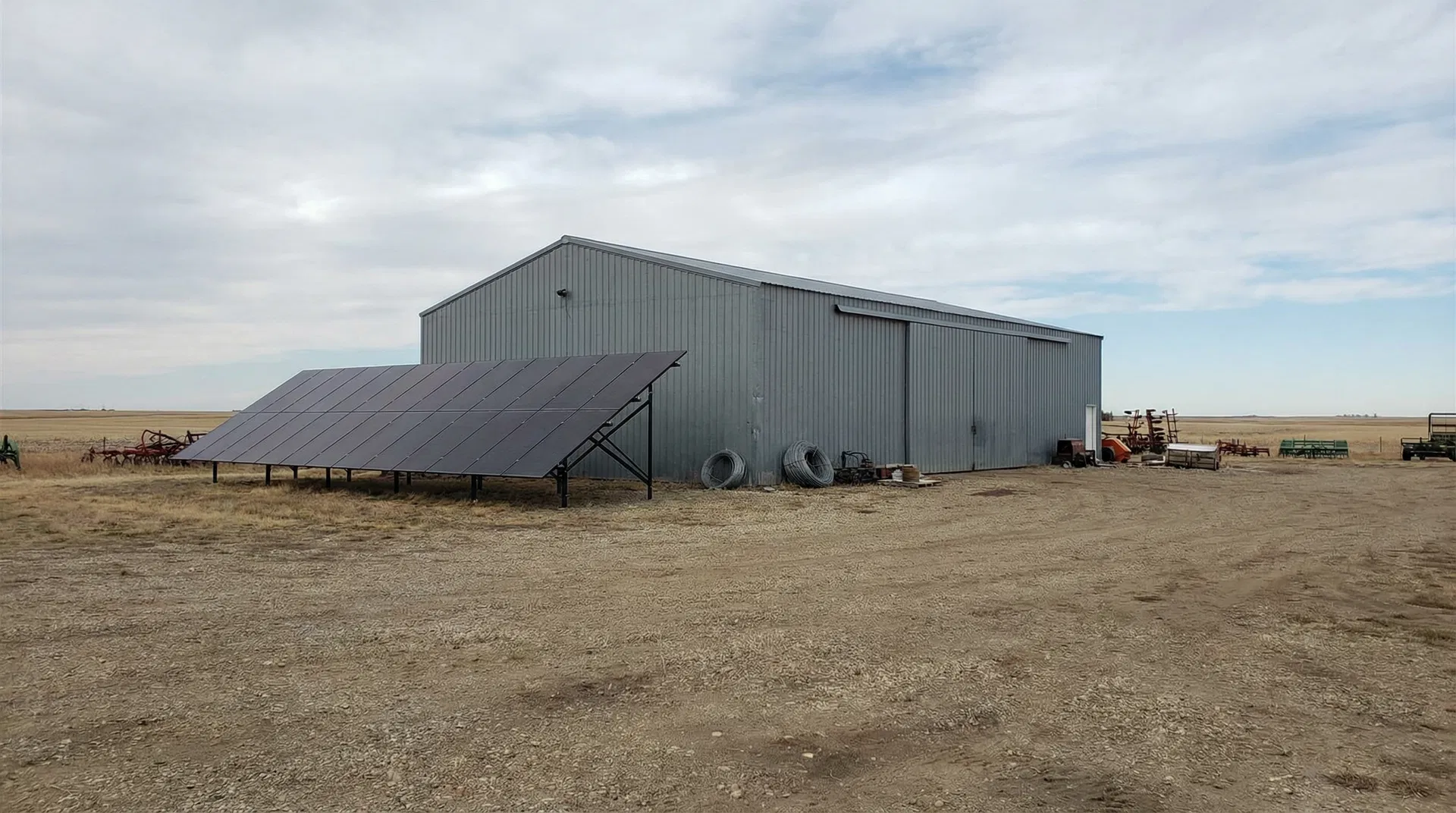
Off-grid systems near Three Hills tend to run larger than a typical in-town rooftop install, because a rural property usually isn't just powering a house. Add a heated shop, a well pump, a bin yard with grain handling equipment, or irrigation, and the load stacks up fast, which is part of why the 5 to 15 kW range for this service is a range and not a single number. Roof or ground mount comes down to what the site looks like. A roof with a good south or west-facing pitch and no shade from trees or outbuildings is often the simpler, less expensive mount. But a lot of acreages and farmsteads around here have shaded roofs, steep or oddly-angled pitches, or just enough open yard that a ground mount makes more sense, especially when it lets us angle the array for better output than the roof would allow. We don't size a system off a rule of thumb like watts per square foot or a generic per-person estimate. We size it from the 12-month usage graph on your most recent power bill, which shows exactly how your load moves through the year, paired with a walk of the site to confirm what's actually running and where the array and battery bank should go. That combination, the bill and the site, is what turns a size range into an actual design.
Typical Load Profiles We Design For in This Area
Cabin or Recreational Property
A hunting or recreational cabin usually needs power for lighting, a fridge, a water pump, and maybe a wood stove blower or block heater in winter. That's a light, intermittent load that doesn't need a big system, but it does need a battery bank sized to get through stretches when nobody's around to run a generator as backup. We build these systems from what's actually plugged in, not a generic cabin package.
Home Plus Heated Shop
A home paired with a heated shop is one of the most common load profiles we design for in this area. The shop alone, welding equipment, power tools, block heaters, sometimes a compressor, can rival or exceed the house load, so we size the array and battery bank around both buildings together, not the house in isolation. Your most recent power bill's usage graph shows us how that combined load shifts through the year.
Farm Operation with Grain Handling or Irrigation
Grain handling equipment, aeration fans, and irrigation pumps create sharp, seasonal spikes rather than steady daily draw, which changes how we approach battery sizing and inverter selection for an off-grid or hybrid system. These loads often run hardest exactly when the rest of the property is quiet, at harvest or during an irrigation cycle. We design around that seasonal pattern using your site's actual equipment list and power bill history, not a flat year-round average.
ATCO Electric Interconnection in Three Hills
Properties around Three Hills, Alberta sit inside ATCO Electric's service territory. An off-grid system is built specifically not to connect to that grid, which is often the point: if running a line to a remote site or cabin costs more than the system itself, going off-grid sidesteps the interconnection process entirely. That said, some properties end up better served by a hybrid design that keeps a grid connection for backup or resale of excess power alongside battery storage. When a project includes any grid-tied component, ATCO Electric is the utility that reviews the connection application, and Range Road Solar handles that application and the supporting design package from start to finish. We don't quote a timeline or outcome for that review in advance. What we can tell you upfront is whether your site is a better fit for full off-grid independence or a grid-interactive hybrid, and that comes out of the same site walk and load review we do for every project in the area.
Project Economics and Design Review
| System Size | Annual Production | Year 1 Savings | Payback Period |
|---|---|---|---|
| 5-15 kW range, 8 kW typical |
Production, savings, and payback numbers are only accurate once we've reviewed your site design and your most recent power bill, not before.
How We Work in Three Hills
Bill and Load Review
We review your power bill to understand your energy use in Three Hills and size the system to your actual consumption, not a generic estimate.
Site Assessment
We assess your roof or ground area, south-facing exposure, electrical service, and utility interconnection requirements specific to your property.
Design and Utility Application
We produce a system layout, production estimate, and cost summary, then submit your micro-generation application to your utility on your behalf.
Installation and Commissioning
Our crew installs racking, panels, inverter, and electrical connections. All work is performed by licensed electricians. We commission and test before handoff.
Current Program and Interconnection Review
Utility connection review
ATCO Electric reviews any grid-tied or hybrid interconnection application for properties in and around Three Hills, Alberta. Range Road Solar puts together the design package and submits it on your behalf as part of the project. We don't promise a specific outcome or turnaround before that review happens.
Current program review
Eligibility for any current commercial, farm, or residential program is reviewed against the rules in place at the time we design your system, since those rules can and do change. We check what applies to your specific property and project during the design review rather than assuming a blanket answer. That review happens before we finalize a quote, not after.
Frequently Asked Questions
Get a Solar Assessment for Three Hills
Submit a recent power bill and we will review your consumption and provide an honest assessment for your Three Hills property. No obligation.
(587) 330-7502 Book a CallRelated Resources
More Solar Services in Three Hills