Kneehill County · Solar cost and pricing
Solar Panel Cost and Pricing in Three Hills, Alberta
Range Road Solar installs 8 to 15 kW systems for properties in this part of Alberta using LONGi panels and APsystems microinverters, with pricing confirmed through a site-specific design review, not a generic online quote.
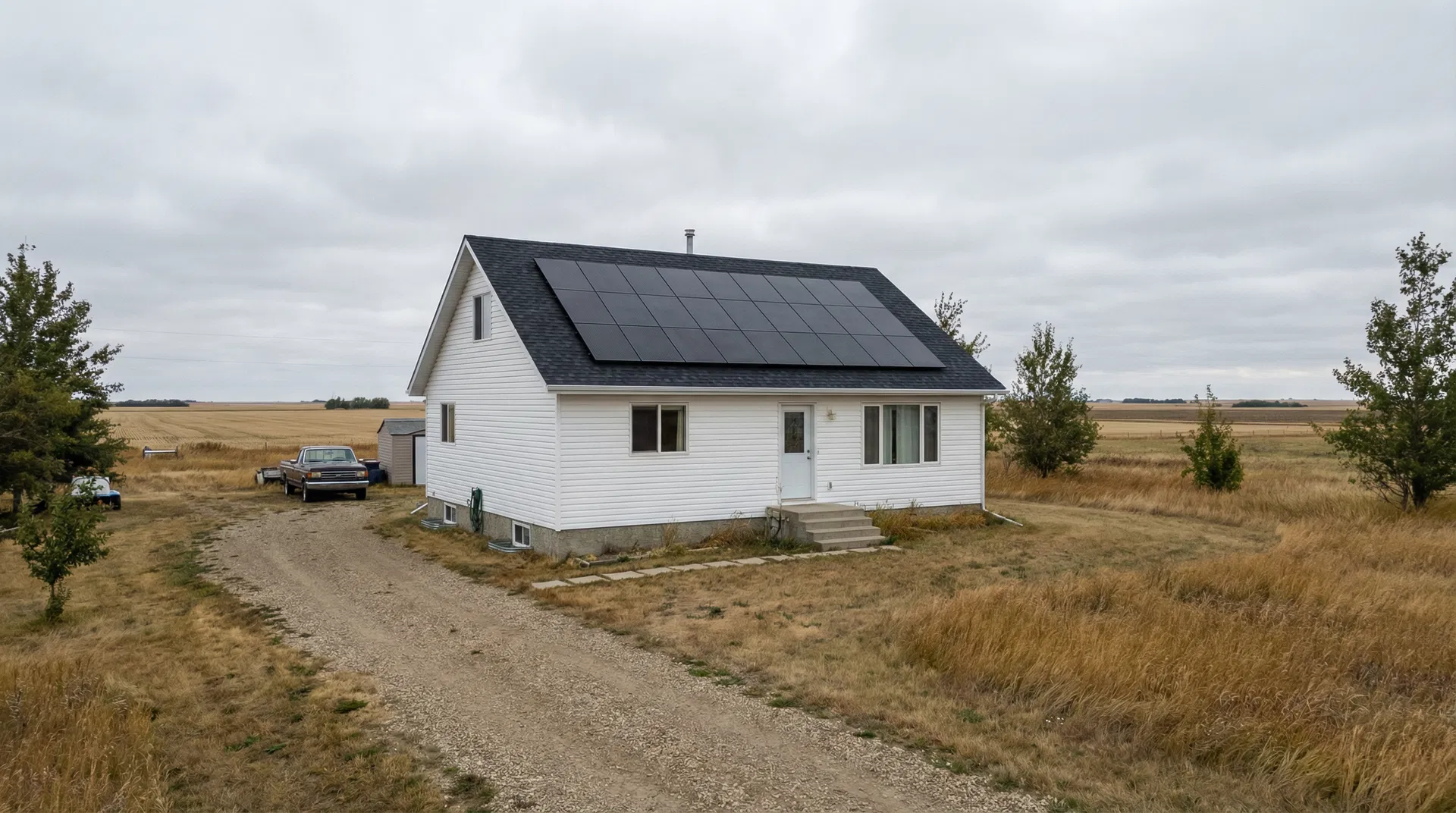
Solar cost and pricing in Three Hills, Alberta starts with real numbers, not a generic online calculator. Every install we quote runs on LONGi panels paired with APsystems microinverters, and pricing is built from the actual system, not a flat per-watt estimate pulled from a national average. For this service area, most residential systems land in the 8 to 15 kW range, with 10 kW as the typical middle ground for a single-family home carrying normal household loads. Properties on smaller in-town lots near the downtown core usually work fine with a straightforward roof-mount layout, since roof space and orientation are usually enough to hit the target output. Acreage and larger properties on the edges of town, especially those running a shop, well pump, or grain-handling equipment alongside the house, often need the higher end of that range, and sometimes a mix of roof and ground-mount arrays if roof space is limited or shaded. APsystems microinverters let us mix panel orientations and manage partial shading from trees or outbuildings without dragging down the whole array's output, which matters on properties where the roof faces more than one direction. We don't hand out pricing over the phone from a square-footage guess. Every number we give you comes after we've looked at your roof or site, checked your electrical panel and service entrance, and reviewed the usage graph on your most recent power bill. That's the only way to give you a figure that holds up once we're actually on site with a ladder and a permit application.
Solar Planning for Three Hills Properties
Three Hills sits within Kneehill County, and most of the properties we assess here run on ATCO Electric service, which shapes how we design and file every microgeneration application. The town's roots go back to June 14, 1912, when it incorporated as a village, and it became a town on January 1, 1929, so the housing stock spans several building eras, from early-1900s downtown lots to newer acreage development on the edges. That matters for solar because roof age, panel condition, and service entrance capacity vary a lot from one property to the next, and we check all three before we size anything. The area counted 3,042 residents in the most recent census, down from 3,212 the prior count, a shift that doesn't change our engineering approach but does tell us this is a mostly established community rather than one in a fast-growth building boom, so we see more retrofit projects than new-construction installs. Prairie College anchors a good chunk of the local economy and draws property owners who ask us about solar for both homes and small commercial buildings near campus. Whatever the property type, we don't quote a system off a rule of thumb. We walk the roof or the yard, look at the electrical panel and service entrance, and review your most recent power bill before we recommend a size.
Electrical Site Review for Three Hills Properties
Voltage Rise
Voltage rise happens when power pushes out along a long stretch of distribution line and the voltage at the far end climbs higher than what's measured near the transformer. On rural feeders serving properties in this area, distance and line conditions can push that voltage rise higher than what you'd see on a short urban run. We measure it on site because a higher baseline voltage affects how close your inverter runs to its clipping threshold and can change how we size the system to stay within a safe operating range.
Single-Phase vs Three-Phase
Some properties around here run single-phase electrical service, while others, particularly those with larger shops or farm equipment, have three-phase service instead. The type of service you have determines which inverter equipment we can spec and how much total system capacity we can connect without exceeding what your service can handle. We confirm which one you have before we finalize any equipment list, since it changes the microinverter configuration.
Panel Infrastructure
A lot of the electrical panels on older rural properties predate current code and were never sized with solar in mind. We check breaker capacity, panel age, and busbar rating before we finalize a design, looking for signs of an outdated panel that can't safely add a solar breaker. If the panel can't support the added capacity, an upgrade means a new panel or a busbar rating increase, which we scope and quote as part of the project, not as a surprise after the fact.
Service Entrance Review
We inspect the service entrance and meter base on every property, checking the condition of the meter socket, the wiring feeding it, and whether it meets current standards. Meter base condition matters directly for the microgeneration application we file with ATCO Electric, since ATCO reviews that equipment as part of approving the interconnection. If the meter base needs replacement or the service entrance can't support the added equipment, we scope that upgrade into the project before we submit the application, not after.
Right-Sizing Solar for Three Hills Properties
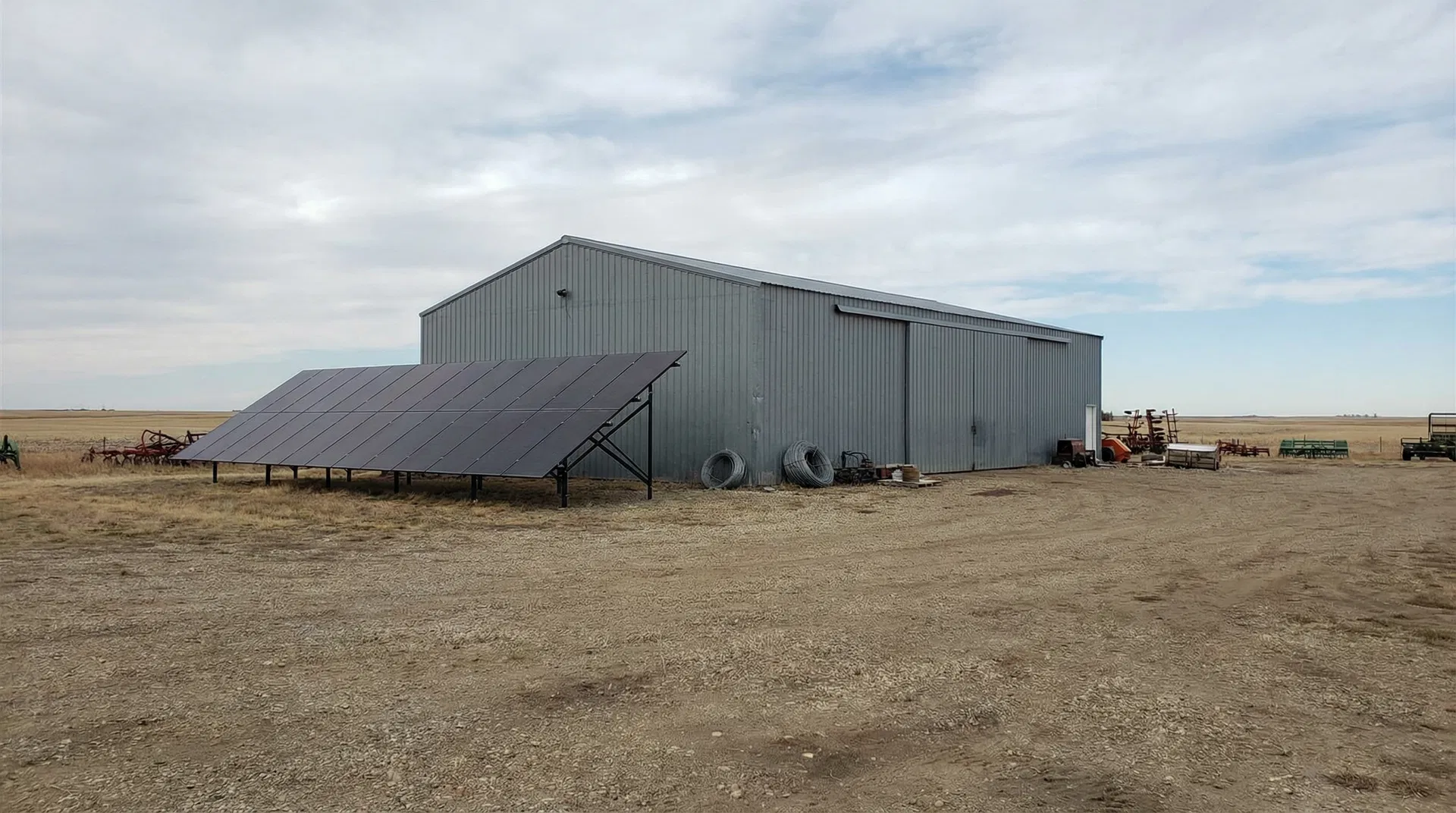
Rural Alberta properties usually need a bigger system than a comparable home in the city, and that's before you even get into what's actually plugged in. A property here might be running a house, a heated shop, a well pump, and grain-handling equipment all on the same service, and each of those loads adds up when we're sizing a system instead of just looking at the home's square footage. That's part of why the range for this service runs from 8 to 15 kW rather than a single fixed number. Roof versus ground mount is its own decision, and it's not automatic. If a roof has good south or west exposure and isn't shaded by mature trees or a neighboring building, a roof mount usually makes sense and keeps ground space open for other uses. But if the roof is broken up, pitched poorly for solar, or shaded for a chunk of the day, and the yard has open land available, a ground-mounted array often makes more sense, since we can orient it for ideal exposure regardless of how the house sits on the lot. Either way, we don't size off a rule of thumb like so many kW per thousand square feet. We size off the 12-month usage graph on your most recent power bill, which shows us your actual consumption pattern across every season, combined with what we measure on site. That combination, not a guess, is what determines the final system size we recommend.
Typical Load Profiles We Design For Near Three Hills
Home + Heated Shop
This profile covers a house plus a detached shop with heat, lighting, and usually a welder or air compressor on top of normal household loads. We size for these profiles off the usage graph on your most recent power bill, since a heated shop can swing usage a lot depending on the season and how it's insulated. That's the kind of load combination that often pushes a system toward the higher end of the 8 to 15 kW range.
Acreage with Well Pump and Outbuildings
Properties with a well pump, detached garage, and one or two additional outbuildings have a different draw pattern than a straightforward single-family home, with the pump adding intermittent but meaningful load. We look at how those loads show up across the seasonal graph on your bill before recommending a size, rather than assuming a flat daily average. Ground mount often comes up in the conversation here if the outbuildings shade part of the roof.
Grain Handling and Farm Equipment
Operations running augers, bin fans, or other grain-handling equipment see usage spikes tied to harvest season rather than a steady year-round draw. Sizing for this kind of profile means reading the seasonal pattern on your most recent power bill closely, since a flat average would miss the harvest-season peaks entirely. These properties frequently land at the top of the range once we've accounted for both the house and the equipment.
ATCO Electric Interconnection in Three Hills
ATCO Electric is the wire service for properties here, and that's the utility we file your microgeneration application with once your system design is finalized. Because ATCO's interconnection process is different from what neighboring co-ops or municipal utilities use, we handle the entire application package ourselves: single-line diagrams, equipment specification sheets for the LONGi panels and APsystems microinverters, and the site plan ATCO requires to review a grid-tied solar system. You don't fill out the paperwork or track down the forms. We prepare it, submit it, and stay on top of any follow-up requests ATCO sends back during their review. We don't quote how long that review takes or promise a specific approval date, since ATCO sets its own timeline and that can shift with application volume. What we can tell you is that we've built the application package the same way for every ATCO-served property we've worked with, and we don't submit anything until the design matches what's actually going to be installed on your roof or ground mount.
Project Economics and Design Review
| System Size | Annual Production | Year 1 Savings | Payback Period |
|---|---|---|---|
| 8-15 kW range, 10 kW typical |
Production, savings, and payback numbers require a property-specific design and a look at your most recent power bill before we can give you anything real.
How We Work in Three Hills
Bill and Load Review
We review your power bill to understand your energy use in Three Hills and size the system to your actual consumption — not a generic estimate.
Site Assessment
We assess your roof or ground area, south-facing exposure, electrical service, and utility interconnection requirements specific to your property.
Design and Utility Application
We produce a system layout, production estimate, and cost summary, then submit your micro-generation application to your utility on your behalf.
Installation and Commissioning
Our crew installs racking, panels, inverter, and electrical connections. All work is performed by licensed electricians. We commission and test before handoff.
Current Program and Interconnection Review
Utility connection review
ATCO Electric reviews every grid-tied solar application before a system can be connected, and that review is part of getting your system live, not an optional step. Range Road Solar prepares and submits the full design package on your behalf, including the equipment specifications for the LONGi panels and APsystems microinverters we're installing. You don't deal with ATCO directly during that process.
Current program review
Residential, farm, and commercial properties can all have different eligibility depending on what rules are in place at the time of your design. We review your property against whatever current rules apply when we build your design package, rather than assuming last year's eligibility still holds. That review happens before we finalize your quote, not after.
Frequently Asked Questions
Get a Solar Assessment for Three Hills
Submit a recent power bill and we will review your consumption and provide an honest assessment for your Three Hills property. No obligation.
(587) 330-7502 Book a CallRelated Resources
More Solar Services in Three Hills