Kneehill County · Solar installers
Solar Installers in Three Hills for Farms and Acreages
Range Road Solar installs LONGi panels and APsystems microinverters on ATCO Electric properties across central Alberta. We handle every step from design through interconnection.
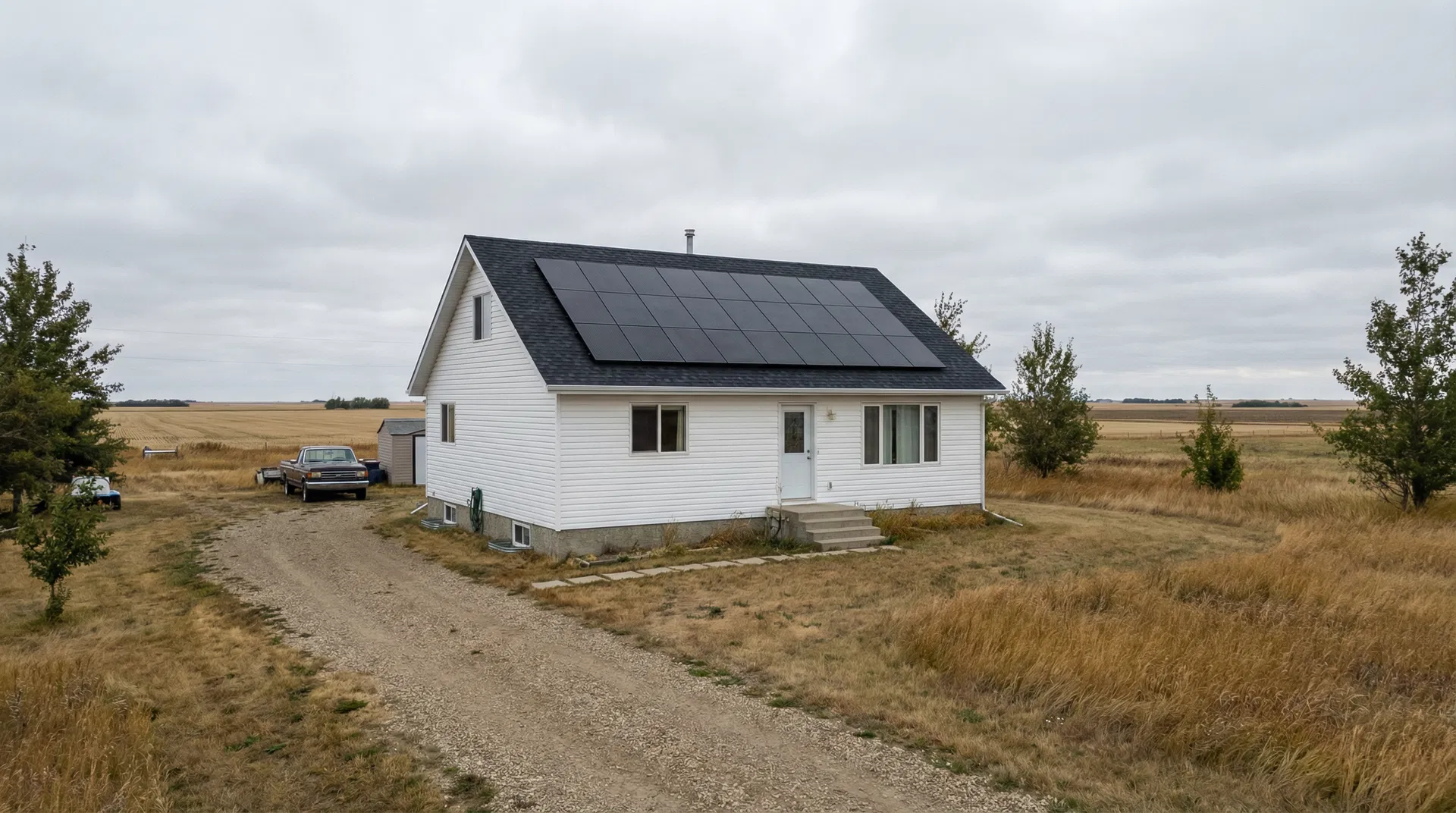
Homeowners and acreage owners searching for solar Three Hills installers are typically dealing with more than just a rooftop. Properties around here carry multiple loads: the house, the shop, the garage, sometimes grain handling or irrigation equipment. An 8-15 kW system covers most residential and light-acreage profiles, with 10 kW being a common starting point for a home and heated shop combination. We install LONGi solar panels and APsystems microinverters on every project. LONGi panels are reliable across Alberta conditions and carry strong manufacturer warranties. APsystems microinverters work at the panel level, which means if one panel is shaded by a tree or a roofline, the rest of the array keeps producing at full capacity. That matters on rural properties where shade sources aren't always predictable. For roof-mount installations, we assess pitch, orientation, and structural condition before committing to a layout. Not every rural roof is the right candidate, and we'll say so if that's what the site tells us. Ground mounts are a practical alternative on properties with available land, and they give us more flexibility on tilt and array orientation. Every project includes our full application package to ATCO Electric. We handle the micro-generation interconnection paperwork, the technical drawings, and the communication with the utility. You don't have to navigate that process on your own.
Solar Planning for Three Hills Properties
Three Hills sits in central Alberta farm country, where electrical infrastructure varies considerably from one property to the next. ATCO Electric serves the area, and their distribution grid covers the kinds of rural layouts you'd expect here: farmyards with grain bins, shops, and residences on the same service, acreages with heated outbuildings, and older rural properties that haven't had an electrical update in years. That variety is exactly why we don't use a one-size approach. A quarter section with an active grain handling setup needs a different design conversation than a two-acre property with a house and a detached shop. The wiring from the transformer to the meter base, the condition of the panel, and how the loads split across the year all factor into what a system can realistically do. We start with your most recent power bill. The 12-month usage graph on that bill tells us more about your actual consumption than any estimate could. From there, we build a design around your specific site, your roof or yard layout, and your ATCO Electric service details. What you get is a production estimate tied to your real load profile, not a generic projection.
Electrical Site Review for Three Hills Properties
Voltage Rise
Voltage rise happens when electricity generated by your solar system pushes back into the distribution line and raises the local voltage above acceptable limits. If the voltage at your meter climbs too high, your inverters will throttle back or disconnect to stay within ATCO Electric's operating range. Distribution conditions vary across rural service territory, so we assess line conditions during the design process to flag potential voltage rise constraints before finalizing system size.
Single-Phase vs Three-Phase
Rural Alberta properties can be served by either single-phase or three-phase service, depending on what was originally installed to support the operation. Farms with grain handling, large irrigation systems, or heavy shop equipment are more likely to have three-phase service, while residential and light-acreage properties are typically single-phase. The phase configuration determines which inverters are compatible and affects how much solar capacity the system can carry.
Panel Infrastructure
Older electrical panels on rural properties weren't designed with solar export in mind, and some have breakers operating near their original load limits. We assess breaker capacity, panel age, and available space as part of the site review. If the panel can't support the solar system without exceeding its rated capacity, a panel upgrade becomes part of the project scope before interconnection proceeds.
Service Entrance Review
The meter base and service entrance are the connection point between your property's wiring and ATCO Electric's distribution network. ATCO Electric's interconnection review includes an assessment of the meter base condition, and a degraded or non-standard meter base can require replacement before approval is granted. We flag any service entrance issues during the initial site visit so the full scope of work is clear before the project starts.
Right-Sizing Solar for Three Hills Properties
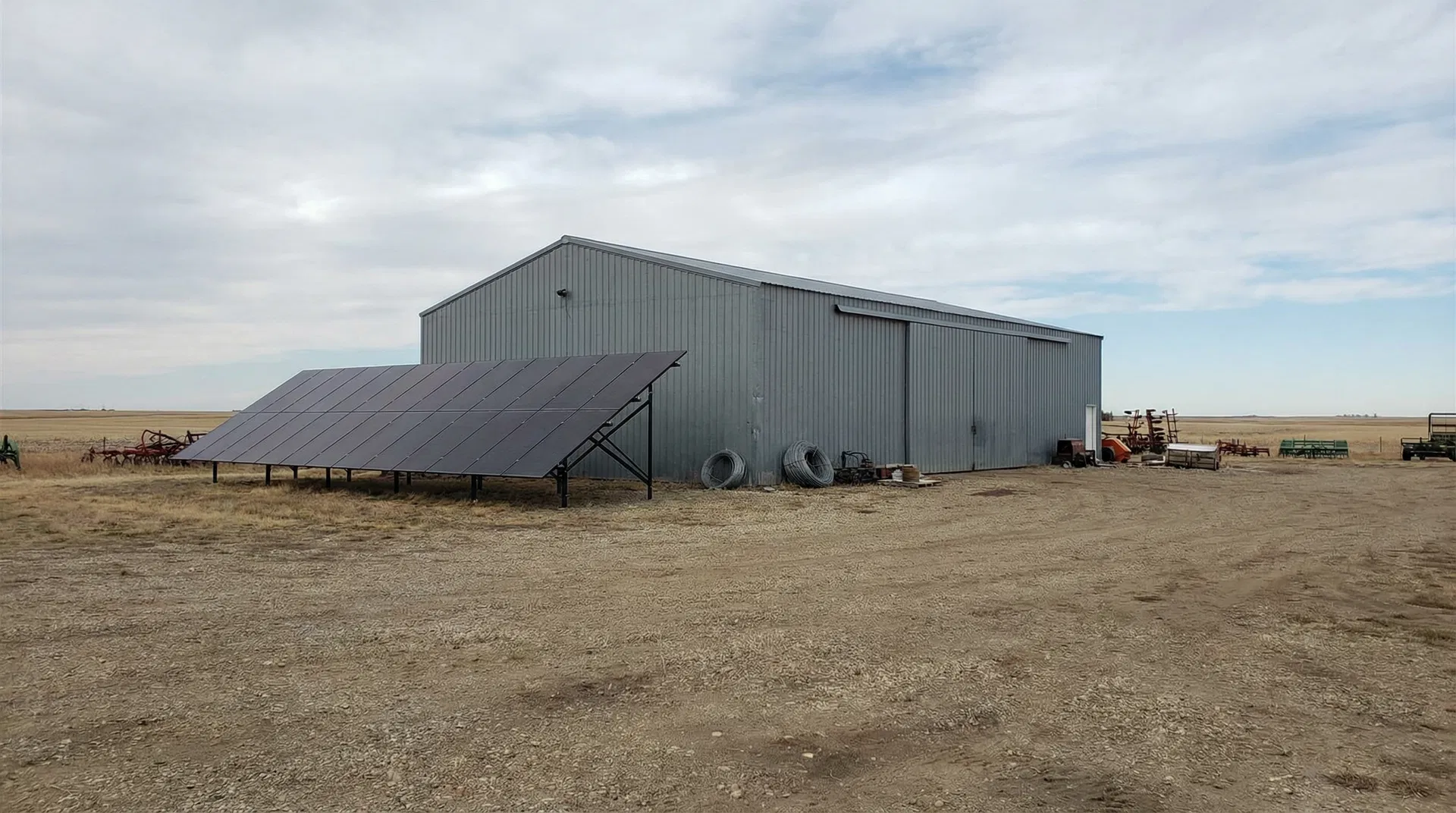
Rural properties carry load profiles that most urban solar calculators don't account for. A farm or acreage isn't just a house. It's a house, a heated shop, grain drying equipment, outbuildings, and sometimes irrigation or water systems all running through the same service entrance. When all of those loads show up on one power bill, the 12-month usage graph on that bill tells a much more useful story than any rule-of-thumb system size could. We size every system from the 12-month usage graph on your most recent power bill. That graph shows actual monthly consumption across the full year, including peak summer and peak winter months. It's the only input that reflects your real load pattern, not a seasonal average. Roof mount versus ground mount is a decision we make based on your specific site. A well-oriented roof with good pitch and minimal shading is a straightforward case for roof mount. But on acreages and farmyards where trees, bins, or outbuildings shade sections of the roof, or where the pitch and orientation don't line up well, a ground mount on a clear section of the yard often delivers a better result. Ground mounts also give us flexibility to scale the array later if your load grows. System sizes in the 8-15 kW range cover most residential and acreage profiles in this area. What your property actually needs comes from the design review, not from a table.
Typical Load Profiles We Design For Near Three Hills
Home and Heated Shop
A house and a heated shop on the same service draw significantly more power than a residential-only property, especially when the shop runs electric heat through the winter months. We size these systems from the 12-month usage graph on your most recent power bill, which captures the full seasonal swing of both loads together. This profile typically lands in the 10-14 kW range, confirmed through the design review.
Farm with Grain Handling
Grain dryers and auger systems can spike electrical demand well above what the house alone uses, and that demand often concentrates in a short harvest window each fall. We account for both the base residential load and the seasonal peak when reviewing your most recent power bill. A farm operation with active grain handling may need a system in the 12-15 kW range, or a phased approach if three-phase service creates specific sizing constraints.
Acreage with Well and Outbuildings
Properties with a well pump, water treatment system, and one or two outbuildings add meaningful load on top of the main residence throughout the year. These loads don't always show up as dramatic seasonal spikes, but they run year-round and accumulate across 12 months. A design review using your most recent power bill will show how the well and outbuilding loads factor into the right system size.
ATCO Electric Interconnection in Three Hills
ATCO Electric is the distribution utility for the area, and any grid-tied solar installation requires a micro-generation interconnection application submitted to them before the system can legally export power to the grid. Range Road Solar prepares and submits the full application package on your behalf. That includes technical drawings, equipment specifications, single-line diagrams, and any other documentation the application requires. You don't need to source or organize that paperwork yourself. The condition of your existing meter base and service entrance is part of what ATCO Electric reviews during the interconnection process. If upgrades are required at the meter base, we flag those early in the design review so there are no surprises. Some older rural properties need service entrance work before the interconnection application can proceed. We assess that during the initial site visit and include any required work in the project scope upfront.
Project Economics and Design Review
| System Size | Annual Production | Year 1 Savings | Payback Period |
|---|---|---|---|
| 8-15 kW range, 10 kW typical |
Production, savings, and payback estimates require a property-specific design and your most recent power bill.
How We Work in Three Hills
Bill and Load Review
We review your power bill to understand your energy use in Three Hills and size the system to your actual consumption — not a generic estimate.
Site Assessment
We assess your roof or ground area, south-facing exposure, electrical service, and utility interconnection requirements specific to your property.
Design and Utility Application
We produce a system layout, production estimate, and cost summary, then submit your micro-generation application to your utility on your behalf.
Installation and Commissioning
Our crew installs racking, panels, inverter, and electrical connections. All work is performed by licensed electricians. We commission and test before handoff.
Current Program and Interconnection Review
Utility connection review
ATCO Electric reviews micro-generation interconnection applications for solar installations in their service territory. Range Road Solar prepares the full technical package, including drawings and equipment specifications, and submits it on your behalf. We know what ATCO Electric's submission package needs to include for rural properties with varying service configurations.
Current program review
Eligibility for commercial, farm, and residential programs is reviewed against current rules at the time of your design. Program terms, funding availability, and eligibility criteria change from year to year. We confirm what's currently available during the design review so you're working with accurate information.
Frequently Asked Questions
Get a Solar Assessment for Three Hills
Submit a recent power bill and we will review your consumption and provide an honest assessment for your Three Hills property. No obligation.
(587) 330-7502 Book a CallRelated Resources
More Solar Services in Three Hills