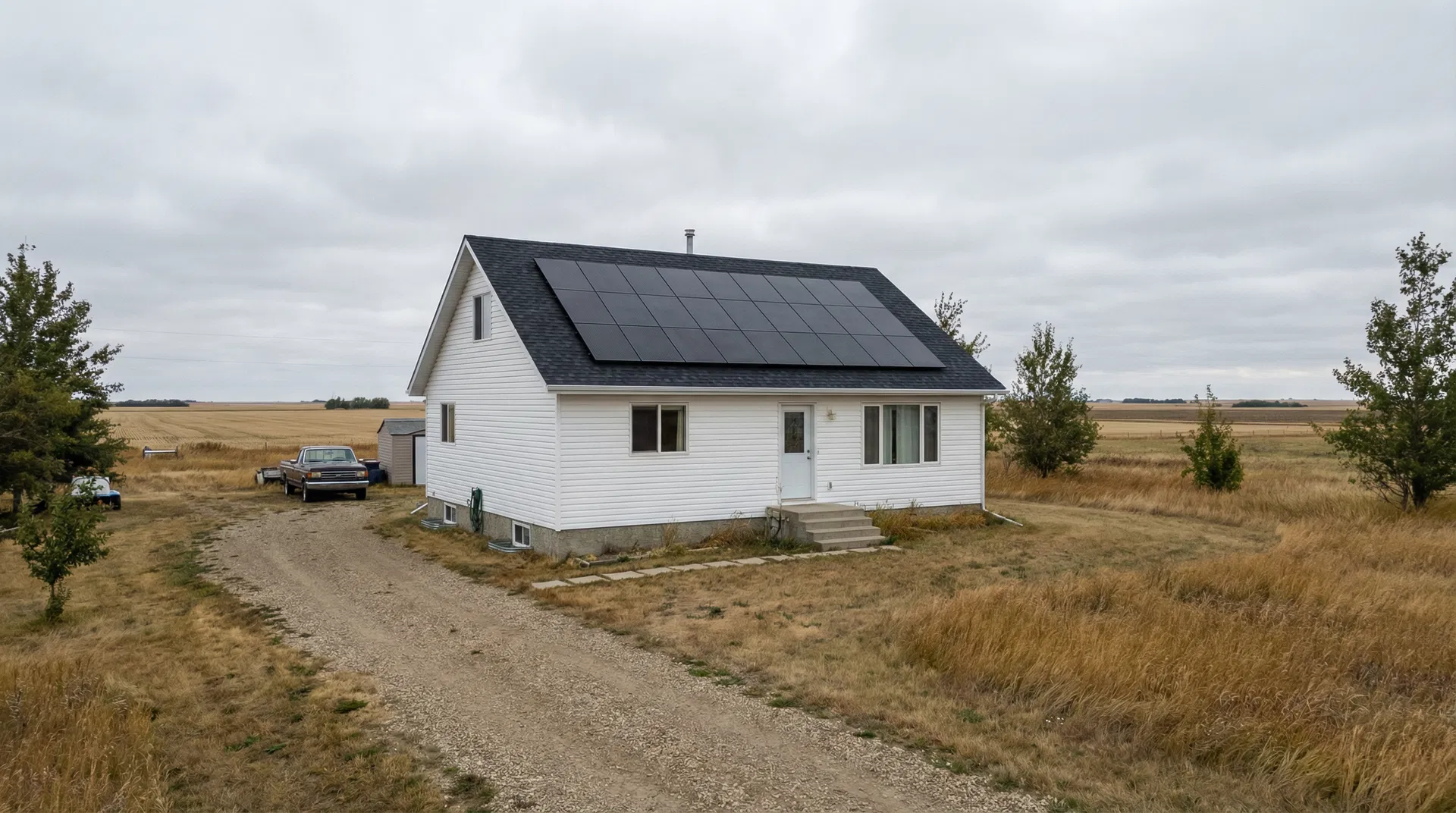
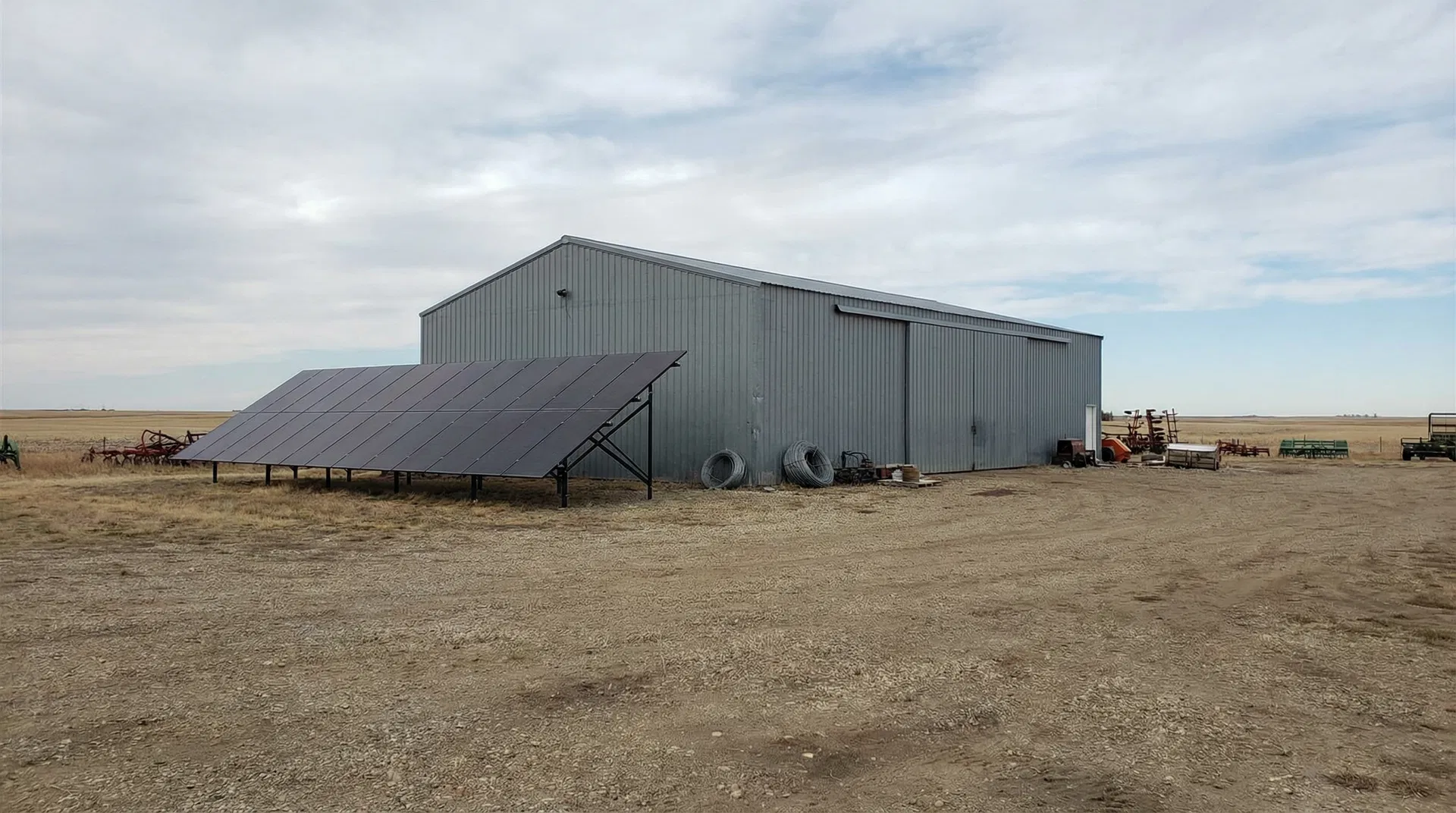
Farm solar in Trochu is built around the loads a working operation actually carries, not a standard residential rooftop package. We size agricultural systems in the 20 to 50 kW range, with 25 kW a common starting point for a farmhouse plus a shop and grain-handling equipment. Every system uses LONGi panels paired with APsystems microinverters, which let us bring multiple roof planes or ground-mount strings online independently and keep a single module failure or shading event from dragging down the rest of the array. For most farm and acreage layouts in this area, ground-mount is our first recommendation. A working yard usually has outbuildings, grain bins, and equipment that shade or crowd rooftop space, and a ground-mount array lets us place panels on open land at the orientation that actually produces, rather than wherever the roof happens to point. Ground-mount also keeps the array accessible for maintenance and snow clearing, which matters on a property where the shop and bins already need regular upkeep. We design around the equipment that defines a grain operation: bin fans, aeration, a dryer, a shop with welding or compressor loads, sometimes a domestic or livestock well. Each of those is a distinct load pattern, and we size the string layout and microinverter placement to match, not just the total square footage available. Before we finalize a design, we walk the property, review your electrical panel and service entrance, and go through your most recent power bill together so the system we propose matches what your operation actually uses.
Solar Planning for Trochu Properties
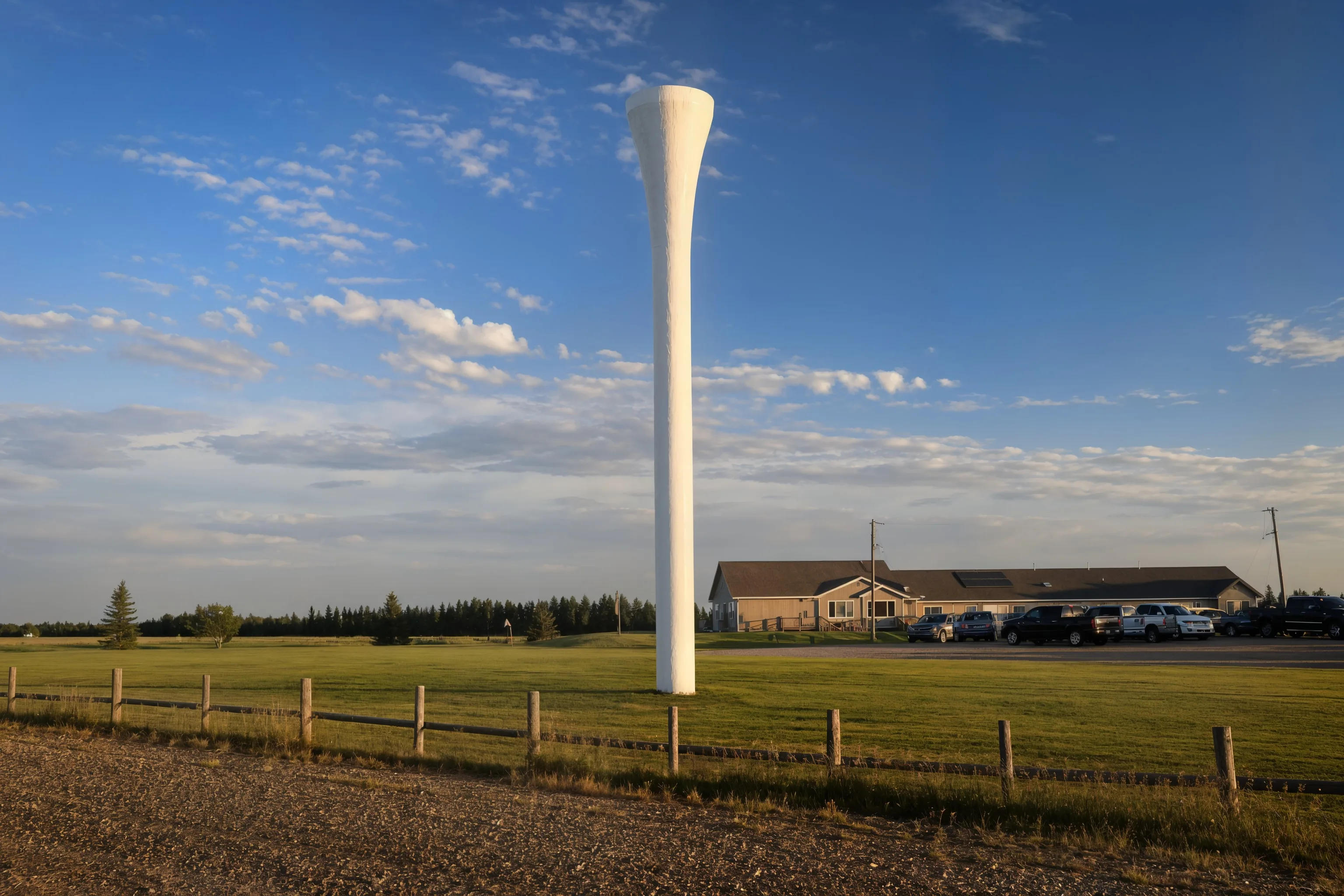
Trochu is a small community of about 998 residents, known locally for the World's Largest Golf Tee and the Trochu Arboretum & Gardens, and ringed by the farms and acreages that keep the area running. Properties out here carry real, varied electrical loads: a farmhouse, a heated shop, grain bins, and sometimes an irrigation pump, all pulling from the same service. That mix is exactly what a farm solar system has to account for, and it's why a generic rooftop quote rarely fits. Range Road Solar starts every project with a site visit and a review of your most recent power bill, not a one-size estimate. We look at your service entrance, your panel capacity, and whether your yard layout favors a roof-mount or a ground-mount array. On working operations, ground-mount is often the better fit: it clears roof pitch and shading problems and lets us size the array to the loads that actually matter, like a grain dryer or a shop heater, rather than whatever square footage happens to face south. Every design we put in front of you is specific to your property, your equipment, and your utility account, not a template with the town name swapped in.
Electrical Site Review for Trochu Properties
Voltage Rise
Voltage rise happens when power has to travel a longer distance along a distribution line before it reaches your service, and rural properties out here can sit well out on a feeder. Higher voltage rise at the point of connection can push inverters toward their upper voltage limit faster, which affects clipping behavior and how we size the array relative to the inverter. We check your line conditions as part of the site review so string sizing and microinverter placement account for it up front, not after installation.
Single-Phase vs Three-Phase
Rural properties in this area can have either single-phase or three-phase electrical service, depending on when the yard was built and what equipment it was wired to run. That distinction matters for farm solar because it determines which microinverter configuration and total system capacity are available to you. We confirm your service type during the site visit so the design matches what's actually feeding your panel, not an assumption based on property type.
Panel Infrastructure
Older electrical panels are common on established farmyards, and breaker capacity and panel age both affect whether a property can support a 20 to 50 kW solar system without changes. We check the panel's rated capacity, its condition, and its available breaker space as part of every site review. If the panel can't support the system we're proposing, an upgrade, typically a new panel or added capacity, becomes part of the project scope before installation begins.
Service Entrance Review
We inspect the service entrance and meter base on every property, checking the condition of the meter socket, the service conductors, and the mounting hardware. This matters because ATCO Electric's micro-generation application requires the service entrance to meet current standards before a system can be interconnected. If the meter base or service entrance needs an upgrade to pass that review, we scope it as part of your project plan rather than leaving it as a surprise after approval.
Right-Sizing Solar for Trochu Properties
Solar systems on farms and acreages in this area tend to run larger than a typical in-town rooftop system, and that's because they're rarely powering just one load. A farmhouse might share a service with a heated shop, grain bins with fans or aeration, a well pump, and sometimes equipment that only draws hard for a few weeks a year during harvest or drying season. Sizing a system for all of that means looking at the property as a whole, not just the house. Roof-mount works where there's enough clear, well-oriented roof space and minimal shading from trees, grain legs, or other buildings. On a lot of farmyards, though, ground-mount ends up being the better call: the yard has open land, the roof pitch or orientation isn't ideal, or outbuildings and equipment shade the house roof for part of the day. Ground-mount also makes it easier to size the array independently of what the house roof happens to allow. Rather than sizing off a rule of thumb or a generic per-square-foot estimate, we size every system from the 12-month usage graph on your most recent power bill. That graph shows us your actual seasonal load pattern, including any spikes from grain drying or irrigation, and combined with a site visit, it tells us what size system actually matches how your property uses power.
Typical Load Profiles We Design For Near Trochu
Home Plus Heated Shop
This profile covers a farmhouse and a detached shop with electric or combination heat, often with a welder, compressor, or power tools running intermittently. We size the array and microinverter layout around both buildings' combined draw, using the 12-month usage graph on your most recent power bill to see how much the shop adds through the colder months.
Grain Bins and Drying Equipment
Grain operations carry seasonal loads from bin fans, aeration, and sometimes a dryer that only run hard for a few weeks around harvest. Because that draw is seasonal rather than constant, we look closely at your most recent power bill's usage pattern to size a system that accounts for those spikes without over-building for the rest of the year.
Livestock and Well Water Systems
Properties running livestock often have well pumps, waterers, and sometimes supplemental lighting or ventilation running on a steadier, more continuous basis than crop operations. We design for that baseline load alongside any seasonal spikes, again starting from the usage pattern on your most recent power bill rather than a generic estimate.
ATCO Electric Interconnection in Trochu
Trochu, Alberta is served by ATCO Electric, the wire service responsible for the distribution lines that bring power to your property. Any farm or acreage solar system that connects to the grid here has to go through ATCO Electric's micro-generation interconnection process, and that paperwork is detailed: load calculations, single-line diagrams, equipment specifications, and a formal application tied to your specific service account. Range Road Solar handles that entire application on your behalf. We prepare the single-line diagram, the equipment datasheets for the LONGi panels and APsystems microinverters, and the load calculations ATCO Electric needs to review the connection, and we submit the full package so you aren't tracking down paperwork between a grain operation and a utility office. We don't make claims about how long ATCO Electric's review will take or how your account will be credited for exported power. Those details depend on your current service agreement and ATCO Electric's current rules, and we confirm them with you directly as part of your design review, before any equipment goes in the ground.
Project Economics and Design Review
| System Size | Annual Production | Year 1 Savings | Payback Period |
|---|---|---|---|
| 20-50 kW range, 25 kW typical |
Production, savings, and payback figures are only provided after a property-specific design review using your most recent power bill.
How We Work in Trochu
Bill and Load Review
We review your power bill to understand your energy use in Trochu and size the system to your actual consumption, not a generic estimate.
Site Assessment
We assess your roof or ground area, south-facing exposure, electrical service, and utility interconnection requirements specific to your property.
Design and Utility Application
We produce a system layout, production estimate, and cost summary, then submit your micro-generation application to your utility on your behalf.
Installation and Commissioning
Our crew installs racking, panels, inverter, and electrical connections. All work is performed by licensed electricians. We commission and test before handoff.
Current Program and Interconnection Review
Utility connection review
ATCO Electric reviews every micro-generation connection application before a farm solar system can be interconnected to the grid. Range Road Solar prepares and submits the full design package, including load calculations and equipment specifications, on your behalf.
Current program review
Commercial, farm, and residential solar incentives and eligibility rules change, and what applies to your operation depends on current federal, provincial, and utility rules at the time you apply. We review your eligibility against those current rules as part of your design review, rather than assuming a program that applied last year still applies today.
Frequently Asked Questions
Get a Solar Assessment for Trochu
Submit a recent power bill and we will review your consumption and provide an honest assessment for your Trochu property. No obligation.
(587) 330-7502 Book a CallRelated Resources
More Solar Services in Trochu