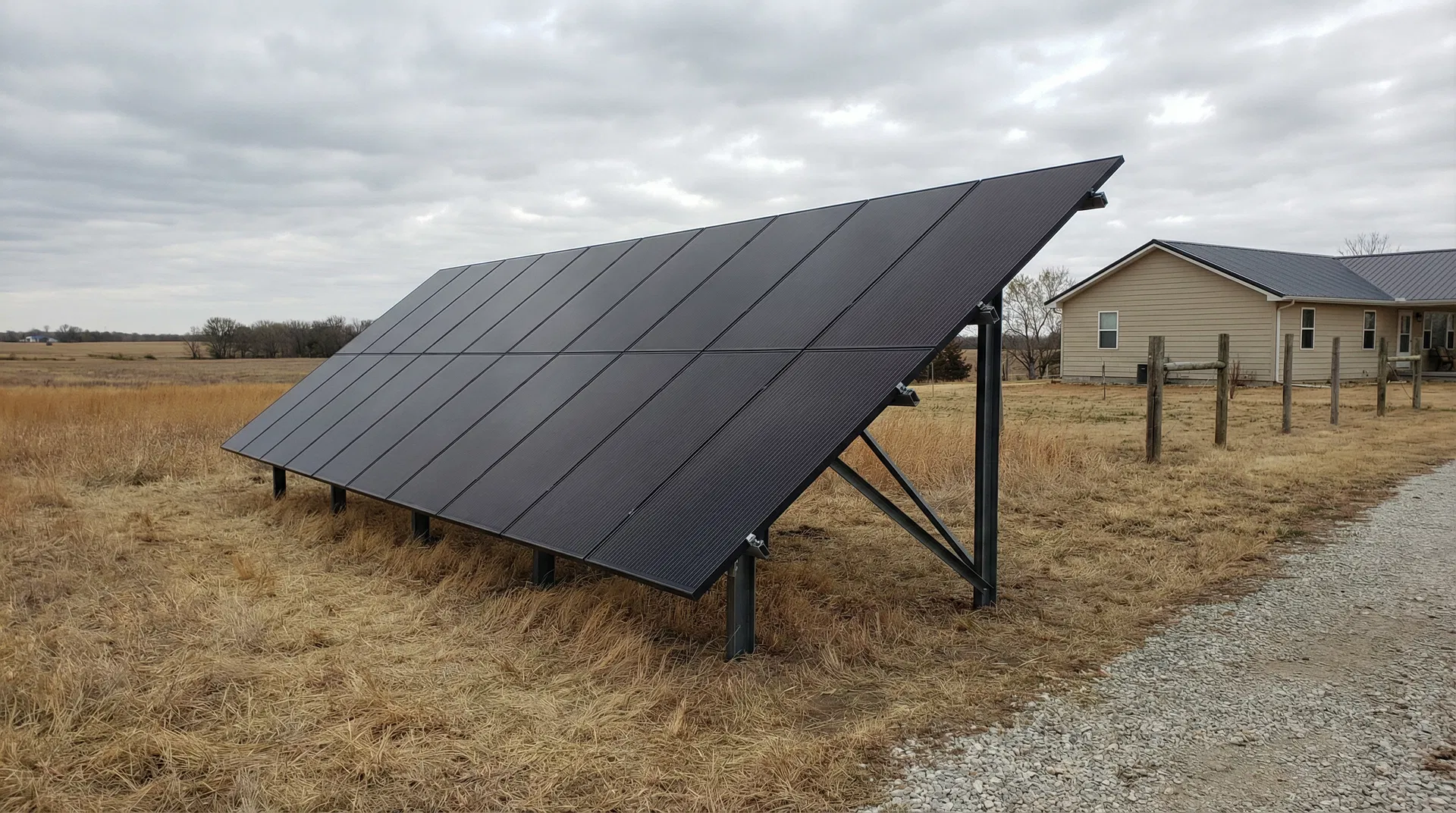
Commercial solar Trochu projects are sized between 15 and 100 kW, with a lot of installations landing around the 30 kW mark for mid-sized agricultural and light commercial operations. The range reflects how different the loads are across the area: a small ag-retail building is a different animal from a grain operation running a full bin yard with aeration and augers. We install LONGi panels on every commercial project. They're a proven panel manufacturer with strong performance data, and they hold up in Alberta conditions. For inverter selection, we use APsystems microinverters on smaller commercial arrays where shading or mixed roof orientations make string performance unreliable. On larger systems in the 50-100 kW range, string inverters are typically the right call for efficiency and serviceability at scale. We select the inverter topology after reviewing your site, not before. Installation covers roof and ground-mount configurations. Flat commercial rooftops, sloped metal shop roofs, and open yard ground mounts are all in scope. We handle structural assessment, ATCO Electric interconnection paperwork, and Alberta Safety Codes permit submission. By the time the system is energized, every sign-off is in place. There are no loose ends for the property owner to chase down. For agricultural operations, we design around seasonal load variation. Irrigation-heavy summers, grain handling in fall, and heated shop loads through winter all look different on a usage graph, and a well-designed system accounts for all of it.
Solar Planning for Trochu Properties
Commercial properties in and around Trochu carry real electrical loads. Grain handling equipment, shop heating, refrigeration, and office systems don't run on a residential schedule, and a system sized for a house won't cut it on a working operation. That's why commercial solar planning here starts with your actual load profile, not a guess. ATCO Electric serves the area, and interconnection through ATCO follows their micro-generation application process. We handle that paperwork. What we need from you is your most recent power bill, which includes a 12-month usage graph. That graph tells us when your loads are heaviest and how a solar array would track against them through the year. Roof mount, ground mount, or a combination: the right answer depends on your building orientation, available land, and how your loads are distributed across the property. We assess all of it before recommending a system size. There's no reason to overbuild or underbuild when the data is right there on your bill. We provide honest production estimates based on your actual power bills and site conditions, not inflated projections.
Electrical Site Review for Trochu Properties
Voltage Rise
Voltage rise happens when solar generation pushes voltage at the point of interconnection above acceptable limits, which can cause inverters to throttle output or shut down to protect the grid. On rural distribution lines, where the wire run from the substation to the property can be long and the line impedance higher, voltage rise is a real constraint that affects how large a system can practically operate. We model voltage rise during the design phase so the system we propose is sized to stay within ATCO Electric's limits and won't clip generation on bright days.
Single-Phase vs Three-Phase
Rural Alberta properties can have either single-phase or three-phase electrical service depending on what was installed when the property was connected and what loads the utility expected to see. Three-phase service supports larger inverter configurations and higher system capacity, while single-phase service limits how much solar can be interconnected at a single point. Inverter selection and array configuration both depend on which service type is at your property, so we confirm that during the site assessment before we quote a system.
Panel Infrastructure
Older electrical panels on rural properties often weren't built with solar in mind, and breaker capacity can be a limiting factor when adding a commercial-scale array. We assess the panel's rated capacity, the age and condition of the breakers, and whether the available space supports the interconnection breaker a solar system requires. If the existing panel can't safely support the system, we include a panel upgrade in the project scope so the installation meets Alberta Safety Codes and ATCO Electric requirements.
Service Entrance Review
The service entrance and meter base are the physical connection point between ATCO Electric's distribution system and your property's wiring, and their condition matters for the micro-generation application. ATCO Electric reviews the service entrance as part of the interconnection process, and a meter base that's damaged, undersized, or non-compliant can hold up approval. We inspect the service entrance during the site visit and flag any upgrades required before we submit the interconnection application, so there are no surprises mid-process.
Right-Sizing Solar for Trochu Properties
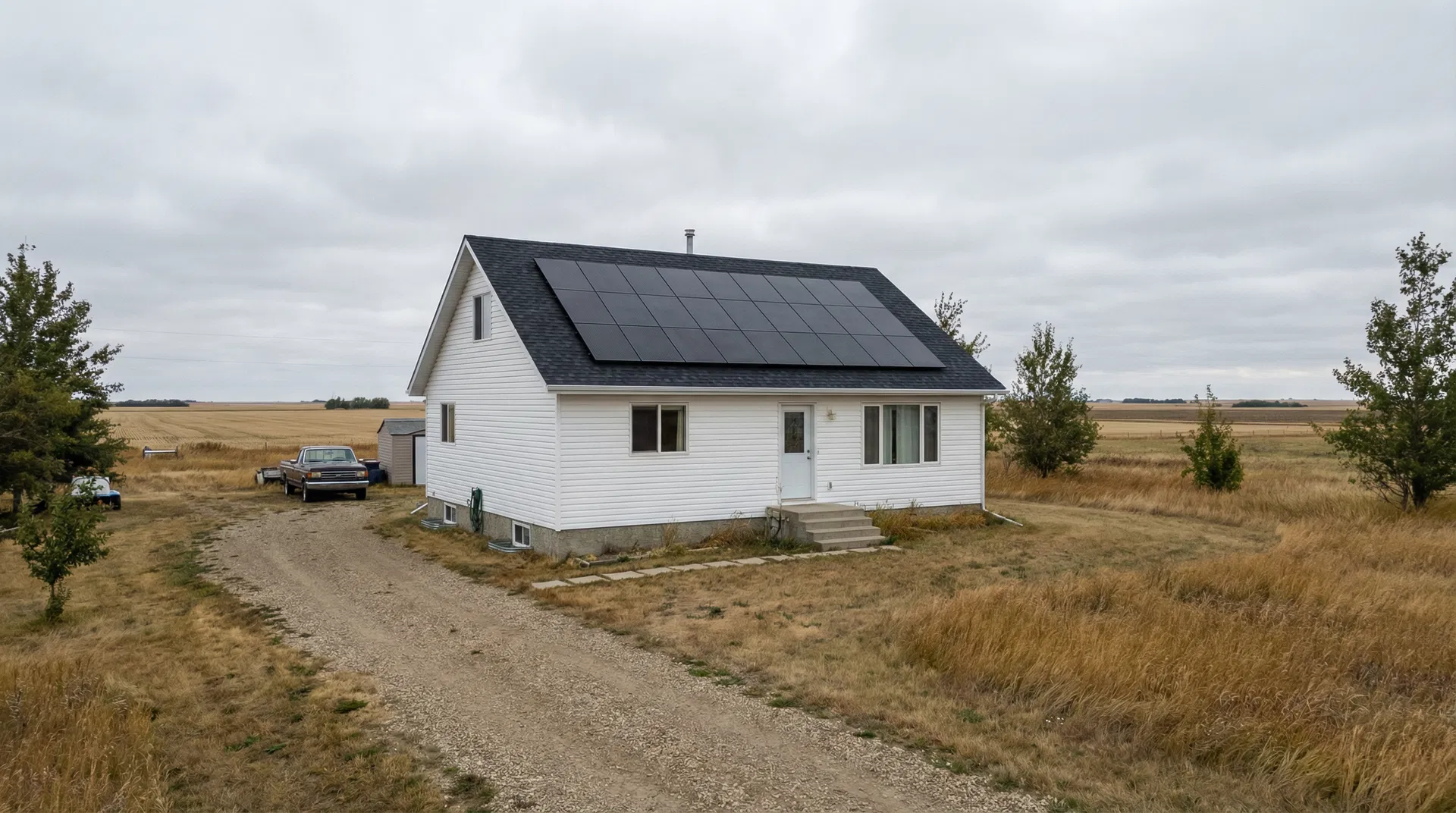
Commercial and agricultural properties in this part of Alberta tend to carry more load than the building footprint suggests. A shop with in-floor heat runs a boiler. A yard with bins runs aeration fans for weeks at a stretch in fall. An office building might be modest in square footage but runs a compressor, a walk-in cooler, and lighting across a long operating day. When you add those loads together, you're not looking at a residential-scale system. You're looking at something that needs to be sized carefully against real usage data. Roof mount and ground mount both work here, and the right choice depends on what's available. A large, well-oriented metal shop roof is often ideal: the surface is already there, the pitch is workable, and you're not using land you might need for other purposes. But if the roof faces the wrong direction, sits in shade from a grain leg or a line of trees, or is split across multiple orientations that complicate string design, a ground-mount array on available yard space is often the cleaner answer. We don't size systems from rule-of-thumb estimates. The 12-month usage graph on your most recent power bill shows us exactly when your operation pulls the most power and how that demand shifts across seasons. That graph, combined with a site visit, is what we use to recommend a system size. It's how we avoid building something too small to move the needle on your bill or too large to interconnect within ATCO Electric's limits for your service point.
Typical Load Profiles We Design For Near Trochu
Grain Operation with Aeration and Handling
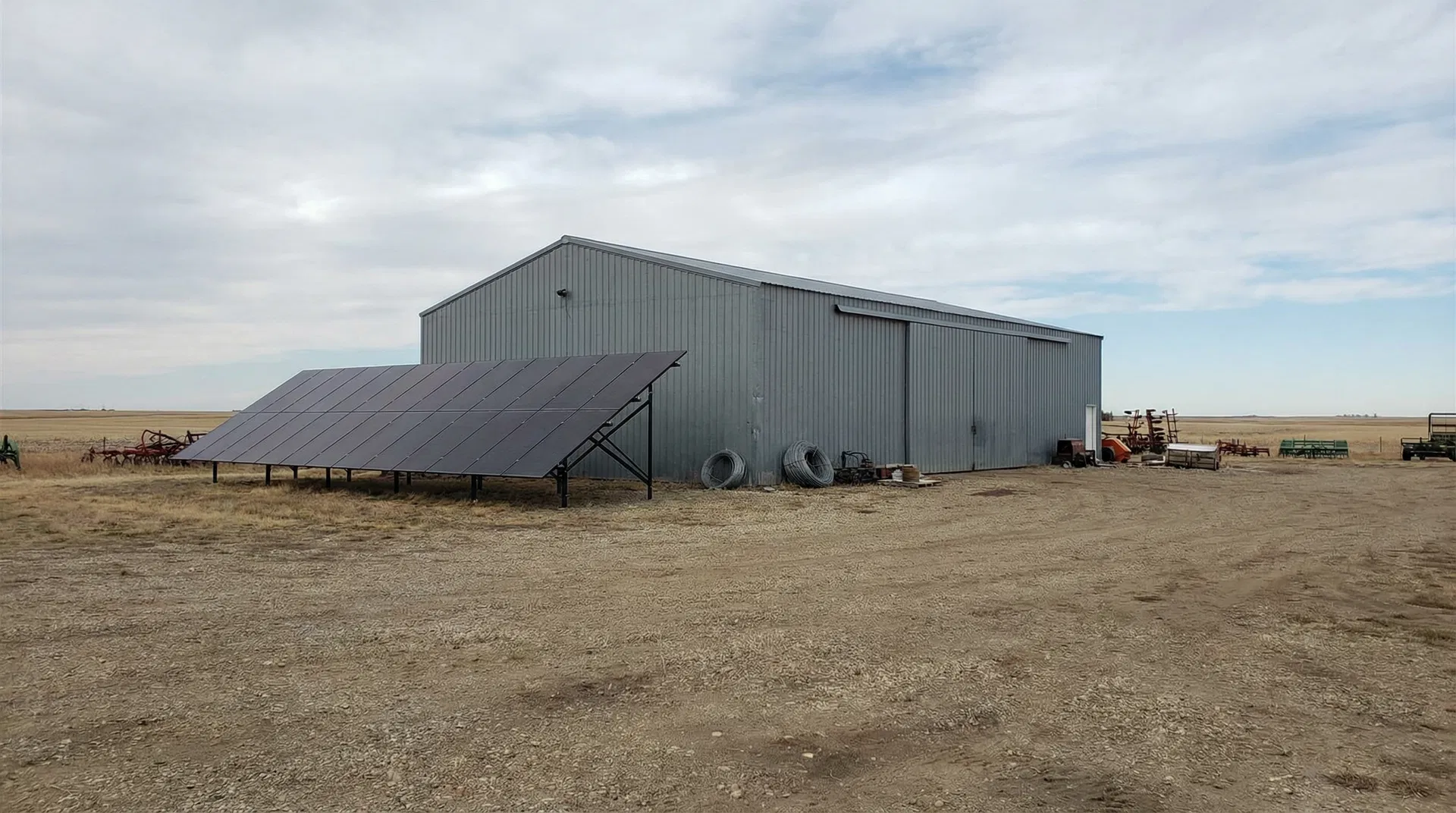
A grain operation running aeration fans across multiple bins plus an auger or conveyor system concentrates heavy electrical demand into a few weeks in fall and lighter usage the rest of the year. A system sized only for peak harvest loads would be oversized for most of the year, so we design against the full 12-month usage pattern on your power bill to find the array size that performs well across all seasons. Bin yard layout and available ground space typically make ground mount the most practical configuration for this load profile.
Commercial Building with HVAC and Refrigeration
A commercial building running packaged HVAC, refrigeration cases, and standard lighting carries a load that's fairly consistent across operating hours, which makes solar a strong offset candidate. A 20-30 kW array can cover a meaningful portion of daytime operating load on a well-oriented roof. We size the system from the actual consumption graph on the most recent power bill, not from square footage, because two buildings of the same size can look very different electrically depending on what equipment is inside.
Heated Shop with Welding and Compressor
A heated agricultural or industrial shop running a radiant or in-floor heating system alongside a large air compressor and welding equipment has a load profile that spikes hard during winter heating season and during active work periods. That kind of load often justifies a system in the 30-50 kW range, but the exact sizing depends on how many hours per day and which months carry the heaviest draw. We pull that detail from the 12-month usage graph so the system we design actually reflects how the shop is used, not how we assume it's used.
ATCO Electric Interconnection in Trochu
ATCO Electric is the wire service for Trochu. Any solar system connected to the grid here goes through ATCO's micro-generation interconnection process. That process requires a formal application package, including single-line electrical drawings, equipment specifications, and site documentation. Range Road Solar prepares and submits the full interconnection package to ATCO Electric on your behalf. You don't need to coordinate with the utility directly. We manage the submission and respond to any technical follow-up ATCO requires during their review. ATCO's interconnection requirements can vary depending on the size of your system, the condition of your service entrance, and the characteristics of the distribution line serving your property. We review those conditions during the site assessment so that the application we submit is complete and accurate the first time. Incomplete packages delay the process. We don't let that happen. Once interconnection is approved and the system passes inspection, ATCO updates your meter configuration. At that point the system is live. Any questions about credit settlement terms, billing treatment, or retailer arrangements are confirmed during the design review against current ATCO rules.
Project Economics and Design Review
| System Size | Annual Production | Year 1 Savings | Payback Period |
|---|---|---|---|
| 15-100 kW range, 30 kW typical |
Production, savings, and payback estimates require a property-specific design and your most recent power bill, and vary with site conditions, utility rules, and load profile.
How We Work in Trochu
Bill and Load Review
We review your power bill to understand your energy use in Trochu and size the system to your actual consumption, not a generic estimate.
Site Assessment
We assess your roof or ground area, south-facing exposure, electrical service, and utility interconnection requirements specific to your property.
Design and Utility Application
We produce a system layout, production estimate, and cost summary, then submit your micro-generation application to your utility on your behalf.
Installation and Commissioning
Our crew installs racking, panels, inverter, and electrical connections. All work is performed by licensed electricians. We commission and test before handoff.
Current Program and Interconnection Review
Utility connection review
ATCO Electric reviews all micro-generation interconnection applications for properties in the Trochu area. Range Road Solar prepares the full design package, including single-line drawings and equipment documentation, and submits it directly to ATCO on your behalf. We handle the back-and-forth with the utility so you don't have to.
Current program review
Commercial and agricultural solar installations may be eligible for federal or provincial programs depending on the nature of the operation and current program rules at the time of installation. We review eligibility against current criteria during the design process, not against outdated information. What's available changes, so we confirm it at the time your project is scoped.
Frequently Asked Questions
Get a Solar Assessment for Trochu
Submit a recent power bill and we will review your consumption and provide an honest assessment for your Trochu property. No obligation.
(587) 330-7502 Book a CallMore Solar Services in Trochu