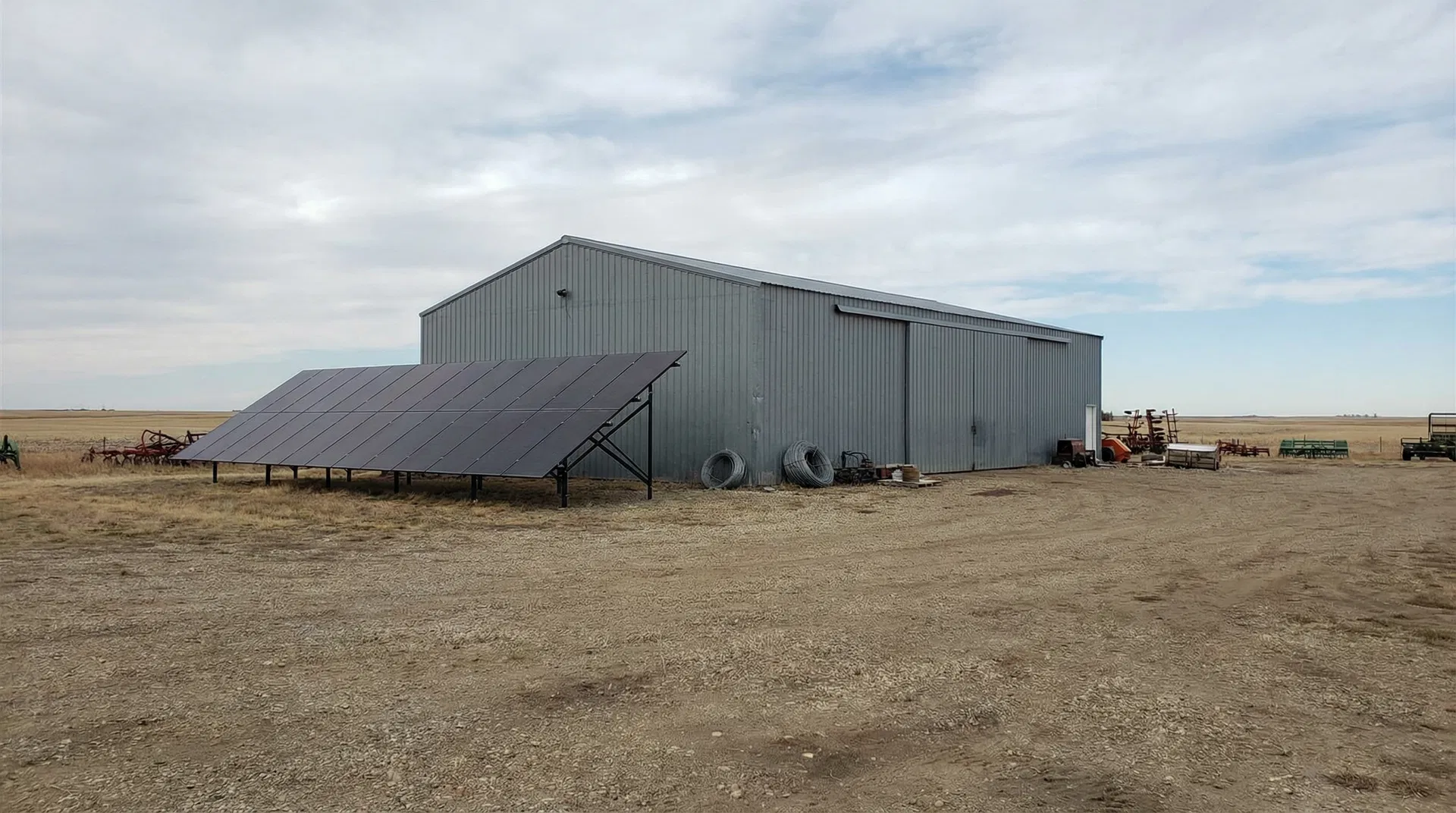
Commercial solar in Kneehill County covers a wide range of properties in this part of Alberta, from retail buildings and farm-supply shops to grain terminals and oilfield-service yards that run heavier three-phase loads than a typical house. We install systems from 15 kW up to 100 kW, with a 30 kW system typical for a mid-size shop or retail building. Every system uses LONGi panels, chosen for consistent output and a manufacturer warranty that holds up under Alberta temperature swings. For smaller commercial arrays, we typically pair them with APsystems microinverters, which let us monitor production panel by panel and isolate an issue without taking the whole array offline. Larger commercial systems, especially anything pushing toward the 100 kW end of the range, often move to string inverters instead, since that's the more cost-effective architecture at that scale and it still gives us clear production data. Mounting depends on the building: standing-seam or membrane commercial roofs get a roof-mount racking system engineered for the roof type, while ground-mount arrays make sense on properties with open yard space and roofs that are shaded, too old, or the wrong pitch. Before we finalize a design, we review your ATCO Electric service size, your electrical panel and breaker capacity, and your most recent power bill so the system matches what the business actually uses. We handle the interconnection paperwork with ATCO Electric directly, so you're not the one chasing down application forms while running a business.
Solar Planning for Kneehill County Properties
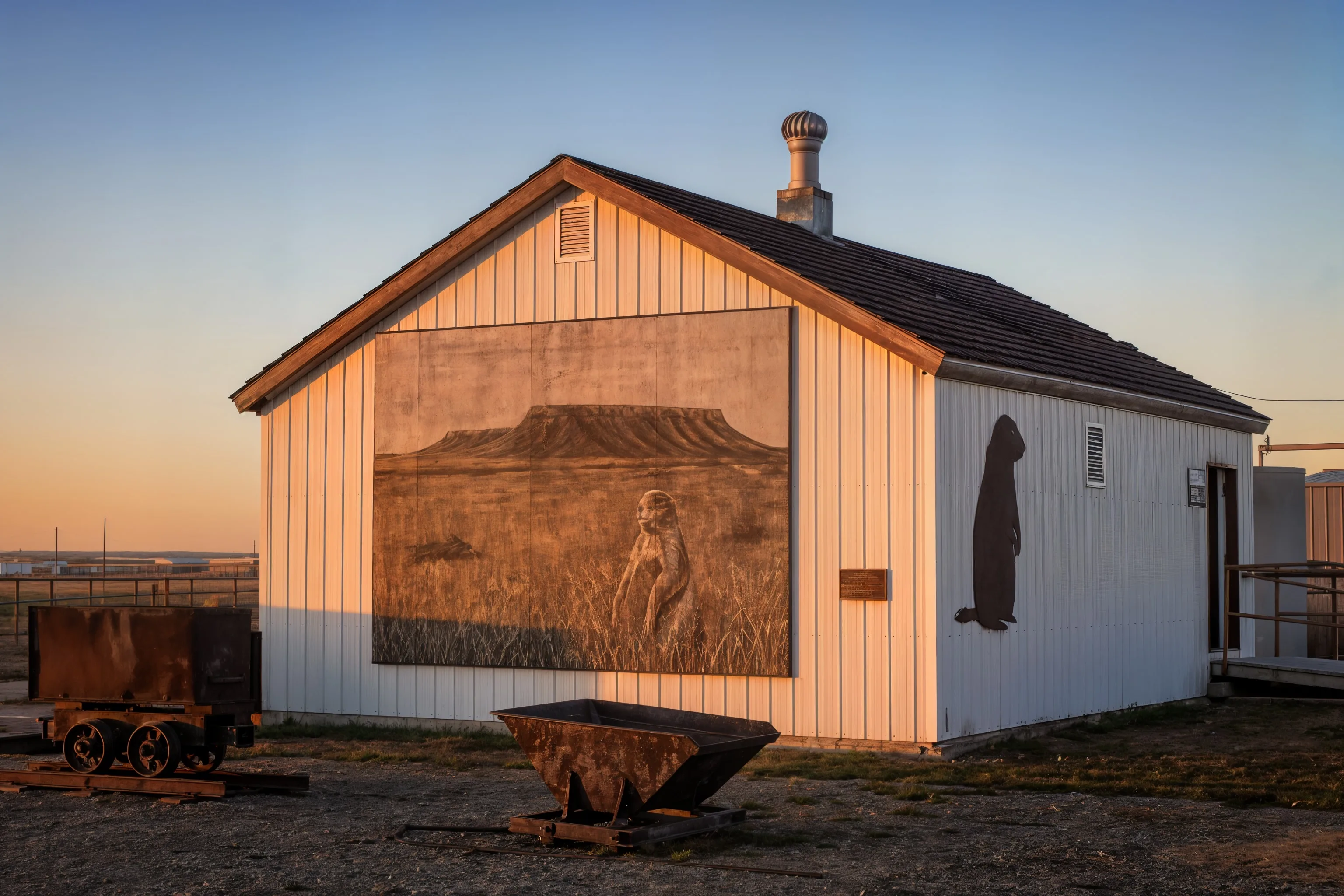
Kneehill County was established January 1, 1944, under Order in Council 601/43, and today it's home to about 4,992 people spread across a landscape built on agriculture (grain and cattle) and oil and gas activity. That mix shows up in the kind of commercial solar projects we design here: a grain terminal with three-phase service and heavy seasonal draw, an oilfield-service yard running shop heaters and welding equipment, a main-street retail building on a single meter. There's no one-size answer for a place built this way. We start with your ATCO Electric account and your most recent power bill, then walk the property to check roof orientation, ground-mount options, and the service size feeding the building. A 30 kW system that works for a machine shop won't fit a feedlot's load pattern, and a system sized for summer irrigation pumps won't match a year-round retail operation. Range Road Solar builds the design around what your business actually draws, not a generic average for the area. That's the only way a commercial system pencils out here, whether you're on a highway frontage or tucked back on a section road.
Electrical Site Review for Rural Commercial Properties
Voltage Rise
Voltage rise happens when a solar inverter pushes power back through a long or lightly loaded feeder line, which can raise the voltage at the point of connection. Rural distribution lines out here often run longer distances between the transformer and the building than an in-town connection would, so we check voltage conditions before finalizing a design. That review affects inverter clipping settings and can shape how we size the system to stay within ATCO Electric's acceptable range.
Single-Phase vs Three-Phase
Commercial properties in this part of Alberta show up with both single-phase and three-phase electrical service, depending on the building's age and what kind of equipment it runs. A grain leg, welder, or large compressor usually needs three-phase power, and that changes which inverters we can use and how much capacity the system can support. We confirm your service type early, since it narrows the equipment list before we ever get to a proposal.
Panel Infrastructure
Older commercial buildings in the area sometimes carry electrical panels that were sized decades ago, before anyone planned for a solar interconnection or the equipment running today. We check the panel's age, its busbar rating, and available breaker space to confirm it can handle a backfed solar breaker without exceeding code limits. If the panel can't support the system, an upgrade means a new panel or a supplemental load center sized to the interconnection, which we scope out during the design review.
Service Entrance Review
We inspect the service entrance and meter base as part of every commercial design, checking for wear, corrosion, and whether the equipment matches what's listed on file with ATCO Electric. The meter base condition matters directly for the micro-generation application, since ATCO Electric reviews that infrastructure against the paperwork we submit. If the review turns up a meter base or service entrance that needs upgrading, we handle that scope as part of the project plan before the interconnection application goes in.
Right-Sizing Commercial Solar for Rural Properties
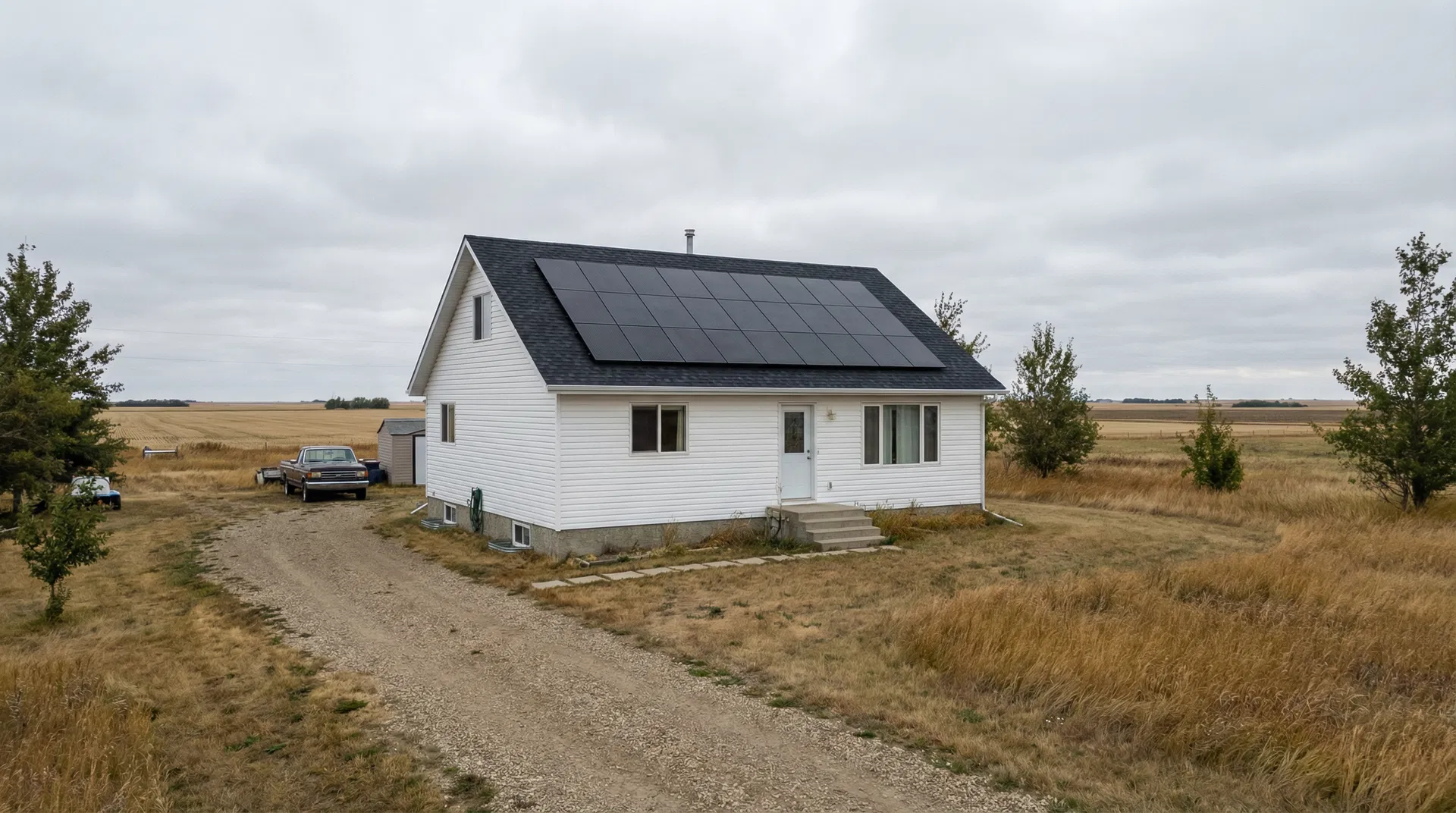
Commercial properties out here rarely run a single, simple load. A grain operation might combine a main shop, cold storage, and grain-handling equipment that spikes hard during harvest. An oilfield-service yard might run shop heaters, welding bays, and yard lighting on top of the office building itself. That combination is exactly why we don't size a commercial system off a rule-of-thumb number per square foot. We start with the 12-month usage graph on your most recent power bill, which shows the actual pattern of your load across the year, including seasonal spikes that a single-month snapshot would miss entirely. From there we walk the roof and the yard. Roof-mount makes sense when the building has clean south, east, or west-facing exposure without heavy shading from grain bins, shelterbelts, or neighboring structures. Ground-mount becomes the better call when the roof is shaded, has a poor pitch or membrane condition that complicates racking, or when the property has open yard space that makes a ground array easier to service and expand later. Some properties in the area end up as a mix of both, roof panels for the main building and a ground array for overflow capacity. Either way, the final system size, somewhere in the 15 to 100 kW range, comes out of that usage graph and the site walk, not a generic area-wide assumption.
Typical Commercial Load Profiles We Design For Near Kneehill County
Shop + Retail Storefront
A lot of commercial buildings in the area combine a retail storefront with an attached shop or warehouse space, which means daytime retail lighting and HVAC layered on top of shop tools, compressors, and bay doors. We size these systems from the load pattern on your most recent power bill rather than treating the retail and shop portions as separate projects.
Grain Handling and Cold Storage
Grain-handling equipment and cold storage draw hard in short, heavy bursts, especially during harvest and shoulder seasons, which shows up clearly on the 12-month usage graph most Alberta utility bills include. We design around those seasonal peaks so the system is sized for how the operation actually runs across the year, not just an average month.
Oilfield-Service Yard
An oilfield-service yard typically runs shop heaters, welding equipment, air compressors, and yard lighting alongside a smaller office space, and that equipment mix draws differently than a straightforward retail building. We review your most recent power bill and walk the yard to confirm three-phase service and available roof or ground-mount space before we settle on a system size.
ATCO Electric Interconnection in Kneehill County
Every commercial solar property in the area connects through ATCO Electric, the wire service here. Before your system goes live, ATCO Electric needs a micro-generation interconnection application on file, along with a design package that shows your system size, equipment, and single-line electrical diagram. Range Road Solar prepares and submits that full package on your behalf: system specifications, the electrical drawings, and the supporting documents ATCO Electric asks for. We also review your service entrance and meter base as part of the design, since ATCO Electric will check that infrastructure against what the application describes. We don't quote approval timelines or promise a specific turnaround, since that's set by ATCO Electric's own review process and can shift depending on their workload and your property's specific service configuration. What we can promise is a complete, accurate application the first time, so you're not stuck waiting on a resubmission because of a missing form or an incomplete drawing. If your current service size needs an upgrade to support the system, we'll flag that during the design review, before anything gets submitted.
Project Economics and Design Review
| System Size | Annual Production | Year 1 Savings | Payback Period |
|---|---|---|---|
| 15-100 kW range, 30 kW typical |
Production, savings, and payback figures are only meaningful once we've completed a property-specific design review using your most recent power bill and site conditions.
How We Work in Kneehill County
Bill and Load Review
We review your power bill to understand your energy use in Kneehill County and size the system to your actual consumption, not a generic estimate.
Site Assessment
We assess your roof or ground area, south-facing exposure, electrical service, and utility interconnection requirements specific to your property.
Design and Utility Application
We produce a system layout, production estimate, and cost summary, then submit your micro-generation application to your utility on your behalf.
Installation and Commissioning
Our crew installs racking, panels, inverter, and electrical connections. All work is performed by licensed electricians. We commission and test before handoff.
Current Program and Interconnection Review
Utility connection review
ATCO Electric reviews every grid connection application for a new commercial solar system, checking the design against its own interconnection standards. Range Road Solar prepares the full design package, including the single-line diagram and system specifications, and handles the submission on your behalf.
Current program review
Commercial, farm, and residential solar projects are each reviewed against whatever incentive and eligibility rules are active at the time of your design, since those rules can change from year to year. We check current program eligibility for your specific project type as part of the design review, rather than assuming it matches a program you may have heard about elsewhere.
Frequently Asked Questions
Get a Solar Assessment for Kneehill County
Submit a recent power bill and we will review your consumption and provide an honest assessment for your Kneehill County property. No obligation.
(587) 330-7502 Book a CallRelated Resources