Solar battery storage for Trochu, Alberta properties starts with a hybrid inverter and a lithium battery bank sized to your actual loads, not a generic package pulled off a shelf. We pair that hybrid inverter with LONGi panels on the solar side, since LONGi's output and warranty terms hold up well on both in-town roofs and acreage ground mounts in the area. Where a property doesn't need storage, we'll often run APsystems microinverters instead, but once a battery enters the picture, the hybrid inverter does the work of managing solar input, battery charge and discharge, and backup power all in one box. The battery bank itself sits on 8 to 20 kW systems here, with 12 kW landing as the typical size for a home plus a shop or a few key circuits. Sizing depends on what you want backed up during an outage: just the fridge and well pump, or the whole panel. We walk through that with you before we spec anything. Installation means mounting the battery enclosure somewhere temperature-stable, usually a garage or mechanical room rather than an exposed shop wall, then running the backup circuits through a sub-panel so the system knows what to carry when the grid drops. For acreages in the area with a shop, grain handling, or an irrigation pump on a separate run, we map out which loads actually need battery backup and which can wait for the grid to come back, since backing up everything on the property usually isn't necessary or cost-effective.
Solar Planning for Trochu Properties
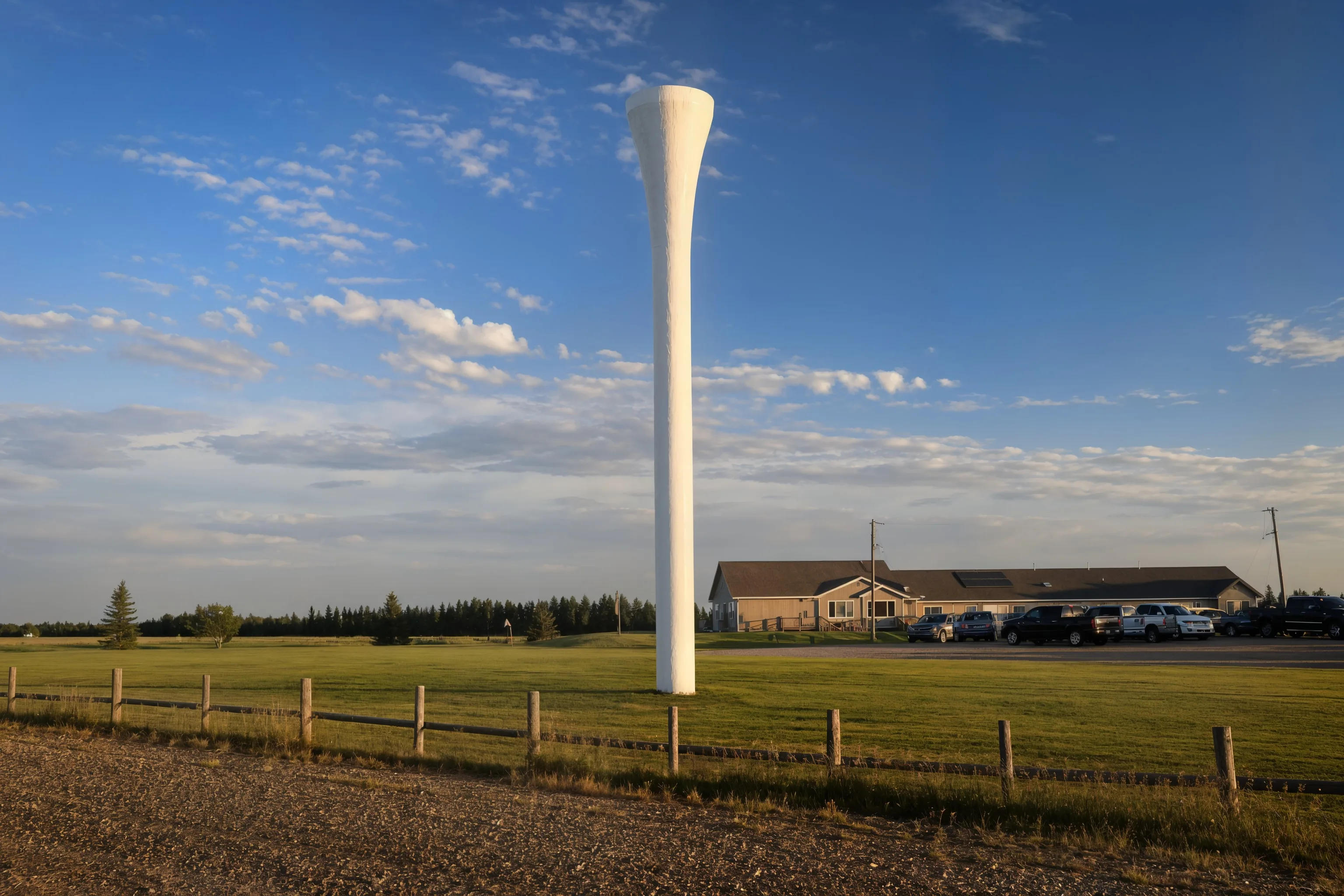
Trochu is a town in Kneehill County, Alberta, home to about 998 residents, down from 1,058 at the last census count. That kind of population means design conversations here start from what a specific property actually has, not a city-wide average. Properties in the area range from in-town lots to acreages with shops, grain bins, and irrigation pumps, each pulling power differently throughout the day, so a battery storage system built for a house in town looks different from one built for a working acreage. Range Road Solar designs around that reality using your most recent power bill and a walk-through of the property, not a generic template. Local color matters less to system design than most people expect: visitors still stop for a photo at the World's Largest Golf Tee, but that tells us nothing about your breaker panel or roof pitch. Environment Canada's bright sunshine normals for this part of Alberta run around 2,021.8 hours a year, which is useful general context, but we don't size a system off a regional average. We size it off your usage graph, your service type, and what you actually want backed up when the power goes out.
Electrical Site Review for Trochu Properties
Voltage Rise
Voltage rise happens when a battery storage system pushes power back toward the grid along a long or lightly loaded line, and rural distribution runs in this area can be more prone to it than a tight in-town grid. If voltage climbs too high at the point of connection, the hybrid inverter can clip output to stay within its operating range rather than push power it isn't allowed to send. We check your service's voltage profile before finalizing system size so the battery and inverter are matched to what the line can actually handle.
Single-Phase vs Three-Phase
Properties in the area run on either single-phase or three-phase electrical service, and which one you have changes what hybrid inverter and battery configuration will actually work. Single-phase service caps the inverter options and total capacity differently than three-phase does, especially on larger shops or outbuildings with heavier equipment. We confirm your service type early, since it shapes equipment selection long before we get to a final system size.
Panel Infrastructure
A lot of properties around here still have older electrical panels, and we check breaker capacity and panel age before adding a hybrid inverter and battery bank into the mix. We're looking for available breaker space, the panel's rated capacity, and whether the bus bar and main breaker can handle the added backup circuits. If the panel can't support the system, an upgrade to a larger panel happens before installation, not as a surprise mid-project.
Service Entrance Review
We check the service entrance and meter base condition as part of every site review, since a worn or undersized meter base can hold up the micro-generation application to ATCO Electric. ATCO Electric wants to see that the physical connection point can safely support a grid-tied battery storage system before approving the paperwork. If the meter base needs an upgrade, we fold that into the project scope so the application isn't delayed waiting on hardware that should've been flagged earlier.
Right-Sizing Solar for Trochu Properties
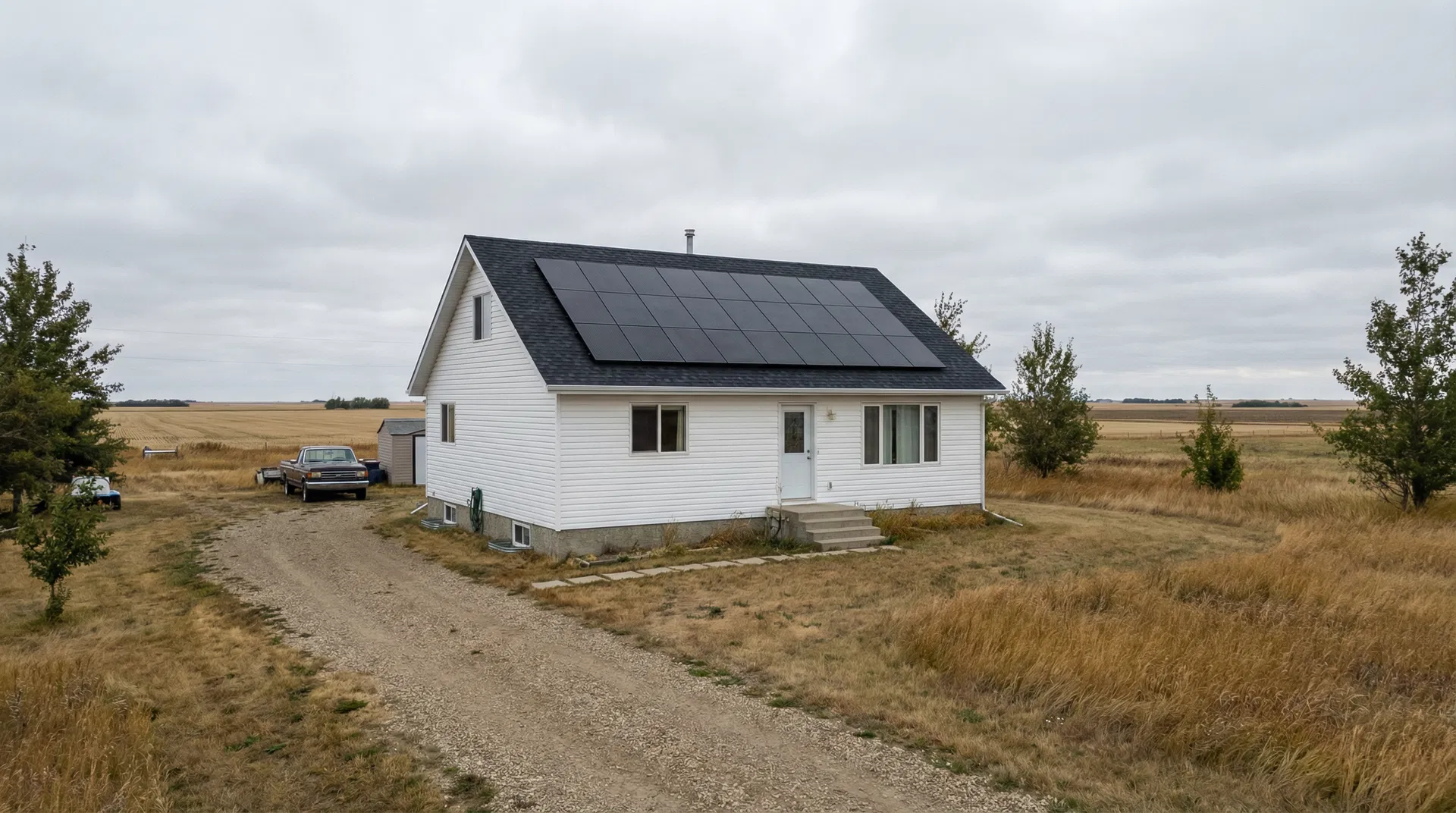
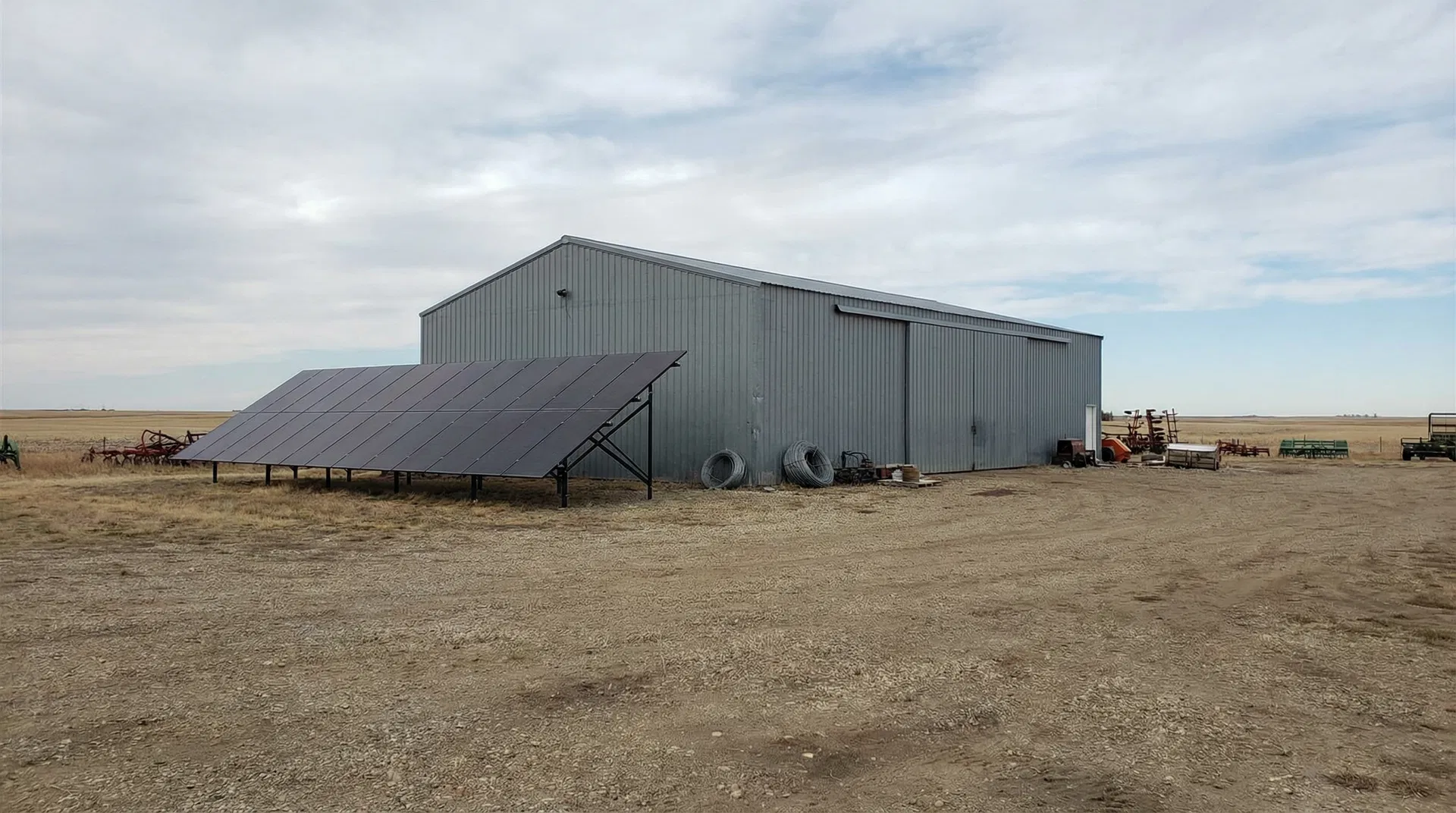
Rural properties around here usually need bigger systems than an equivalent house in the city, because there's more than one load to cover. A home plus a shop plus a grain bin or an irrigation pump adds up to more total draw than a house alone, and a battery storage system has to be sized against all of it, not just the house panel. That's part of why systems here land anywhere from 8 to 20 kW, with 12 kW as a common middle ground rather than a fixed number. Roof versus ground mount comes down to the property itself. A roof with good southern exposure and no shading from trees or an outbuilding is usually the simpler, cheaper mount. But if the roof's pitch is wrong, shade from a shelterbelt or a neighboring structure cuts into production, or the yard has open land sitting unused, a ground mount often makes more sense, especially on an acreage where there's room to place it exactly where the sun hits longest. Either way, we size the system off the 12-month usage graph on your most recent power bill, not a rule-of-thumb number per square foot or per occupant. That graph shows us your actual seasonal swings, so the battery and solar array get sized to real usage. Bring us that bill and we'll walk the site with you before we land on a final number.
Typical Load Profiles We Design For Near Trochu
Home + Heated Shop
This profile covers a house plus a heated shop, where the shop's heater and any power tools or welding equipment add a second, often unpredictable load on top of normal household draw. We look at your most recent power bill and walk the shop itself to see what's actually running out there before sizing the battery and solar array together. The goal is backup power that covers both buildings during an outage, not just the house.
Acreage with Well Pump
Acreages that rely on a well pump need backup power that doesn't skip a beat, since losing water pressure during an outage is more than an inconvenience. We treat the well pump as a priority circuit on the sub-panel, so the battery system keeps it running even if we scale back less critical loads elsewhere on the property. Sizing comes from your bill's usage graph plus the pump's actual draw, not an estimate.
Grain Handling and Seasonal Loads
Grain handling equipment, like augers or aeration fans, can spike usage hard for a few weeks a year and barely register the rest of the time, which standard load calculations tend to miss. We size around those seasonal peaks using the 12-month usage graph on your most recent power bill, so the system doesn't fall short during harvest just because the rest of the year looks modest. That's a different sizing problem than a steady year-round load, and we design for it specifically.
ATCO Electric Interconnection in Trochu
ATCO Electric is the wire service for properties in this area of Alberta. Any battery storage system that ties into your solar array and connects to the grid needs an interconnection application filed with ATCO Electric, and that paperwork is part of what Range Road Solar handles as part of your install. We prepare the single-line diagrams, equipment specifications, and site details ATCO Electric needs to review the application, and we coordinate the physical inspection and meter work that comes with a grid-tied system. Battery storage adds a layer to that application since the system can island the property during an outage, so we document how the hybrid inverter manages that transition before it goes to ATCO Electric for review. You don't need to track down ATCO Electric's forms or figure out what a utility reviewer wants to see. We put the package together, submit it, and keep you updated while ATCO Electric works through it. That's true whether you're in town on a standard lot or out on an acreage with a longer service run.
Project Economics and Design Review
| System Size | Annual Production | Year 1 Savings | Payback Period |
|---|---|---|---|
| 8-20 kW range, 12 kW typical |
Production, savings, and payback figures require a property-specific design review and your most recent power bill, not a town average.
How We Work in Trochu
Bill and Load Review
We review your power bill to understand your energy use in Trochu and size the system to your actual consumption, not a generic estimate.
Site Assessment
We assess your roof or ground area, south-facing exposure, electrical service, and utility interconnection requirements specific to your property.
Design and Utility Application
We produce a system layout, production estimate, and cost summary, then submit your micro-generation application to your utility on your behalf.
Installation and Commissioning
Our crew installs racking, panels, inverter, and electrical connections. All work is performed by licensed electricians. We commission and test before handoff.
Current Program and Interconnection Review
Utility connection review
ATCO Electric reviews every grid-tied battery storage application before a system goes live, checking the equipment, the single-line diagram, and the physical connection point. Range Road Solar puts that design package together and submits it on your behalf, so you're not the one deciphering utility paperwork. We keep you posted as ATCO Electric moves through its own review process.
Current program review
Whether your property qualifies for any commercial, farm, or residential consideration tied to a battery storage install depends on rules that can shift, so we check current eligibility at the time we design your system rather than assuming last year's terms still apply. That review happens as part of the design process, before we finalize equipment or system size. We'll tell you plainly what applies to your property and what doesn't.
Frequently Asked Questions
Get a Solar Assessment for Trochu
Submit a recent power bill and we will review your consumption and provide an honest assessment for your Trochu property. No obligation.
(587) 330-7502 Book a CallMore Solar Services in Trochu