Foothills County · Residential solar installation
Solar Installation in Black Diamond, AB
Grid-tied residential solar for Black Diamond homes and acreages. We handle design, engineering, and FortisAlberta interconnection from start to finish.
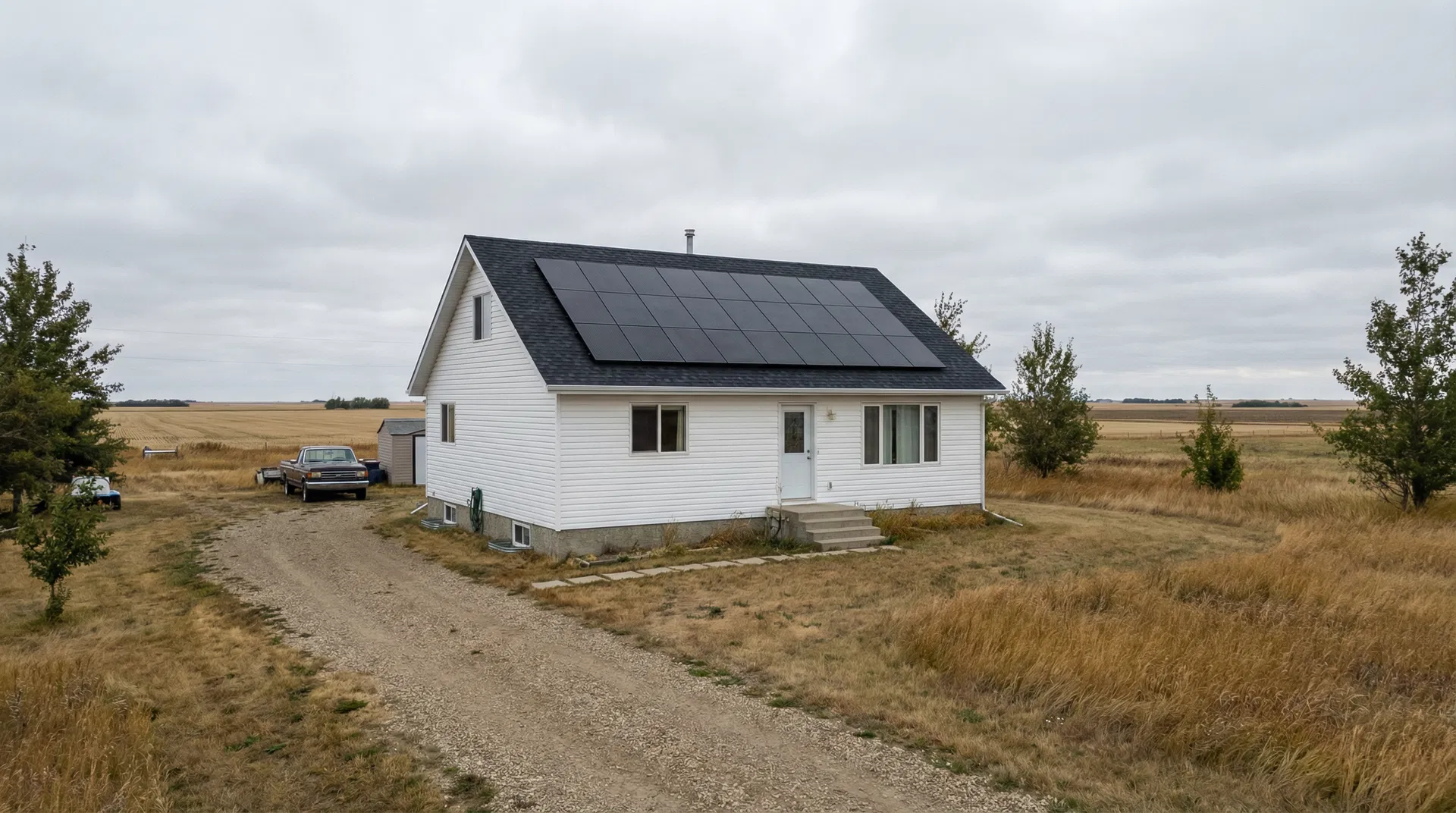
Solar installation in Black Diamond follows the same process whether you're on a standard residential lot or a larger acreage property outside the core. We install LONGi solar panels, which are a well-proven panel line with strong performance across Alberta's climate range, and we pair them with APsystems microinverters. Microinverters matter on properties where shading isn't uniform. If part of your roof gets shaded by a dormer, a chimney, or a nearby tree for part of the day, a string inverter setup means that shaded panel pulls down production across the whole string. APsystems microinverters work at the panel level, so each panel operates independently. That's particularly useful on acreage homes where the roof geometry can be irregular or where trees haven't been trimmed back in years. Most residential systems in the 8-12 kW range, with 10 kW being a common design point, involve 20-30 panels depending on panel wattage and available mounting area. We'll confirm roof load capacity, rafter spacing, and mounting points during the site assessment. If your roof isn't the right fit, whether it's due to age, orientation, pitch, or shading, we'll tell you that upfront and walk through whether a ground mount makes more sense for your property. We handle the full scope: design package, engineering stamp, FortisAlberta micro-generation application, installation, and commissioning. You're not coordinating between multiple contractors. We do it as one project.
Solar Planning for Black Diamond Properties
Black Diamond sits in a part of Alberta where properties tend to spread out. Larger lots, detached shops, and outbuildings are common, and that changes how a solar system gets designed. A home with an attached garage is a very different design problem than a property with a heated shop, a secondary dwelling, or irrigation running on the same meter. FortisAlberta is the wire service here, and grid-tied systems connect back through them as micro-generation. That process involves an interconnection application, and the rules around it affect what your system can look like, how it gets metered, and what happens with the electricity your system doesn't immediately consume. We don't size systems from a template. Every design starts with your most recent power bill, which includes a 12-month usage graph. That graph tells us what you've actually used across the seasons, which matters a lot in Alberta where heating and cooling loads shift significantly throughout the year. Roof orientation, available ground space, shading from trees or outbuildings, and your current panel infrastructure all factor into the design before we quote anything. If you're curious whether solar makes sense for your property, a design review is the right starting point.
Electrical Site Review for Black Diamond Properties
Voltage Rise
Voltage rise happens when a solar system pushes power back toward the grid and the local distribution line voltage climbs above acceptable limits. In areas served by longer rural distribution lines, the line impedance is higher, which makes voltage rise more likely. If voltage rise limits aren't managed during system design, your inverters will clip or throttle output to stay within allowable voltage bands, which reduces the effective capacity of your system.
Single-Phase vs Three-Phase
Properties in rural Alberta can be served by either single-phase or three-phase electrical service depending on what's been run to the site and what loads the property was built to handle. Three-phase service is more common on properties with larger motors, grain handling, or commercial-scale equipment. The phase configuration at your service entrance directly affects which inverter models are compatible and how the system capacity is distributed across the panel.
Panel Infrastructure
Older electrical panels on rural properties sometimes don't have the breaker capacity to accommodate a solar system without upgrades. We check the panel age, available breaker slots, and total breaker capacity relative to the main service rating during our site assessment. If the existing panel can't safely support the system, we'll identify what an upgrade involves before any installation work begins.
Service Entrance Review
The service entrance and meter base are part of what FortisAlberta reviews when processing a micro-generation interconnection application. We check the meter base condition, the service entrance rating, and whether the existing infrastructure meets current interconnection requirements. If the meter base needs to be upgraded to support the bi-directional metering FortisAlberta requires, we'll flag that early so it doesn't hold up the application.
Right-Sizing Solar for Black Diamond Properties
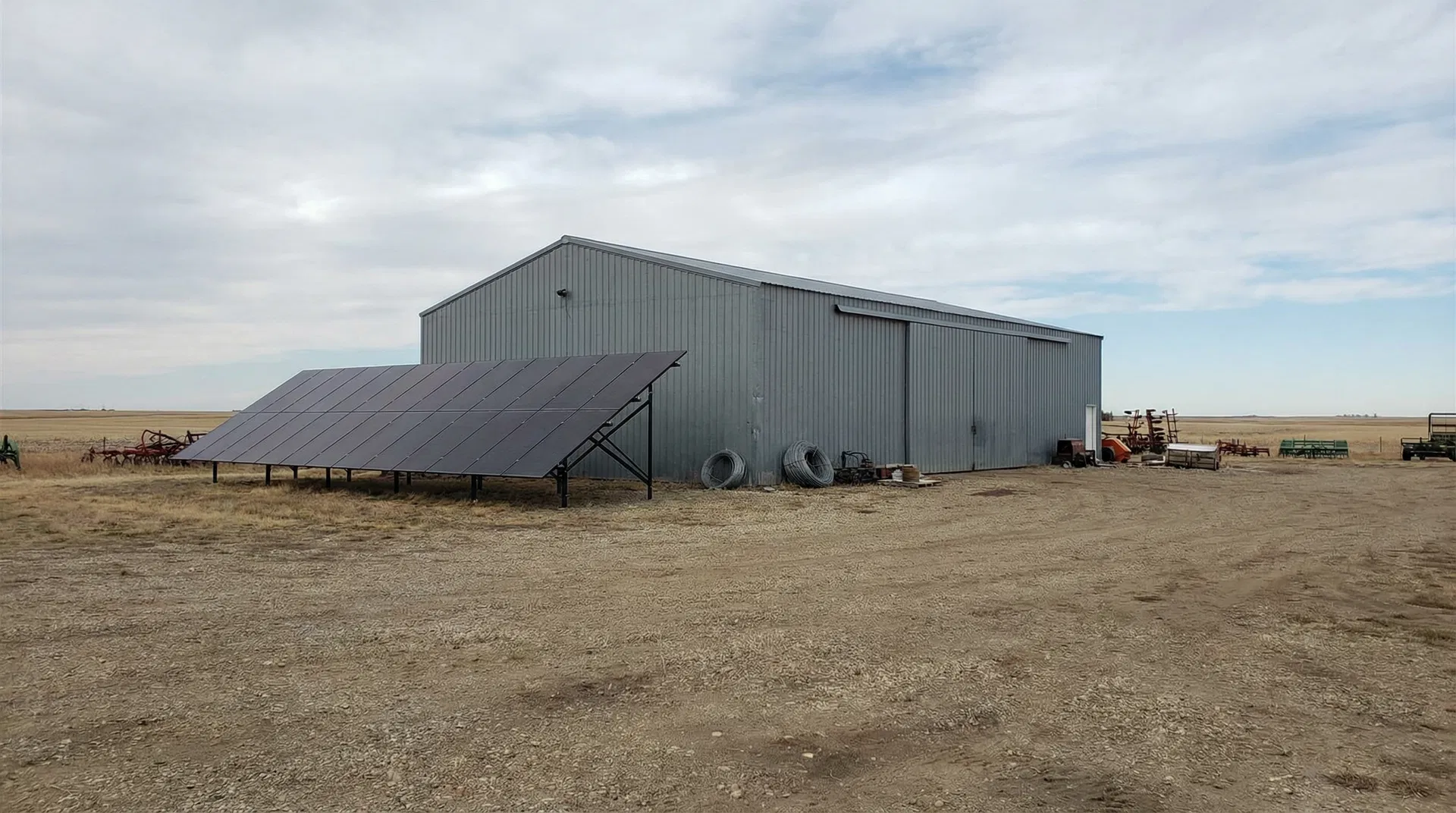
Rural Alberta properties often carry more electrical load than a standard urban house, and that changes the math on system sizing. A home on its own might call for a modest system, but when you add a heated shop, a secondary suite, a water well pump, or outbuildings on the same meter, the annual usage picture is very different. We don't assume anything about what's running on your property until we see the numbers. The most reliable sizing input is the 12-month usage graph on your most recent power bill. Alberta utility bills from FortisAlberta include that graph, and it shows your actual monthly consumption across every season. That's what we use to build the system size recommendation, not a rule-of-thumb kilowatt-per-bedroom calculation. Roof versus ground mount is a real decision for many properties here. If your roof is oriented poorly, shaded by trees or a hip-roof section, past its service life, or simply doesn't have enough uninterrupted area to fit the panels you need, a ground mount on available yard space is often the better call. Acreage layouts frequently have the land for it, and ground mounts can be oriented and tilted for better production than a compromise roof install. We don't push one option over another. We look at your property, review your usage, and recommend what actually fits. If a 10 kW rooftop system does the job cleanly, that's what we'll propose. If your loads justify an 8-12 kW ground mount in a better location on the property, we'll show you that instead.
Typical Load Profiles We Design For Near Black Diamond
Home Plus Heated Shop
A residence paired with a heated detached shop is one of the most common load profiles we see on properties in this area. The shop can add significant heating and lighting load through the winter months, pulling the 12-month usage graph up considerably compared to a home-only property. We size the system from the combined usage on your most recent power bill so the design reflects what's actually running, not just the house.
Home With Well Pump and Outbuildings
Properties with a water well, a pump house, and one or more outbuildings on the same utility account carry a broader base load year-round. Well pumps cycle unpredictably, and outbuilding lighting and receptacles add up over a full year. A 10-12 kW system is often warranted for these properties, but the right size comes from the usage graph, not the equipment list.
Full-Time Residence With Electric Heat
Homes that rely on electric baseboard or in-floor electric heat have some of the highest annual usage profiles we design for, with winter months often representing the bulk of annual consumption. That seasonal skew matters for system sizing and for the conversation about what percentage of annual usage is realistically offset by a solar system. We provide honest production estimates based on your actual power bills and site conditions, not inflated projections.
FortisAlberta Interconnection in Black Diamond
FortisAlberta is the wire service for Black Diamond, and any grid-tied solar system installed here connects through them as a micro-generation facility. That means the interconnection application goes to FortisAlberta, not a municipality or a different utility. Range Road Solar prepares and submits the full interconnection package on your behalf. That includes the system design documentation, single-line electrical diagram, equipment specifications, and any engineering documentation FortisAlberta requires for review. We don't hand you a folder of forms and leave you to figure it out. FortisAlberta's review process is theirs to run, and we don't control how long it takes. What we can do is make sure your application is complete and accurate the first time, which reduces the chance of back-and-forth delays. If FortisAlberta comes back with questions or requests additional documentation, we handle that too. The interconnection approval is what allows your system to legally export power back to the grid. We won't commission your system until that approval is in hand.
Project Economics and Design Review
| System Size | Annual Production | Year 1 Savings | Payback Period |
|---|---|---|---|
| 8-12 kW range, 10 kW typical |
Production, savings, and payback figures require a property-specific design and your most recent power bill before they can be accurately estimated.
How We Work in Black Diamond
Bill and Load Review
We review your power bill to understand your energy use in Black Diamond and size the system to your actual consumption — not a generic estimate.
Site Assessment
We assess your roof or ground area, south-facing exposure, electrical service, and utility interconnection requirements specific to your property.
Design and Utility Application
We produce a system layout, production estimate, and cost summary, then submit your micro-generation application to your utility on your behalf.
Installation and Commissioning
Our crew installs racking, panels, inverter, and electrical connections. All work is performed by licensed electricians. We commission and test before handoff.
Current Program and Interconnection Review
Utility connection review
FortisAlberta reviews all micro-generation interconnection applications for properties in Black Diamond. Range Road Solar prepares the complete design and documentation package and submits it on your behalf. We don't ask you to manage any part of that process.
Current program review
Residential, farm, and commercial solar eligibility for available programs is reviewed against the rules in effect at the time of your design. Programs and eligibility criteria change, so we confirm what applies to your specific property type and situation during the design review rather than making assumptions upfront.
Frequently Asked Questions
Get a Solar Assessment for Black Diamond
Submit a recent power bill and we will review your consumption and provide an honest assessment for your Black Diamond property. No obligation.
(587) 330-7502 Book a CallRelated Resources