Foothills County · Shop and outbuilding solar
Shop and Outbuilding Solar in Black Diamond, AB
Range Road Solar designs and installs grid-tied shop solar systems from 8 to 20 kW for properties in Black Diamond and surrounding rural Alberta. Rooftop or ground-mount, we build it to fit your loads.
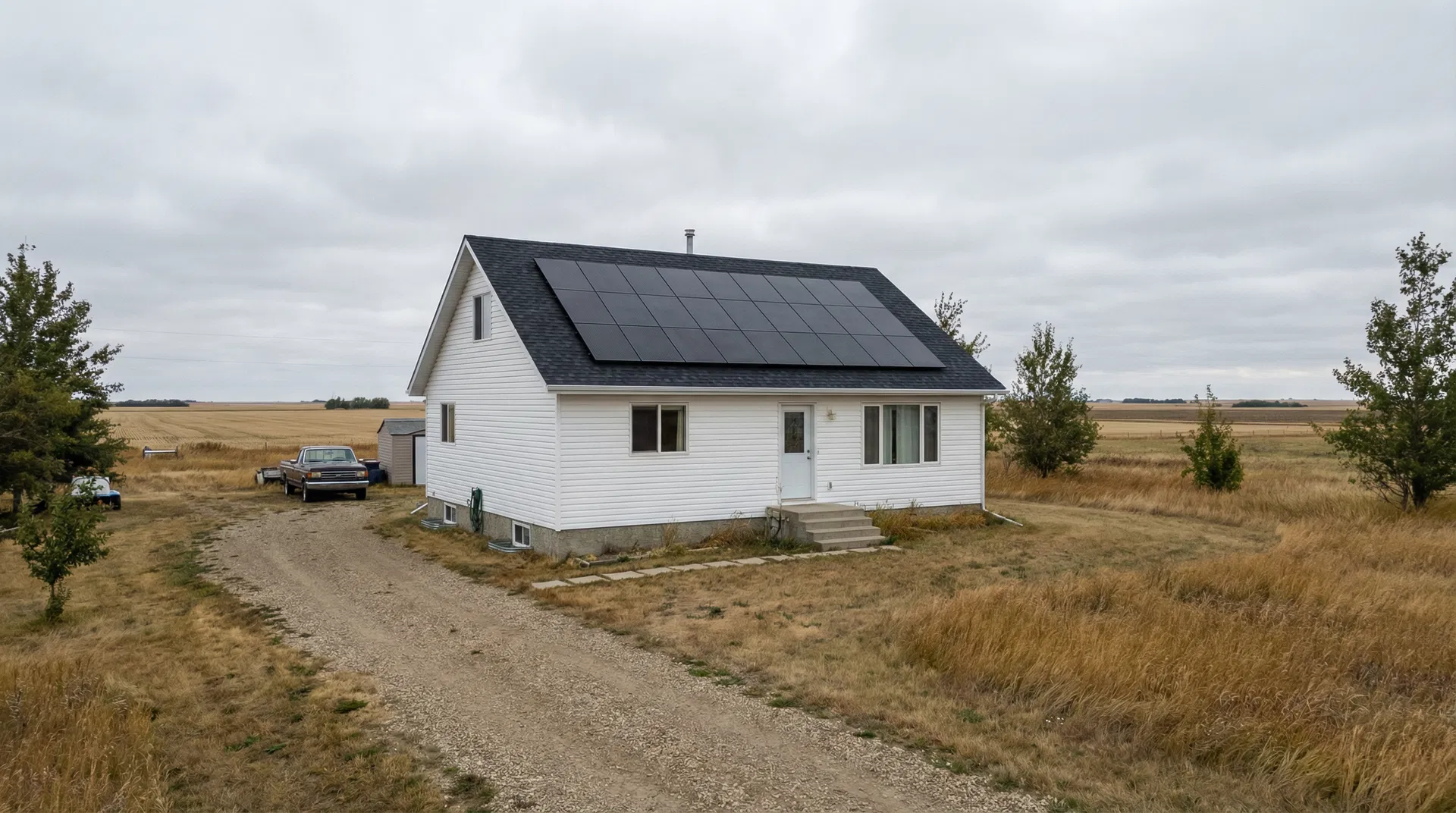
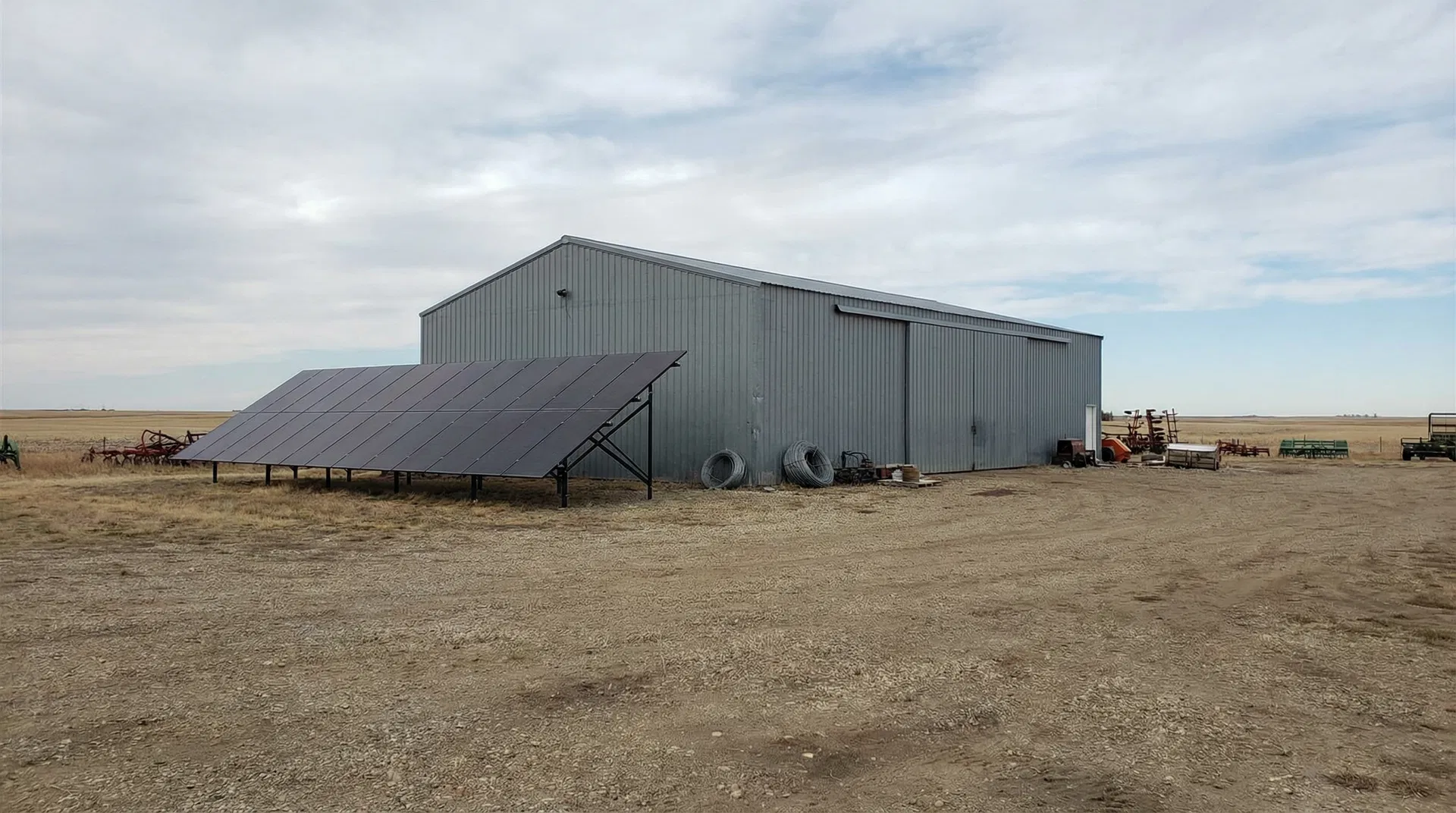
When someone searches solar black diamond looking for a shop system, they're usually dealing with a building that wasn't originally designed with solar in mind. The roof pitch might face the wrong direction. There might be a neighbour's tree or a grain bin casting shade. The panel is old. We've seen it all, and none of it is automatically a dealbreaker. For rooftop installs on shops and outbuildings, we use LONGi panels, which hold up well under variable roof conditions and work efficiently across a wide range of orientations. APsystems microinverters handle the DC-to-AC conversion at the panel level, which means shading on one part of the roof doesn't pull down the output of the whole system. That matters a lot on a shop roof where a ventilation stack or a satellite dish might throw a shadow mid-afternoon. For properties where the roof isn't the right call, we install ground-mount systems on the yard. Acreages and small farms near Black Diamond often have open land close to the shop that isn't being used productively. A ground-mount there lets us face the array at the ideal angle, size it to the full load, and avoid any roof-penetration conversation entirely. Systems in the 8 to 20 kW range cover most shop and outbuilding scenarios we see in rural Alberta. A 12 kW system is a common landing point for a heated shop paired with a home, but the right number always comes from the design, not from a default.
Solar Planning for Black Diamond Properties
Properties in and around Black Diamond often carry a heavier electrical load than a standard residential lot. A heated shop, a small equipment barn, a well pump, and a home on the same meter can add up fast. That's the kind of load profile where a properly sized solar system actually makes sense, not because of a marketing pitch, but because the numbers on the bill reflect it. FortisAlberta is the wire service here, and they administer micro-generation applications for grid-tied solar. That means any system we install ties into a regulated process with real paperwork and real timelines. We handle that entire process on your behalf. We don't size systems off a rule of thumb. We pull the 12-month usage graph off your most recent power bill and build the design from there. If your loads are seasonal, like a shop that runs hard through harvest and quiets down in spring, that shows up in the graph and it shapes the system. We provide honest production estimates based on your actual power bills and site conditions, not inflated projections.
Electrical Site Review for Black Diamond Properties
Voltage Rise
Voltage rise happens when a solar system pushes power back toward the grid and the local distribution line voltage climbs as a result. In rural areas, where distribution lines can be long and serve fewer customers, that rise can be more pronounced than in a dense residential neighbourhood. If voltage rise exceeds FortisAlberta's limits, the inverters will clip output or shut down to protect the grid, which is why we assess line conditions before finalizing system size.
Single-Phase vs Three-Phase
Rural properties in Alberta can be served by either single-phase or three-phase power, and the distinction matters when sizing a solar system. Three-phase service supports larger inverter configurations and higher system capacity, which is relevant for shops running heavy equipment or three-phase motors. We confirm your service type during the site review so we select the right APsystems microinverter configuration for your actual panel.
Panel Infrastructure
Older electrical panels on rural properties sometimes don't have the breaker capacity to support a new solar system without an upgrade. We look at the panel age, the main breaker rating, and whether there's room to add a solar back-feed breaker within code limits. If the panel can't support the system, we'll scope the upgrade as part of the design so there's no surprise cost partway through the project.
Service Entrance Review
The meter base and service entrance are the connection point between your property's wiring and the FortisAlberta distribution system. We inspect the meter base condition as part of the design review because FortisAlberta requires it to meet current standards before a micro-generation connection is approved. If the meter base needs upgrading, we identify that early and include it in the project scope rather than discovering it during the application process.
Right-Sizing Solar for Black Diamond Properties
Rural properties near Black Diamond don't run on a single load. A typical acreage or small farm might have a house, a heated shop, a barn with lighting and ventilation, a well pump, and seasonal equipment like a grain auger or irrigation pump, all on the same account. That combined load is often two or three times what a suburban home pulls, which is why systems in this area tend to land in the 12 to 20 kW range rather than the 6 to 8 kW range you'd see on a city lot. When we're deciding between a rooftop and a ground-mount, the shop roof is the starting point. But a lot of agricultural and rural buildings have roof pitch issues, ventilation stacks, or shading from nearby trees and grain storage that make the roof a poor candidate. When that's the case, a ground-mount in an open area of the yard is often the cleaner solution. It's easier to orient correctly, easier to expand later, and it doesn't involve any penetration into a steel or metal roof that might void a warranty. We don't size systems from a calculator that asks how many bedrooms you have. We start with the 12-month usage graph on your most recent power bill. That graph shows us your actual seasonal load pattern, including whether your shop runs hard all winter or whether irrigation spikes your summer usage. That's the data that drives the design.
Typical Load Profiles We Design For Near Black Diamond
Home Plus Heated Shop
This is the most common profile we see on acreages in this area: a house and a heated shop on the same meter, with the shop running electric heat, lighting, and a compressor through the winter months. The combined load is heavy enough that a system smaller than 12 kW usually won't make a meaningful dent. We size from the 12-month usage graph on your most recent power bill to make sure we're covering the actual load, not a rough guess.
Shop, Barn, and Livestock Loads
Properties with active livestock facilities add waterers, heat lamps, ventilation fans, and barn lighting on top of shop and residential loads. Those loads often run year-round, which changes the seasonal shape of the bill and affects how we size the array. A system in the 16 to 20 kW range is common when a barn and a shop are both pulling from the same account.
Small Commercial or Rural Business
Some properties near Black Diamond run a small commercial operation out of a shop or outbuilding, whether that's a welding shop, a mechanic's bay, or a fabrication facility. These loads can be irregular and high-peak, which affects inverter selection and system configuration. We review the most recent power bill and discuss operating hours to make sure the system design reflects how the business actually runs, not just what it says on the nameplate.
FortisAlberta Interconnection in Black Diamond
FortisAlberta is the distribution wire service for Black Diamond. Any grid-tied solar system we install here connects to the FortisAlberta network, and that connection requires a formal micro-generation application before the system goes live. We manage the entire application on your behalf. That includes the engineering package, the single-line diagram, the equipment specifications, and all correspondence with FortisAlberta during the review process. You don't have to navigate their portal or figure out what documents they need. That's our job. What we can't control is FortisAlberta's review timeline or approval conditions. Those depend on grid conditions in your specific area and on the application itself. What we can tell you is that we don't schedule your installation until the application is in order, so the system we build is the system that's been approved to connect. No surprises at energization.
Project Economics and Design Review
| System Size | Annual Production | Year 1 Savings | Payback Period |
|---|---|---|---|
| 8-20 kW range, 12 kW typical |
Production, savings, and payback figures require a property-specific design review and your most recent power bill before any estimates can be confirmed.
How We Work in Black Diamond
Bill and Load Review
We review your power bill to understand your energy use in Black Diamond and size the system to your actual consumption — not a generic estimate.
Site Assessment
We assess your roof or ground area, south-facing exposure, electrical service, and utility interconnection requirements specific to your property.
Design and Utility Application
We produce a system layout, production estimate, and cost summary, then submit your micro-generation application to your utility on your behalf.
Installation and Commissioning
Our crew installs racking, panels, inverter, and electrical connections. All work is performed by licensed electricians. We commission and test before handoff.
Current Program and Interconnection Review
Utility connection review
FortisAlberta reviews all micro-generation connection applications for properties in their service territory, including Black Diamond. Range Road Solar prepares and submits the full design package on your behalf. We don't ask you to interact with FortisAlberta directly.
Current program review
Commercial, farm, and residential solar installations may be eligible for programs or incentives depending on the type of property and how it's used. We review your eligibility against current rules at the time of your design review. We don't assume eligibility in advance, because rules do change.
Frequently Asked Questions
Get a Solar Assessment for Black Diamond
Submit a recent power bill and we will review your consumption and provide an honest assessment for your Black Diamond property. No obligation.
(587) 330-7502 Book a CallRelated Resources