Foothills County · Acreage solar systems
Acreage Solar in Black Diamond, AB
Rural properties outside Black Diamond carry higher electrical loads than city homes. We design 12-18 kW systems built around your actual usage, not rule-of-thumb estimates.
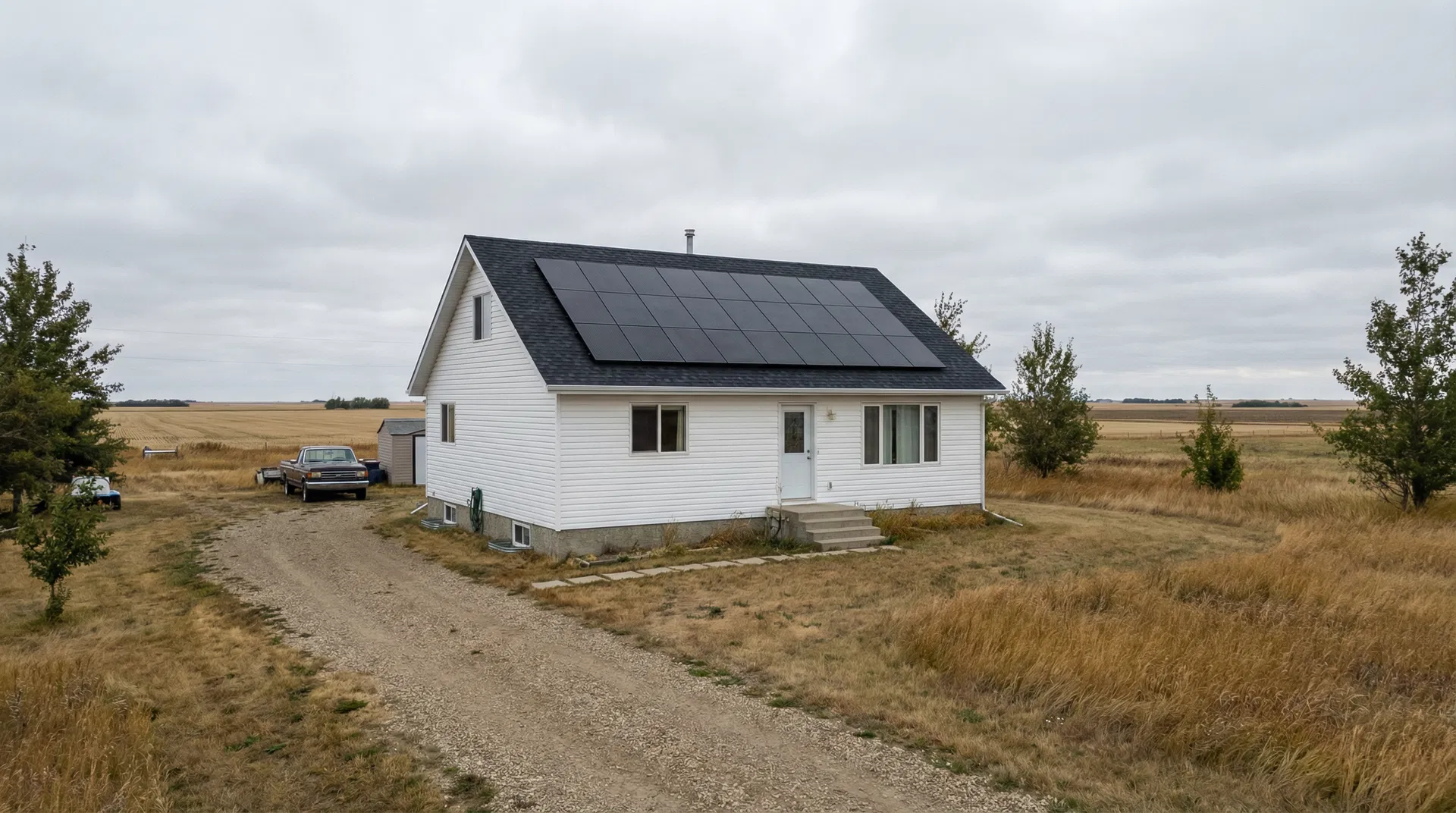
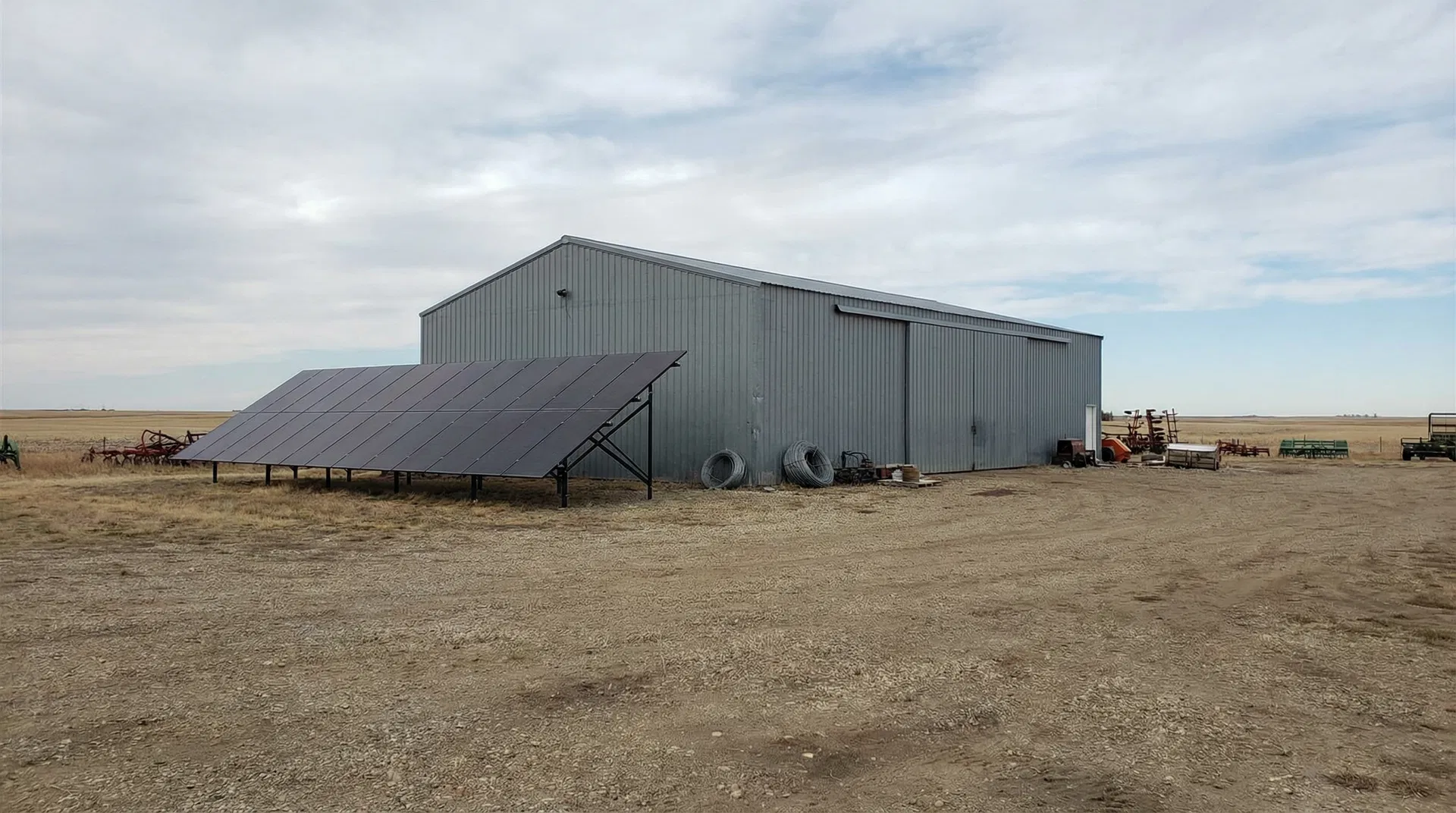
Acreage solar black diamond inquiries come to us from properties with a wide range of electrical setups. Some are straightforward: a well-built house with a good south-facing roof and moderate loads. Others are more complex, with aging panels, three-phase service, multiple structures, and loads that shift significantly by season. We design for both. System sizes for acreage properties typically run 12-18 kW, with 15 kW being a common landing point for a home-and-shop combination. The right number comes from your usage data, not from a chart on a website. We install LONGi solar panels on every system. They're a consistent performer in Alberta conditions and they're what we stand behind. APsystems microinverters handle the DC-to-AC conversion at the panel level, which matters on acreage rooftops where partial shading from trees, dormers, or adjacent outbuildings is common. Microinverters mean one shaded panel doesn't drag down the entire array. For properties where the roof doesn't work, whether that's because of pitch, age, shading, or layout, we design ground-mount systems instead. Ground mount gives you control over orientation and tilt, and on a large rural lot there's usually space to get it right. We handle engineering, racking, wiring, and the FortisAlberta interconnection application regardless of which mounting approach fits your property.
Solar Planning for Black Diamond Properties
Acreage properties around Black Diamond are wired differently than a subdivision lot in the city. You're likely running a heated shop, well pump, livestock equipment, or outbuildings alongside the main house. That combination of loads changes what a solar system needs to do and how it should be sized. A cookie-cutter residential quote won't cut it here. FortisAlberta serves properties in this area as the wire service provider. That matters because the interconnection process, metering setup, and micro-generation application all flow through them. We've worked through that process before and we handle the application on your behalf. What we need from you is your most recent power bill. Alberta utility bills include a 12-month usage graph, and that graph tells us far more about your property than a rough estimate of bedrooms or square footage ever could. From there, we pair it with a site assessment covering roof orientation, shading, panel placement options, and whether ground mount makes more sense than rooftop. The design comes from your actual conditions, not a template.
Electrical Site Review for Black Diamond Properties
Voltage Rise
Voltage rise happens when a solar system pushes power back toward the grid and raises the local line voltage above acceptable limits. On rural distribution lines, where the service run from the transformer to your property can be long, this effect is more pronounced than in a dense subdivision. If voltage rise is a concern at your property, it can affect how much of the system's capacity the inverters can actually use, which is something we account for during system sizing.
Single-Phase vs Three-Phase
Rural acreage properties in Alberta can be served by either single-phase or three-phase electrical service, depending on what's been built out in the area and what loads the property was originally designed to support. The phase configuration of your service entrance affects which inverter configurations are compatible and what total system capacity is practical. We confirm your service type during the site review before finalizing inverter selection.
Panel Infrastructure
Older electrical panels on rural properties sometimes don't have the breaker capacity to support a solar system without an upgrade. We check the main panel's amperage rating, available breaker slots, and the condition of the bus bar and wiring during our site review. If an upgrade is required, we'll tell you up front so it's factored into the project scope before installation begins.
Service Entrance Review
The meter base and service entrance are reviewed as part of every acreage installation because FortisAlberta's micro-generation application requires the metering infrastructure to meet current standards. If the meter base is outdated or not compatible with a bi-directional meter, an upgrade is required before the interconnection can proceed. We identify that condition during the site review so there are no surprises mid-project.
Right-Sizing Solar for Black Diamond Properties
Acreage properties carry a different kind of electrical load than a house in town. You're not just running lights and a refrigerator. You might have a heated shop drawing power through the winter, a well pump cycling on and off, livestock equipment, irrigation during the summer, or a grain handling setup that pulls hard for a few weeks a year. Each of those loads has to be accounted for in the system design, and that's why acreage systems in the 12-18 kW range are common here, rather than the 8-10 kW systems that work for a suburban home. The roof-versus-ground-mount decision depends on your specific site. If your house has a well-oriented roof with good pitch and minimal shading, rooftop is often the cleaner option. But acreage properties frequently have trees, outbuildings, or dormers that create shading problems. They also sometimes have roofs that are aging, metal-clad, or just not oriented the right way. When the roof doesn't work, ground mount gives you full control over tilt and orientation, and rural lots generally have the space to make it happen. We size every system from the 12-month usage graph on your most recent power bill. That graph shows us the seasonal swing in your consumption, which matters a lot on a property with electric heat or heavy summer irrigation. We don't work from rules of thumb. Your bill tells us what your property actually uses, and the system gets designed around that.
Typical Load Profiles We Design For Near Black Diamond
Home + Heated Shop
A house combined with a heated shop is one of the most common load combinations we see on acreage properties in this part of Alberta. The shop often has a 240V heater, compressor, and welder running through the colder months, which pushes total consumption well above what a house alone would draw. We size the system from the 12-month usage graph on your most recent power bill to capture that seasonal spike, not just the summer baseline.
Home + Well Pump + Outbuildings
Properties with a well pump, barn, or secondary outbuildings have load spread across multiple structures and service points. The well pump alone can cycle frequently enough to show up clearly on a usage graph. We assess whether all loads are on a single meter or split across sub-panels, since that affects both system sizing and how the FortisAlberta micro-generation application is structured.
Home + Small-Scale Livestock or Hobby Farm
A property running heat lamps, water heaters for livestock, and refrigeration for feed storage has a different seasonal load shape than a straight residential property. Winter consumption tends to be elevated and consistent, while summer may be lighter. We use the 12-month usage graph on your most recent power bill to map that pattern and design a system that addresses the months where your bill is highest, rather than averaging across the year.
FortisAlberta Interconnection in Black Diamond
FortisAlberta is the wire service provider for properties in and around Black Diamond. Any solar system connected to the grid here goes through their micro-generation interconnection process. That includes submitting a design package, coordinating on metering, and meeting FortisAlberta's technical requirements for equipment and installation. We handle that application for you. You don't need to navigate FortisAlberta's process on your own or figure out what their engineering team needs to see. We put together the design package, submit it, and manage the back-and-forth. What we won't do is promise you a specific approval timeline, because that's not something we control. FortisAlberta reviews applications on their own schedule, and timelines can shift depending on the volume of submissions and the complexity of your service connection. What we can tell you is that having a complete, accurate application from the start avoids the delays that come from resubmissions. Getting the paperwork right the first time is part of what we do.
Project Economics and Design Review
| System Size | Annual Production | Year 1 Savings | Payback Period |
|---|---|---|---|
| 12-18 kW range, 15 kW typical |
Production, savings, and payback estimates require a property-specific design and your most recent power bill before any numbers can be confirmed.
How We Work in Black Diamond
Bill and Load Review
We review your power bill to understand your energy use in Black Diamond and size the system to your actual consumption — not a generic estimate.
Site Assessment
We assess your roof or ground area, south-facing exposure, electrical service, and utility interconnection requirements specific to your property.
Design and Utility Application
We produce a system layout, production estimate, and cost summary, then submit your micro-generation application to your utility on your behalf.
Installation and Commissioning
Our crew installs racking, panels, inverter, and electrical connections. All work is performed by licensed electricians. We commission and test before handoff.
Current Program and Interconnection Review
Utility connection review
FortisAlberta reviews all micro-generation interconnection applications for properties in their service territory, including acreage properties near Black Diamond. Range Road Solar prepares the full design package required for that application. We handle the submission so you're not dealing with FortisAlberta's technical requirements on your own.
Current program review
Eligibility for commercial, farm, and residential programs is reviewed against the rules that are current at the time of your design. Programs change, and we don't list incentives on the website that may no longer apply by the time you're ready to install. We confirm what's available during the design review.
Frequently Asked Questions
Get a Solar Assessment for Black Diamond
Submit a recent power bill and we will review your consumption and provide an honest assessment for your Black Diamond property. No obligation.
(587) 330-7502 Book a CallRelated Resources