Foothills County · Farm and agricultural solar
Farm Solar in Black Diamond, AB for Agricultural Operations
Range Road Solar designs and installs farm solar systems sized for real agricultural loads near Black Diamond, from grain handling and irrigation to heated shops and outbuildings.
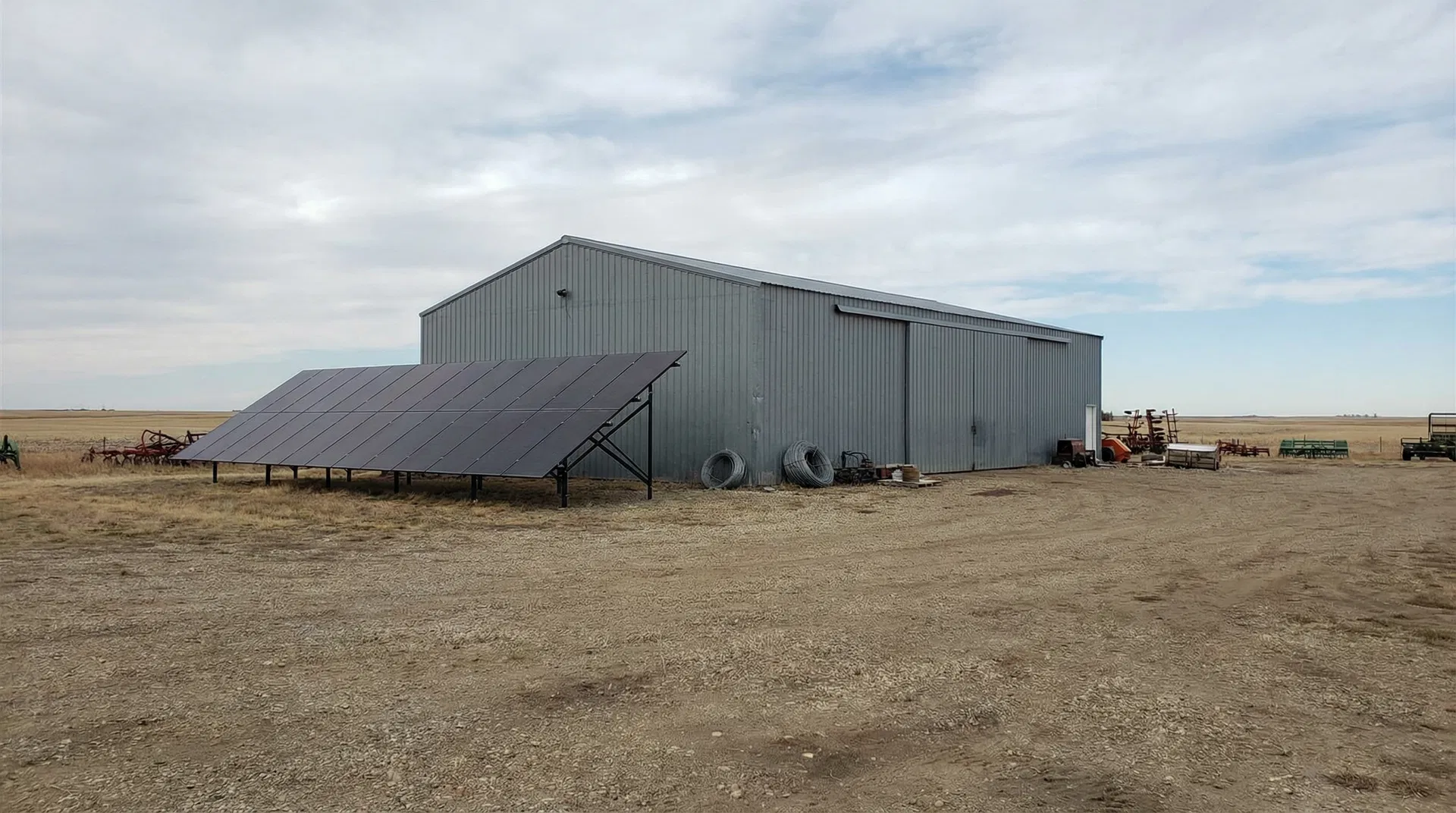
Farm solar black diamond inquiries almost always involve operations that span multiple buildings and multiple load types. We size and install systems in the 20-50 kW range for agricultural properties in this area, with 25 kW being a common design point for a mixed load that includes a home, a heated shop, and one or two outbuildings. That said, every property gets sized from its own numbers. We use LONGi panels across our farm installs. They're workhorses: consistent output, solid warranty terms, and a track record in Alberta conditions. For most farm-scale systems, we default to ground-mount racking. It gives us full control over tilt and orientation, keeps the array away from aging roof structures, and makes future panel access straightforward without anyone climbing onto a metal shop roof in February. Where a rooftop installation makes sense, we assess it honestly. APsystems microinverters are our standard inverter choice. On a farm system, where panels may face slightly different directions or shade differently depending on building placement, microinverters mean each panel operates independently. One shaded panel near the shop eave doesn't pull down the whole array. The interconnection application goes to FortisAlberta, and we prepare and submit that package. What we need from you to get started is your most recent power bill. That single document, combined with a site walkthrough, gives us everything we need to produce a design that reflects your actual operation rather than a best-guess estimate.
Solar Planning for Black Diamond Properties
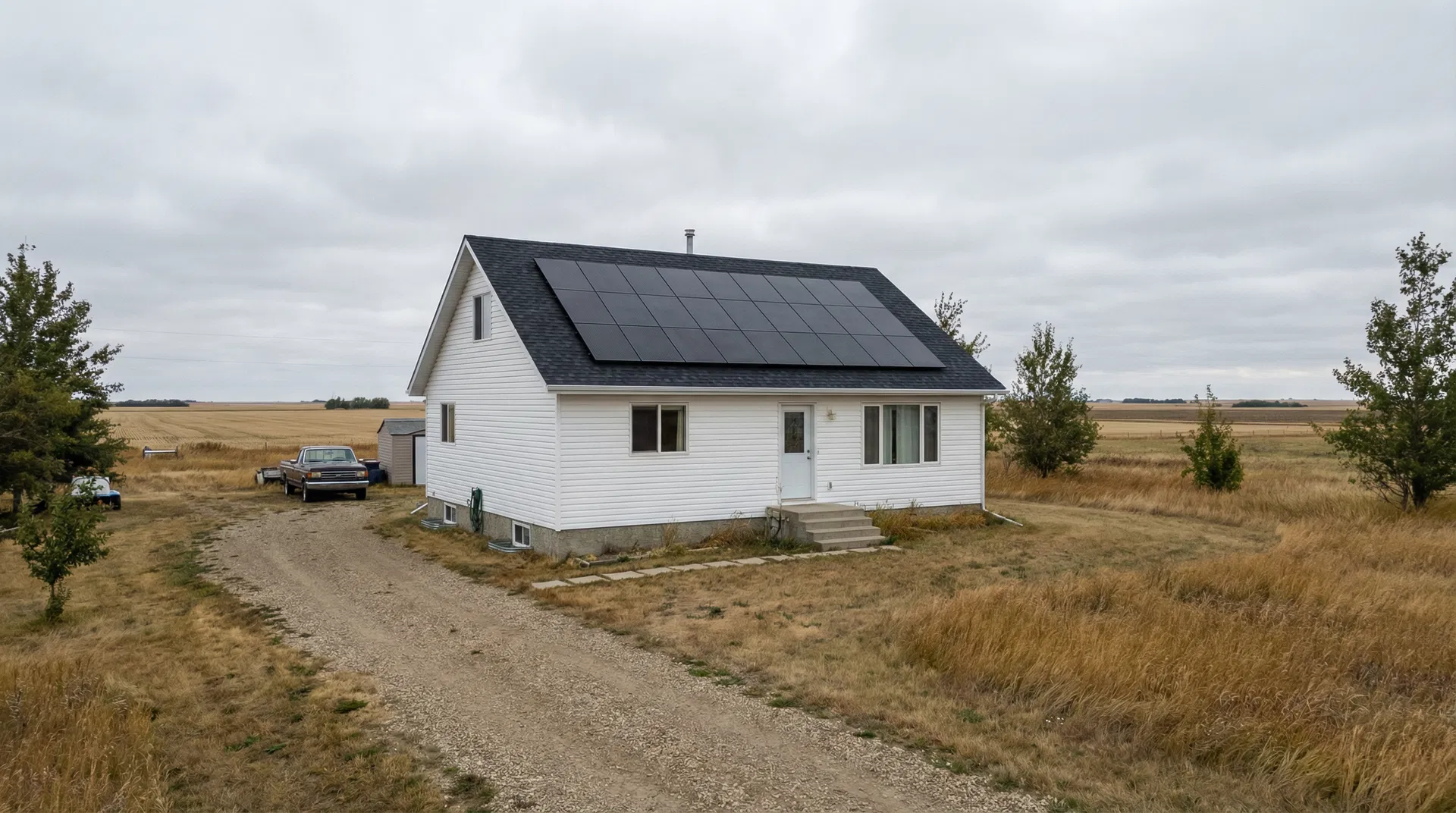
Farm operations in this part of Alberta carry electrical loads that dwarf a typical residential bill. A heated shop running year-round, a grain dryer cycling through harvest, irrigation pulling hard through summer, and the farmhouse itself all land on the same meter. That combination is exactly what a properly sized farm solar system is built for. Agricultural properties near Black Diamond tend to have the yard space to make ground-mount solar practical, which removes most of the constraints that limit rooftop systems on older buildings. You're not fighting a 30-year-old roof pitch or working around a vent stack. You're placing panels where the orientation and shading conditions are actually right for the system. FortisAlberta serves the area as the wire service, which means any system we design goes through FortisAlberta's micro-generation interconnection process. We handle that application on your behalf. The starting point for every design we do is your most recent power bill. Alberta utility bills include a 12-month usage graph, and that graph tells us what you're actually consuming month by month, not what a rule-of-thumb formula guesses. That's where the work begins.
Electrical Site Review for Black Diamond Properties
Voltage Rise
Voltage rise happens when a solar system pushes power back through a distribution line that has a long run or limited conductor capacity. On rural properties served by FortisAlberta, the distance from the transformer to your meter can amplify this effect. If voltage rise exceeds the allowable threshold, inverters will clip output or shut down to protect grid stability, and we account for that in system sizing from the start.
Single-Phase vs Three-Phase
Rural Alberta properties can be served by either single-phase or three-phase electrical service, depending on the loads historically connected at that location. Three-phase service is common where grain handling equipment or large motors have been running for years. The service type directly affects which inverter configuration we specify and what total system capacity is achievable without triggering interconnection issues.
Panel Infrastructure
Older electrical panels on farm properties often weren't sized with a future solar addition in mind. We assess breaker capacity, panel age, and available space during our site review because a panel that's already near its rated capacity can't safely accommodate the additional breaker a solar system requires. If an upgrade is needed, we identify it before the design is finalized so there are no surprises in the installation scope.
Service Entrance Review
The meter base and service entrance are the physical connection point between your property and the FortisAlberta distribution system. We check the condition of both because FortisAlberta's micro-generation application review includes the service entrance as part of their interconnection assessment. If the meter base isn't in acceptable condition, the application can be held until an upgrade is completed, and we'd rather surface that during our site review than mid-application.
Right-Sizing Solar for Black Diamond Properties
Farm systems near Black Diamond aren't sized like a city rooftop job. A residential system might be designed around a single meter feeding one house. Out here, that same meter is often carrying the farmhouse, a heated shop, a grain bin with aeration fans, a water pump, and seasonal equipment all at once. The cumulative load profile looks completely different from month to month, and a system that doesn't account for all of it will underperform year-round. That's why we don't use rule-of-thumb sizing. We start with the 12-month usage graph on your most recent power bill. That graph shows consumption for every month of the year, including harvest peaks and winter heating loads. It's the only honest starting point for a farm system design. The roof versus ground-mount decision comes next, and it's not just aesthetic. Farm shop roofs are often metal, aging, or oriented to the building's practical needs rather than solar south. Trees, bins, and adjacent structures can shade a rooftop array for part of the day. Ground-mount gives us the freedom to place the array in the best available spot on your yard, set the tilt angle correctly for Alberta's latitude, and keep the whole system accessible without ladders on a shop roof. We size in the 20-50 kW range for most agricultural properties in this area. Where a 25 kW system fits a mixed residential-plus-shop load, a larger grain operation with dryer loads or irrigation might push toward the upper end of that range. We won't know until we've looked at your bill and walked the site.
Typical Load Profiles We Design For Near Black Diamond
Home Plus Heated Shop
This is the most common profile we see in the area: a farmhouse running year-round domestic loads combined with a heated shop that draws heavily through winter for welding equipment, compressors, and heat. The shop heating load alone can double what the house uses in January. We size the system from the combined 12-month usage shown on your most recent power bill, not from the house load alone.
Grain Operation with Aeration and Drying
Grain properties add a distinct seasonal spike that a home-plus-shop profile doesn't capture. Aeration fans running through fall and a grain dryer pulling 20-40 kW during harvest push the annual consumption graph into a completely different shape. A 35-50 kW ground-mount system is often the right design range for this kind of operation, but the actual size comes from the usage data on your most recent power bill and a site walkthrough.
Acreage with Irrigation and Outbuildings
Properties running a well pump or surface irrigation system alongside a home and one or two outbuildings carry a summer-heavy load profile that's often underestimated. A 20-30 kW system can address a significant portion of that summer demand, but the design has to account for what the site draws across all twelve months, not just the peak irrigation weeks. We review that full profile before specifying anything.
FortisAlberta Interconnection in Black Diamond
FortisAlberta is the wire service for Black Diamond, which means your farm system connects to the grid through FortisAlberta's distribution network and micro-generation program. Every grid-tied solar installation in this area requires a micro-generation application reviewed and approved by FortisAlberta before the system can be energized. Range Road Solar prepares and submits that application on your behalf. The package includes the system design, equipment specifications, and the electrical documentation FortisAlberta requires. We don't hand you a pile of forms and wish you luck. The interconnection process involves review by FortisAlberta's engineering team. We can't commit to their timeline on your behalf, and we won't. What we can tell you is that we've been through this process before, we know what the application needs to include, and we flag any site conditions early that could complicate the review. If your meter base or service entrance needs attention before the application moves forward, we'll identify that during our site assessment, not after you've been waiting on an approval.
Project Economics and Design Review
| System Size | Annual Production | Year 1 Savings | Payback Period |
|---|---|---|---|
| 20-50 kW range, 25 kW typical |
Production, savings, and payback estimates require a property-specific design and the 12-month usage graph from your most recent power bill.
How We Work in Black Diamond
Bill and Load Review
We review your power bill to understand your energy use in Black Diamond and size the system to your actual consumption — not a generic estimate.
Site Assessment
We assess your roof or ground area, south-facing exposure, electrical service, and utility interconnection requirements specific to your property.
Design and Utility Application
We produce a system layout, production estimate, and cost summary, then submit your micro-generation application to your utility on your behalf.
Installation and Commissioning
Our crew installs racking, panels, inverter, and electrical connections. All work is performed by licensed electricians. We commission and test before handoff.
Current Program and Interconnection Review
Utility connection review
FortisAlberta reviews all micro-generation interconnection applications for properties in Black Diamond. Range Road Solar prepares the full design package and submits it on your behalf, including equipment specifications and electrical documentation. We handle the paperwork so you're not navigating FortisAlberta's application requirements on your own.
Current program review
Agricultural and commercial solar installations may be eligible for programs or incentives at the federal or provincial level, but eligibility rules and available funding change regularly. We review current program availability against your specific operation type and system size at the time of design, not against a list that may already be out of date.
Frequently Asked Questions
Get a Solar Assessment for Black Diamond
Submit a recent power bill and we will review your consumption and provide an honest assessment for your Black Diamond property. No obligation.
(587) 330-7502 Book a CallRelated Resources