Foothills County · Farm and agricultural solar
Farm Solar in Turner Valley, Alberta
Ground-mount and rooftop systems sized for agricultural loads in the Turner Valley area. We design from your actual power bill, not rule-of-thumb numbers.
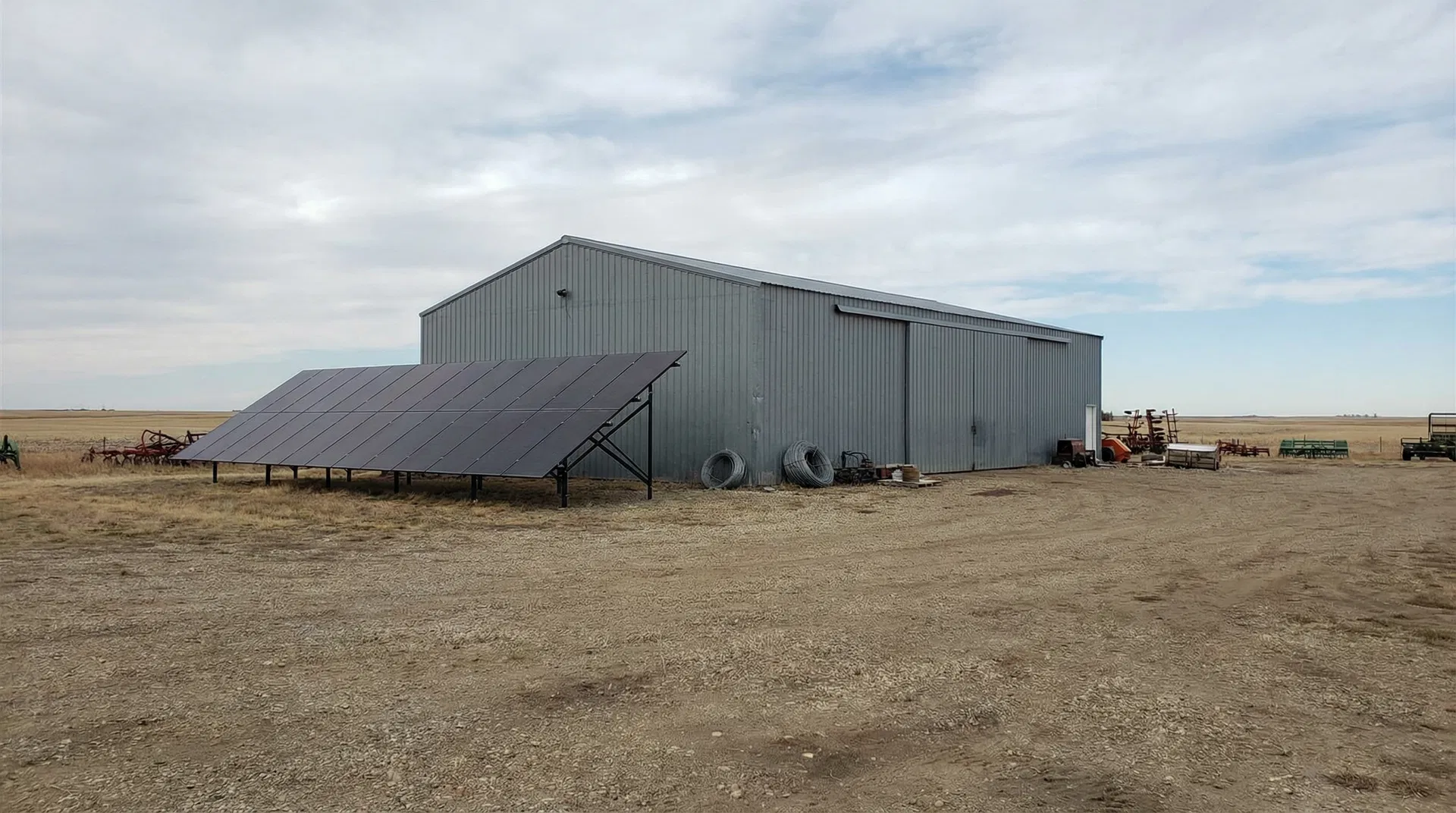
Farm solar Turner Valley projects typically run in the 20 to 50 kW range, with a 25 kW system being a common starting point for a home-plus-shop combination. Larger operations with grain handling, irrigation, or multiple outbuildings often push toward the upper end of that range or beyond, depending on what the 12-month usage graph on the most recent power bill shows. For most farm layouts, ground-mount is the right call. Rooftops on old quonsets and machine sheds are often corrugated steel at a low pitch, with framing that wasn't designed for panel loading. Ground-mount lets us orient the array properly, avoid shading from bins and trees, and keep the installation accessible for maintenance. We use LONGi panels throughout, which are a proven workhorse in agricultural settings where dust, debris, and the occasional stray object are part of life. On the inverter side, APsystems microinverters work well for farm systems because each panel operates independently. If one panel takes a hit from shading, a bird, or a partial obstruction, the rest of the array keeps producing at full capacity. That matters on a spread-out farm yard where shading conditions can vary across a ground-mount array. We handle the full project: site assessment, electrical review, FortisAlberta interconnection application, supply, installation, and inspection. You don't need to manage multiple contractors or navigate the utility paperwork yourself.
Solar Planning for Turner Valley Properties
Farm properties in the Turner Valley area carry electrical loads that look nothing like a suburban home. You've got a house, a heated shop, maybe grain handling equipment or irrigation, and outbuildings that all run off the same service. When you add it up, the monthly draw is substantial, and it stays that way year-round. That's what makes agricultural solar worth planning seriously here. FortisAlberta serves this area, and they have a micro-generation interconnection process that lets qualifying farm systems feed excess generation back to the grid. The rules around that process matter for how we size and design a system, so we work through the current FortisAlberta requirements at the start of every project. We don't build quotes from a formula. We start with your most recent power bill, which includes a 12-month usage graph, and we work through the actual loads on your property before a single panel gets specified. That process is what keeps a system honest, and it's what protects you from being sold more capacity than your property can actually use or interconnect.
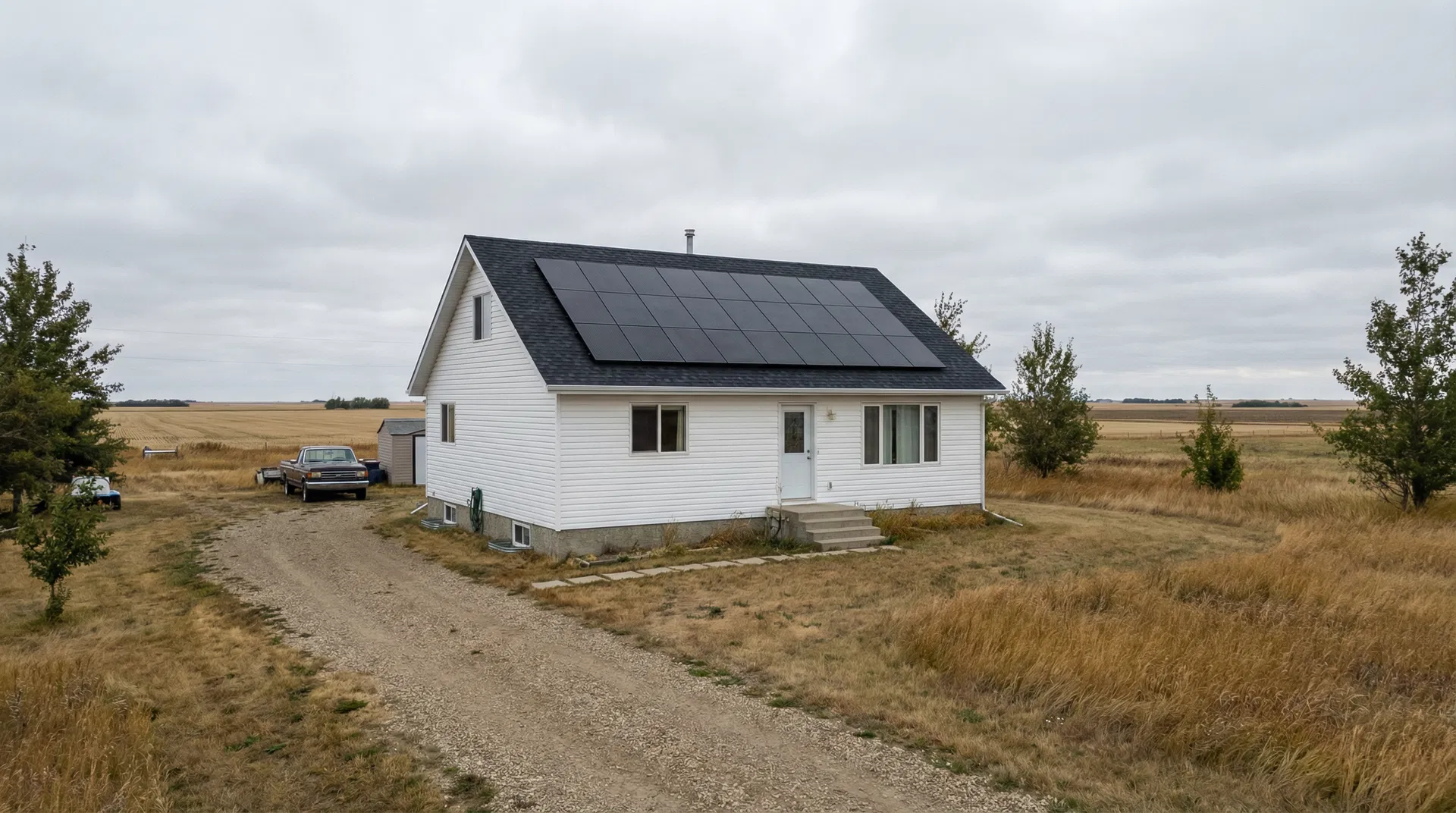
Electrical Site Review for Turner Valley Properties
Voltage Rise
Voltage rise happens when a solar system pushes generation back through distribution lines that weren't designed for two-way power flow. On rural lines that serve a small number of properties over long distances, line impedance can be high, which increases the risk of voltage at the point of connection rising above the threshold where the inverter will operate. If voltage rise is a concern on a given site, it affects how we size the system and configure the inverter output to stay within FortisAlberta's interconnection limits.
Single-Phase vs Three-Phase
Rural properties in Alberta can have either single-phase or three-phase electrical service, and the distinction matters for how a solar system gets designed. Three-phase service allows for larger inverter capacity and is common on properties with significant motor loads like grain augers, irrigation pumps, or compressors. Single-phase service has different capacity limits, and the inverter selection and system size need to reflect whichever service type is present at the meter.
Panel Infrastructure
Older electrical panels on farm properties are common, and they don't always have the breaker capacity needed to support a solar system interconnection. We assess the main panel's rated capacity, the age of the breakers, and whether there's room to add the solar backfeed breaker that the interconnection requires. If the panel needs an upgrade before the system can be installed safely and to code, we identify that during the site review so it's part of the project plan, not a surprise during installation.
Service Entrance Review
The service entrance and meter base are reviewed as part of every FortisAlberta micro-generation application. FortisAlberta requires that the meter base meet current standards before a bi-directional meter can be installed, and older meter sockets on farm properties don't always qualify. We check the meter base condition during the site assessment, and if an upgrade is required, we include it in the project scope so the interconnection application isn't held up during the approval process.
Right-Sizing Solar for Turner Valley Properties
Farm and acreage properties carry electrical loads that a typical residential solar calculator won't handle correctly. You're not sizing for a house. You're sizing for a house plus a heated shop, plus whatever outbuildings, grain handling equipment, or irrigation runs off the same service. Those loads stack up, and they don't all peak at the same time, which means the 12-month usage graph on your most recent power bill tells a more accurate story than any rule of thumb. That's exactly where we start. Your most recent Alberta utility bill includes a bar graph showing monthly consumption across the past year. That graph shows us the seasonal swing in your usage, how high your winter load climbs when the shop heat is running hard, and where the summer consumption lands. From that, we build a system size that actually fits what your property uses, not what a generic farm solar calculator guesses. The roof vs ground-mount decision comes down to what's available on your specific site. If your shop roof is in good shape, faces the right direction, and isn't shaded by bins or trees, a rooftop system can work well. But on most farm layouts, a ground-mount array gives us better control over orientation, pitch, and shading avoidance. It's also easier to expand if your loads grow. We won't oversize a system to hit a sales target. If your usage supports 25 kW, we'll design 25 kW. If it supports more, we'll tell you that too.
Typical Load Profiles We Design For Near Turner Valley
Home + Heated Shop
A farmhouse combined with a heated shop is one of the most common profiles we see in this area. The shop heat, lighting, and plug loads can rival the house consumption on their own, particularly in winter. We size the system from the 12-month usage graph on the most recent power bill, which captures both loads together, and design the array to offset as much of that combined consumption as the site and FortisAlberta interconnection rules allow.
Grain Operation with Multiple Outbuildings
Grain farms often have augers, conveyors, dryers, and aeration fans that run hard during harvest and then sit quiet the rest of the year. That seasonal spike shows up clearly in the 12-month usage graph, and it shapes how we size the array. A system designed only for the off-season baseline would leave most of the harvest load unaddressed, so we work through the full annual curve to find a system size that's useful year-round, not just in summer.
Acreage with Irrigation or Water Systems
Properties with well pumps, irrigation systems, or livestock watering equipment carry a load profile that runs differently from a standard farm. Pump motor loads tend to be intermittent but high-draw, and they often run during peak solar production hours in summer. That alignment between load and generation is worth capturing in the design, and it's another reason we work from actual usage data rather than estimating from property size or acreage.
FortisAlberta Interconnection in Turner Valley
FortisAlberta is the wire service for Turner Valley and the surrounding area. Any solar system installed here that's intended to connect to the grid goes through FortisAlberta's micro-generation interconnection process. That application requires a design package that meets FortisAlberta's technical standards, including single-line diagrams, equipment specifications, and site details. Range Road Solar prepares and submits the full interconnection application on your behalf. We don't hand you a folder of documents and send you to the utility. We handle the package, respond to any technical questions FortisAlberta raises, and keep the project moving through the approval process. What we won't do is quote you approval timelines or credit settlement rules, because those details are set by FortisAlberta and can change. We review the current interconnection requirements at the start of every project and design the system to meet them. That way there are no surprises when the application lands with the utility.
Project Economics and Design Review
| System Size | Annual Production | Year 1 Savings | Payback Period |
|---|---|---|---|
| 20-50 kW range, 25 kW typical |
Production, savings, and payback estimates require a property-specific design and your most recent power bill.
How We Work in Turner Valley
Bill and Load Review
We review your power bill to understand your energy use in Turner Valley and size the system to your actual consumption — not a generic estimate.
Site Assessment
We assess your roof or ground area, south-facing exposure, electrical service, and utility interconnection requirements specific to your property.
Design and Utility Application
We produce a system layout, production estimate, and cost summary, then submit your micro-generation application to your utility on your behalf.
Installation and Commissioning
Our crew installs racking, panels, inverter, and electrical connections. All work is performed by licensed electricians. We commission and test before handoff.
Current Program and Interconnection Review
Utility connection review
FortisAlberta reviews micro-generation interconnection applications for farm and acreage solar systems in this service area. Range Road Solar prepares the full design package, including all technical documentation FortisAlberta requires, and submits it on your behalf. We don't ask you to manage the utility relationship. That's part of what we handle.
Current program review
Eligibility for commercial, farm, and agricultural solar programs is reviewed against the rules that are in effect at the time of your design review. Program availability, contribution limits, and eligibility criteria can change, so we confirm the current landscape during the project planning stage rather than publishing program details that may be out of date.
Frequently Asked Questions
Get a Solar Assessment for Turner Valley
Submit a recent power bill and we will review your consumption and provide an honest assessment for your Turner Valley property. No obligation.
(587) 330-7502 Book a CallRelated Resources