Foothills County · Commercial solar
Commercial Solar Turner Valley, Alberta
Range Road Solar designs and installs commercial solar systems from 15 to 100 kW for Turner Valley businesses, with full FortisAlberta interconnection support handled in-house.
Commercial solar Turner Valley projects typically fall between 15 and 100 kW, with 30 kW being a common starting point for light commercial and service-industry buildings. The right number for your property depends on your load, your available mounting space, and your utility connection. We don't quote a size before we've reviewed your power bill and done a site assessment. Equipment matters on commercial jobs. We install LONGi panels, which are a proven, bankable product used on commercial projects across Alberta. For smaller commercial systems, APsystems microinverters are often the right call because they handle shading and partial-load conditions better than a single central inverter. For larger systems in the 50 to 100 kW range, string inverters are typically more appropriate for the load and electrical configuration. We make that call based on your specific site, not a product preference. Turner Valley properties often have a mix of building types on the same parcel. A shop, an office, a storage structure. We look at all of it during the design review to determine where the panels go and how the system connects back to your main service. Ground-mounted arrays are worth considering when rooftop conditions aren't ideal, and we design both. The Canada Investment Tax Credit for clean technology is something we review at design time for qualifying commercial and farm operations. We confirm current eligibility and rules during the design process, not upfront with a generic estimate.
Solar Planning for Turner Valley Properties
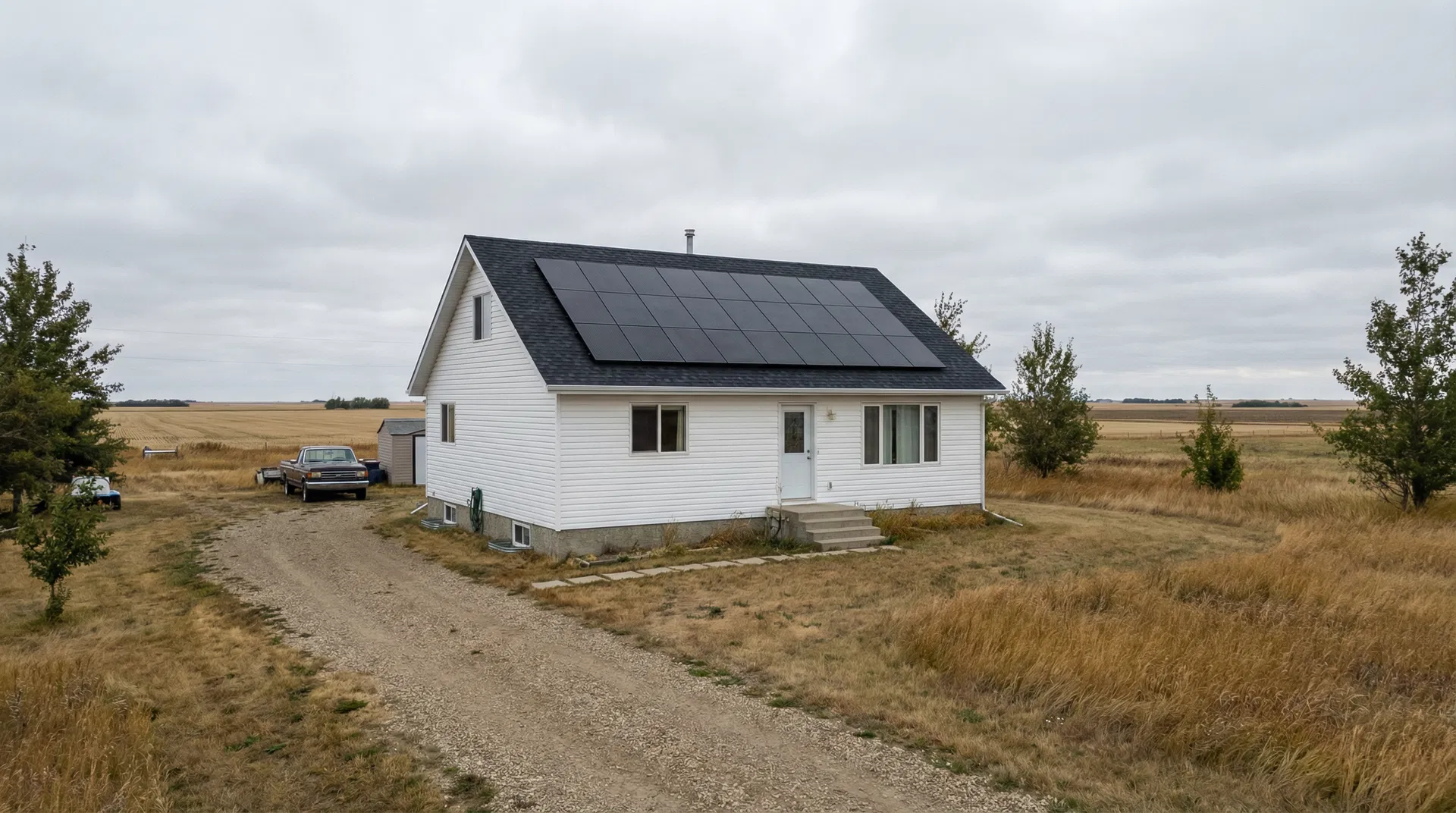
Turner Valley sits in the Foothills, and the commercial properties here don't look like strip-mall businesses in the city. You've got shops, service yards, agricultural operations, and light industrial buildings spread across real land. That changes how a solar system gets planned. Roof orientation matters. So does shading from adjacent structures, trees, or terrain. And the electrical service conditions on properties like these aren't always what you'd find in a newer commercial development. FortisAlberta is the wire service for Turner Valley, which means your interconnection application goes through their micro-generation process. We know how that process works and we handle the application on your behalf. What we need from you is simple: your most recent power bill. Alberta utility bills include a 12-month usage graph, and that graph is where every honest system design starts. We don't size systems from rule-of-thumb estimates or per-square-foot formulas. We size from your actual usage data, your roof or ground-mount conditions, and a site review. That's how we make sure the system we install actually performs for your operation.
Electrical Site Review for Turner Valley Properties
Voltage Rise
Voltage rise happens when solar generation pushes voltage at the inverter above acceptable grid limits, which can cause the inverter to clip output or shut down to protect the system. Distribution line conditions in rural and semi-rural areas, like longer runs and lower fault current, can make voltage rise more pronounced than on urban feeders. We account for voltage rise during the design phase so system capacity decisions reflect what the local grid can actually absorb at your service point.
Single-Phase vs Three-Phase
Commercial properties in rural Alberta can be served by either single-phase or three-phase power, and the type of service at your meter directly affects inverter selection and the maximum system capacity we can install. Three-phase service typically allows for larger systems with simpler inverter configurations, while single-phase service has different capacity constraints that we design around. We confirm your service type during the site review so inverter selection is matched to your actual electrical infrastructure.
Panel Infrastructure
Older commercial and agricultural panels may not have the breaker capacity to support a solar system without an upgrade to the distribution panel. We assess breaker slots, total amperage, and panel age during the site review to determine whether the existing infrastructure can support the system as designed. If a panel upgrade is required, we include that scope in the project quote so there are no surprises at installation time.
Service Entrance Review
The meter base and service entrance are reviewed as part of the FortisAlberta micro-generation application process, and the condition of the meter base can affect whether the application proceeds without additional work. We inspect the service entrance during the site visit to identify any issues before the application is submitted. If the meter base requires an upgrade to meet FortisAlberta's requirements, we flag that early so it's factored into the project scope and timeline.
Right-Sizing Solar for Turner Valley Properties
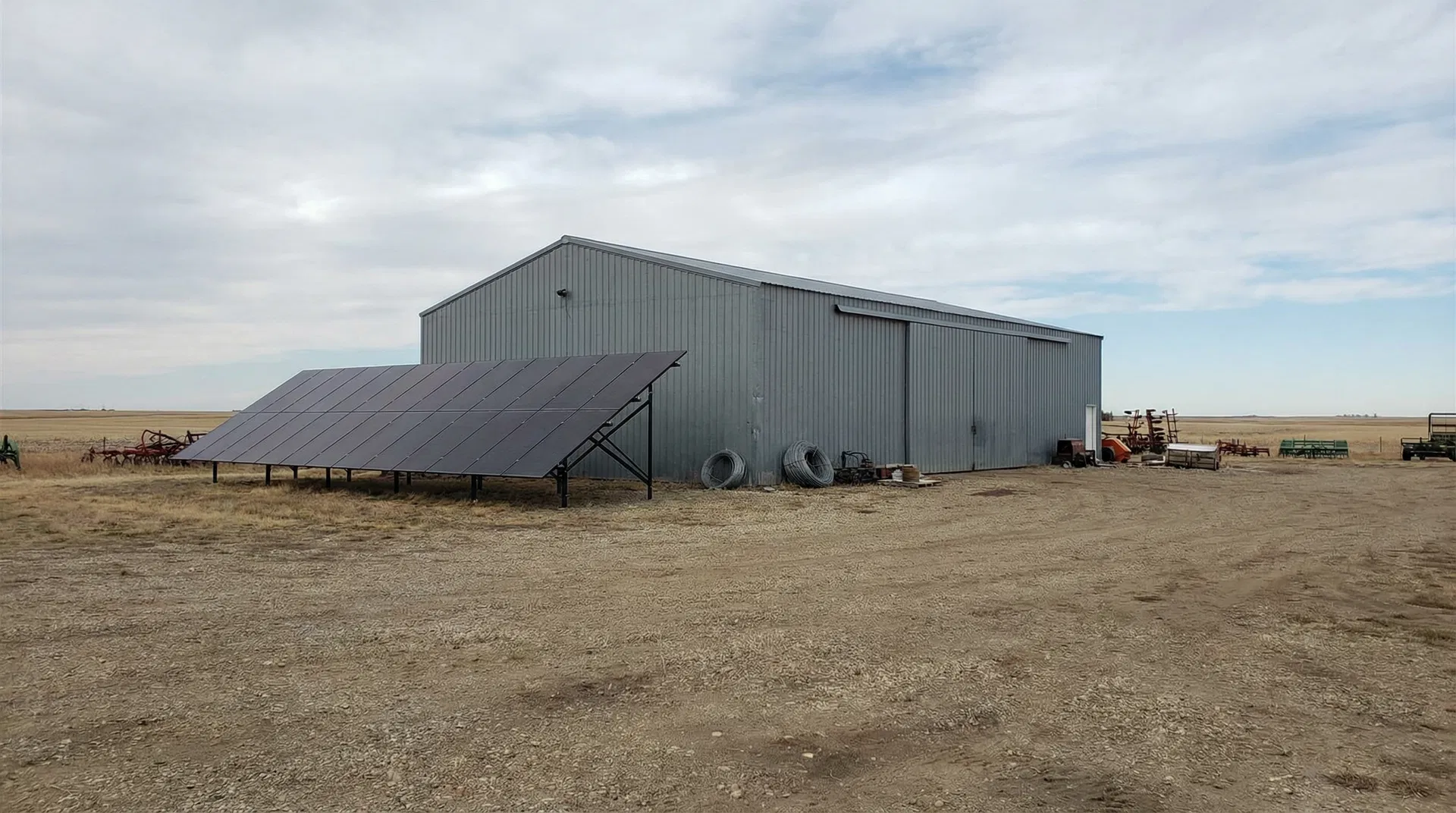
Commercial properties around Turner Valley often carry more than one load. You might have a shop on the same service as an office, a yard light system, a heated wash bay, or equipment plugged in year-round. When you're sizing solar for a setup like that, you're not sizing for a single-use building. You're sizing for everything drawing from the meter, and that's a different calculation than what most online calculators handle. The starting point is the 12-month usage graph on your most recent power bill. That graph shows how your consumption actually shifts across seasons, which is the only honest basis for a production model. We don't use rule-of-thumb numbers. If your usage spikes in winter because of heating loads and drops in summer, the system size needs to reflect that pattern. Roof-mount versus ground-mount is the other big decision. For buildings with good south-facing roof space and no shading from adjacent structures or terrain, roof-mount is usually straightforward. But Foothills properties often have rooflines that don't face ideally, or trees and shop additions that cast shade during key production hours. When that's the case, a ground-mounted array on available yard space is often the better call. It gives you control over tilt, orientation, and future expansion. We design both, and we recommend the one that fits the site, not the one that's easiest to quote.
Typical Load Profiles We Design For Near Turner Valley
Light Commercial Building with Office and Shop
A combined office-and-shop operation typically runs lighting, HVAC, compressors, and small power tools off the same meter, creating a load profile that's spread across business hours rather than concentrated in evenings. We size the system from the 12-month usage graph on the most recent power bill to capture how that load shifts between winter heating demand and summer cooling. The roof or a ground-mount array is evaluated based on the building orientation and available unshaded space on the property.
Service Business with Heavy Equipment
Properties running welders, lifts, air compressors, or electric vehicle charging alongside standard building loads can see high demand spikes that affect how a solar system is sized and interconnected. A 30 to 60 kW system is a common starting range for this type of operation, but the actual size depends on the usage data from the most recent power bill and whether the service is single-phase or three-phase. Inverter selection and system layout are designed around the demand pattern, not a generic template.
Agricultural Operation with Processing or Storage Loads
Year-round refrigeration, grain handling equipment, or irrigation pumping can make agricultural operations strong candidates for commercial-scale solar in the 40 to 100 kW range. These properties often have large, relatively unobstructed roof surfaces on storage or processing buildings, or open land suitable for a ground-mounted array. We confirm which configuration makes sense by reviewing the 12-month usage graph on the most recent power bill alongside a site assessment of the available mounting options.
FortisAlberta Interconnection in Turner Valley
FortisAlberta is the wire service for Turner Valley, and your micro-generation interconnection application goes through them. The application requires a system design package that meets FortisAlberta's technical requirements, and we prepare and submit that package on your behalf. You don't have to manage the paperwork or deal with the back-and-forth. We do. FortisAlberta reviews the application against their grid connection rules for your specific service point. The outcome depends on the conditions at your meter base and service entrance, the size of the system, and the local distribution infrastructure. We assess all of that during the site review so there are no surprises after you've signed off on a design. What we won't do is quote you an approval timeline or promise a specific credit settlement outcome. Those details depend on FortisAlberta's current policies and your individual account, and we confirm them during the design review rather than making claims upfront.
Project Economics and Design Review
| System Size | Annual Production | Year 1 Savings | Payback Period |
|---|---|---|---|
| 15-100 kW range, 30 kW typical |
Production, savings, and payback figures require a property-specific design and your most recent power bill before any estimates can be confirmed.
How We Work in Turner Valley
Bill and Load Review
We review your power bill to understand your energy use in Turner Valley and size the system to your actual consumption — not a generic estimate.
Site Assessment
We assess your roof or ground area, south-facing exposure, electrical service, and utility interconnection requirements specific to your property.
Design and Utility Application
We produce a system layout, production estimate, and cost summary, then submit your micro-generation application to your utility on your behalf.
Installation and Commissioning
Our crew installs racking, panels, inverter, and electrical connections. All work is performed by licensed electricians. We commission and test before handoff.
Current Program and Interconnection Review
Utility connection review
FortisAlberta reviews all micro-generation grid connection applications for Turner Valley commercial properties. Range Road Solar prepares the full design package required for the application and handles the submission on your behalf. We stay in contact with FortisAlberta through the review process so you don't have to manage it directly.
Current program review
Commercial, farm, and light industrial solar installations may qualify for federal or provincial programs depending on the property type, ownership structure, and current eligibility rules. We review applicable programs against your specific situation at design time, not from a static list of incentives that may have changed. Eligibility is confirmed during the design review.
Frequently Asked Questions
Get a Solar Assessment for Turner Valley
Submit a recent power bill and we will review your consumption and provide an honest assessment for your Turner Valley property. No obligation.
(587) 330-7502 Book a CallRelated Resources