Foothills County · Shop and outbuilding solar
Shop and Outbuilding Solar in Turner Valley, AB
Grid-tied solar for rural shops, barns, and outbuildings on FortisAlberta service. We size systems from 8 to 20 kW based on your actual loads and property layout.
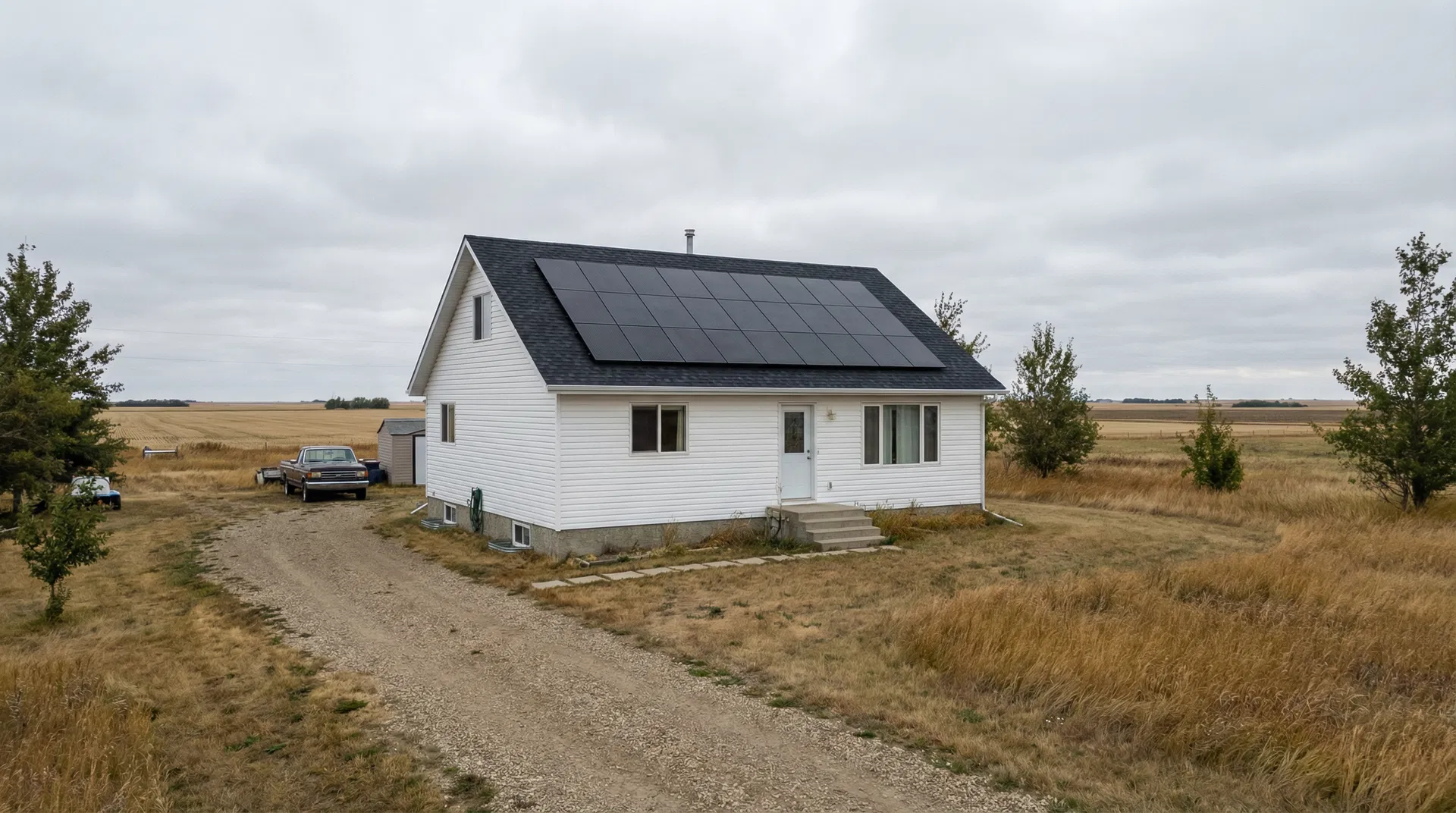
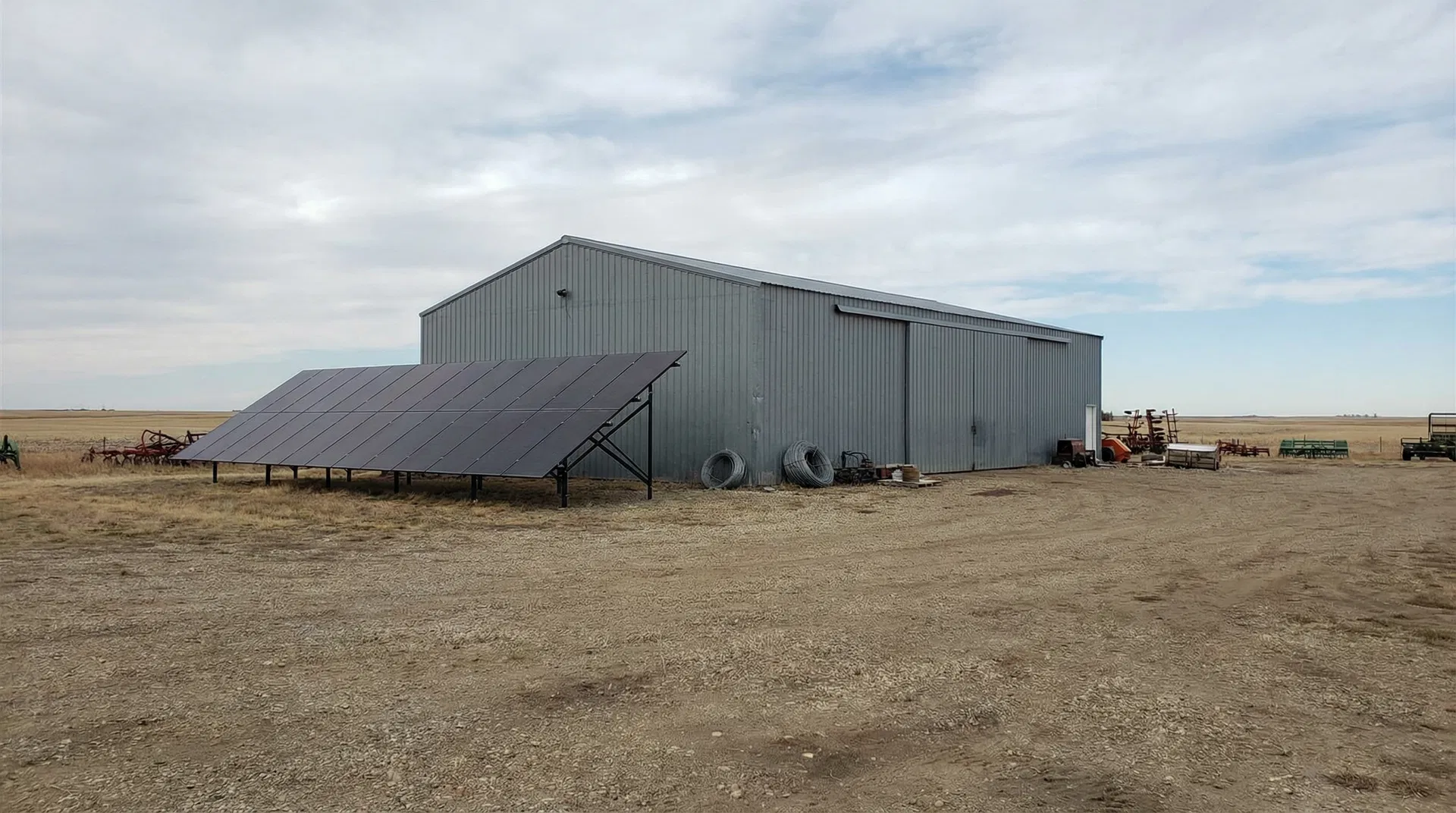
Solar turner valley properties need systems built for rural commercial and agricultural use, not residential cookie-cutter kits. Shop and outbuilding installations in this area typically run between 8 and 20 kW, with 12 kW being a common size for a single heated shop with standard electrical loads. Larger setups, covering a shop plus barn plus a home feed, push toward the top of that range. We install LONGi panels on every job. They're well-suited to rooftop and ground-mount configurations, and they hold up to the physical demands of rural Alberta without fuss. For inverters, we use APsystems microinverters. The microinverter approach matters on shop roofs because partial shading from a vent stack, a satellite dish, or an adjacent outbuilding won't drag down output from the entire array the way a string inverter would. Each panel operates independently. For properties where the shop roof isn't ideal, ground-mount is a straightforward alternative. We use the available yard space, orient the array to maximize daily output, and run conduit back to the building's electrical panel. Ground-mount also makes future expansion easier if loads grow over time. Both rooftop and ground-mount systems are tied into the FortisAlberta grid. Excess generation is sent back to the grid under the utility's micro-generation program, and we handle the interconnection application as part of the installation. We provide honest production estimates based on your actual power bills and site conditions, not inflated projections.
Solar Planning for Turner Valley Properties
Properties around Turner Valley tend to carry real electrical loads. A heated shop, a well pump, outdoor lighting, and a home on the same meter can push monthly consumption well above what a typical suburban system is sized to handle. That's the starting point for every design we do here. FortisAlberta is the wire service for the area, and the interconnection process for micro-generation systems is something we manage from the first paperwork submission through to final approval. You don't need to chase the utility yourself. The Foothills landscape also shapes installation decisions. Acreage lots here vary in tree coverage, building orientation, and available yard space. Some shops sit at an angle that works well for a south-facing roof mount. Others are surrounded by spruce or older outbuildings that throw shade at the wrong time of day. We assess all of that before we recommend a configuration. We don't apply a template to these properties. We look at the 12-month usage graph on your most recent power bill, walk the site, and build a design that fits what's actually happening on your property. That's the only way to get the sizing right.
Electrical Site Review for Turner Valley Properties
Voltage Rise
Voltage rise happens when a solar system pushes current back through a long distribution line, raising the voltage at the point of interconnection. On rural FortisAlberta lines, where the distance from transformer to meter can be significant, voltage rise limits can constrain how large a system is permitted to be. We check this during design so the system we specify will actually pass the interconnection review.
Single-Phase vs Three-Phase
Rural Alberta properties can be served by either single-phase or three-phase electrical service, and that distinction matters for solar design. Three-phase service, common on agricultural operations with large motors or grain handling equipment, opens up different inverter configurations and higher system capacities. We confirm your service type during the site review and select APsystems microinverter configurations that match what's already at your panel.
Panel Infrastructure
Older electrical panels on rural properties often have limited breaker capacity, and adding a solar feed requires available breaker space rated for the system size. We assess your panel's age, amperage rating, and remaining capacity before finalizing the design. If the existing panel can't support the system safely, we include a panel upgrade in the project scope rather than discovering the issue on installation day.
Service Entrance Review
The meter base and service entrance are the points FortisAlberta inspects as part of the micro-generation application. We check the condition of both before submitting any paperwork. If the meter base doesn't meet current FortisAlberta standards, it needs to be upgraded before the interconnection application will be approved, and we build that into the project plan from the start.
Right-Sizing Solar for Turner Valley Properties
Rural properties carry more electrical load than a city lot. A home, a heated shop, a water well, and a few outbuildings can all be feeding off the same meter, and that combined draw is what determines the right system size. We don't size from a rule of thumb. We size from the 12-month usage graph on your most recent power bill, which shows seasonal swings, peak months, and total annual consumption in one place. Roof mount versus ground mount is a real decision on acreage and farm layouts, not just a preference. A shop with good south-facing exposure and minimal shading is often the best rooftop candidate. But if trees, a grain bin, or an adjacent building shades the south face during peak hours, a ground-mount array in an open part of the yard will outperform it. Ground mount also allows you to orient and tilt the array for the best possible angle regardless of how the building sits. When multiple loads are involved, we look at each one. A heated shop running in December draws differently than irrigation equipment running in July. That seasonality shows up in the usage graph, and it shapes which system size and configuration actually offsets the most consumption across the full year. We don't recommend oversizing for its own sake. We size to what your property actually needs, and the design review confirms it.
Typical Load Profiles We Design For Near Turner Valley
Heated Shop with Home Meter
A property where the shop and house share a single meter is one of the most common configurations we see. The shop's electric heat, compressors, and lighting run alongside the home's baseload, and combined consumption can justify a system in the 14 to 20 kW range depending on shop size. We pull the full 12-month usage graph from the most recent power bill to see how shop and home loads interact across the heating season before recommending a system size.
Standalone Commercial Shop
A shop on its own meter, used for trades work, vehicle storage, or a small rural business, typically runs a tighter load profile than a combined home and shop setup. Systems for this scenario commonly land between 8 and 12 kW. We design around the shop's actual usage pattern, including any three-phase service requirements for larger equipment, so the array isn't undersized for summer air compressor loads or oversized for a building that sits idle on weekends.
Barn and Outbuilding Array
Barns with lighting, ventilation fans, water heaters, or heated water bowls for livestock carry a steady baseload that solar offsets well. A ground-mount array adjacent to the barn is often the right call when the barn roof faces the wrong direction or has too much pitch variation across a long ridgeline. We assess both rooftop and ground-mount options during the site visit, and we size the system based on the actual consumption showing on the most recent power bill for that service point.
FortisAlberta Interconnection in Turner Valley
FortisAlberta is the wire service for Turner Valley, and any grid-tied solar system here connects under their micro-generation program. Before panels go up, a design package goes to FortisAlberta for technical review. That package includes system specs, a single-line electrical diagram, and site details. We prepare and submit everything. The application process requires that your meter base and service entrance meet FortisAlberta's current standards. If the existing infrastructure doesn't meet requirements, an upgrade is part of the project scope. We identify that at the design stage, not after installation begins. FortisAlberta reviews and approves the application before we commission the system. Once approved, your system is registered under the micro-generation tariff and excess generation flows back to the grid under the applicable program rules. We don't claim to know your specific credit terms, carryover rules, or settlement details, because those depend on your retailer and current program conditions. What we can tell you is that we handle the FortisAlberta side of the process completely. You don't need to manage that paperwork.
Project Economics and Design Review
| System Size | Annual Production | Year 1 Savings | Payback Period |
|---|---|---|---|
| 8-20 kW range, 12 kW typical |
Production, savings, and payback estimates require a property-specific design and a review of your most recent power bill.
How We Work in Turner Valley
Bill and Load Review
We review your power bill to understand your energy use in Turner Valley and size the system to your actual consumption — not a generic estimate.
Site Assessment
We assess your roof or ground area, south-facing exposure, electrical service, and utility interconnection requirements specific to your property.
Design and Utility Application
We produce a system layout, production estimate, and cost summary, then submit your micro-generation application to your utility on your behalf.
Installation and Commissioning
Our crew installs racking, panels, inverter, and electrical connections. All work is performed by licensed electricians. We commission and test before handoff.
Current Program and Interconnection Review
Utility connection review
FortisAlberta reviews grid connection applications for all micro-generation systems in their service territory, including Turner Valley. Range Road Solar prepares the full design package and submits it on your behalf. We don't ask you to deal with the utility directly.
Current program review
Commercial, agricultural, and residential solar installations may qualify under federal or provincial programs depending on ownership structure and current eligibility rules. We review applicable programs at the time of your design review, not from a static list that may be out of date by the time you read this.
Frequently Asked Questions
Get a Solar Assessment for Turner Valley
Submit a recent power bill and we will review your consumption and provide an honest assessment for your Turner Valley property. No obligation.
(587) 330-7502 Book a CallRelated Resources