Foothills County · Acreage solar systems
Acreage Solar Turner Valley: Rural Systems Built for Real Loads
Acreage properties outside Turner Valley carry bigger electrical loads than a city lot. We design 12-18 kW systems around your actual usage, your roof or ground conditions, and FortisAlberta's interconnection requirements.
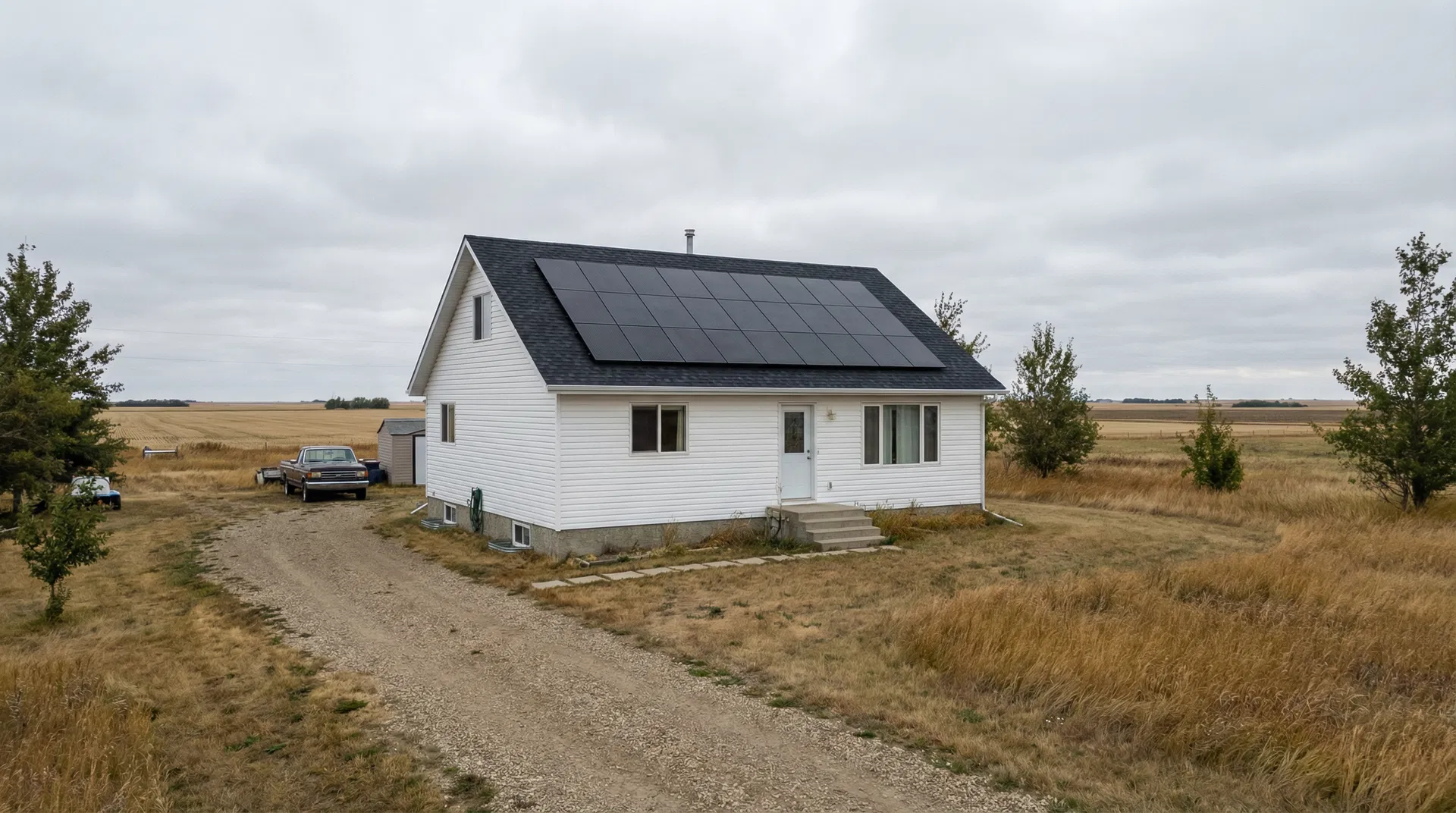
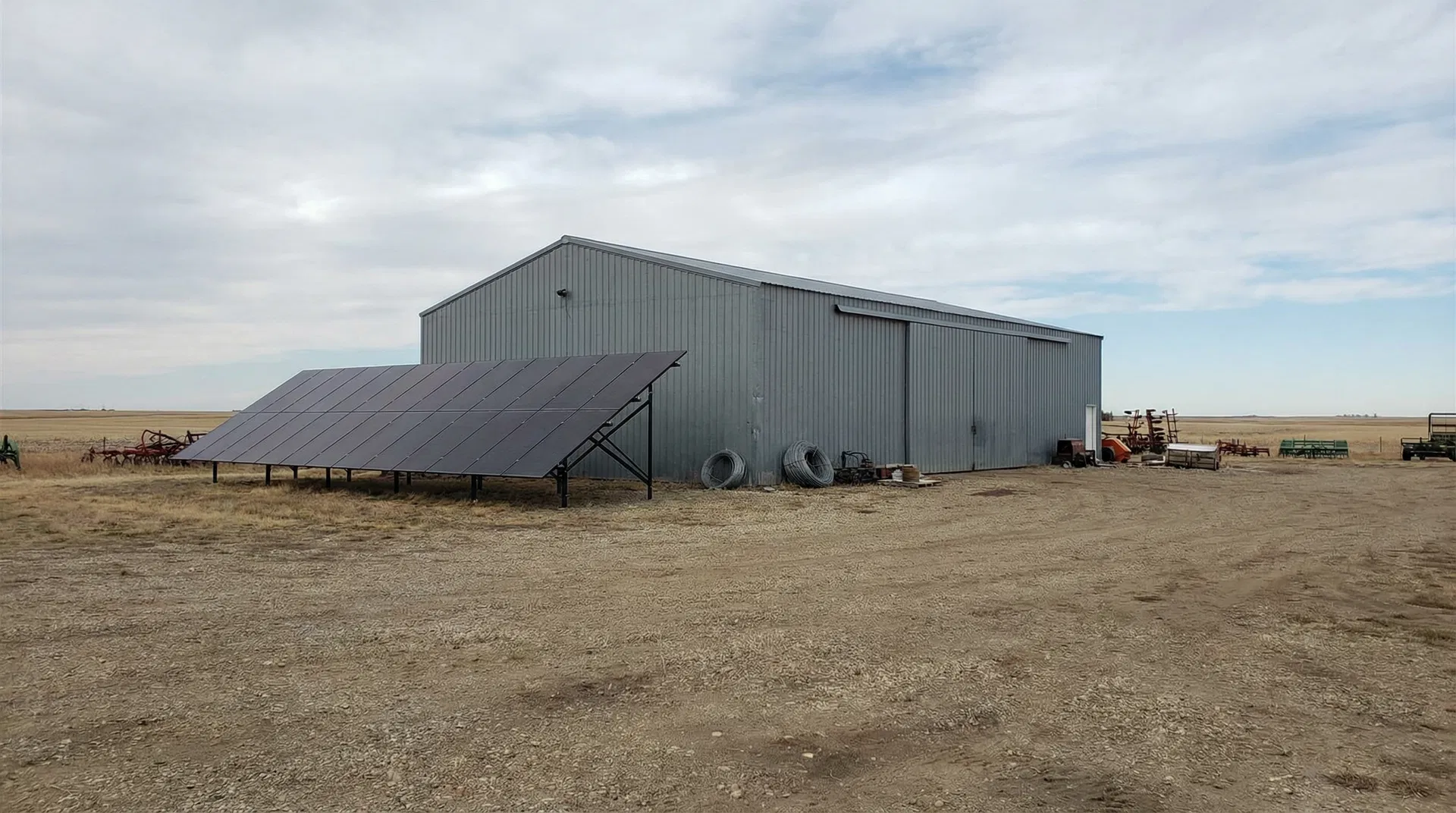
Acreage solar turner valley inquiries typically come from property owners who've watched their electrical bills climb as their operations have grown. A home with a heated shop and a water system runs a very different load profile than a residential lot, and the system we design reflects that. We install LONGi solar panels across our acreage projects. LONGi panels carry strong output ratings at the wattages that make sense for 12-18 kW systems, and they hold up in Alberta's freeze-thaw cycles without special coddling. Each panel is paired with an APsystems microinverter rather than a string inverter. On acreage layouts, that matters: if one panel gets shaded by a shop roofline or a tree, only that panel is affected. The rest of the array keeps producing at full capacity. You also get panel-level monitoring, so you can see exactly what each panel is doing at any given time. For properties where the house roof isn't ideal, whether it's the wrong pitch, too much shading from mature trees, or simply not enough unobstructed surface area, a ground-mount system is often the better call. Ground mounts let us dial in the tilt angle and orientation for the site rather than working around whatever the roof gives us. On a larger acreage, there's often a flat spot near the house or shop that works well. We assess both options during the design review and recommend the configuration that fits the property. Sometimes it's a roof mount. Sometimes it's a ground mount. Sometimes it's both.
Solar Planning for Turner Valley Properties
Acreages in the Turner Valley area don't run like a suburban house on a 50-foot lot. You've got a house, maybe a heated shop, outbuildings, a well pump, and possibly livestock or irrigated land. Those loads stack up fast, and they're spread across a property that gives you real options: roof space, ground space, or both. FortisAlberta is the wire service here, and that matters for how your micro-generation application gets filed and reviewed. We handle that process, from the design package to the utility submission, so you're not trying to navigate it on your own. The right system size for a property near Turner Valley depends on what you're actually running, not a number pulled from a general estimate. We build the production model from the 12-month usage graph on your most recent power bill combined with a site design that accounts for your roof pitch, panel orientation, shading, and available ground area. That's how we arrive at a system that fits the property, not one that looks good on a brochure. We provide honest production estimates based on your actual power bills and site conditions, not inflated projections.
Electrical Site Review for Turner Valley Properties
Voltage Rise
Voltage rise occurs when a solar system pushes power back onto a distribution line that's already at or near the upper end of its voltage tolerance. In rural areas, distribution lines often run longer distances with fewer properties sharing the load, which can make voltage rise more pronounced than it is in a dense neighbourhood. If voltage rise is significant at a given site, the inverter may clip output to stay within limits, and we account for that when sizing the system.
Single-Phase vs Three-Phase
Rural properties in Alberta can be served by either single-phase or three-phase electrical service, and that distinction shapes both inverter selection and total system capacity. Three-phase service is more common on properties with large motor loads like grain handling equipment or commercial irrigation, and it opens up different inverter configurations than single-phase. We confirm the service type during the site review and select APsystems microinverter configurations that match the property's electrical service.
Panel Infrastructure
Older acreage panels often weren't designed with a solar backfeed breaker in mind, and the available breaker capacity sometimes limits what a system can feed in without an upgrade. We assess the panel's age, main breaker rating, and available breaker slots during the site review. If the existing panel can't support the system safely, we'll tell you what an upgrade involves before any work begins.
Service Entrance Review
The meter base and service entrance condition are reviewed as part of the FortisAlberta micro-generation application process, and a deteriorated or non-compliant meter base can hold up the interconnection approval. We inspect the service entrance during the site visit and flag any issues that would require attention before the application is filed. If an upgrade is needed, we include it in the project scope so there are no surprises mid-install.
Right-Sizing Solar for Turner Valley Properties
Acreage systems run larger than what you'd put on a city house for a straightforward reason: there's more running. A typical acreage property might have the house load, a heated shop with plug-ins and compressors, a water system with a well pump, and outbuildings that draw power year-round. Those loads don't add up to a modest residential draw. They add up to a usage profile that often justifies a system in the 12-18 kW range, sometimes at the top of that range. Roof versus ground mount isn't a preference question, it's a site question. If the house roof faces south with minimal shading and enough unobstructed surface area, a roof mount works well. But a lot of acreage homes have mature trees nearby, steep or shallow pitches, or multiple rooflines that break up the available area. In those cases, a ground mount in an open part of the yard or near the shop often produces a cleaner result. We look at both during the site review and recommend whichever configuration makes more sense for the property. We don't size systems from rule-of-thumb numbers or average household consumption figures. We start with the 12-month usage graph on your most recent power bill, which shows us how your consumption shifts across seasons. That graph, combined with the site design, tells us what size system actually fits your property. It's the only honest way to do it.
Typical Load Profiles We Design For Near Turner Valley
Home Plus Heated Shop
This is the most common profile we see on acreages in the area: a house combined with a heated and wired shop running on 240V circuits for tools, plug-in heaters, and compressors. The shop load alone can significantly raise annual consumption, and the combined draw typically pushes the system into the 14-16 kW range. We size from the 12-month usage graph on your most recent power bill, which captures the winter shop load that a summer estimate would miss.
Home, Shop, and Well Pump
Properties with a well pump add a cycling motor load that runs regardless of season and doesn't show up in a simple walkthrough of the house. A 1.5 horsepower or larger well pump running multiple times daily contributes meaningfully to annual consumption, and we account for that load specifically when building the production model. This profile often supports a system in the 15-18 kW range depending on what else is on the property.
Acreage with Horse or Livestock Setup
Heated water bowls, heat lamps, barn lighting, and ventilation fans run continuously through Alberta winters, and that winter load profile looks very different from a summer baseline. A property running a small horse setup or a few cattle can carry electrical loads that push annual consumption well above what the house alone would use. A site design built around the 12-month usage graph on your most recent power bill captures that seasonal swing and informs a system size that doesn't leave that load unaddressed.
FortisAlberta Interconnection in Turner Valley
FortisAlberta is the wire service for Turner Valley and the surrounding rural area. Any solar system connected to the grid here goes through FortisAlberta's micro-generation program, which governs how excess generation is credited and how the interconnection application is reviewed. We handle the application on your behalf. That includes preparing the design package that FortisAlberta requires: system specs, single-line diagrams, equipment documentation, and site details. You don't need to coordinate between us and the utility. We submit it, track it, and follow up as needed. What we don't do is promise you a specific approval timeline or tell you exactly how credits will be settled, because those rules can change and they depend on your retailer and account details. What we can tell you is that we know the FortisAlberta process well, we've filed these applications before, and we build the design package to meet their technical requirements the first time.
Project Economics and Design Review
| System Size | Annual Production | Year 1 Savings | Payback Period |
|---|---|---|---|
| 12-18 kW range, 15 kW typical |
Production, savings, and payback estimates require a property-specific design and the 12-month usage graph from your most recent power bill.
How We Work in Turner Valley
Bill and Load Review
We review your power bill to understand your energy use in Turner Valley and size the system to your actual consumption — not a generic estimate.
Site Assessment
We assess your roof or ground area, south-facing exposure, electrical service, and utility interconnection requirements specific to your property.
Design and Utility Application
We produce a system layout, production estimate, and cost summary, then submit your micro-generation application to your utility on your behalf.
Installation and Commissioning
Our crew installs racking, panels, inverter, and electrical connections. All work is performed by licensed electricians. We commission and test before handoff.
Current Program and Interconnection Review
Utility connection review
FortisAlberta reviews grid connection applications for micro-generation systems in the Turner Valley area, and Range Road Solar prepares and submits the full design package on your behalf. We don't ask you to coordinate directly with the utility. We handle the documentation and track the application through the process.
Current program review
Eligibility for federal and provincial programs, including options that may apply to rural residential or farm properties, is reviewed against current rules at design time. Program availability and terms change, and we confirm what applies to your specific project before you commit to anything.
Frequently Asked Questions
Get a Solar Assessment for Turner Valley
Submit a recent power bill and we will review your consumption and provide an honest assessment for your Turner Valley property. No obligation.
(587) 330-7502 Book a CallRelated Resources