Foothills County · Solar installers
Solar Turner Valley: Licensed Installers for Rural Alberta Properties
Range Road Solar installs LONGi panels and APsystems microinverters on properties throughout Turner Valley and the surrounding area. We handle everything from site design through FortisAlberta interconnection.
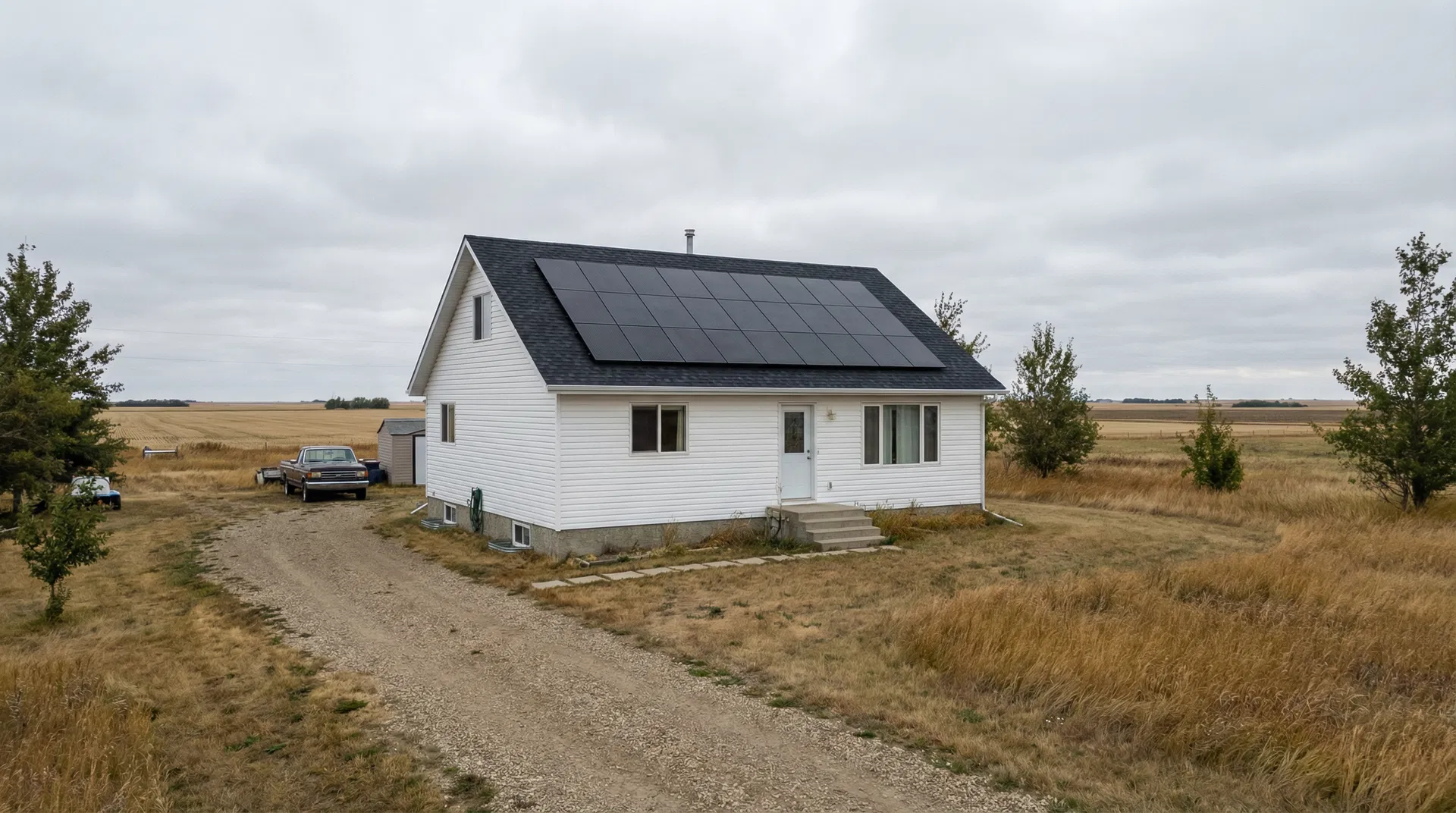
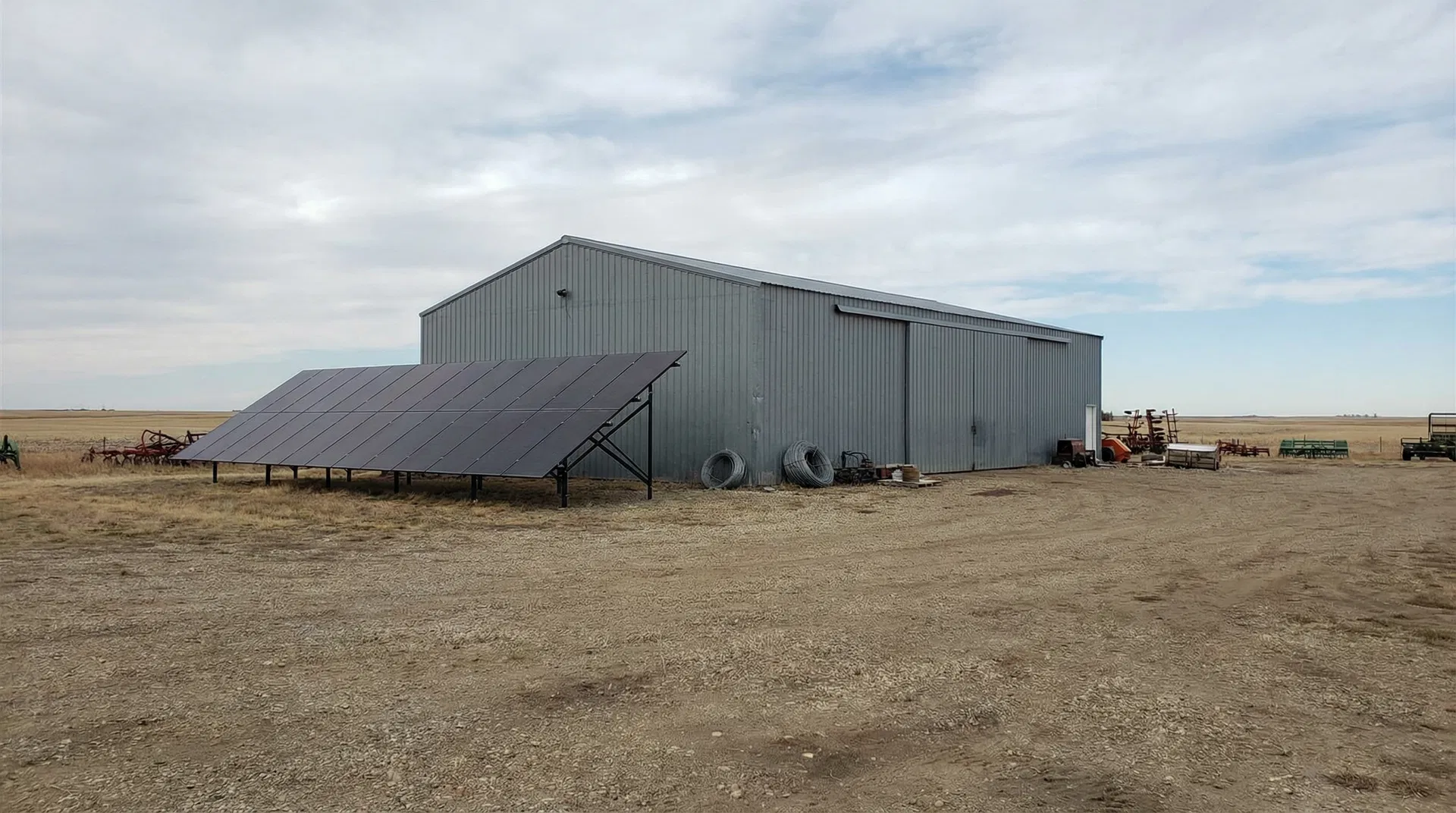
When people search solar Turner Valley, they're usually looking for someone who actually knows rural Alberta electrical work, not a city crew that treats every job like a cookie-cutter subdivision install. That's not what we do. Range Road Solar sends licensed solar installers who understand the difference between a 200-amp panel on a modern acreage and a 100-amp panel on a property that's been on the same service since the 1980s. We assess the full electrical picture before any design is finalized. On the equipment side, we install LONGi panels because they hold up in rural conditions and carry a warranty that means something. We pair them with APsystems microinverters, which operate independently at each panel rather than running everything through a single central inverter. That matters on properties where partial shading from a tree line or a shop roofline might clip production from one section of an array. With microinverters, one shaded panel doesn't drag down the whole system. For properties in this area, we typically see systems in the 8 to 15 kW range. A straight residential home might sit at the lower end of that range. Add a heated shop, a water pump, or an outbuilding with consistent load, and you're looking at something closer to 12 to 15 kW to make the numbers work. We size every system from your actual usage data, not from an average. Roof mounts are common here, but ground mounts are often the right answer on acreages with good south-facing yard space and a roof that doesn't cooperate. We'll tell you which makes more sense after we've looked at the site.
Solar Planning for Turner Valley Properties
Properties around Turner Valley tend to carry real electrical loads. Heated shops, water wells, outbuildings, and year-round home usage add up fast, and the monthly bills reflect it. That's exactly the kind of load profile where a well-designed solar system earns its keep. We're not talking about a rooftop decoration. We're talking about an 8 to 15 kW system engineered to offset a meaningful portion of what you're actually drawing from the grid every month. The design starts with your most recent power bill, which includes a 12-month usage graph. That graph tells us more about your property than any rule-of-thumb estimate ever could. From there, we look at your roof pitch and orientation, available yard space for a ground mount, shading from trees or buildings, and your panel infrastructure. Rural properties in this part of Alberta often have older electrical infrastructure that needs to be assessed before any equipment goes in. We check all of it. FortisAlberta handles interconnection for this area, and we manage that application on your behalf. You don't need to navigate utility paperwork on your own. We provide honest production estimates based on your actual power bills and site conditions, not inflated projections.
Electrical Site Review for Turner Valley Properties
Voltage Rise
Voltage rise happens when a solar system pushes power back toward the grid and raises the local line voltage above acceptable limits. Distribution conditions on rural lines, including line length and the number of customers on a given segment, affect how much rise is acceptable before an inverter clips output or shuts down. We account for voltage rise during system design to make sure the inverter settings and system size don't create a compliance problem after installation.
Single-Phase vs Three-Phase
Rural properties in Alberta can be served by either single-phase or three-phase power, depending on what's been run to the site. That distinction matters because it directly affects which inverters can be used and how much capacity the system can carry. We confirm the phase configuration at your property during the site review and design the system accordingly.
Panel Infrastructure
Older electrical panels on rural properties often don't have the breaker capacity to support a new solar system without an upgrade. We assess the panel age, main breaker rating, and available breaker slots as part of every site review. If the panel can't support the system as designed, we'll scope the upgrade alongside the solar install so there are no surprises after the project starts.
Service Entrance Review
The meter base and service entrance are the connection point between your property and the FortisAlberta distribution line, and their condition is part of what FortisAlberta reviews when they process a micro-generation application. We inspect the meter base for weathering, clearance issues, and compliance with current interconnection requirements. If an upgrade is required before the application can be submitted, we identify it at the site assessment stage so it's built into the project plan from the start.
Right-Sizing Solar for Turner Valley Properties
Rural properties carry more load than a city lot, and that changes how we size a system. A home on an acreage near Turner Valley might also have a heated shop running a welder and air compressor, a water well pump cycling through the day, and one or two outbuildings drawing power for lighting and heat tape in winter. Each of those loads adds to the monthly draw, and a system sized only for the house won't come close to offsetting what the meter is actually recording. That's why we start with the 12-month usage graph on your most recent power bill. That graph shows us seasonal swings, summer irrigation loads, winter heating loads, and everything in between. Rule-of-thumb sizing doesn't capture any of that. Your bill does. On the roof-versus-ground-mount question, we look at pitch, orientation, and shading before recommending anything. A south-facing roof with a good pitch and no tree line interference is often the most cost-effective option. But if the roof is broken up by dormers or vents, shaded by a shop building or a stand of trees, or oriented the wrong direction, a ground mount on open yard space will outperform it. Many properties in this area have the land to make a ground mount work well. We'll tell you which option makes more sense once we've looked at the site. Systems in the 8 to 15 kW range cover most of what we see here, but the right number for your property comes from your usage data and your site, not from a regional estimate.
Typical Load Profiles We Design For Near Turner Valley
Home Plus Heated Shop
A property with a residence and a heated shop is one of the most common load combinations we see in this part of Alberta. The shop adds heating, lighting, and intermittent equipment loads like compressors or welders that push monthly consumption well above a standard residential home. We size the system from the combined usage on your most recent power bill and account for the shop's seasonal load swings in the production model.
Acreage with Water Well and Outbuildings
Properties running a submersible well pump alongside one or more powered outbuildings have a load profile that's spread across multiple service points. The well pump alone can add a meaningful draw depending on depth and cycle frequency, and outbuildings used for storage, equipment, or livestock often run heat tape, lighting, and ventilation year-round. We pull those loads into the design from your bill data rather than estimating them separately.
Home-Based Business or Shop Studio
Some properties near Turner Valley operate a business from the site, whether that's a workshop, a studio, or a light commercial operation. That kind of setup adds daytime electrical load that actually lines up well with solar production hours. We look at when the load peaks, what equipment is running, and how consistent the draw is across months to determine whether a system sized around that usage profile is the right fit.
FortisAlberta Interconnection in Turner Valley
FortisAlberta is the wire service for Turner Valley. Any solar system installed here connects to the grid through a FortisAlberta micro-generation application, and that process has specific technical and documentation requirements. We handle the full application on your behalf. That includes the engineering design package, the single-line diagram, equipment specifications, and all correspondence with FortisAlberta through to approval. You don't need to make calls to the utility or figure out what forms are required. We've done this process enough times to know what FortisAlberta needs and how to submit it cleanly. What we won't do is promise you a specific timeline or tell you what credits look like on your bill. Approval timelines and credit settlement rules are set by FortisAlberta and subject to change. We'll walk you through the current process during your design review, based on the rules in place at that time. If your meter base or service entrance needs an upgrade before the application can proceed, we'll identify that during the site assessment and factor it into the project scope before anything gets signed.
Project Economics and Design Review
| System Size | Annual Production | Year 1 Savings | Payback Period |
|---|---|---|---|
| 8-15 kW range, 10 kW typical |
Production, savings, and payback estimates require a property-specific site design and the 12-month usage graph from your most recent power bill.
How We Work in Turner Valley
Bill and Load Review
We review your power bill to understand your energy use in Turner Valley and size the system to your actual consumption — not a generic estimate.
Site Assessment
We assess your roof or ground area, south-facing exposure, electrical service, and utility interconnection requirements specific to your property.
Design and Utility Application
We produce a system layout, production estimate, and cost summary, then submit your micro-generation application to your utility on your behalf.
Installation and Commissioning
Our crew installs racking, panels, inverter, and electrical connections. All work is performed by licensed electricians. We commission and test before handoff.
Current Program and Interconnection Review
Utility connection review
FortisAlberta reviews all micro-generation applications for properties it serves, including those in Turner Valley. Range Road Solar prepares and submits the full design package on your behalf, including the engineering drawings and equipment documentation that FortisAlberta requires. We handle the correspondence through to approval so you're not chasing the utility on your own.
Current program review
Residential, farm, and commercial properties may be eligible for current provincial or federal programs depending on their situation. We review eligibility against the rules in place at the time of your design, not against programs that have since changed or closed. What applies to your property gets confirmed during the design review, not assumed upfront.
Frequently Asked Questions
Get a Solar Assessment for Turner Valley
Submit a recent power bill and we will review your consumption and provide an honest assessment for your Turner Valley property. No obligation.
(587) 330-7502 Book a CallRelated Resources