Foothills County · Residential solar installation
Solar Installation in Turner Valley, AB
Grid-tied residential systems sized 8 to 12 kW for properties in Turner Valley. We handle everything from engineering to FortisAlberta interconnection.
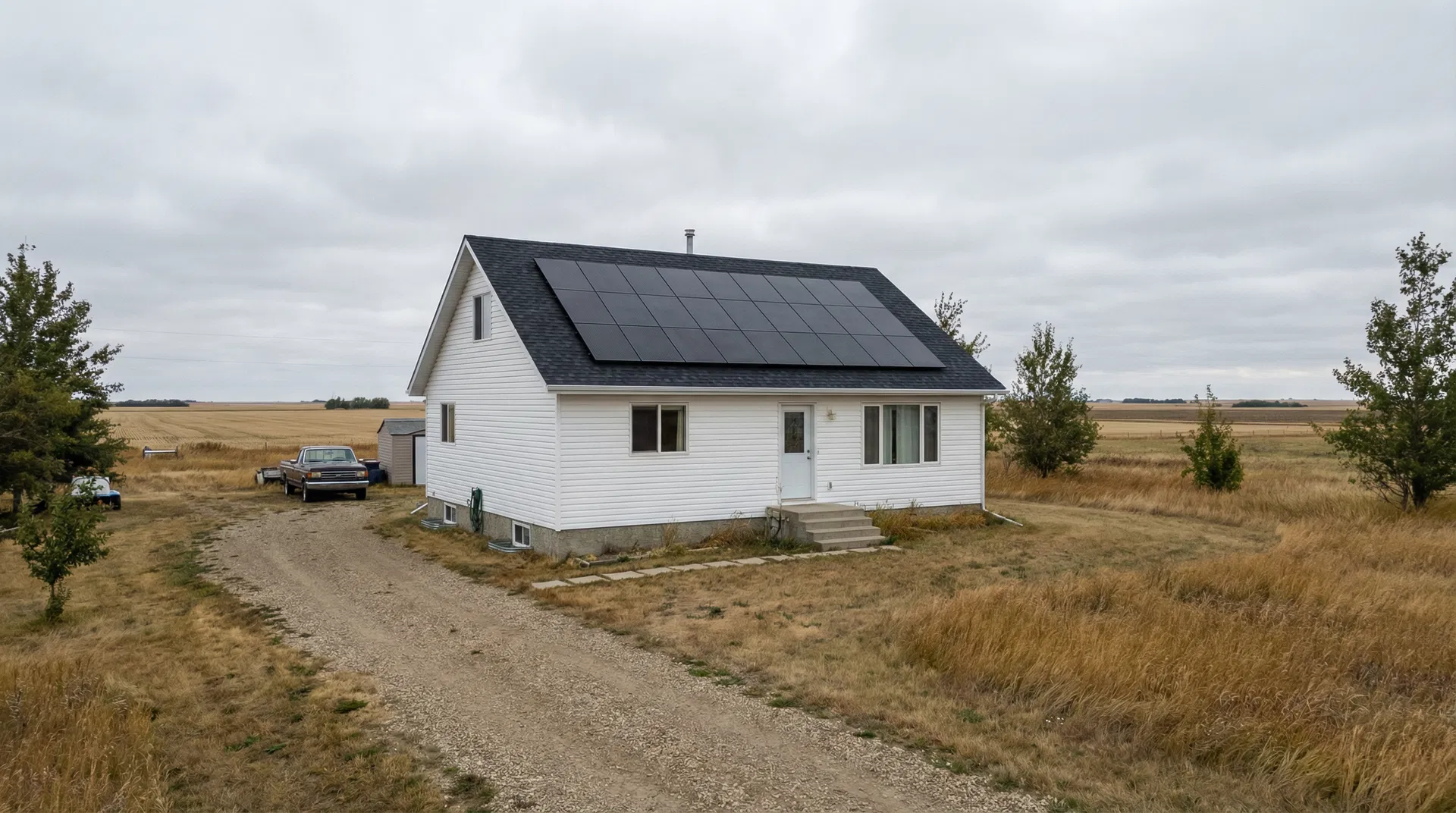
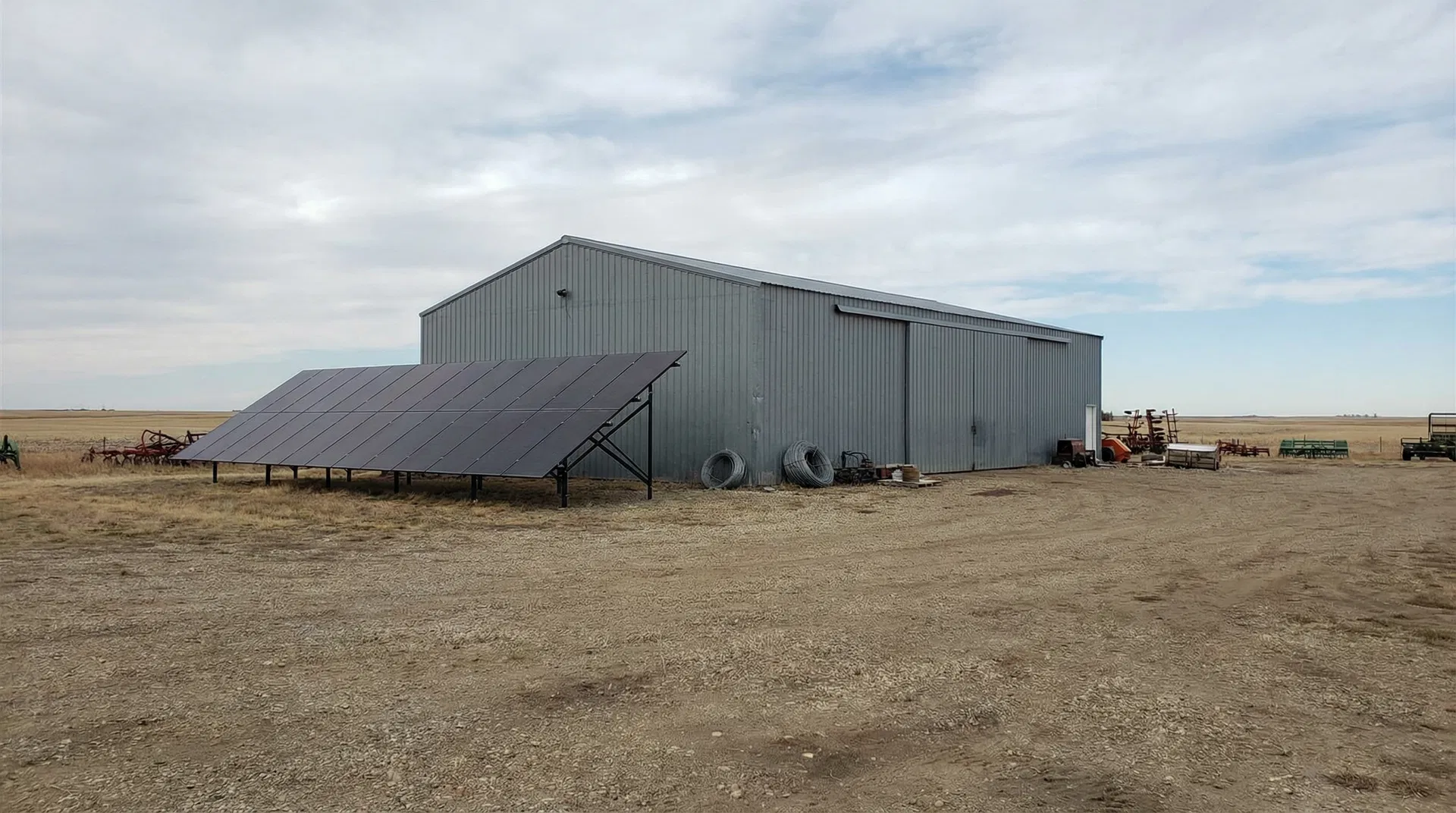
Solar installation in Turner Valley starts with a site design, not a sales pitch. Once we've reviewed your most recent power bill and assessed the property, we can put together a system that fits both your consumption and your roof or yard. We install LONGi solar panels across our residential projects. LONGi manufactures high-density monocrystalline panels suited to Alberta's conditions, with strong output at the wattages needed for 8 to 12 kW systems. For inverters, we use APsystems microinverters. Each panel gets its own microinverter, which means shading on one section of the array doesn't pull down output from the rest. It also gives you panel-level monitoring so you can see exactly what each panel is producing. For rooftop installs, we work with both asphalt shingle and metal roofing, which is common on properties around here. Ground-mount systems are also available when the roof doesn't work, either because of pitch, shading, or structural concerns. Both options use the same LONGi panels and APsystems microinverters. Once the system is designed and equipment is confirmed, we handle all documentation for the FortisAlberta micro-generation application. That includes the single-line diagram, engineering stamp if required, and coordination through inspection. You don't have to manage the paperwork side of this.
Solar Planning for Turner Valley Properties
Properties around Turner Valley vary a lot. Some sit on acreages with detached shops and outbuildings. Others are residential lots with straightforward rooftop access. That variation is exactly why we don't quote a system size before we've reviewed the property and seen the power bill. FortisAlberta serves the area, and their micro-generation program allows homeowners to feed surplus production back to the grid. That connection process involves an application, engineering review, and inspection before the system can operate. We prepare and submit that package on your behalf. The starting point for any design is your most recent power bill, which includes a 12-month usage graph. That graph tells us more about your actual consumption than a rough square-footage estimate ever could. Roof orientation, shading from trees or adjacent structures, available ground space, and how you use electricity all factor into what we recommend. We don't guess at system size and we don't pad projections. We provide honest production estimates based on your actual power bills and site conditions, not inflated projections.
Electrical Site Review for Turner Valley Properties
Voltage Rise
Voltage rise occurs when a solar system pushes current back through the distribution line, raising the local voltage above acceptable limits. On longer rural service runs, the existing line impedance can make this more pronounced, which constrains how much the inverters are permitted to export. If voltage rise limits are tight on a given service point, it affects how we size the system and configure inverter output to stay within FortisAlberta's connection standards.
Single-Phase vs Three-Phase
Properties in and around Turner Valley may have either single-phase or three-phase electrical service, and that distinction matters when we're selecting inverters and calculating maximum system capacity. Single-phase service is common on residential lots, while some acreages and properties with agricultural loads may have three-phase. The phase configuration determines which APsystems microinverter models apply and sets the ceiling on how large the system can be built at the current service.
Panel Infrastructure
Older electrical panels on rural properties sometimes lack the breaker capacity to safely support a solar system backfeed. We assess panel age, available breaker slots, and the main breaker rating as part of the site review. If a panel can't support the system without exceeding its rated capacity, we'll identify what an upgrade involves and factor that into the project scope before anything is quoted or contracted.
Service Entrance Review
The meter base and service entrance are reviewed as part of the FortisAlberta micro-generation application process. FortisAlberta requires that the meter base meet current standards before a grid-tied system can be approved and commissioned. If the existing meter base is outdated or damaged, an upgrade is required prior to interconnection approval, and we identify that during the design phase so there are no surprises at inspection.
Right-Sizing Solar for Turner Valley Properties
Properties here don't all have the same electrical load. A home with a heated shop, a water well pump, and yard lighting draws significantly more power than a residential lot with just a house on it. When you add grain handling, irrigation, or multiple outbuildings, the combined consumption can push the right system size well into the upper end of the 8 to 12 kW range or beyond. We don't assume. We pull the numbers from your most recent power bill, which includes a 12-month usage graph that shows exactly how your consumption shifts across seasons. For some properties, a rooftop system makes perfect sense. But if the main roof faces the wrong direction, sits in partial shade from a treeline or adjacent building, or doesn't have the structural capacity for the array size you need, a ground mount is the better call. Acreages with open yard space often have ideal ground-mount conditions: full sun exposure, flexible orientation, and room to scale up if loads grow. We use the 12-month usage graph on your most recent power bill as the sizing anchor. That graph tells us your peak months, your low months, and how much your consumption varies. From there, we model a system that targets your actual usage rather than a round number someone picked from a brochure. The result is a design that fits the property, not a generic package that fits a category.
Typical Load Profiles We Design For Near Turner Valley
Home Plus Heated Shop
A home combined with a heated detached shop is one of the most common load profiles we see on properties around here. The shop's electric heat, lighting, and power tools can add substantially to the household baseline, often pushing total consumption high enough to justify a 10 to 12 kW system. We size from the 12-month usage graph on your most recent power bill, which captures both the shop's winter heating demand and the household's year-round load together.
Home with Well Pump and Outbuildings
Properties with a submersible well pump, detached garage, and one or two additional outbuildings carry a broader spread of electrical loads than a straightforward house. The pump itself draws significant current at startup, and outbuilding lighting and receptacles add consistent background load. A site design accounts for how those loads interact over a 12-month period, not just peak demand, so the system we recommend covers actual annual consumption rather than a snapshot.
Residential Rooftop Only
Not every property around Turner Valley is an acreage. For standard residential lots with a single home and no significant secondary loads, an 8 to 10 kW rooftop system is often the right range. Roof orientation and shading are the primary variables on smaller lots, and we assess both before confirming panel count and layout. The sizing still comes from the 12-month usage graph on your most recent power bill, because consumption habits vary widely even between homes of similar size.
FortisAlberta Interconnection in Turner Valley
FortisAlberta is the wire service for Turner Valley. Any grid-tied solar system installed here requires a micro-generation application submitted to FortisAlberta before the system can be commissioned and energized. That application includes a design package: panel layout, inverter specifications, single-line electrical diagram, and supporting documentation. FortisAlberta reviews the package, and once approved, the system can be installed and inspected. The inspection must be completed and accepted before the system operates on the grid. We handle the full FortisAlberta application process for every system we install. You don't need to source documents, fill out utility forms, or coordinate separately with FortisAlberta. We prepare the package, submit it, and follow up through approval and inspection. If anything needs revision during the review process, we handle that too. The goal is a clean handoff so the interconnection doesn't slow down your install timeline.
Project Economics and Design Review
| System Size | Annual Production | Year 1 Savings | Payback Period |
|---|---|---|---|
| 8-12 kW range, 10 kW typical |
Production, savings, and payback figures require a property-specific design and review of your most recent power bill.
How We Work in Turner Valley
Bill and Load Review
We review your power bill to understand your energy use in Turner Valley and size the system to your actual consumption — not a generic estimate.
Site Assessment
We assess your roof or ground area, south-facing exposure, electrical service, and utility interconnection requirements specific to your property.
Design and Utility Application
We produce a system layout, production estimate, and cost summary, then submit your micro-generation application to your utility on your behalf.
Installation and Commissioning
Our crew installs racking, panels, inverter, and electrical connections. All work is performed by licensed electricians. We commission and test before handoff.
Current Program and Interconnection Review
Utility connection review
FortisAlberta reviews all grid-tied micro-generation applications for properties in their service area, including Turner Valley. Range Road Solar prepares the complete design package for submission, including layout drawings and inverter specifications. We handle the application so you don't have to navigate FortisAlberta's technical requirements on your own.
Current program review
Residential, farm, and acreage solar projects may be eligible for programs or incentives depending on current rules at the time of installation. Eligibility criteria and program availability change, so we review what applies to your specific project during the design process rather than advertising programs that may no longer be active or may not apply to your property type.
Frequently Asked Questions
Get a Solar Assessment for Turner Valley
Submit a recent power bill and we will review your consumption and provide an honest assessment for your Turner Valley property. No obligation.
(587) 330-7502 Book a CallRelated Resources