Foothills County · Solar installers
Solar Black Diamond, AB: Licensed Installers and FortisAlberta Interconnection
Range Road Solar installs LONGi panels and APsystems microinverters on properties in this area, handling every step of the FortisAlberta micro-generation application from design through energization.
Solar Black Diamond projects run the full range from in-town residential installs to larger acreage systems where multiple loads share one service entrance. The equipment we use on every install is LONGi panels and APsystems microinverters. LONGi panels are one of the most-installed panel lines in Alberta. They're a practical choice for rural installs: consistent output, reliable spec sheets, and a manufacturer track record that holds up when the FortisAlberta application is reviewed. We don't use budget panels because the application requires equipment that meets specific standards, and cutting corners creates problems at interconnection review. APsystems microinverters work at the panel level, meaning each panel operates independently. On a roof with even minor shading from a dormer, vent stack, or nearby tree, microinverters outperform a string inverter because one shaded panel doesn't drag down the rest of the array. On acreage installs where the layout might not be perfectly uniform, panel-level operation also simplifies monitoring. System sizes for this area run in the 8 to 15 kW range, with 10 kW being a common residential starting point. A property with a heated shop, water well, and in-floor heat pulls significantly more than a standard home, though. System size follows actual consumption, not a general estimate. We size every system from the 12-month usage graph on your most recent power bill and the site design, not from rule-of-thumb tables.
Solar Planning for Black Diamond Properties
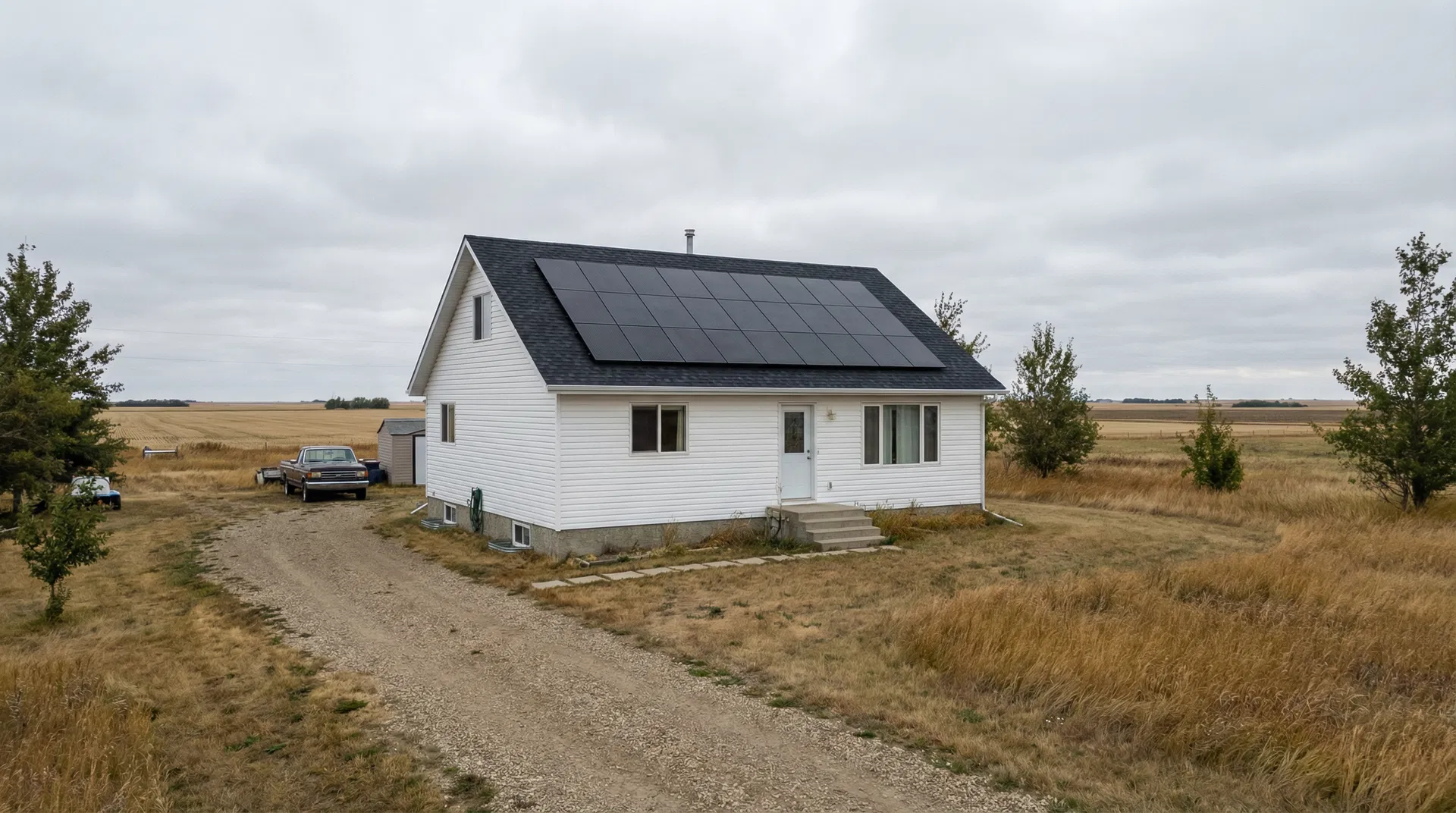
Properties in and around this area vary a lot. Some are in-town residential lots with south-facing roofs. Others are larger acreages where the house, shop, and outbuildings all pull from the same meter. That difference matters when sizing a system. FortisAlberta is the wire service here. For any grid-tied solar system to operate, it has to go through the FortisAlberta micro-generation application process. The application has specific technical requirements for system design, equipment specs, and metering, and we take care of that package on your behalf. We don't start with a system size and work backward. We start with your most recent power bill, which includes a 12-month usage graph, and use that to understand your actual consumption patterns. From there, the site design covers roof pitch, shading from trees or structures, and whether the layout of your property suits a ground-mounted array better than a rooftop one. Properties in rural Alberta often have a wider range of electrical infrastructure than urban installs. Panel age, breaker capacity, and the condition of the service entrance are all part of the site assessment. We flag anything that needs attention before the FortisAlberta application goes in, not after.
Electrical Site Review for Black Diamond Properties
Voltage Rise
Voltage rise happens when a solar system pushes power back onto the distribution line and the local line voltage increases beyond acceptable limits. In rural areas, distribution lines can be longer and thinner than urban grids, which makes voltage rise a more common consideration at the service point. If voltage rise is a factor, system sizing and inverter output settings may need to be adjusted to keep the system within FortisAlberta's limits.
Single-Phase vs Three-Phase
Rural Alberta properties can have either single-phase or three-phase service at the meter, depending on what the original installation was designed for. Grain handling equipment, large irrigation pumps, and industrial machinery are common reasons a property might carry three-phase service. Inverter selection and how the solar system ties into the panel depends on which service type is present, so we confirm this during the site assessment.
Panel Infrastructure
Older electrical panels on rural properties sometimes have breaker capacity or bus bar ratings that can't support the additional current a solar system introduces. We check the panel's rated amperage, the condition of the main breaker, and whether the panel has room for the interconnection breaker the FortisAlberta application requires. If the panel needs an upgrade, we scope that work as part of the project before the application is submitted.
Service Entrance Review
The meter base and service entrance condition are part of what FortisAlberta reviews when a micro-generation application comes in. A weathered or non-compliant meter base can require an upgrade before the interconnection is approved. We inspect the service entrance early in the design process so that any required work is identified and scoped before it becomes a surprise mid-project.
Right-Sizing Solar for Black Diamond Properties
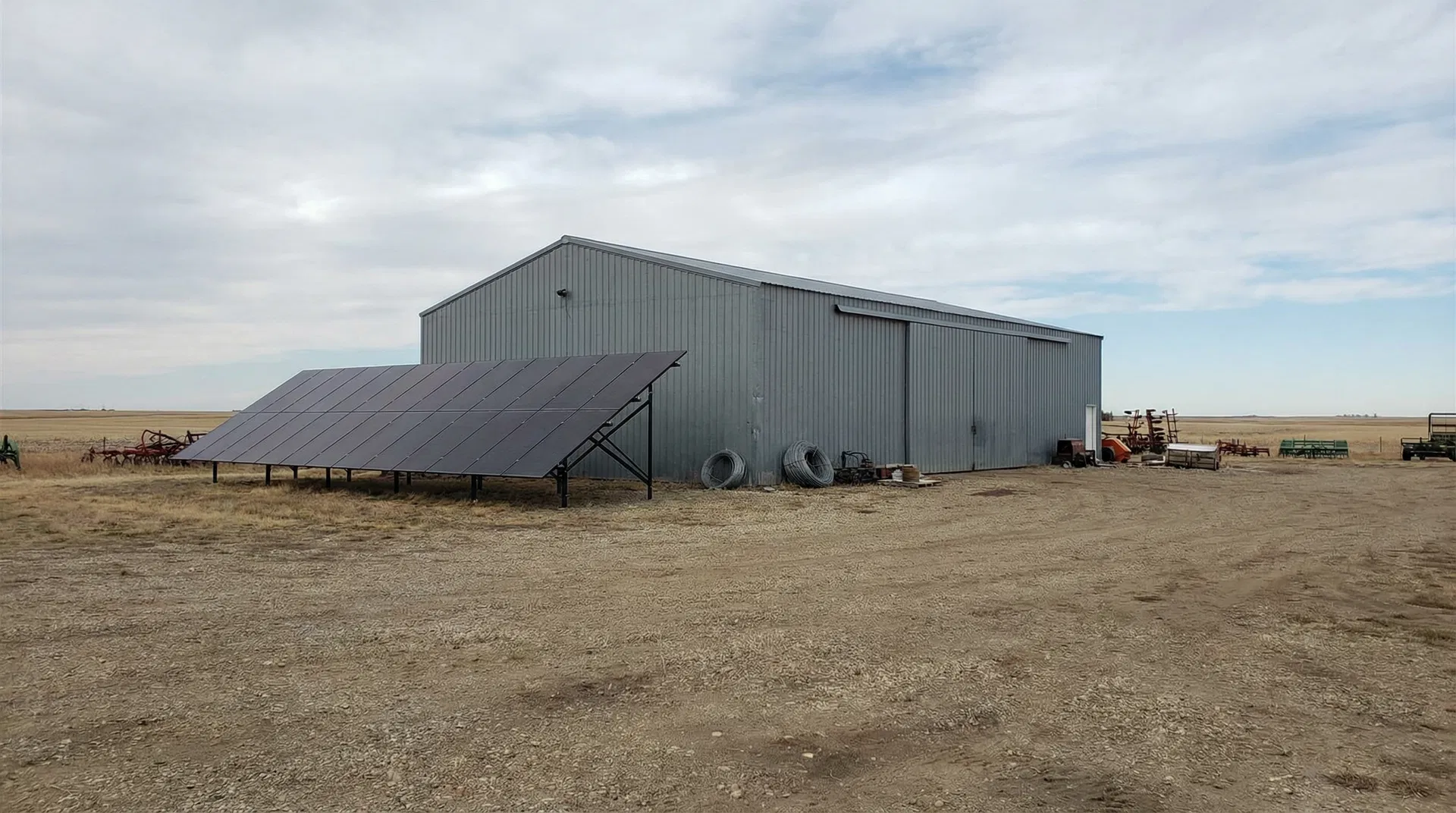
Rural Alberta properties don't size like urban homes. A standard urban install might need a 7 kW system. A property in this part of Alberta with a heated shop, a well pump, yard lights, and in-floor radiant heat can easily need 12 to 15 kW. That's before factoring in a grain dryer or irrigation pump if the land use warrants it. We size from what the property actually consumes, not from a square-footage estimate. The starting point is your most recent power bill. Alberta utility bills include a 12-month usage graph, and that graph shows us the consumption pattern across the full year, including heating season peaks. We don't need multiple statements from you. One current bill gives us the data we need to model a system that fits the actual load. Roof or ground mount is a site decision, not just a preference. A south-facing roof with good pitch and no shade from dormers, chimneys, or nearby trees is often the most cost-effective option. If the roof doesn't work, whether because of shading, a shallow pitch, or a metal profile that doesn't suit panel mounting, a ground-mounted array on available yard space usually delivers better performance. Acreage layouts often have room for ground mounts. We assess both options and recommend what makes sense for the actual site, not the easier install.
Typical Load Profiles We Design For Near Black Diamond
Home and Heated Shop
A property with a house and a heated shop often needs a system in the 12 to 15 kW range, depending on how the shop is heated and what equipment runs inside. Electric in-floor heat, compressors, and welders all add to the draw on a single meter. We size from the 12-month usage graph on your most recent power bill, which captures the shop's winter draw alongside the house load.
Acreage with Well Pump and In-Floor Heat
Properties relying on an electric well pump and hydronic in-floor heating typically show a pronounced winter consumption peak on their usage graph. That peak drives system sizing more than the summer baseline does. A system sized only for summer use won't offset what the property actually consumes over a full year.
Home-Only Residential
An in-town or acreage lot without a shop or major farm load often fits in the 8 to 10 kW range, though the right size depends on the actual bill. Electric dryers, hot water tanks, and electric baseboard heat all factor in. A gas-heated home with modest electrical use might need a noticeably smaller system than a comparable all-electric property of the same square footage.
FortisAlberta Interconnection in Black Diamond
FortisAlberta is the wire service for this area. For any grid-tied solar system to operate here, it has to go through the FortisAlberta micro-generation application process. We handle that application on your behalf. The package we submit includes the system design, the single-line electrical diagram, equipment specifications for the LONGi panels and APsystems microinverters, and the site information FortisAlberta needs to review the interconnection. Getting that package right the first time matters because incomplete submissions create delays. The application covers the technical specs of the system, confirmation that the meter base and service entrance meet the requirements, and the design parameters that determine how the system interacts with the distribution grid. We don't make claims about how long FortisAlberta's review takes because their timeline depends on the queue and the specifics of the application. Once the interconnection is approved, you'll receive a production meter. From that point, any surplus generation the system produces is handled according to FortisAlberta's current micro-generation rules.
Project Economics and Design Review
| System Size | Annual Production | Year 1 Savings | Payback Period |
|---|---|---|---|
| 8-15 kW range, 10 kW typical |
Production, savings, and payback estimates require a property-specific system design and your most recent power bill.
How We Work in Black Diamond
Bill and Load Review
We review your power bill to understand your energy use in Black Diamond and size the system to your actual consumption — not a generic estimate.
Site Assessment
We assess your roof or ground area, south-facing exposure, electrical service, and utility interconnection requirements specific to your property.
Design and Utility Application
We produce a system layout, production estimate, and cost summary, then submit your micro-generation application to your utility on your behalf.
Installation and Commissioning
Our crew installs racking, panels, inverter, and electrical connections. All work is performed by licensed electricians. We commission and test before handoff.
Current Program and Interconnection Review
Utility connection review
FortisAlberta reviews the grid connection application for every solar install in their service territory. We prepare and submit the full design package, including equipment specifications and the single-line electrical diagram. You don't need to manage the utility relationship directly.
Current program review
Commercial, farm, and residential properties may each have access to different programs depending on current eligibility rules and how the project is structured. We confirm what applies to your specific situation at design time, so the project economics are based on what's actually current, not general information that may be out of date.
Frequently Asked Questions
Get a Solar Assessment for Black Diamond
Submit a recent power bill and we will review your consumption and provide an honest assessment for your Black Diamond property. No obligation.
(587) 330-7502 Book a CallRelated Resources